
If you are searching for 3D printing orthodontics options for yourself or your child, custom 3D printed braces can tailor brackets to individual teeth. Digital scanning guides treatment planning and a bonding tray for accurate bracket placement. You still need wires, good hygiene and an orthodontist who adjusts the plan as teeth respond.
Your bite and daily routine will determine whether custom fixed brackets offer you more than standard braces or removable aligners.
3D printing orthodontics: how custom braces work
Some offices use 3D printers to create dental models, retainers or placement trays without printing brackets. With custom orthodontics such as LightForce, digital files also guide tooth-specific bracket fabrication. A clinical review of custom bracket printing describes this workflow. Ask which 3D printed appliances are included in your care.
From a scan to brackets on your teeth
-
Records and planning: The orthodontist examines your bite and uses digital scans to build 3D models alongside other diagnostic records.
-
Bracket design: In a custom system such as LightForce, the orthodontist plans bracket positions and the brackets are made to suit the patient’s tooth surfaces and treatment plan.
-
Placement: A transfer, or indirect bonding, tray guides bracket placement according to the digital plan. The orthodontist checks the fit and bonds the brackets to the teeth.
-
Movement and adjustments: An archwire works with the brackets to move teeth. Your orthodontist follows progress and changes wires or other components as needed.
3D printing technology does not make teeth or eliminate adjustments. Invisalign also starts with a digital plan, although its aligners come out and custom braces stay fixed to the teeth.
Where customization could help, and where it cannot
Tooth-specific brackets and a placement tray may reduce guesswork and bonding chair time. A fitted bracket may enhance comfort for some patients, but you can still experience discomfort. A peer-reviewed review of 3D-printed orthodontic accessories discusses customization and workflow benefits while noting that long-term performance needs more research.
Teeth do not move on a computer’s schedule. Growth, missed appointments, broken orthodontic appliances and elastics can affect treatment efficiency. Your orthodontist adjusts care as teeth respond.
3D-printed braces vs traditional braces vs Invisalign
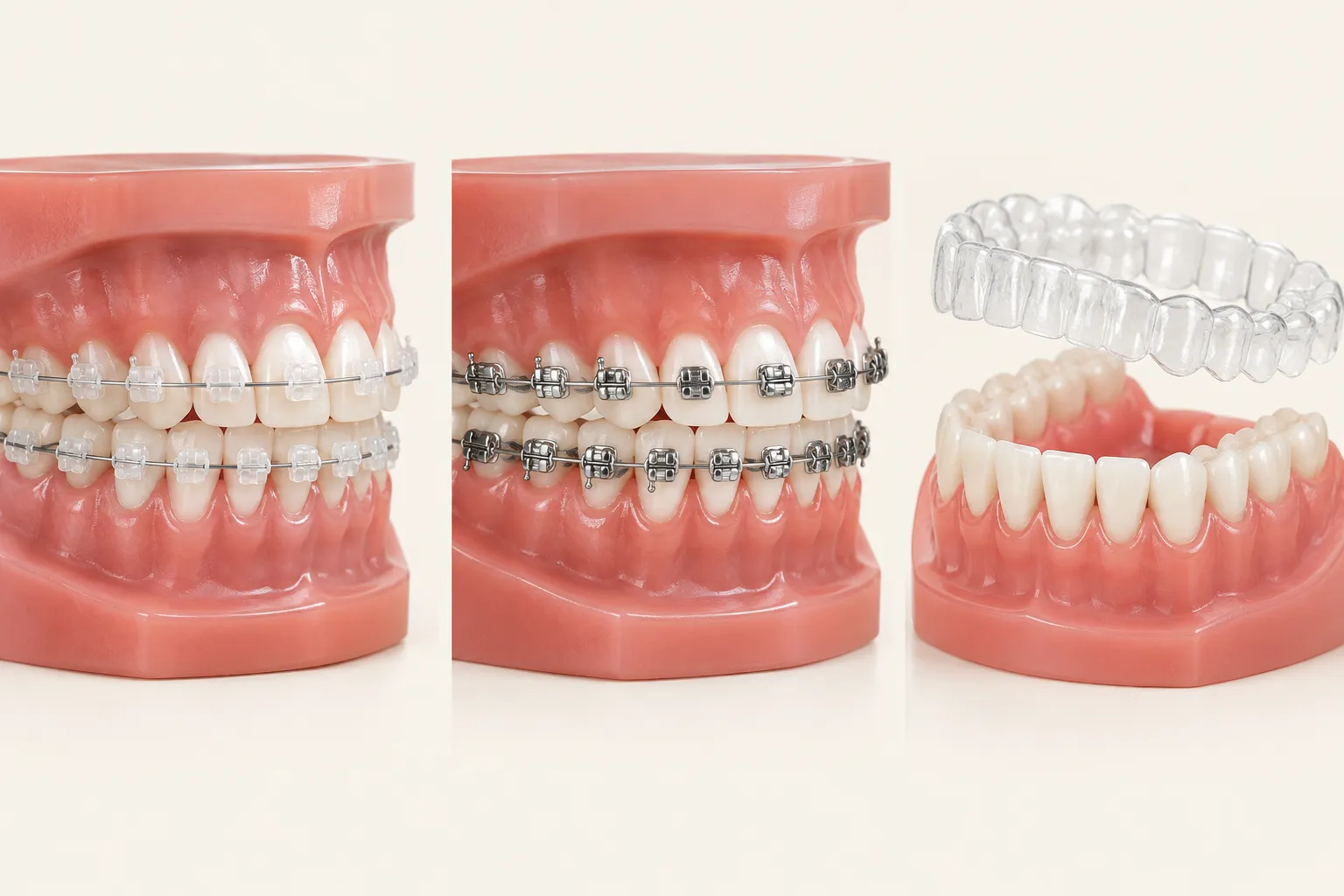
Traditional braces use standard brackets; custom braces use tooth-specific brackets and wires. Invisalign uses removable clear aligners. All three depend on an orthodontist’s diagnosis, even when 3D printing helps create custom dental appliances.
|
Question |
Custom 3D-printed braces |
Traditional metal braces |
Invisalign |
|---|---|---|---|
|
What stays on the teeth? |
Custom brackets and wires stay attached. |
Standard brackets and wires stay attached. |
Aligners come out for meals and cleaning. |
|
Who controls daily wear? |
Fixed appliance, so there is no tray to remember. |
Fixed appliance, so there is no tray to remember. |
The patient must wear the aligners as directed. |
|
How visible is it? |
Ceramic custom brackets can be less conspicuous than metal, but wires remain visible. |
Metal brackets and wires are visible. |
Clear trays are less noticeable, though attachments may show. |
|
Eating and cleaning |
Avoid foods that damage brackets; clean around wires and brackets. |
The same fixed-braces food and cleaning precautions apply. |
Remove trays to eat; brush before replacing them. |
|
Planning advantage |
Tooth-specific hardware can be placed using a digitally planned transfer tray. |
The orthodontist selects and places standard hardware and adjusts it over time. |
Digital planning maps a sequence of removable trays. |
|
Main tradeoff |
Custom fabrication may affect the fee or lead time; it does not eliminate adjustments. |
Familiar fixed treatment without a custom-printed bracket for every tooth. |
Less hardware, but treatment depends on consistent wear and tray handling. |
For some bites, fixed appliances offer the control the orthodontist wants; others suit aligners. A teen who might misplace trays may prefer braces that stay put. An adult may value taking Invisalign out for meals, provided aligners suit the treatment plan.
Are printed brackets faster or more comfortable?
Tooth-specific brackets may help placement or reduce some adjustments, but they cannot guarantee faster treatment. Ask about the schedule for your bite, including remote monitoring.
A retrospective study of one orthodontist’s completed cases compared 103 LightForce patients with 74 conventional-bracket patients. It found shorter average treatment time and fewer scheduled visits in the LightForce group:
“The LightForce group’s average treatment time was 45% shorter than the conventional group’s treatment time” – Journal of Clinical Orthodontics
You cannot use that result to predict your finish date. The study looked back at one clinician’s cases rather than randomly assigning treatments, and LightForce supported it. The authors noted possible selection bias and changes to the system during the study. By their assessment, both groups finished with nearly ideal or acceptable bites on average.
Expect some tenderness after your orthodontist places or adjusts either type of braces. Ceramic brackets may blend in better than metal, but a bracket or wire can still rub your cheek. Try orthodontic wax for irritation and call the office if a sharp spot persists.
What about the price?
There is no universal price range for 3D printing braces. The fee depends on your bite, appliance and practice. Custom fabrication may cost more than standard hardware, so do not assume it is more cost effective. Compare written totals, including records, repairs, retainers and any extended-treatment charges.
What treatment feels like day to day
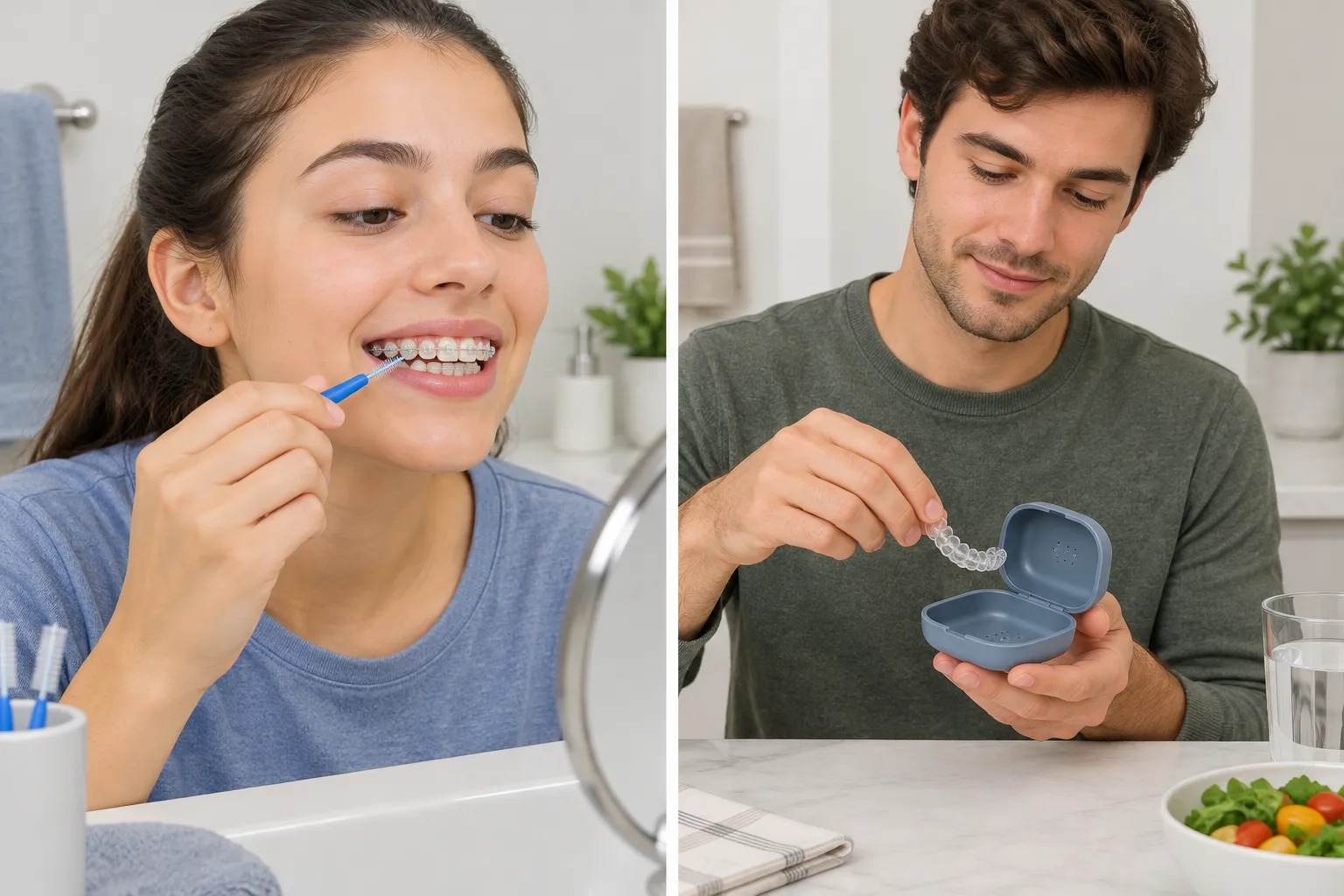
Brushing with fixed braces takes care around each bracket and along the gumline. Clean beneath the wires and between teeth, and avoid hard or sticky foods that can loosen hardware. Call the practice if a bracket breaks. Because a printed bracket is custom-made, replacing it may involve a different process from replacing a standard bracket.
Aligners spare you brushing around wires. They do ask more of you at meals: take the trays out, store them safely, then put them back as directed. Consider which routine you or your child can manage each day.
You will need follow-up and a retainer with any of these options. Teeth can shift after treatment, so the retainer routine matters well beyond the last adjustment.
How to choose at a consultation
At the consultation, ask about your bite and routine:
-
What needs correction besides crooked front teeth, and which options can address it?
-
Are the brackets themselves printed, or does the office print the placement tray or models?
-
If you recommend custom brackets, what benefit do you expect in my case, and what remains uncertain?
-
What is the estimated treatment schedule, how will progress be monitored, and what happens if a bracket breaks or an aligner does not track?
-
What does the total fee include, particularly retainers and repair visits?
Eisenberger and Meister Orthodontics in Passaic welcomes North Jersey families to discuss LightForce custom ceramic braces, conventional braces, clear braces and Invisalign at a complimentary consultation. The practice also offers Dental Monitoring where appropriate and financing support. It describes 38 years of experience and more than 15,000 smiles treated. Your treatment recommendation should still address your bite and daily habits.
North Jersey communities by county
Families comparing orthodontic options in North Jersey may be coming from any of these municipalities in Passaic or Bergen County. These are county lists, not a claim that every town borders Passaic or Clifton.
-
Passaic County: Bloomingdale, Clifton, Haledon, Hawthorne, Little Falls, North Haledon, Passaic, Paterson, Pompton Lakes, Prospect Park, Ringwood, Totowa, Wanaque, Wayne, West Milford and Woodland Park. Passaic County municipality directory.
-
Bergen County: Allendale, Alpine, Bergenfield, Bogota, Carlstadt, Cliffside Park, Closter, Cresskill, Demarest, Dumont, East Rutherford, Edgewater, Elmwood Park, Emerson, Englewood, Englewood Cliffs, Fair Lawn, Fairview, Fort Lee, Franklin Lakes, Garfield, Glen Rock, Hackensack, Harrington Park, Hasbrouck Heights, Haworth, Hillsdale, Ho-Ho-Kus, Leonia, Little Ferry, Lodi, Lyndhurst, Mahwah, Maywood, Midland Park, Montvale, Moonachie, New Milford, North Arlington, Northvale, Norwood, Oakland, Old Tappan, Oradell, Palisades Park, Paramus, Park Ridge, Ramsey, Ridgefield, Ridgefield Park, Ridgewood, River Edge, River Vale, Rochelle Park, Rockleigh, Rutherford, Saddle Brook, Saddle River, South Hackensack, Teaneck, Tenafly, Teterboro, Upper Saddle River, Waldwick, Wallington, Washington Township, Westwood, Woodcliff Lake, Wood-Ridge and Wyckoff. Bergen County municipality directory.
Bottom line
Custom 3D-printed braces make sense when tooth-specific design and planned placement offer a useful advantage. Traditional metal braces are another fixed option. Invisalign may suit someone who wants a removable appliance and can keep up with wear. Your diagnosis, follow-up and retainer plan matter whichever you choose.
If you are considering care in or around Passaic, book a complimentary consultation at Eisenberger and Meister Orthodontics. You can compare LightForce, conventional braces and Invisalign against the same treatment goals and a written fee before choosing what fits your teeth and your day-to-day life.
FAQ
Can you 3D print a brace?
Yes. In orthodontics, some systems print custom brackets for individual teeth, while practices may also print models or bonding trays used during braces treatment. A printed bracket still works with a wire and needs professional placement and follow-up.