
Accelerated braces may help some patients move teeth sooner, but a faster phase does not guarantee shorter orthodontic treatment. Your bite, treatment plan and consistent appliance use matter more than an advertised speed percentage. If you are considering accelerated orthodontics in Passaic, ask what reducing treatment time would mean for your case.
Accelerated orthodontics vs. traditional braces
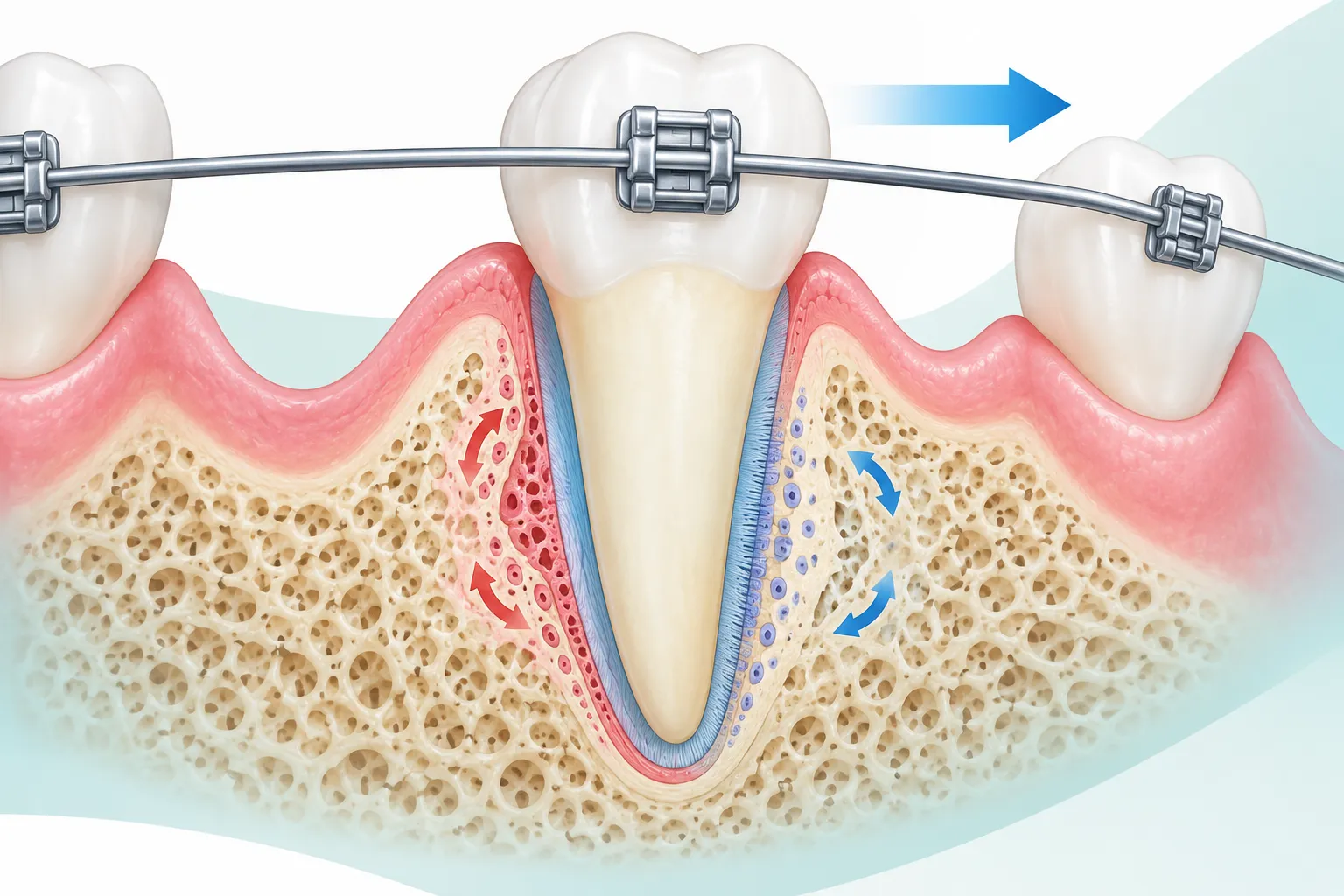
Traditional methods and accelerated treatment both rely on orthodontic appliances to guide teeth. The accelerated approach adds customized planning or an orthodontic device intended to shorten a phase of care. Teeth still need time to respond to controlled force; increasing that force yourself is unsafe. Minor crowding and a complex bite also require different plans, so faster results in one case cannot predict yours.
Which accelerated braces treatment options are available?
-
Planning and follow-through: Digital planning and custom LightForce braces can tailor care; attending visits, protecting brackets and wearing braces as instructed can help avoid delays. Neither customization nor fewer visits proves an earlier finish. See how LightForce braces work.
-
Vibration and light devices: These add-ons are marketed for faster movement or reduced discomfort. Ask whether either claim is clinically proven for complete treatment, rather than a single stage.
-
Bone-stimulating procedures: Micro-osteoperforations (sometimes called micro perforations) and corticotomy-related techniques aim to stimulate bone remodeling. You may see the term “osteogenic orthodontics” in discussions of these approaches. A minimally invasive office procedure still carries healing considerations, costs and potential risks. Our practice does not present these procedures as services it offers.
Benefits of accelerated orthodontics: speed and comfort
Fewer visits may make care more convenient, but they do not mean treatment ends sooner. Some add-ons are promoted for decreasing discomfort; the evidence below does not show a clear pain benefit from vibration.
What does the evidence say about shorter treatment?
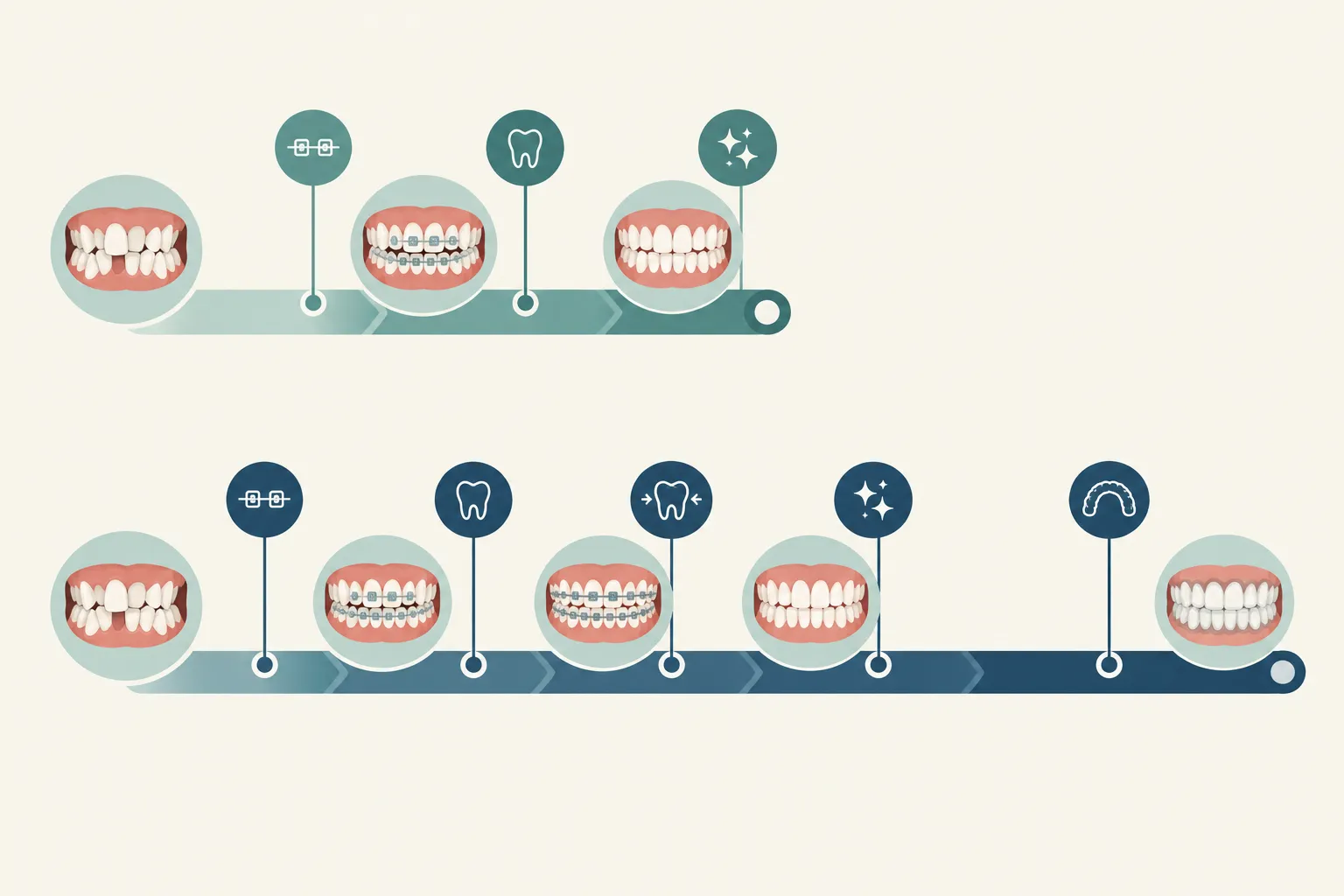
Studies often measure early alignment or one tooth movement, not when braces come off. A Cochrane review indexed by the National Library of Medicine found low- to very-low-certainty evidence. It found no clear overall-duration or pain benefit from vibration. A Cochrane review of surgical adjuncts reported short-term movement results, but its trials did not directly measure total treatment duration. Claims that an add-on will help you smile faster need that distinction.
Who is a good candidate for accelerated braces?
The right treatment option depends on your bite, gum and root health, and the orthodontic treatment required. Ask which part of your plan could shorten and whether studies measured the full course. If you are considering a minimally invasive procedure, ask about its cost and healing risks. Root and gum health and a stable final bite matter more than an earlier removal date. Retainers remain necessary after treatment. Remote check-ins can reduce hassle without making teeth move faster.
At Eisenberger and Meister Orthodontics in Passaic, children, teens and adults can compare braces, clear braces, Invisalign and LightForce. At a complimentary consultation, we can discuss the orthodontic treatment your bite requires and estimate your treatment time. If you are considering accelerated orthodontic treatment, ask whether it could shorten your full course, not just move teeth faster in one phase. Dental Monitoring may offer convenient follow-up for suitable patients alongside needed in-person care.
Families from across nearby North Jersey communities can visit our Passaic office. Towns roughly within 20 miles include Clifton, Paterson, Wayne, Totowa, Woodland Park, Little Falls and Hawthorne in Passaic County; Rutherford, Lyndhurst, Garfield, Lodi, Hackensack, Fair Lawn and Paramus in Bergen County; Nutley, Belleville, Bloomfield, Montclair, West Orange and Newark in Essex County; and Secaucus, Kearny, Harrison, Hoboken and Jersey City in Hudson County. Distances vary by starting point and route; these are nearby communities, not additional office locations.
FAQ
How to speed up braces treatment?
Follow wear instructions, attend visits, avoid broken brackets and keep teeth and gums healthy. Ask whether your plan has avoidable delays and whether an add-on can shorten the whole treatment, not just one stage. Never apply extra force yourself.