
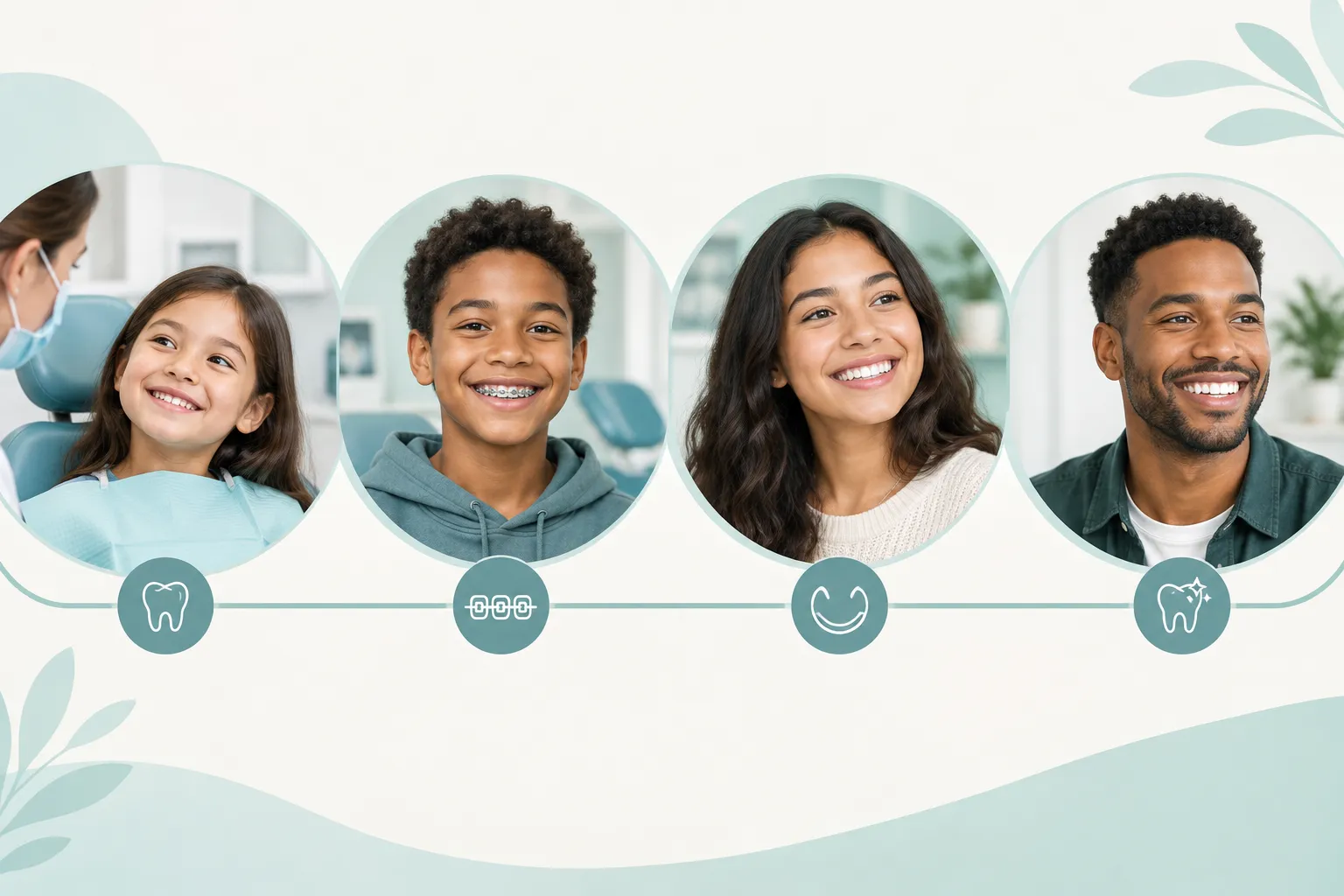
There is no upper age limit for braces on teeth. Children should have an orthodontic evaluation by age seven, and many who need full treatment start in the preteen years, once enough permanent teeth have arrived. A nine-year-old with a developing crossbite may benefit from earlier care; a healthy adult can start decades later. An orthodontist chooses the time based on the bite, teeth, growth and gum health.
Is there an age limit for braces on teeth?
No. Tooth movement is possible throughout life. An orthodontist will plan differently for a child whose jaws are still growing and an adult whose growth is complete. Use these ages to anticipate the next conversation, rather than as fixed start dates.
|
Age or stage |
Typical next step |
Why the timing might change |
|---|---|---|
|
Around 7 |
First orthodontic evaluation |
A bite or eruption problem might call for early treatment, while many children only need monitoring. |
|
8–10 |
Monitor growth and incoming teeth; consider targeted early treatment if indicated |
Crossbites, severe crowding or teeth erupting out of position can warrant action before full braces. |
|
11–13 |
Assess readiness for full braces or aligners |
Many permanent teeth are present, but eruption and bite development vary. |
|
14–17 |
Start treatment when needed |
A teen who missed an earlier evaluation has not missed the opportunity. |
|
Adulthood |
Evaluate teeth, gums and supporting bone before selecting treatment |
Restorations, gum disease or missing teeth may affect the plan, but age itself is not the barrier. |
Why age seven is for an evaluation, not automatically braces
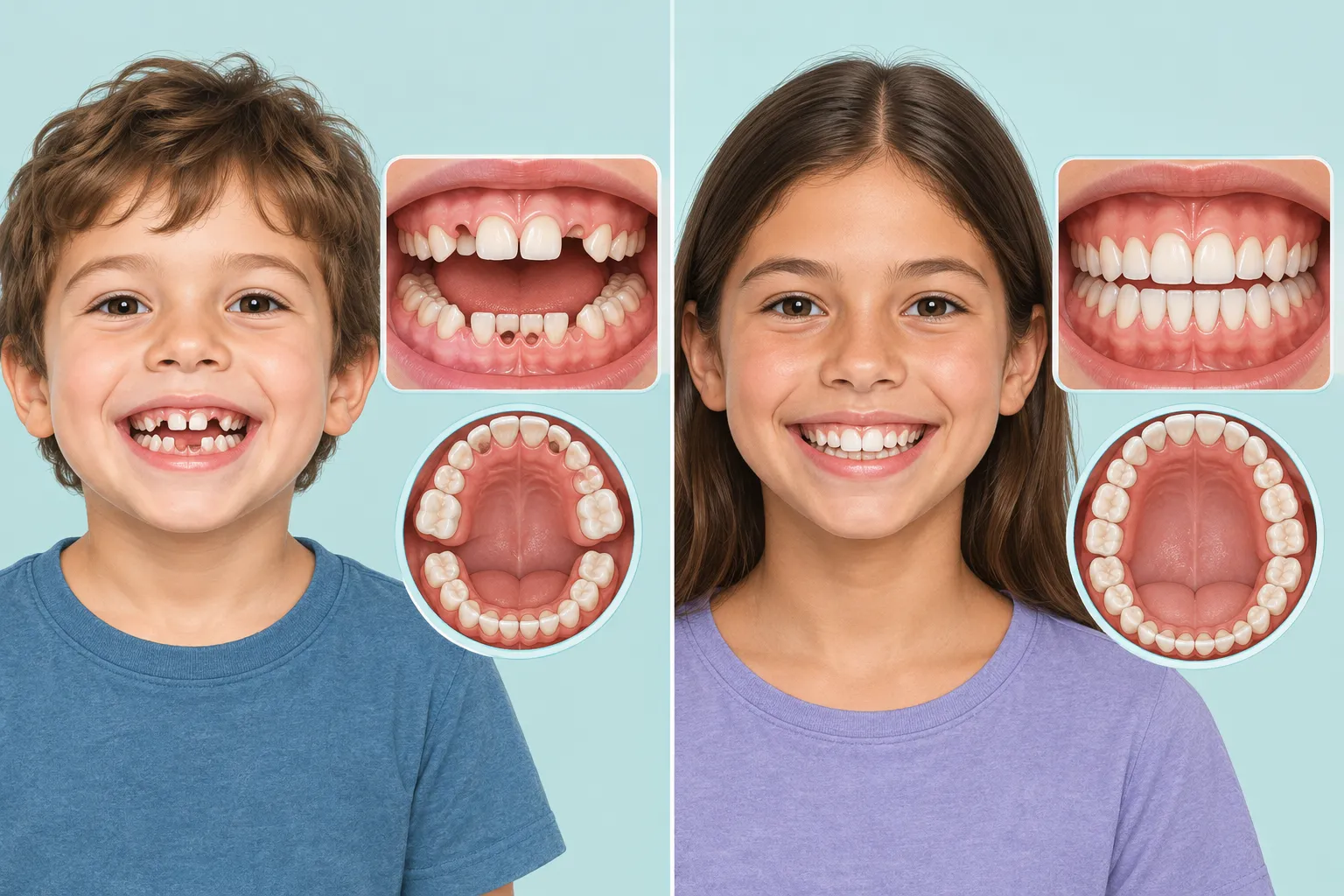
The American Association of Orthodontists recommends a first orthodontic check when a problem is noticed, but no later than age seven. Baby and permanent teeth are often present together at this age, so the orthodontist can examine the developing bite. Most families come away with a plan for follow-up, rather than braces that day.
The orthodontist looks at how the upper and lower teeth meet, whether there is room for incoming permanent teeth, and whether teeth are erupting as expected. A child whose bite is developing normally may simply be observed as more teeth come in.
When might a younger child need treatment?
Early or “phase one” care targets a developing problem while baby teeth remain. For a crossbite, a narrow upper jaw or teeth blocked from erupting, the orthodontist may suggest a palatal expander or limited braces. Some children will still need full treatment once their permanent teeth come in.
Book an assessment sooner if you notice a bite that shifts to one side, teeth that cannot fit into place, or front teeth that protrude substantially. The examination determines whether to act now or watch and wait.
What is the best age for braces for children?
Many children start full braces around 11 to 13. Enough permanent teeth have usually come in for comprehensive alignment, and the orthodontist can account for remaining jaw growth. A 10-year-old may be ready sooner, while a 13-year-old may need to wait for more teeth to erupt.
What about ages 9 and 10?
At nine, a child with many baby teeth may need monitoring or treatment for a specific problem rather than full braces. By 10, some children are ready to discuss a comprehensive plan; others benefit from watching how the jaw and teeth develop. A classmate getting braces says little about your child’s timing.
Are 12 and 13 good ages for braces?
Often, yes. Many preteens have enough permanent teeth for the orthodontist to plan full treatment. Depending on the bite and which teeth have erupted, the recommendation may be braces, aligners or more time for the teeth to come in.
Is 16 too late?
No. Teens can straighten teeth and address many bite problems at 16 or later. The orthodontist will assess remaining growth and the bite before choosing a plan. The teen also needs to brush around appliances, attend visits and use elastics or aligners as prescribed.
What determines the right start date?
Before recommending a start date, an orthodontist considers:
-
A crossbite or a permanent tooth blocked from erupting may need attention sooner than mild crowding.
-
Full braces are often easier to plan once the relevant permanent teeth arrive. An early appliance can help with a specific problem while baby teeth remain.
-
Remaining jaw growth can help with some bite corrections. Adults can still receive treatment, though their plan may differ.
-
Tooth decay and gum disease need attention before or during orthodontic treatment to protect dental health.
-
Braces call for careful brushing around brackets and food restrictions. Aligners need consistent wear. Good oral hygiene and a plan the patient can follow matter at any age.
At the consultation, ask what the orthodontist wants to correct and why now is the right time. Ask what might change if you wait and, if early treatment is proposed, whether a second phase is likely.
Can adults get braces?
Yes. Braces have no maximum age when the teeth and supporting tissues can be treated safely. Fillings, worn or missing teeth, gum problems and adult bone density may change the plan. The orthodontist may work with a dentist or another specialist before moving teeth. The American Association of Orthodontists explains how adult treatment differs from care for adolescents, including considerations for correcting bite issues.
“One out of three orthodontic patients are adults.” – American Association of Orthodontists
Orthodontic options for adults
Traditional metal braces use brackets and wires to move teeth and correct alignment or bite problems. They stay on the teeth, so there are no trays to keep track of, but you must clean around the brackets. Clear ceramic braces are a less noticeable fixed option. Clear aligners come out for meals and cleaning, and require consistent wear. Lingual braces sit behind the teeth, although not every practice offers them and they do not suit every case. For adults seeking a straighter smile, the right choice depends on the bite and the care each option requires.
For an adult with a jaw-related problem, the orthodontist has to plan around completed growth. The problem being corrected, along with adherence to treatment and retainer wear, affects treatment length and long-term results more than whether someone is 16, 40 or 70.
Orthodontic care for Passaic-area families
Eisenberger and Meister Orthodontics in Passaic sees children, teens and adults. Its options include early orthodontics, braces, clear braces, Invisalign and custom LightForce ceramic braces. During a consultation, a family can learn whether treatment should begin now or whether the orthodontist recommends watching the bite as it develops. Dental Monitoring and financing options can help make ongoing care easier to manage.

Families also visit Passaic from communities in surrounding counties:
|
County |
Surrounding towns and cities |
|---|---|
|
Passaic County |
Clifton, Paterson, Haledon, North Haledon, Prospect Park, Hawthorne, Totowa, Woodland Park, Little Falls, Wayne, Pompton Lakes, Wanaque, Ringwood, Bloomingdale and West Milford |
|
Bergen County |
Garfield, Lodi, Elmwood Park, Saddle Brook, Fair Lawn, Hasbrouck Heights, Hackensack, Maywood, Rochelle Park, Paramus, Wallington, Wood-Ridge, Carlstadt, East Rutherford, Rutherford and Lyndhurst |
|
Essex County |
Nutley, Belleville, Bloomfield, Glen Ridge, Montclair, Verona, Cedar Grove, Newark and Livingston |
|
Hudson County |
Secaucus, Kearny, Harrison, North Bergen, Union City, Weehawken, Hoboken and Jersey City |
|
Morris County |
Lincoln Park, Montville, Pequannock, Riverdale and Boonton |
Travel times vary across these towns. Families should weigh the proposed visit schedule alongside the treatment plan.
Arrange a first orthodontic check by seven. Full braces often begin around 11 to 13, while treatment at 16 or in adulthood remains possible. Eisenberger and Meister Orthodontics can examine your or your child’s bite, explain whether treatment is needed now, and plan around the timing that makes clinical sense.
FAQ
Can I get braces at the age of 40?
Yes. At 40, your orthodontist will assess your teeth, gums, supporting bone and existing dental work before recommending braces or another option. Your birthday alone does not decide whether you can begin.
Can a 70 year old get braces?
Yes. At 70, the health of your teeth, gums and supporting bone matters more than your age. The orthodontist will also consider the bite problem before proposing treatment.
Is age 10 too early for braces?
Some children need targeted care at 10. Others need time for more permanent teeth to come in before full braces. An orthodontic evaluation can tell you which course fits your child.
How much would braces cost for a 12 year old?
There is no set price based on being 12. The appliance and complexity of treatment affect cost. A consultation provides a plan-specific estimate and a chance to discuss financing.