
Angel Aligner and Invisalign are removable clear aligners prescribed by clinicians. When comparing Angel Aligner vs Invisalign in 2026, focus on how your orthodontist plans complex tooth movements, checks progress, and adjusts treatment if a tooth does not move as expected. A brand name alone cannot tell you which plan will suit your bite or budget.
With either system, you remove the trays for meals and clean your teeth before putting them back in. Your orthodontist can assess whether aligners suit your bite and tell you which systems the office provides. Eisenberger and Meister Orthodontics offers Invisalign in Passaic; it does not list Angel Aligner among its services.
Angel Aligner vs Invisalign at a glance
|
Decision point |
Angel Aligner |
Invisalign |
|---|---|---|
|
Planning platform |
iOrtho digital treatment planning |
ClinCheck digital treatment planning |
|
Trays |
Proprietary clear aligner materials; product options vary |
Proprietary SmartTrack material |
|
Added movement control |
Attachments and, when prescribed, integrated angelButton anchorage for elastics |
Attachments and, when prescribed, elastics with clinician-selected hardware |
|
Day-to-day wear |
Removable for eating and hygiene; sustained wear is necessary |
Removable for eating and hygiene; sustained wear is necessary |
|
Progress checks |
Scheduled by the treating practice; a plan may need adjustment |
Scheduled by the treating practice; a plan may need adjustment |
|
Price and timing |
Determined by the proposed case plan and provider |
Determined by the proposed case plan and provider |
Both systems move teeth in stages with custom trays. Your starting bite, bone and gum health, wear habits, and orthodontist’s decisions all affect the result. The features in the table cannot predict how your teeth will respond.
How each system plans tooth movement
Digital setup and case customization
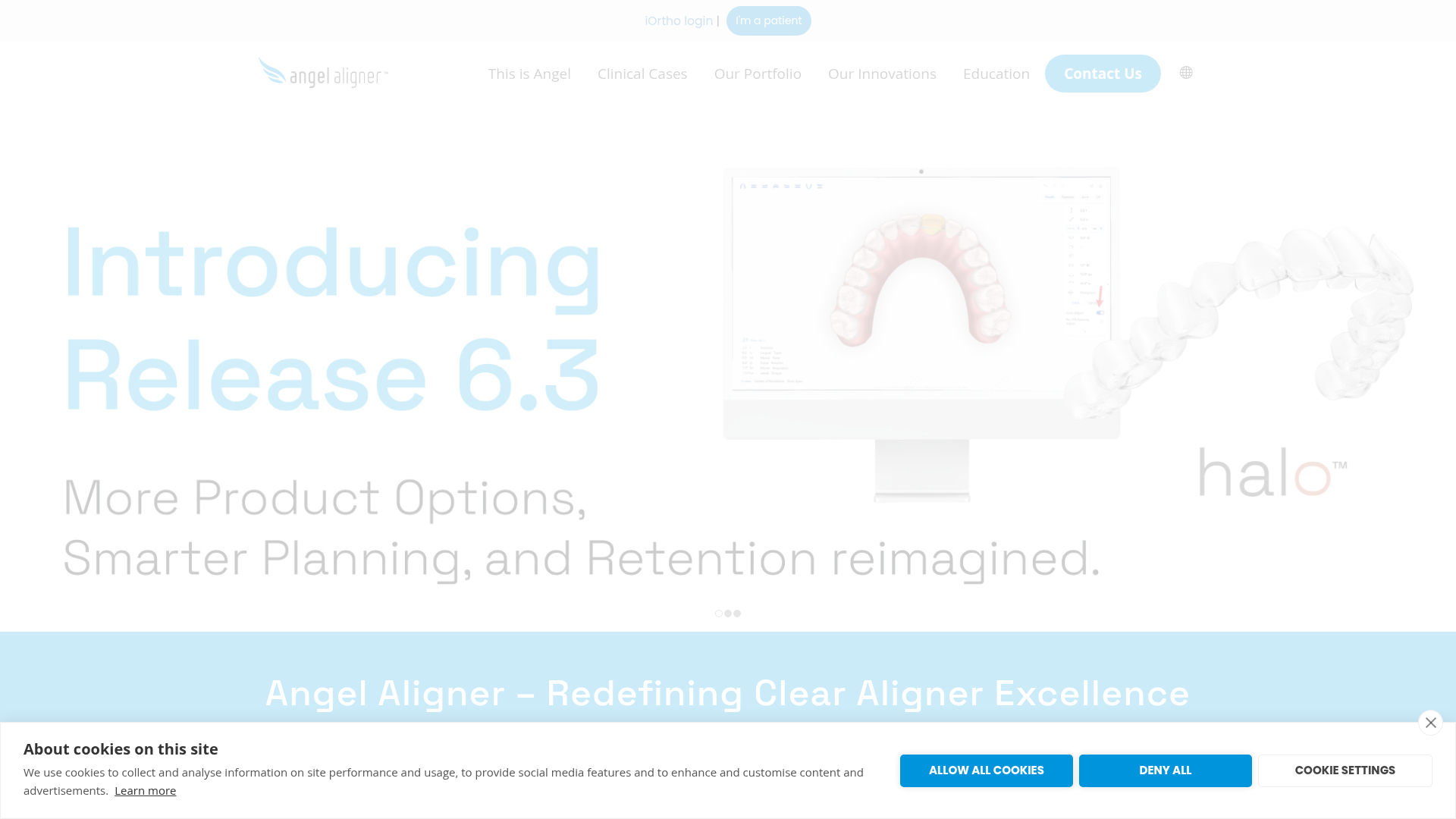
Your orthodontist starts with a clinical evaluation of your teeth and bite before planning movements in software. Angel Aligner’s iOrtho platform provides digital simulations and planning tools; Invisalign uses ClinCheck. With either system, your orthodontist should examine the proposed setup. A computer preview cannot guarantee the finished result.
Ask your orthodontist which tooth movement will be hardest and how the plan will control it. A rotated tooth, a complex bite discrepancy, or a tooth that needs to move vertically may need more than a tray alone. Both systems can use tooth-colored attachments: small bonded shapes that help the tray grip a tooth. For bite correction, your orthodontist may prescribe elastics. Angel Aligner’s angelButton is an anchorage point built into the tray for elastics, though your plan may not call for it.
Ask what happens if a tooth does not follow the digital plan. Your orthodontist may recommend a rescan and additional trays, called refinements. Find out whether the fee includes extra trays, visits, and final retainers.
Comfort and material
Invisalign calls its material SmartTrack. Angel Aligner uses proprietary materials across its product range. A new tray may feel snug with either system. Tell your orthodontist about a sharp edge, persistent soreness, or a tray that will not seat. If appearance matters to you, ask about the planned attachments and elastics as well as the trays: both brands are nearly invisible at a glance, but those added parts can show.
Claims that one material always stains less, hurts less, or moves teeth faster cannot settle your choice. Ask which tray configuration and attachments your orthodontist would use for you.
What wearing either aligner system is like
Take out the trays for meals and drinks other than water. Brush before putting them back when possible. Clean the trays as your orthodontist directs, avoid hot water that can distort plastic, and carry a case. A new tray may feel tight; call your treating office if pain persists or the tray stops fitting.
Consistent wear is essential for both systems. A teen needs somewhere to put the trays at lunch or during sports, preferably a case rather than a napkin. Frequent coffee breaks or long meals can make wear harder for adults. If the trays will spend too much time out of your mouth, traditional braces may be more dependable.
“Your doctor will tell you how long to wear your aligners each day, but typically people wear their Invisalign aligners 20 to 22 hours a day to get the best results.” – Invisalign Frequently Asked Questions
You will still need retainers after active treatment because teeth can shift again. Ask which type your orthodontist plans and how long you should wear them.
Monitoring, treatment time, and cost
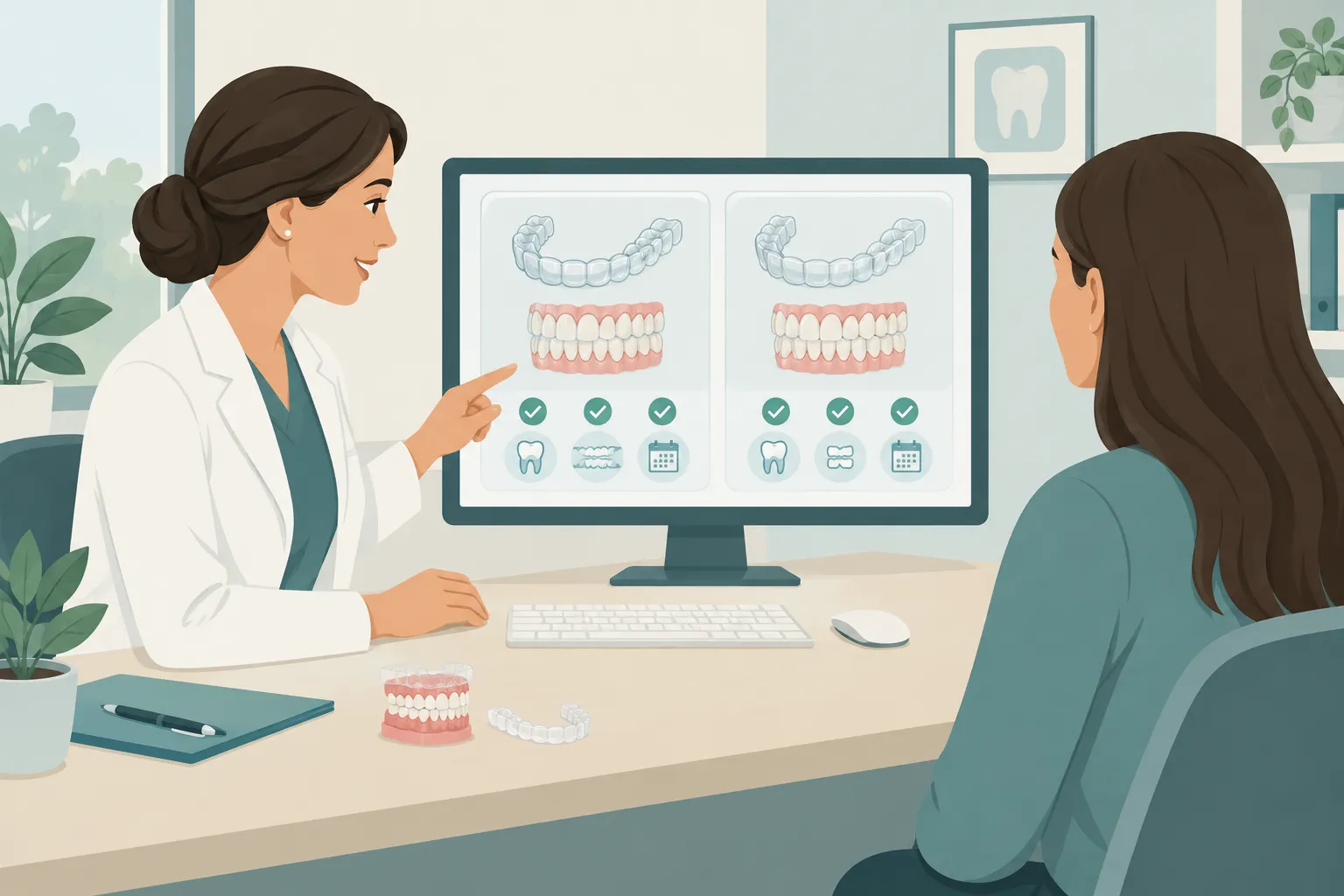
At progress checks, your orthodontist sees whether the trays fit and your teeth are moving as planned. Photos or remote check-ins can help between visits, while problems needing hands-on care still call for an examination. Remote monitoring depends on the practice’s workflow, not the tray brand. Eisenberger and Meister Orthodontics offers Dental Monitoring; ask how it would fit into your Invisalign plan.
No brand has a universal speed advantage. If two quotes give different timelines, compare the intended final bite, attachments, possible refinements, and visits. Case complexity, treatment duration, and the work involved can differ between a minor alignment plan and a bite-correction plan.
A four-month quote also tells you little about price until you know which teeth need to move and what the fee covers. Ask for a written breakdown of records, trays, visits, refinements, retainers, insurance benefits, and financing. Eisenberger and Meister Orthodontics offers complimentary consultations and financing support, including 0% APR options without a hard credit check, so families can discuss payments alongside the clinical plan.
Questions to ask before choosing a brand
If you have quotes from more than one North Jersey office, bring them to a consultation and ask:
-
Am I a candidate for aligners? Ask which part of your bite is difficult to correct and whether braces or a combined approach would give better control.
-
Which system do you actually offer and use for cases like mine? A practice may specialize in one platform; do not assume both are available.
-
What will be visible? Request a description of planned attachments, elastics, and any other hardware.
-
How will you monitor progress? Find out when visits or photo check-ins occur and what triggers an in-person reassessment.
-
What happens if teeth do not track? Clarify the process and fee for rescans and refinement aligners.
-
What exactly does the quote cover? Compare total fees and retention plans, not just a monthly payment.
Invisalign care in Passaic and nearby North Jersey towns
Eisenberger and Meister Orthodontics provides Invisalign treatment for children, teens, and adults in Passaic, New Jersey. The practice has 38 years of experience, has treated more than 15,000 smiles, and holds Invisalign Sapphire Provider status. Those credentials do not guarantee a particular outcome; your treatment plan still has to fit your teeth. The practice also offers braces and custom LightForce ceramic braces. At a complimentary consultation, you can discuss which aligner therapy is best suited to your bite, along with scheduling, Dental Monitoring, financing, and what to expect from its warm, spa-like office.
Families travel to Passaic from across North Jersey. For orientation, nearby communities are grouped by county below; the list does not mean the practice has offices in these towns:
|
County |
Nearby towns and cities |
|---|---|
|
Passaic County |
Passaic, Clifton, Paterson, Haledon, Prospect Park, Hawthorne, North Haledon, Totowa, Woodland Park, Little Falls, Wayne, Pompton Lakes, Wanaque, Ringwood, West Milford, Bloomingdale |
|
Bergen County |
Garfield, Wallington, Lodi, Hasbrouck Heights, Wood-Ridge, Moonachie, Carlstadt, Rutherford, East Rutherford, Lyndhurst, North Arlington, Saddle Brook, Elmwood Park, Fair Lawn, Hackensack, Maywood, Rochelle Park, Paramus, Ridgewood |
|
Essex County |
Nutley, Belleville, Bloomfield, Montclair, Glen Ridge, Verona, Cedar Grove, West Orange, Newark, East Orange, Orange, Livingston, Caldwell, West Caldwell, North Caldwell |
|
Hudson County |
Secaucus, Kearny, Harrison, North Bergen, Union City, Weehawken, Hoboken, Jersey City, Bayonne, West New York |
|
Morris County |
Lincoln Park, Pequannock Township, Riverdale, Montville, Boonton, Parsippany-Troy Hills, Denville, Morristown |
|
Union County |
Elizabeth, Hillside, Union Township, Springfield, Kenilworth, Roselle Park, Cranford |
The bottom line
Choose the aligner plan that addresses the movements your teeth need, with progress checks and a written fee you understand. Ask how much experience your provider has with the proposed system. A short advertised timeline cannot tell you whether the final bite will meet your goals.
Considering Invisalign near Passaic? Book a complimentary consultation with Eisenberger and Meister Orthodontics to discuss a plan for your bite. Its Invisalign Sapphire Provider experience and Dental Monitoring option can help you decide whether aligners or another treatment fit your routine.
FAQ
What are angel aligners?
Angel Aligner is a doctor-planned clear aligner system that uses a sequence of removable trays to move teeth. Its iOrtho planning platform and optional features such as integrated anchorage for elastics support a clinician’s treatment plan.
What are the key differences between clear aligners and Invisalign?
Clear aligners are the treatment category; Invisalign is one brand within that category, as is Angel Aligner. Brands differ in planning software, materials, and optional movement-control features, while the orthodontist’s plan and your consistent wear determine how the treatment proceeds.
How much should 4 months of Invisalign cost?
Four months alone does not determine a price. The fee depends on the treatment plan and what is included, particularly visits, additional aligners, and retainers; request a written estimate after an examination.