
Baby teeth not falling out? An orthodontist in NJ can assess where your child’s permanent teeth are and whether they have room to come in. A stubborn baby tooth may need nothing more than observation. If baby teeth fall out early, the gap may need attention, though braces are not inevitable. For families in Passaic and across North Jersey, start with a dentist or pediatric dentist for pain, decay or an injury; see an orthodontist if eruption, spacing or the bite looks off.
When should baby teeth fall out?
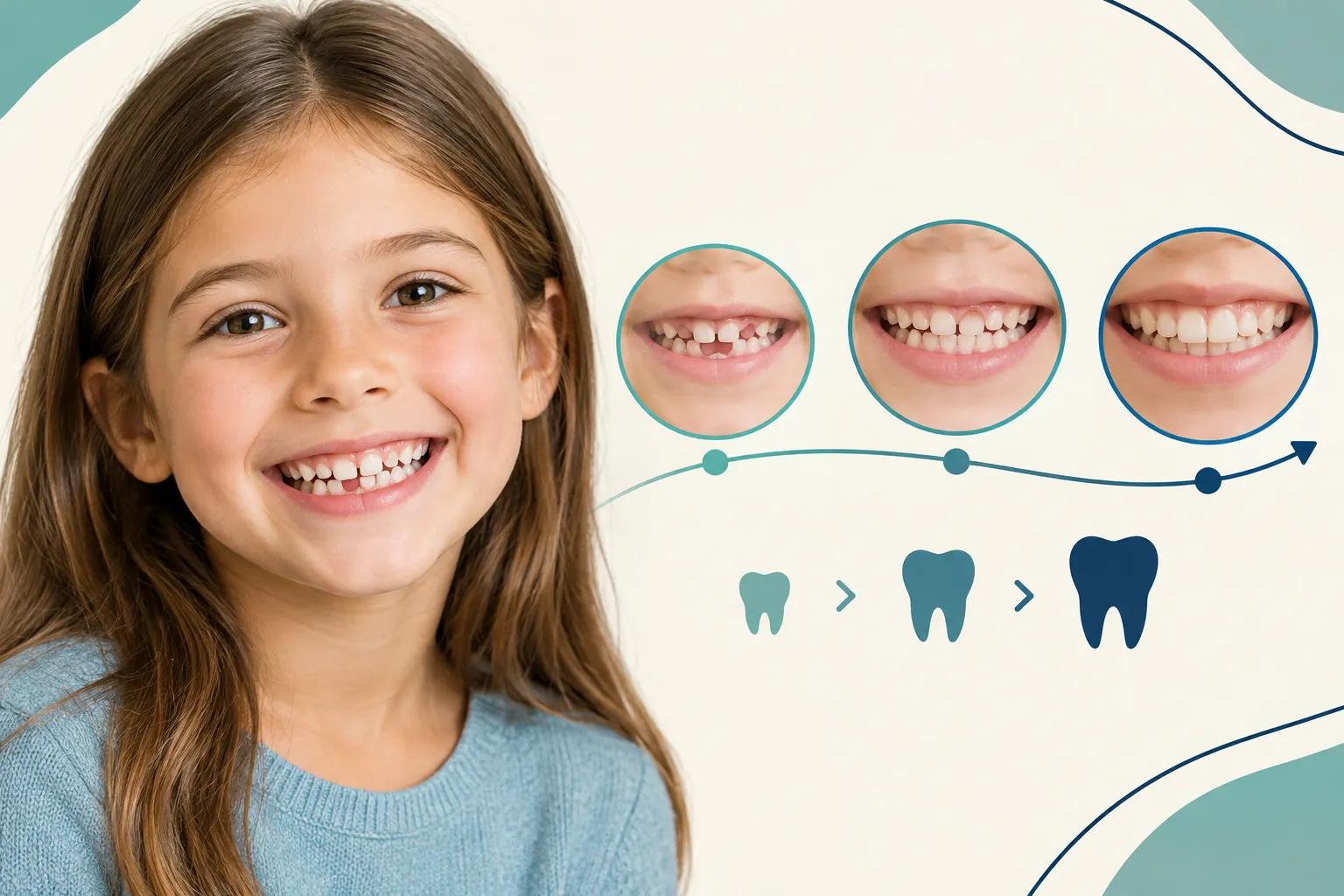
Children lose teeth at different rates. Lower front baby teeth often go before back baby teeth, and the mix of baby and permanent teeth can last for years. Your child’s dental history tells you more than the date a classmate lost a tooth.
The American Association of Orthodontists (AAO) recommends a first orthodontic checkup no later than age 7. Around age seven, early orthodontic evaluations give the orthodontist a chance to assess eruption and jaw growth while baby and permanent teeth are both present. They can identify a developing problem without assuming your child needs braces. If something looks unusual before age 7, arrange an assessment sooner.
|
What you notice |
Sensible next step |
|---|---|
|
Baby teeth are still present, but your child is comfortable and dental visits show normal development |
Continue regular dental care and arrange the age-seven orthodontic checkup. |
|
One baby tooth remains while the matching tooth on the other side has changed, or an adult tooth is appearing out of position |
Arrange an assessment of eruption and space. |
|
A baby tooth was lost because of decay or injury |
Contact your child’s dentist promptly; ask whether the gap needs monitoring or space protection. |
|
Pain, swelling or a damaged tooth |
Contact a dentist promptly rather than waiting for an orthodontic appointment. |
Baby teeth not falling out? Orthodontist NJ evaluation signs
Why do some baby teeth stay in place?
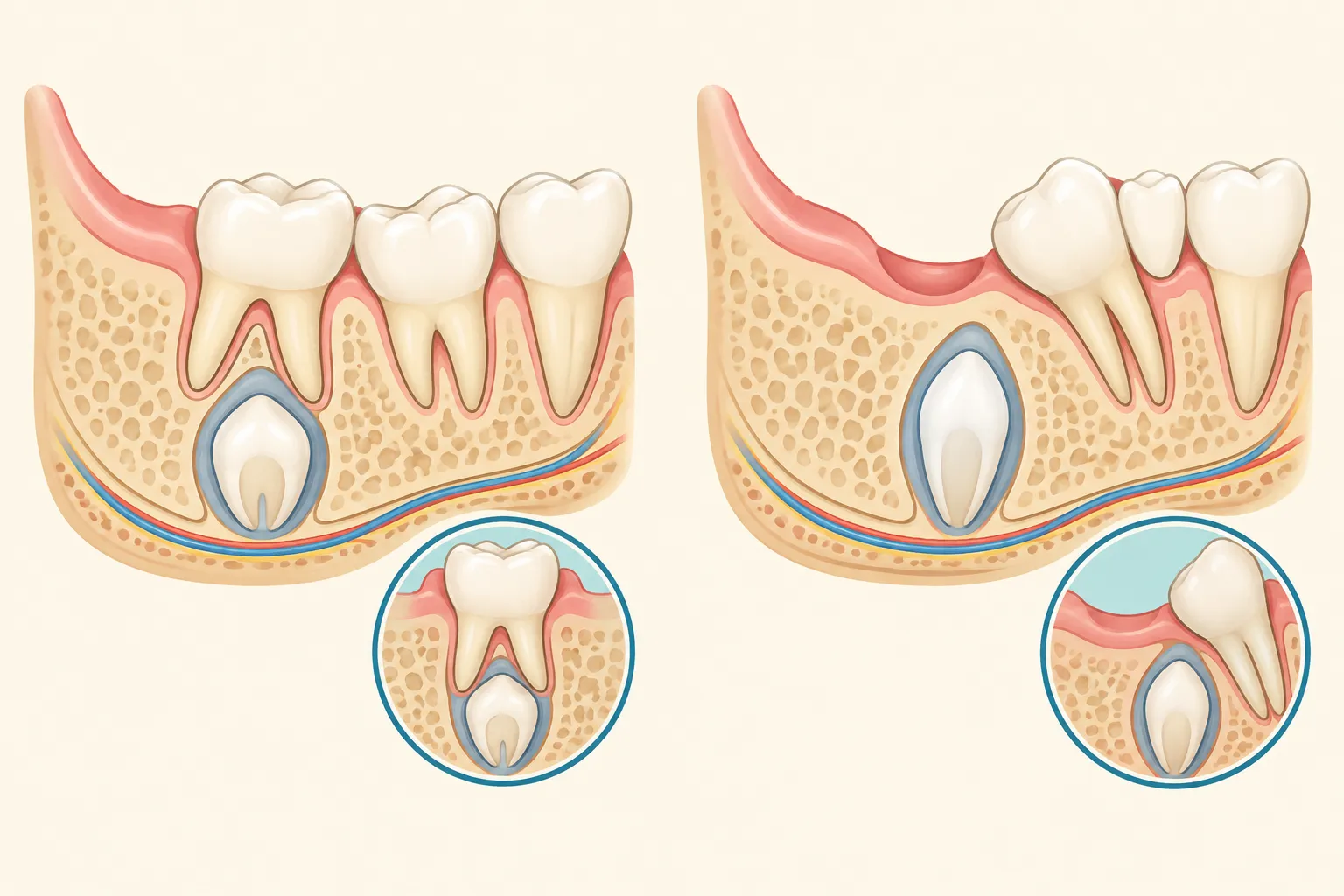
A baby tooth loosens as its roots dissolve and the permanent tooth develops. If it stays firm, the permanent tooth may be late, coming in on a different path or short of space. In some children, there is no permanent replacement. You cannot tell which of these applies by looking at the baby tooth. A dentist or orthodontist can examine it and, if needed, use an X-ray to locate the permanent tooth and assess the remaining roots. This helps distinguish normal variation from development issues that need attention.
You might spot an adult tooth behind a baby tooth that has not loosened. Have a dentist assess it, especially if the new tooth looks crowded. Leave a firmly attached tooth alone rather than trying to pull it out. Whether it needs removal depends on the adult tooth’s position, available space and your child’s bite. Crowded teeth or a change in jaw alignment can call for early orthodontic care even when the baby tooth is healthy. Regular dental visits remain an important part of preventive care and oral health while your child’s teeth are developing.
Signs that merit an orthodontic evaluation
-
A permanent tooth has erupted but the baby tooth is still in place.
-
The left and right sides are changing very differently, or a tooth seems blocked from coming in.
-
Nearby teeth are crowding into a gap, or a new tooth is emerging at an unusual angle.
-
Your child has trouble biting or chewing, the upper and lower teeth meet awkwardly, or the upper teeth jut out.
-
Baby teeth were lost unusually early or remain in place much longer than expected for your child’s development.
An orthodontist can tell you what to watch and when to return. Many children who come in for an early checkup do not need treatment then.
What if a baby tooth falls out too early?
Baby teeth hold space for adult teeth as well as helping children chew. When a baby molar goes early, neighboring teeth may move into the opening before its replacement is ready. The adult tooth can then have trouble coming in straight. This space-holding role is an important part of your child’s developing bite. The risk depends on which tooth was lost, the size of the gap and how far along its replacement is.
Call your child’s dentist right away after a fall or collision knocks out a baby tooth, or if decay led to its loss. Do not put a knocked-out baby tooth back in the socket. Seek prompt dental care for bleeding, pain or an injured lip or jaw. The dentist can assess the injury and the developing adult tooth, then involve an orthodontist if the bite or gap needs attention.
Does an early gap always need a space maintainer?
Monitoring may be enough if the adult tooth is close to erupting and still has room. Where neighboring teeth may drift, a dentist or orthodontist may consider a space maintainer to hold the opening. The American Academy of Pediatric Dentistry advises considering space maintenance after premature primary-tooth loss, while noting that evidence for preventing future bite problems is limited. Your child’s tooth and bite determine the plan.
If a maintainer is fitted, keep the area clean, avoid foods that might dislodge it and attend follow-up appointments so its fit and the incoming tooth can be monitored. Call the office if it becomes loose or uncomfortable.
When might early intervention help?
At an orthodontic evaluation, the orthodontist looks at where the adult teeth are coming in, how much room they have, the child’s jaw growth and the bite. You may leave with a schedule for watching the teeth, or the orthodontist may work with your child’s dentist on a retained tooth or an early gap. If the bite is developing unevenly, early intervention may help; whether specific orthodontic treatment is needed early depends on the individual bite. An evaluation while baby teeth remain gives you those options without committing your child to treatment. If monitoring is enough now, treatment options can be revisited later.
|
Finding |
Possible plan |
|---|---|
|
Permanent tooth is developing normally and has room |
Monitor eruption at scheduled visits. |
|
Retained baby tooth or adult tooth erupting off course |
Assess position and discuss whether dental removal, observation or orthodontic guidance is appropriate. |
|
Early loss with a narrowing gap |
Consider space maintenance or another plan based on the tooth and bite. |
|
Crowding or a jaw or bite issue that benefits from early attention |
Discuss targeted early orthodontic treatment for bite correction or room for new teeth; comprehensive braces, if needed, may come later. |
Eisenberger and Meister Orthodontics in Passaic offers a complimentary consultation and a treatment plan tailored to your child’s stage of development. Options include early orthodontics, palatal expanders, braces and Invisalign for children and teens. The experienced team has 38 years in practice and has treated more than 15,000 smiles. If your child needs treatment, the team can discuss financing, including 0% APR options with no hard credit check, along with how Dental Monitoring and its technology may fit the plan. Ask the team about insurance coverage for any recommended care.
North Jersey families near Passaic
Passaic is close to communities in several North Jersey counties. The list below includes towns and cities within or near a 20-mile radius; some locations are farther by road.
|
County |
Surrounding communities |
|---|---|
|
Passaic |
Clifton, Paterson, Haledon, North Haledon, Prospect Park, Hawthorne, Wayne, Little Falls, Totowa, Woodland Park, Pompton Lakes, Wanaque, Bloomingdale, Ringwood, West Milford |
|
Bergen |
Garfield, Lodi, Wallington, East Rutherford, Rutherford, Carlstadt, Wood-Ridge, Hasbrouck Heights, Teterboro, Moonachie, South Hackensack, Hackensack, Saddle Brook, Elmwood Park, Fair Lawn, Glen Rock, Ridgewood, Paramus, Maywood, Rochelle Park, Bogota, Teaneck, Englewood, Fort Lee, Cliffside Park, Edgewater, Bergenfield, New Milford, River Edge, Oradell, Emerson, Westwood, Hillsdale, Wyckoff, Franklin Lakes, Oakland, Mahwah |
|
Essex |
Nutley, Belleville, Bloomfield, Glen Ridge, Montclair, Verona, Cedar Grove, West Orange, East Orange, Orange, Newark, North Caldwell, Caldwell, Fairfield, Livingston, Roseland, Maplewood, South Orange, Millburn |
|
Hudson |
Secaucus, Kearny, Harrison, North Bergen, Union City, Weehawken, West New York, Guttenberg, Hoboken, Jersey City, Bayonne |
|
Morris |
Lincoln Park, Montville, Pequannock, Riverdale, Butler, Kinnelon, Boonton, Parsippany-Troy Hills, Mountain Lakes, Denville, East Hanover, Florham Park, Morristown, Madison |
|
Union |
Hillside, Union, Elizabeth, Roselle Park, Kenilworth, Springfield, Summit, New Providence |
The next step for your child
Call your child’s dentist first for a painful, injured or decayed tooth. For a baby tooth that will not loosen, an adult tooth coming in behind it or a gap that appears to be closing, book an orthodontic evaluation. You may only need a schedule for keeping an eye on it. Eisenberger and Meister Orthodontics offers North Jersey families a complimentary consultation in Passaic to assess timing and available space, then talk through what your child needs.
FAQ
Can you get braces without losing all your baby teeth?
Yes. An orthodontist can evaluate the bite while baby and permanent teeth are both present and recommend treatment if a specific issue needs early attention. Many children need monitoring instead, and comprehensive braces, if needed, may come later.
Is there a condition where baby teeth don’t fall out?
Yes. A baby tooth can stay in place if its permanent replacement is missing, late or coming in at an unusual angle. A dentist or orthodontist can examine the tooth and use an X-ray when needed to decide whether to monitor or treat it.
How late is too late to lose baby teeth?
There is no single cutoff for every tooth or child. Arrange an evaluation if an adult tooth comes in while the baby tooth stays put, one side lags far behind the other, or you notice crowding or a change in the bite.
Why are my 8 year old teeth not coming out?
Children lose teeth at different rates, and some baby teeth remain at eight. If your eight-year-old’s teeth are not loosening, a dentist or orthodontist can assess the eruption pattern, especially when an adult tooth is already visible or the bite is changing.
Is it normal for a 7-year-old to not lose baby teeth?
Yes, it can be normal, though age alone cannot tell you whether the adult teeth have enough room. The AAO recommends an orthodontic checkup by age seven even if baby teeth remain. Many children only need monitoring.