
Braces and orthodontics go together: dental braces straighten teeth and help correct bad bites, while orthodontic care includes diagnosis, treatment planning and retention. If you are choosing braces for yourself or your child, compare metal, clear ceramic and custom options by appearance, design and daily care.
How braces and orthodontics work together
Brackets and an archwire apply controlled pressure to move teeth according to a treatment plan. An orthodontist may also use elastics or another appliance for bite correction. Crowded teeth, gaps and teeth that do not meet properly are orthodontic problems worth assessing. The goal is a functional bite and healthy teeth, not just a beautiful smile.
An orthodontist examines the bite and reviews scans or other records before recommending treatment, including braces or aligners. The American Association of Orthodontists recommends a first check-up by age 7; that does not mean treatment must start then.
Compare metal, clear ceramic and custom braces
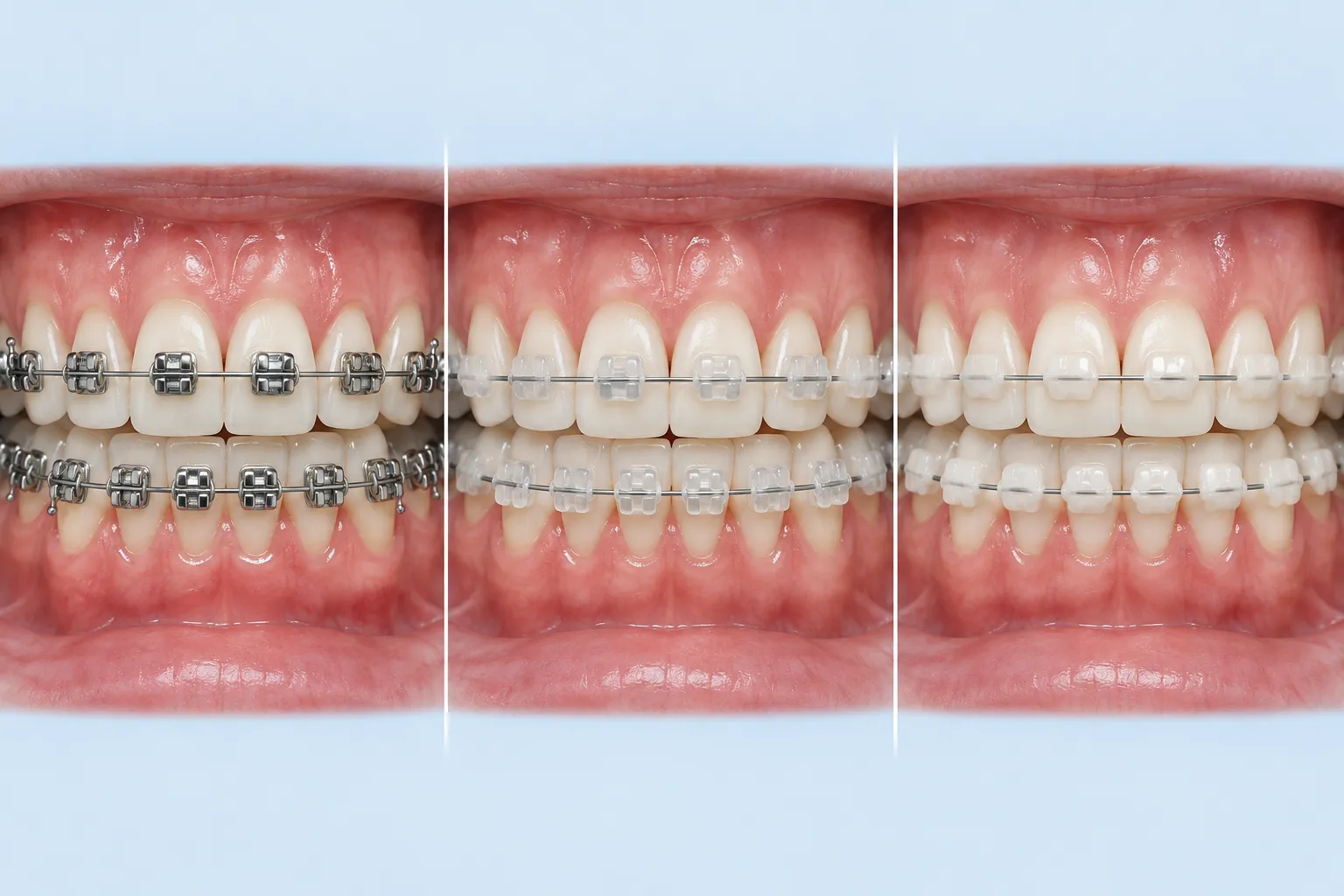
All three options are fixed during braces treatment. They differ in material, visibility and bracket design, but all require careful cleaning and a retainer afterward.
|
Option |
What you see |
How it works |
Main tradeoff |
|---|---|---|---|
|
Traditional metal braces |
Visible metal brackets and wire; colored or subtle elastic ties may be available |
Standard brackets and an archwire guide teeth through a tailored treatment plan |
Durable and familiar, but the most noticeable choice here |
|
Clear ceramic braces |
Tooth-colored or clear brackets; the wire may still show |
The same fixed-brace principle as metal brackets |
Less conspicuous, but ceramic brackets can be more fragile |
|
Custom braces, such as LightForce |
Individually designed ceramic brackets; still visible up close |
Digital planning shapes brackets for each tooth and its planned position |
More individualized bracket design, but not a guarantee of fewer visits or a shorter course |
Traditional metal braces
Traditional metal braces can address a broad range of alignment and bite problems. They stay on, so there are no trays to remember, but the brackets and wires need careful cleaning. Ask whether colored elastic ties are available.
Clear ceramic braces
Clear braces use tooth-colored ceramic brackets, though the wire may still show. Ceramic can be more fragile than metal; ask how your bite and eating habits affect the choice.
Custom braces and LightForce
LightForce uses a digital model to design 3D-printed ceramic brackets for individual teeth. See the practice’s LightForce and traditional braces comparison. Ask whether custom placement could simplify your appointments; faster treatment is not guaranteed.
Which option fits your priorities?
Choose based on your bite, visibility preferences and the care each option needs. Ask what custom bracket planning would change in your case.
Considering Invisalign instead? Aligners come out for meals and cleaning but must be worn as directed. Fixed braces remove that daily decision, though you must clean around hardware and avoid damaging foods. Ask which approach suits your bite.
How long do braces take to work?
Treatment length depends on your bite, tooth movement and appliance care. Request an estimate based on your examination rather than a promise tied to bracket type.
When is early orthodontic treatment useful?
An early assessment can identify children who may benefit from an expander or limited treatment. Others need only monitoring until later.
What happens during treatment?
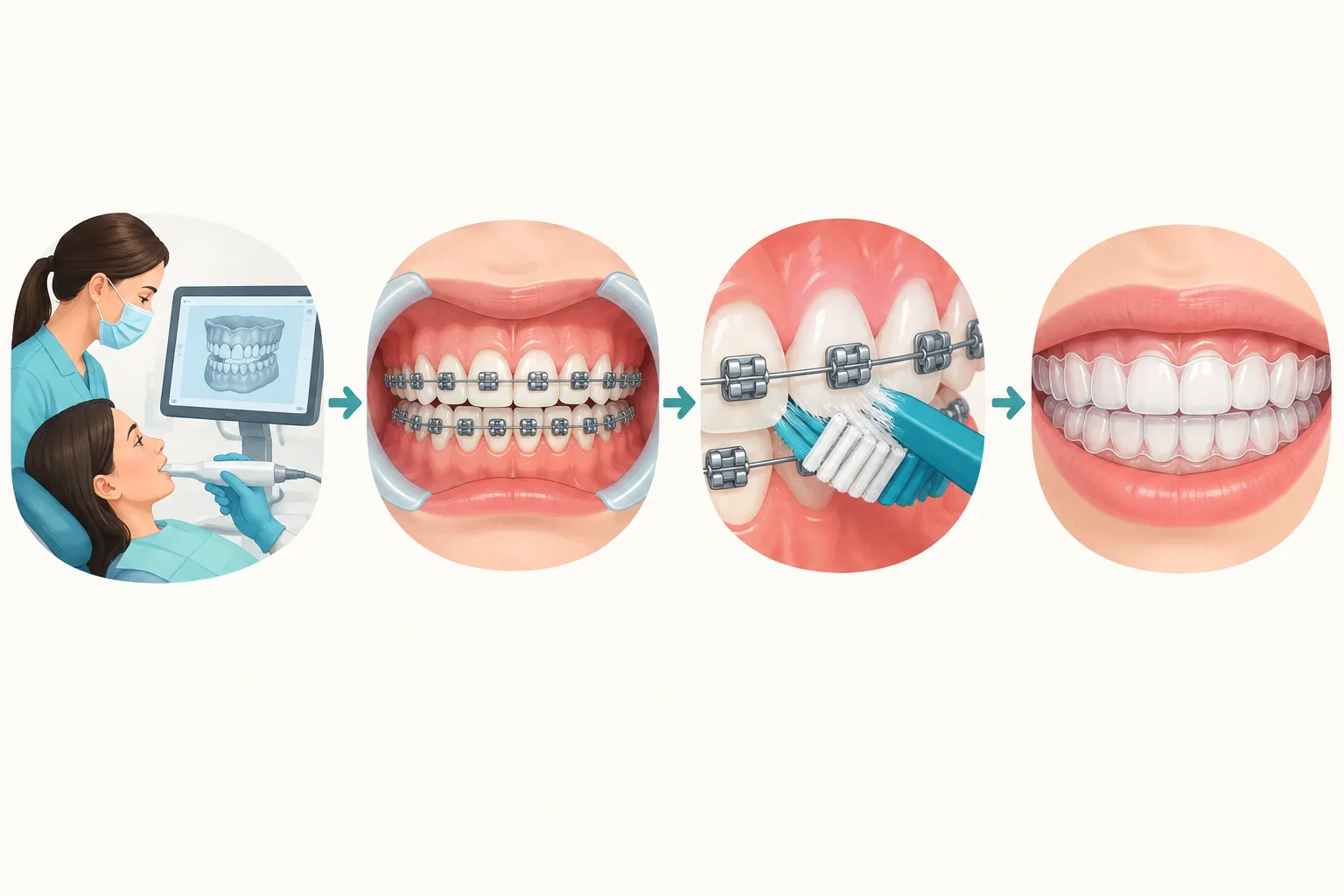
At the consultation, the orthodontist checks your bite and records. Cavities may need attention before brackets are bonded. Tenderness after placement or adjustment is common.
At follow-ups, the orthodontist checks movement and adjusts the appliance. Brush around brackets with fluoride toothpaste, clean under wires and between teeth daily, and keep dental checkups. Plaque buildup increases the risk of decay and gum disease. Avoid hard or sticky foods, including chewing gum if your orthodontist advises against it. For broken wires or brackets, call the office for guidance.
After treatment, retainers help prevent shifting. Ask about wear, replacements and costs early.
Questions to ask your orthodontist
Bring these questions to your consultation:
-
Which options fit my bite, and would custom brackets change the plan?
-
How long might treatment take, and how often are visits?
-
Will I need another appliance, including braces accessories such as elastics?
-
What do the quote, insurance and financing cover, including repairs and retainers?
-
For a child, is treatment needed now or is monitoring better?
Get the plan and financial terms in writing before deciding.
Orthodontic care in Passaic and nearby communities
At Eisenberger and Meister Orthodontics in Passaic, NJ, children, teens and adults can compare metal braces, clear braces, LightForce and Invisalign at a complimentary consultation. The team uses digital scans for planning and also helps with broken braces.
The Passaic office also welcomes families from nearby communities, grouped here by county: Passaic County: Clifton, Paterson, Haledon, North Haledon, Prospect Park, Woodland Park, Totowa, Little Falls and Wayne; Bergen County: Garfield, Wallington, Rutherford, East Rutherford, Carlstadt, Wood-Ridge, Hasbrouck Heights, Lodi, South Hackensack, Moonachie, Teterboro, Lyndhurst and North Arlington; Essex County: Nutley, Belleville, Bloomfield, Montclair, Glen Ridge and Cedar Grove; and Hudson County: Kearny, Harrison and Secaucus. Families can discuss financing at a complimentary consultation, including 0% APR options with no hard credit checks. Ask which terms apply to your plan.
Make the choice with a plan, not a picture
No bracket type is best for every bite. To compare your options, contact Eisenberger and Meister Orthodontics for a personalized treatment and payment plan.
FAQ
Is orthodontics the same as braces?
No. Orthodontics diagnoses and treats alignment and bite problems; braces are one possible appliance. Care may also involve aligners, an expander or retainers.
Can I go to a different orthodontist with braces?
Yes, but the new orthodontist must assess your appliance and plan first. Request your records and ask how transferring might affect costs and timing.