
Braces at age 10 can make sense if a developing bite or space problem needs attention now. If more permanent teeth need time to come in, an orthodontist may recommend waiting. Your child’s bite and stage of growth matter more than the birthday.
An evaluation gives you a plan without committing your child to braces. The American Association of Orthodontists recommends a first checkup by age 7. If your child missed that visit, age 10 is a good time to ask.
“Only a few orthodontic problems will need correction around age 7.” – American Association of Orthodontists
Are braces at age 10 too early?
No. At 10, many children still have a mix of baby and permanent teeth. Depending on the bite, an orthodontist may recommend a limited first phase of treatment, plan for comprehensive braces later, or watch how the teeth develop.
Two children of the same age can need very different care. One may have a crossbite that affects how the jaws fit together; the other may have mild crowding worth reassessing as the remaining adult teeth come in. An early appointment helps the orthodontist tell the difference.
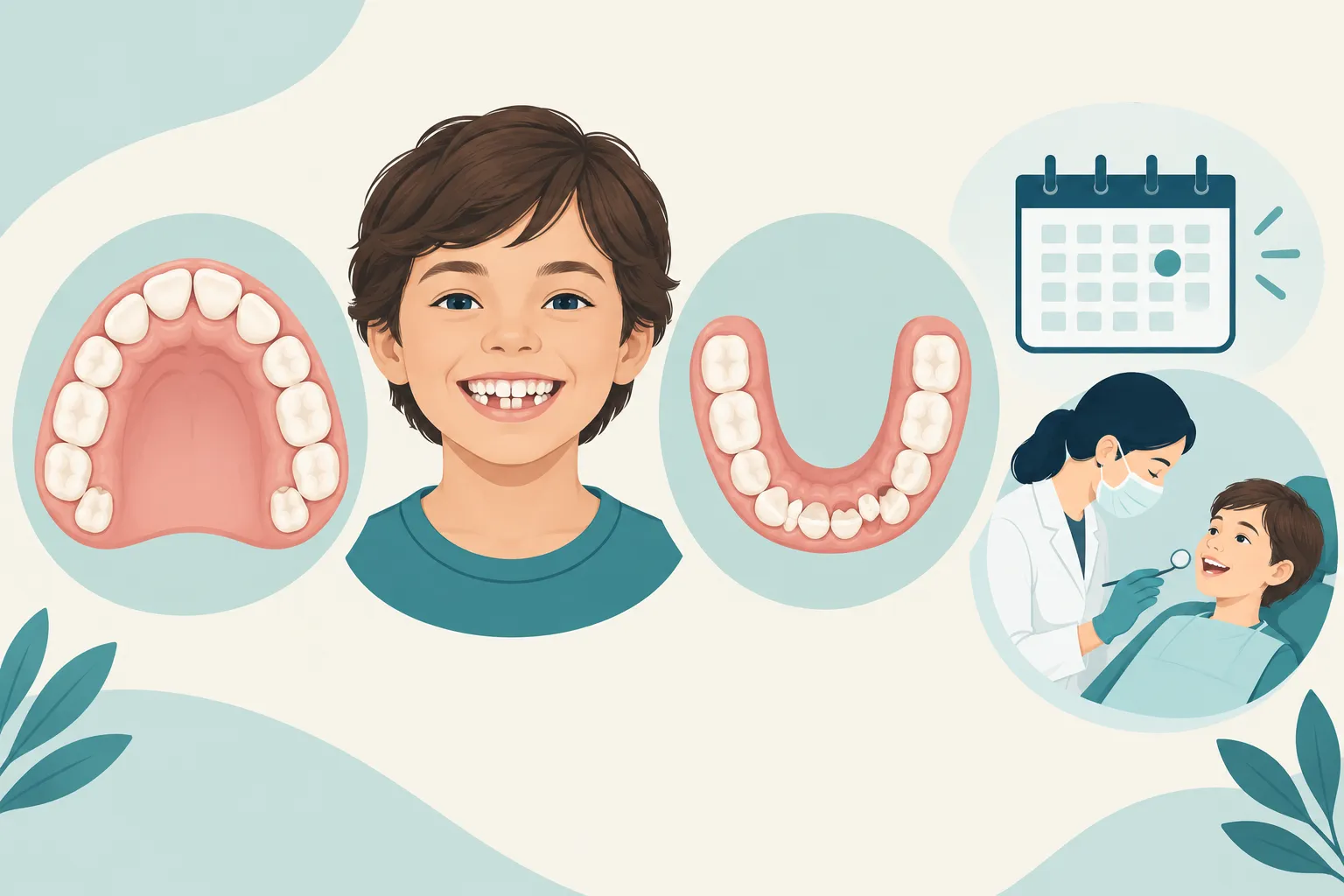
How orthodontists decide whether to start now
An orthodontist assesses your child’s teeth and jaws as they are today, then considers how growth and new teeth could affect the plan:
|
What the orthodontist assesses |
Why it matters at age 10 |
|---|---|
|
Permanent tooth eruption |
Teeth still coming in may change the timing and scope of braces. A tooth with no clear path into place may call for earlier planning. |
|
Space and crowding |
The issue is whether there is room for the permanent teeth, not simply whether the front teeth look crooked. |
|
Bite and jaw relationship |
A crossbite, underbite or pronounced overjet can have a different timetable from routine alignment. |
|
Growth |
Some corrections may make use of remaining jaw growth; others can wait without losing an important opportunity. |
|
Chewing and dental health |
Difficulty biting, uneven tooth contact or teeth at risk of damage may change the priority. |
At home, you might notice upper teeth closing inside the lower teeth, the jaw shifting to one side as your child bites, or a tooth growing in out of line. Difficulty chewing, front teeth that stick out, baby teeth lost unusually early or permanent teeth that appear blocked also deserve an assessment. These signs call for a closer look; they do not establish that braces must start right away.
When early orthodontic treatment can help
Early treatment, often called Phase 1, addresses a specific developing problem while a child still has baby teeth. The American Association of Orthodontists explains when early treatment may help. Depending on the bite and growth pattern, the orthodontist might recommend a palatal expander, limited braces or another appliance. A child may still need a later phase after the remaining adult teeth come in.
A crossbite or narrow upper jaw may call for attention before all adult teeth arrive. So can an underbite, crowding that blocks a permanent tooth, or front teeth that protrude and are vulnerable to injury. An examination determines whether treatment now would help; crooked teeth on their own do not establish urgency.
If the orthodontist recommends Phase 1, ask which problem the appliance will correct, what could happen if you wait, and whether a second phase of braces is likely. The first phase does not guarantee that your child can skip comprehensive treatment later. You should leave knowing how follow-up will work once the first phase ends.
When waiting is the better plan
If the bite is developing normally and permanent teeth still need time to come in, the orthodontist may recommend observation. They can set a follow-up interval to reassess growth, tooth eruption and available space. Your child gets a plan without starting braces before those teeth are ready.
You can wait to start treatment without ignoring a concern. If your child has discomfort while chewing, a shifting bite or a permanent tooth that looks blocked, arrange an evaluation. For mild alignment concerns, comprehensive treatment later may be simpler than a first phase with no pressing problem to solve.
|
Possible recommendation |
What it means for your family |
|---|---|
|
Monitor |
No appliance now; revisit tooth eruption and bite development at a recommended interval. |
|
Limited early treatment |
Correct a defined problem now, then reassess as permanent teeth erupt. |
|
Comprehensive treatment |
Plan full braces or another suitable option when the teeth and bite are ready. |
What to expect at your child’s evaluation
Tell the orthodontist what prompted the visit. Perhaps your child struggles to chew, feels self-conscious about a tooth, or lost baby teeth earlier than expected. You should leave knowing how the bite fits together, which permanent teeth have come in, and whether there is a reason to start treatment now.
Ask these questions before agreeing to a plan:
-
What specific problem are we treating, and why now?
-
What changes if we wait and monitor instead?
-
Is this one phase of care or might my child need braces again later?
-
What appliances are appropriate for my child, and what will the total plan cost?
There is no set fee for braces at age 10. A limited first phase and a broader treatment plan can have different costs. Ask for a written breakdown that separates any early treatment from possible later braces and explains the payment terms.
At Eisenberger and Meister Orthodontics in Passaic, families can discuss early orthodontics and braces at a complimentary consultation. The practice offers personalized treatment plans and financing options, including 0% APR options with no hard credit checks on qualifying plans. An appointment is a chance to find out whether your child needs care now, not an obligation to begin it.
Families across Passaic and surrounding counties can visit the Passaic office to discuss whether braces or early orthodontic care are right for their child. Nearby communities include:
-
Passaic County: Clifton, Paterson, Woodland Park, Little Falls, Totowa, Wayne, Haledon, North Haledon, Hawthorne, Prospect Park and Pompton Lakes.
-
Bergen County: Garfield, Wallington, Rutherford, East Rutherford, Carlstadt, Wood-Ridge, Hasbrouck Heights, Lodi, Maywood, Hackensack, Fair Lawn, Elmwood Park, Saddle Brook, Ridgefield Park and Teaneck.
-
Essex County: Nutley, Bloomfield, Belleville, Montclair, Glen Ridge, Cedar Grove, Verona, West Orange, Newark and East Orange.
-
Hudson County: Secaucus, Kearny, Harrison, North Bergen, Union City, Weehawken, Hoboken and Jersey City.
-
Morris County: Lincoln Park, Montville, Pequannock, Riverdale, Butler and Parsippany.
The bottom line
At 10, your child may need care for a developing bite or space problem, or may be better off waiting for more permanent teeth. A clear reason to act now should guide the choice. If you are unsure, schedule a complimentary evaluation with Eisenberger and Meister Orthodontics in Passaic. You’ll get a treatment plan shaped around your child’s growth before making a decision.
FAQ
Is it a good idea for a 10 year old to get braces?
It can be, if an orthodontist identifies a problem that benefits from treatment now, such as a developing bite issue or a permanent tooth blocked by lack of space. If the bite is healthy and teeth are still erupting, monitoring may make more sense than starting braces immediately.
Who is the youngest kid to get braces?
There is no useful minimum age that applies to every child. An orthodontist recommends early appliances or limited braces for a particular problem, not because a child reaches a particular birthday; the first orthodontic checkup is recommended by age 7.
How much do braces cost for 10 year olds?
There is no single price based on age. The cost depends on the treatment needed, whether it is limited early care or comprehensive braces, and whether a later phase is expected. Ask for a written plan that separates each stage and its cost.
Is age 11 too early for braces?
No. As at age 10, the right timing at 11 depends on the bite, growth, available space and which permanent teeth have erupted. Some children are ready for comprehensive treatment; others benefit from monitoring or targeted early care.
What age do most girls get braces?
There is no single best age for girls to begin braces. Growth and permanent tooth eruption vary from child to child, so an orthodontist assesses readiness rather than using a gender-based schedule. An evaluation by age 7 helps establish a plan even when braces can wait.