
If someone has suggested a braces expander for your child, the question is whether the upper jaw needs more width. Palatal expanders widen the upper arch; braces address alignment issues. Your child’s bite, available space, and growth determine whether they need one or both.
When is an expander recommended with braces?
An orthodontist may recommend a palatal expander when the upper jaw is too narrow for the lower jaw. One sign is a posterior crossbite, where upper back teeth bite inside lower back teeth. Braces can move those teeth, but the orthodontist may also need to correct the width of the upper jaw.
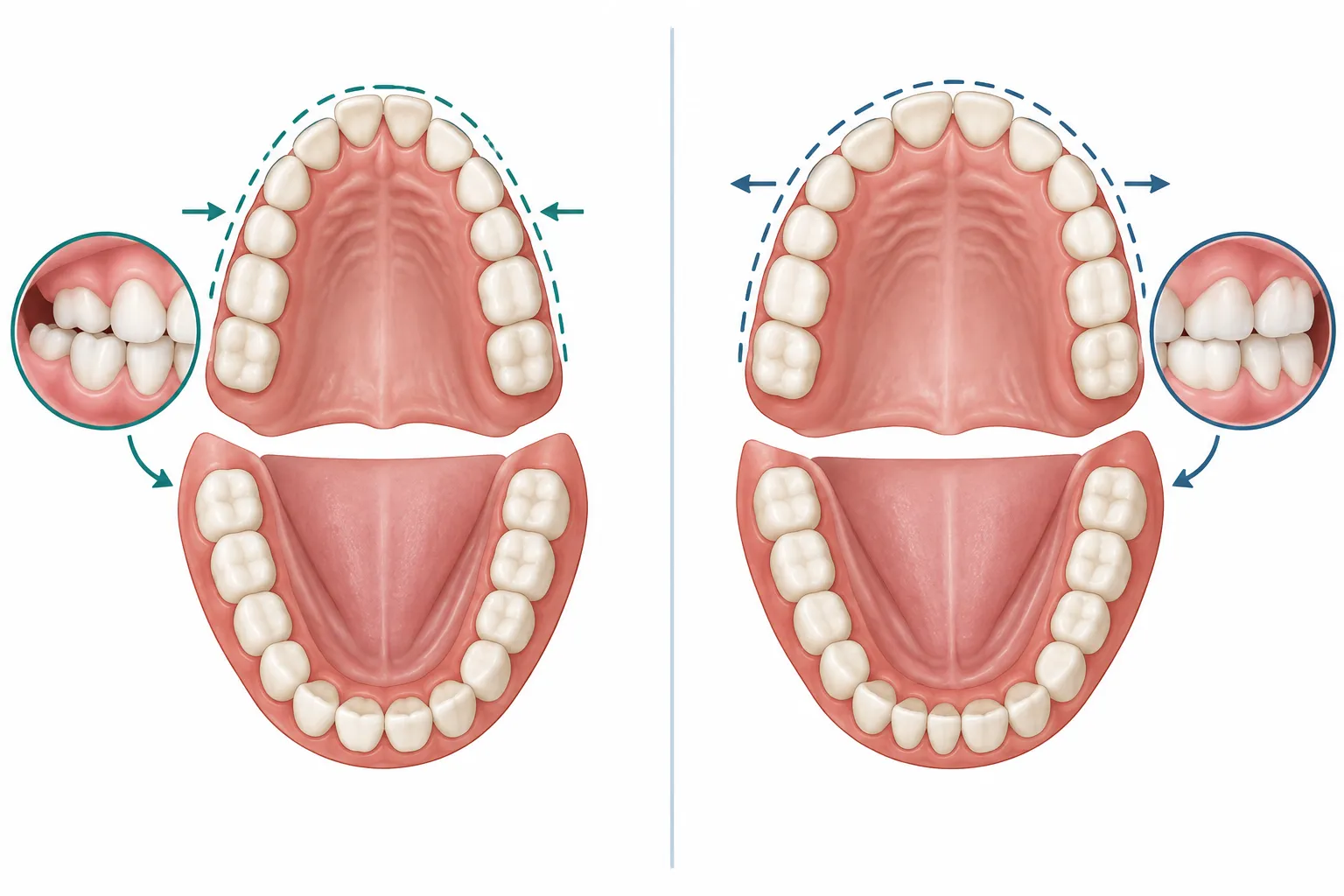
Expansion may create additional space for permanent teeth in a narrow arch. Dental crowding alone, however, does not mean the jaw needs widening.
|
What the orthodontist finds |
Why expansion might be considered |
Does it automatically mean an expander? |
|---|---|---|
|
Upper back teeth bite inside lower back teeth |
The upper arch may need to be widened to correct a crossbite |
No; the bite and cause need assessment |
|
Narrow upper arch with limited room for developing teeth |
More arch width may improve the space available |
No; crowding can have other causes |
|
Teeth are crooked but upper-jaw width is adequate |
Braces can focus on tooth alignment |
Usually not for width alone |
A photo of the front teeth won’t show how the back teeth meet. Ask how your child’s plan would differ with braces alone.
How does a braces expander fit into treatment?
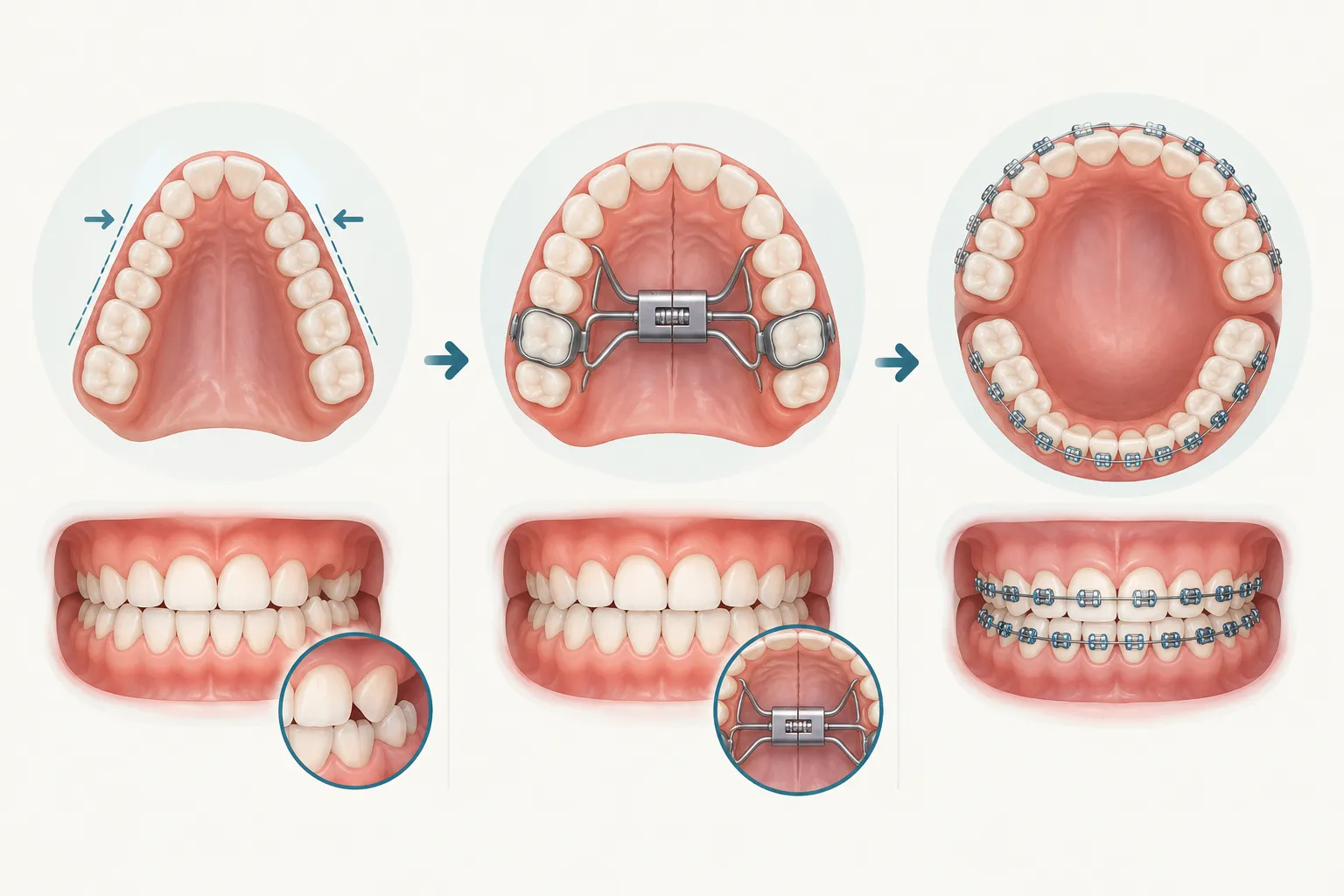
Palatal expanders are orthodontic devices designed to widen the upper arch. In growing children, controlled pressure allows the palatal suture to respond; a rapid palatal expander is one option anchored to the upper molars. Braces then guide teeth and refine the bite.
Are there different types of expanders?
Yes. Nationwide Children’s Hospital describes removable, fixed, and bone-anchored designs. Which option fits depends on the patient’s growth, bite, and ability to follow the treatment plan; not every expander uses a key.
Orthodontic treatment with palatal expansion can follow several sequences:
-
Before braces: The orthodontist widens the upper arch first if its width would make tooth alignment or bite correction difficult.
-
Alongside braces: In some plans, expansion overlaps with braces so alignment can start while width is being addressed.
-
During retention: After turns stop, the expander can stay in place to hold the new width while braces begin or continue.
A temporary gap may open between the front teeth as the arch widens; later tooth movement can close it. Palatal expander treatment addresses width, not every alignment issue.
An overbite alone says little about jaw width; a narrow upper jaw with a crossbite is a clearer reason to consider expansion.
What is day-to-day life with an expander like?
During the adjustment period, children may experience temporary pressure or tenderness after a turn and changes in speech or saliva. Make only the turns prescribed by the orthodontist.
If the appliance uses a key, ask the team to demonstrate it; designs and turning schedules vary.
For oral health, brush around the appliance and gumline and rinse after meals. Softer foods may help at first; avoid foods your care team says could loosen the appliance. Call the office if it breaks or pain is significant or persistent.
Benefits and limitations to weigh
Expansion can help the back teeth meet properly and make room in a narrow arch. It also requires cleaning and prescribed adjustments; soreness and a temporary front-tooth gap are possible.
An expander does not replace braces or other care for dental issues such as impacted teeth, marked crowding, or a different bite problem. Although expansion changes the palate near the nasal passages, it should not be presented as a treatment for sleep apnea; breathing concerns need medical evaluation.
How long does an expander stay in?
During active expansion, you make prescribed adjustments. During retention, the appliance holds the new width, sometimes longer than the turning phase. Timing depends on the appliance and your child’s progress.
Braces may begin before the expander comes out. Ask when turns stop, when the appliance comes out, and when braces would begin.
When should a child be evaluated?
Expansion is generally easier during growth, but a birthday alone is no reason to start treatment. An orthodontist can assess whether your child’s bite needs attention now.
“The American Association of Orthodontists (AAO) recommends an orthodontic check-up when a problem is first noticed, and no later than age 7.” – American Association of Orthodontists
Seven is an age for a check-up, not a deadline for expansion. The American Association of Orthodontists explains that expansion can correct a crossbite.
Adults can have narrow upper arches too, but the palatal suture responds differently after growth. An adult may need another appliance or a more involved plan.
Making an informed decision near Passaic, NJ
At Eisenberger and Meister Orthodontics, your child’s bite and growth shape the recommendation. The consultation is a chance to ask:
-
Is there a crossbite or a narrow upper jaw, or is the main issue tooth crowding?
-
What would an expander accomplish that braces alone would not?
-
Would expansion happen before braces or at the same time?
-
How long will the appliance remain after active expansion?
The Passaic practice offers a wide range of options, including palatal expanders, clear braces, and early orthodontic care. Its complimentary consultation gives you time to discuss treatment and financing.
Families in Passaic and nearby communities can get an assessment based on their child’s bite. An expander is not a routine step before braces. Schedule a consultation with Eisenberger and Meister Orthodontics to learn which treatment fits your child.