
Braces explained simply: they move teeth with gentle, steady pressure. The tissue and bone around each tooth’s root adapt as it changes position. Your orthodontist guides that movement over a series of visits, so you will not see a sudden change when the braces go on.
The parts of braces, explained simply
The wire guides the movement, while brackets hold it against your teeth. Here is what the other parts do:
|
Part |
What it does |
|---|---|
|
Brackets |
Small pieces attached to the front of teeth that hold the wire in place. |
|
Archwire |
The wire running through the brackets; it helps guide teeth toward their planned positions. |
|
Ties or clips |
Hold the wire in the brackets. Some braces use small elastic ties; others use built-in clips. |
|
Rubber bands (if prescribed) |
Connect upper and lower braces to help guide how the teeth fit together. Not everyone needs them. |
Metal and clear braces work on the same principle. Ceramic brackets are less noticeable; custom brackets can be made to fit a patient’s tooth positions. Your orthodontist recommends an option based on your teeth, your bite, and how visible you want the braces to be.
Why steady pressure changes tooth position
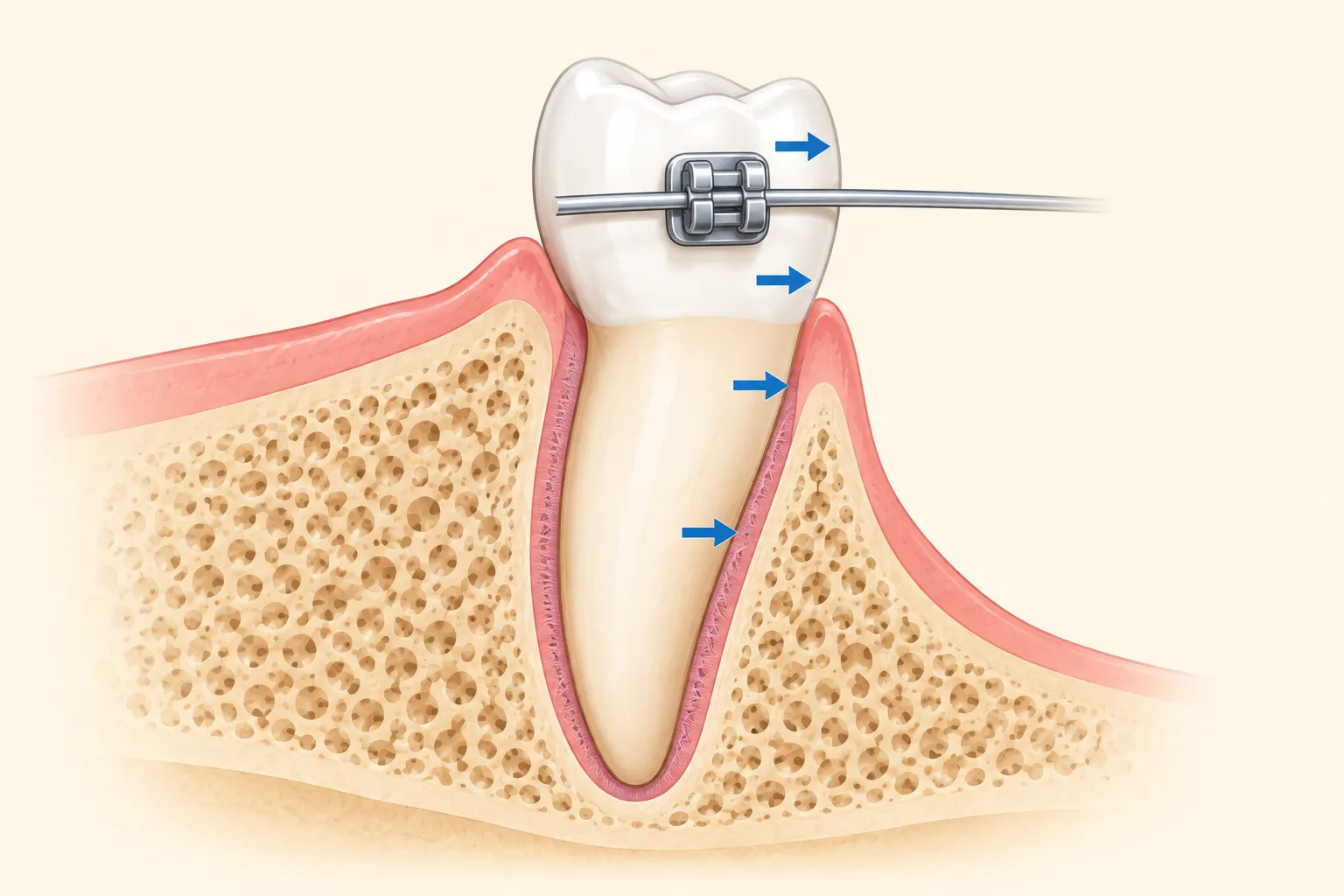
Your tooth roots sit in sockets in the jawbone, held by a thin layer of living tissue called the periodontal ligament. Pressure from the archwire acts on that ligament. The body gradually reshapes the surrounding bone to make room for the tooth and support its new position.
Bone needs time to adapt; pushing harder would not be a safe shortcut. Your orthodontist adjusts the braces as your teeth respond. The front teeth may look straighter while the orthodontist is still working on your bite.
“braces or aligners to deliver gentle, controlled forces to guide teeth into their proper places.” – American Association of Orthodontists
What happens from first visit to retainer
1. The consultation and treatment plan
At the consultation, your orthodontist looks at your teeth and how your bite fits together. Photos, scans, or X-rays may help shape the plan. This is the time to discuss metal or clear braces, and whether your bite calls for another appliance. Your orthodontist can give you a timeline based on the movement your teeth need.
2. Braces go on
The team attaches brackets to your teeth, then threads an archwire through them. You may feel pressure later, once the wire begins to guide your teeth. Your cheeks and lips can also take a little time to get used to the brackets. Read more about what to expect when you first get braces.
3. Follow-up visits guide the movement
At follow-up visits, your orthodontist checks how your teeth are moving and changes wires or other parts when needed. If you have rubber bands, wearing them as directed helps guide how your upper and lower teeth meet. Keep your appointments, and let the team know if a bracket breaks so they can repair it.
Your orthodontist may work on crowding or gaps and your bite during the same stretch of treatment. Smaller finishing adjustments come later. That is why your teeth can look straight before you are ready to have the braces removed.
4. Braces come off, and retention begins
Once your teeth and bite reach their planned positions, the orthodontist removes the brackets. You then wear a retainer to help hold your teeth in place. Teeth can shift after active treatment, so follow your retainer instructions even when your smile looks finished.
“To maintain the results created by your treatment, you must wear retainers.” – American Association of Orthodontists
What braces feel like, and what helps
Tender teeth are common after braces go on and after some adjustments. Choose softer foods until eating feels comfortable again. If a bracket rubs your cheek or lip, a little orthodontic wax over it can help. The soreness and rubbing should ease rather than intensify.
Call your orthodontic team about a sharp wire, a painful loose bracket, or severe or persistent pain. Seek prompt dental or medical advice if you develop facial swelling or other symptoms that feel urgent.
Daily habits make treatment easier:
-
Brush around brackets and along the gumline, and clean between teeth with a method your orthodontic team recommends.
-
Avoid chewing ice and other very hard foods that could damage brackets or wires. Cut foods that are awkward to bite into into smaller pieces.
-
Wear prescribed rubber bands as directed. Trying to speed up tooth movement on your own can disrupt the plan.
What results can you realistically expect?
Braces can close spaces, straighten crowded teeth, and improve the way your upper and lower teeth fit. Your orthodontist will discuss which changes are possible for your teeth and plan for a comfortable bite as well as a smile you feel good about.
Your timeline depends on how far teeth need to move and how your bite responds. Wearing prescribed appliances and bands matters, and broken braces can interrupt progress. Two years can be a reasonable plan; even when a tooth looks straight, the bite and supporting tissues may need more time.
Wear your retainer as your orthodontist directs, and keep up with routine dental care during and after treatment.
A comfortable starting point in Passaic
At Eisenberger and Meister Orthodontics in Passaic, children, teens, and adults can discuss traditional metal braces, clear braces, and custom LightForce ceramic braces at a complimentary consultation. The team can talk through financing, too. Custom brackets can help tailor the plan to your teeth, but they cannot promise a finish date.
Families in Passaic and Clifton may also be exploring orthodontic care from nearby communities across three counties:
-
Passaic County: Paterson, Woodland Park, Little Falls, Totowa, Haledon, and Wayne.
-
Bergen County: Garfield, Wallington, Rutherford, East Rutherford, Lodi, and Hasbrouck Heights.
-
Essex County: Nutley, Belleville, Bloomfield, Montclair, and Cedar Grove.
If you are considering braces for yourself or a child, a consultation gives you a plan based on your bite.
Braces move teeth in planned steps, and a retainer helps keep them in place afterward. To learn what treatment might involve for you or your child, book a complimentary consultation with Eisenberger and Meister Orthodontics.
FAQ
Is it painful to put on braces?
Putting brackets and a wire on your teeth is different from the soreness you may feel once the teeth start responding to pressure. Expect some tenderness afterward, especially at first, and ask your orthodontic team about any severe or persistent pain.
Can I chew ice with braces?
It is best not to chew ice while wearing braces. Hard ice can damage a bracket or wire, which may mean a repair visit and an interruption to your treatment plan.
Is 2 years of braces a lot?
Not necessarily. Treatment length depends on your starting alignment, bite goals, and how your teeth respond. Your orthodontist can estimate a timeline after examining you, then update it as treatment progresses.