
Braces How Long to Wear: Treatment Time Guide
If you’re considering braces for yourself or your child, one question usually comes first: how long will braces need to stay on? The short answer is that most patients wear braces for 12 to 24 months, but the real answer depends on your bite, crowding, age, goals, and how consistently treatment instructions are followed.
For families in Passaic, Clifton, Garfield, Paterson, Wallington, East Rutherford, Rutherford, Lyndhurst, North Arlington, Nutley, Bloomfield, Montclair, Little Falls, Woodland Park, Totowa, Wayne, Elmwood Park, Fair Lawn, Hackensack, Lodi, Hasbrouck Heights, Carlstadt, Moonachie, Newark, Belleville, Kearny, Secaucus, and Bergen County and Essex County communities nearby, understanding the likely timeline helps with planning, budgeting, and peace of mind.
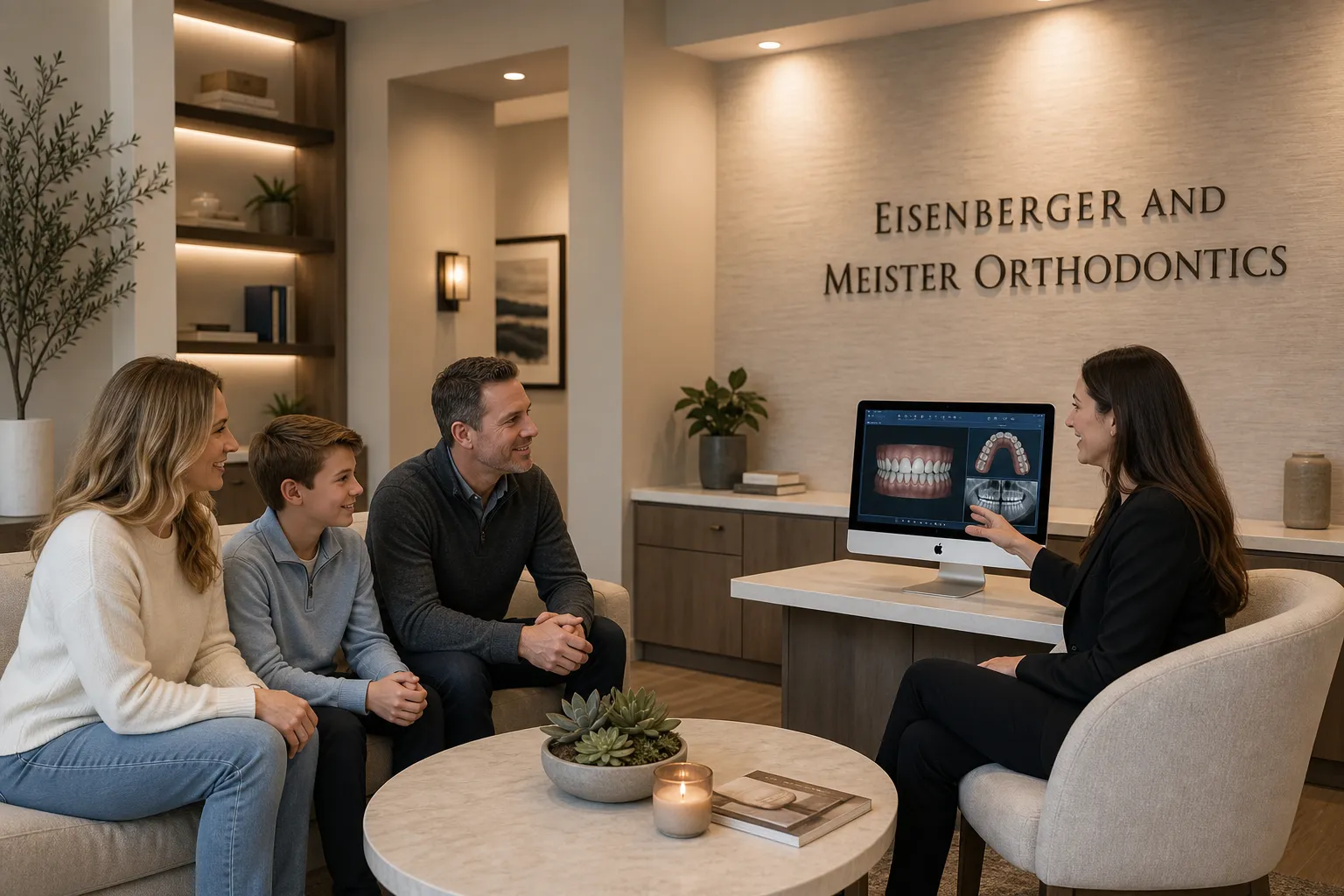
At Eisenberger and Meister Orthodontics, we believe treatment time should be explained clearly from the start. With 38 years in practice and 15,000+ smiles treated, our team creates highly personalized orthodontic plans for children, teens, and adults using advanced tools like LightForce custom braces, Invisalign, and Dental Monitoring to help treatment stay efficient, precise, and convenient.
The Average Braces Timeline at a Glance
Most orthodontic patients fall into a fairly predictable range, but complexity matters.
|
Case Type |
Typical Treatment Time |
|---|---|
|
Mild crowding or spacing |
6–12 months |
|
Moderate crowding or bite correction |
12–18 months |
|
More complex bite or alignment issues |
18–30 months |
|
Average traditional braces case |
12–24 months |
This is why questions like braces how long to wear, braces treatment time, or for how long are braces worn never have a single universal answer. Two patients may both have braces, but one may need limited alignment while another needs full bite correction, space creation, rotation control, and finishing refinement.
Why Braces Time Varies So Much
Competitor articles often mention a broad timeline, but they usually stop there. What they often miss is that orthodontic treatment is not just about making teeth look straighter. It is also about building a bite that is healthy, stable, functional, and made to last.
Tooth Movement Is Biological
Teeth do not slide instantly into place. Braces apply gentle pressure that stimulates bone remodeling around each tooth. That process takes time and must happen carefully to protect roots, gums, and supporting bone.
Straight Teeth Are Only Part of the Goal
In many cases, the visible straightening happens earlier than the deeper bite correction. That is why some patients feel their smile already looks better halfway through treatment, yet still need more months to finish the details properly.
What Affects Braces Treatment Time?
Case Complexity
This is the biggest factor in teeth braces duration. Small gaps and mild crowding can often be corrected more quickly than impacted teeth, deep overbites, crossbites, severe rotations, or jaw-related concerns.
Age
Children and teens are often still growing, which can make certain types of orthodontic movement more efficient. Adults can absolutely achieve outstanding results, but in some cases treatment takes longer because bone metabolism and tissue response are different.
That said, adults often do extremely well because they tend to be more consistent with appointments and care. At Eisenberger and Meister Orthodontics, we treat kids, teens, and adults with plans tailored to their stage of life and goals.
Type of Appliance
Not every orthodontic system works exactly the same way. Traditional metal braces remain highly effective, but newer options can improve efficiency and comfort in the right case.
At our practice, we offer:
-
Metal braces
-
Clear braces
-
LightForce custom 3D-printed ceramic braces
-
Invisalign
-
Early orthodontic treatment appliances
-
Palatal expanders and other growth-guiding solutions
For many patients, custom LightForce braces may support more precise tooth movement and potentially fewer appointments because each bracket is designed specifically for the individual tooth.
Patient Habits and Compliance
This is one of the most overlooked factors in braces time. Treatment can slow down if a patient:
-
Misses appointments
-
Breaks brackets repeatedly
-
Does not wear rubber bands as directed
-
Does not keep aligners in long enough
-
Has poor oral hygiene that causes gum inflammation
In other words, teeth braces timing is not just decided by the orthodontist. It is also influenced by what happens between visits.
Mild, Moderate, and Complex Cases: What They Usually Mean
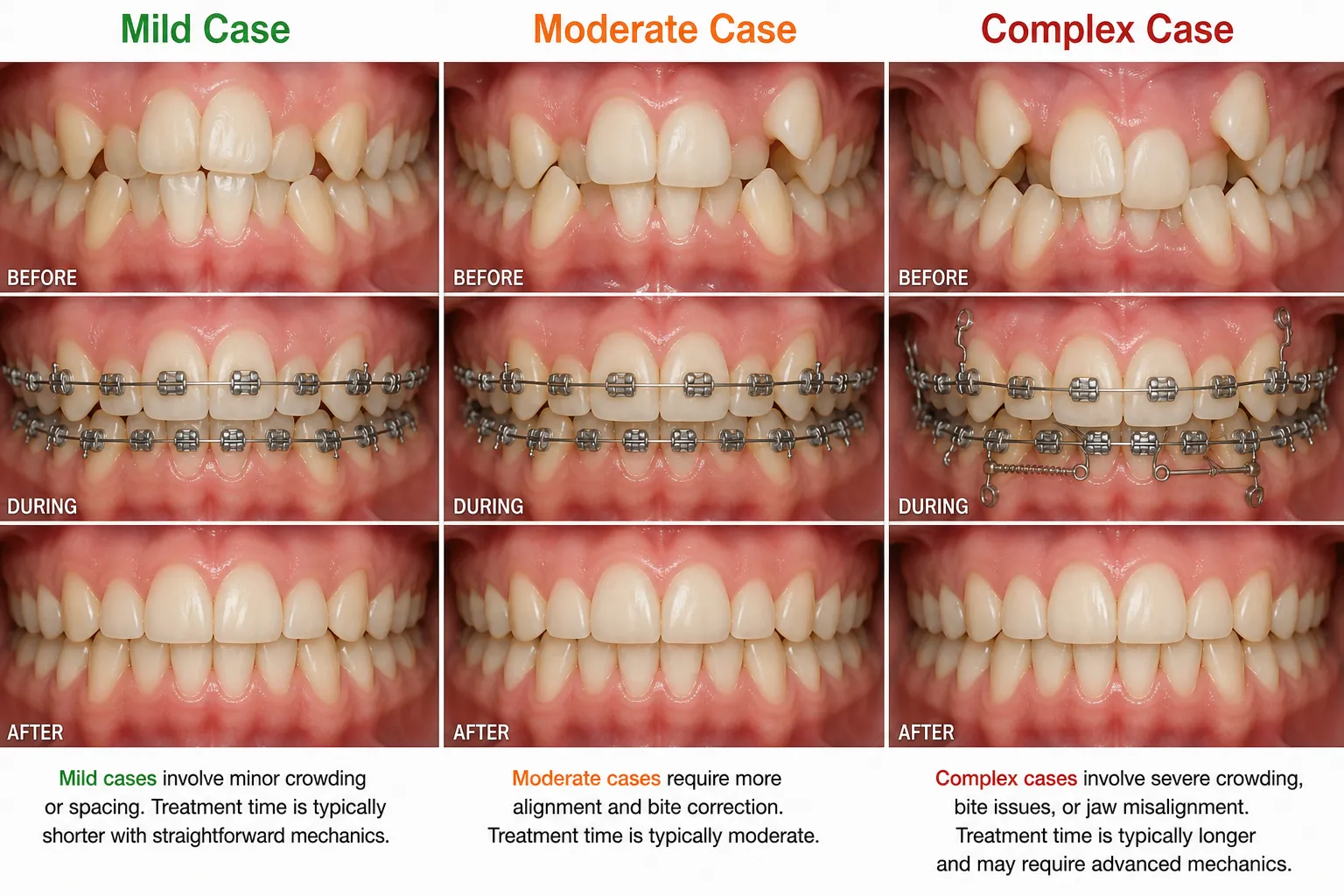
Mild Cases: 6 to 12 Months
Mild cases may include:
-
Minor crowding
-
Small spaces
-
Limited front-tooth alignment issues
-
Cosmetic improvements with little bite correction needed
If you are wondering braces for teeth how long in a simple case, this is the shortest likely range.
Moderate Cases: 12 to 18 Months
Moderate cases may involve:
-
Noticeable crowding
-
Mild overbite or underbite concerns
-
Spacing plus bite imbalance
-
Teeth that need more rotation or vertical control
This is a very common range for both teens and adults.
Complex Cases: 18 to 30 Months or More
Complex orthodontic treatment may include:
-
Severe crowding
-
Impacted teeth
-
Significant bite discrepancies
-
Jaw development concerns
-
Multi-phase treatment
-
Airway or expansion-related planning
These cases benefit most from a highly experienced orthodontic team and modern treatment planning technology.
How Long Do Metal Braces Take?
Patients often specifically ask about metal braces how long does it take or dental braces how long does it take when comparing options.
Traditional metal braces are still one of the most reliable and versatile treatments available. For many people, they remain the gold standard for complex control because they allow detailed movement of the teeth in multiple dimensions.
Typical Range for Metal Braces
Most patients in metal braces wear them for around 12 to 24 months. Mild cases may be shorter, and complex cases can extend longer.
Are Metal Braces Faster?
Not always faster in every situation, but often very efficient, especially for:
-
Severe crowding
-
Significant bite correction
-
Tooth rotations
-
Vertical movement control
-
Complex finishing
At Eisenberger and Meister Orthodontics, we also offer LightForce custom braces, an advanced alternative that combines the effectiveness of braces with highly customized planning. For the right patient, that can mean a more streamlined experience with excellent precision.
How Long Do Clear Braces or Invisalign Take?
Many patients looking for a more aesthetic option want to know whether discreet treatment changes the duration of braces for teeth.
Clear Braces
Clear braces can often follow a timeline similar to metal braces, depending on the case. They are popular with older teens and adults who want something less noticeable.
Invisalign
Invisalign may work beautifully for mild to moderate cases and certain comprehensive treatments. Success depends heavily on wear time. If trays are not worn as directed, treatment slows quickly.
As an Invisalign Sapphire Provider in the top 0.5% of specialists, Eisenberger and Meister Orthodontics brings exceptional expertise to clear aligner treatment. That experience matters when evaluating whether Invisalign can deliver the desired result efficiently and predictably.
The 5 Stages of Braces Treatment
One major content gap in most competitor articles is that they mention total months but rarely explain what actually happens during that time.
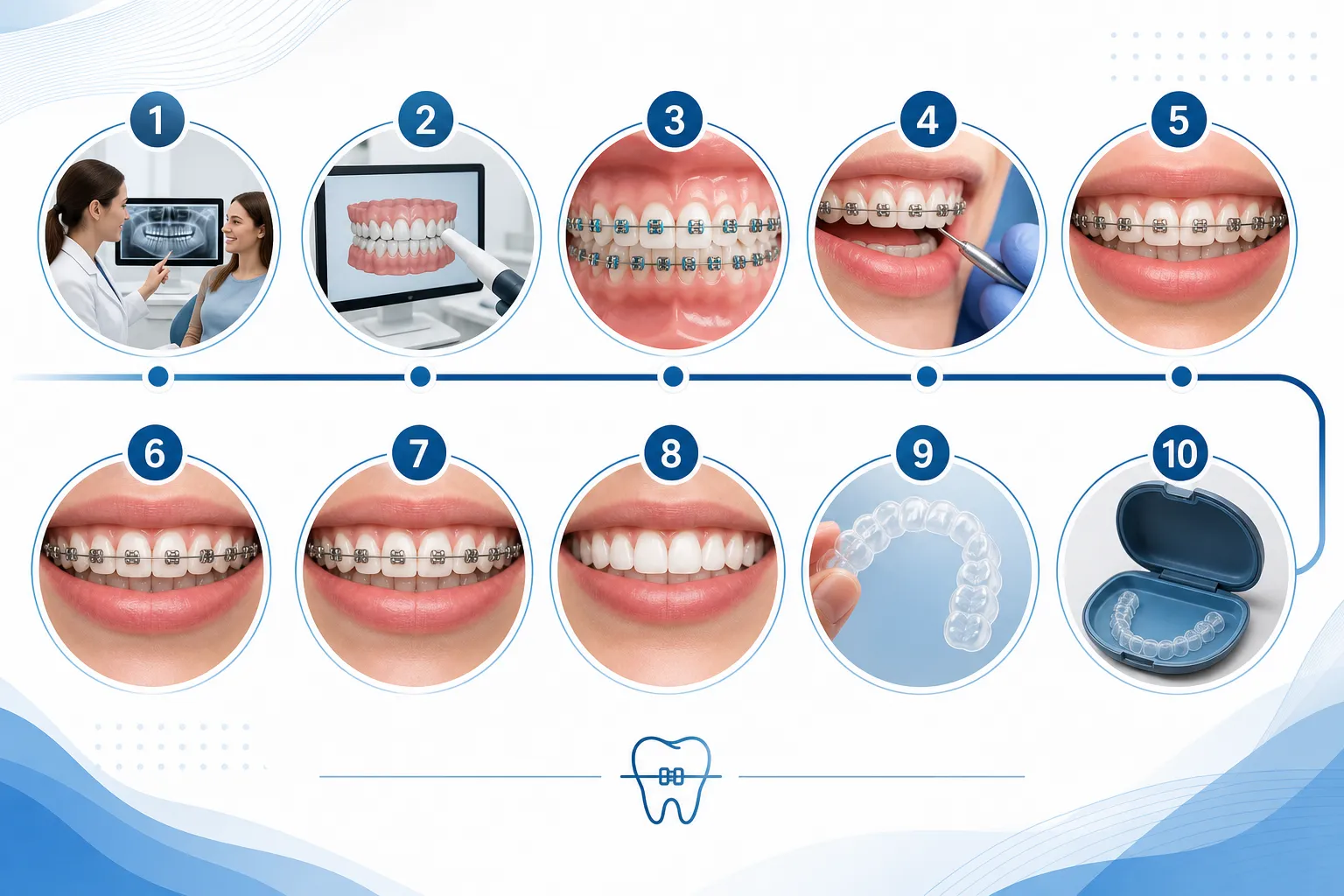
1. Consultation and Records
This includes your exam, photos, scans, X-rays if needed, and a personalized treatment plan. At our office, complimentary consultations make it easier for families to explore options without pressure.
2. Bonding the Braces or Starting Aligners
This is the day treatment officially begins. Some soreness is normal at first, but it usually improves within several days.
3. Leveling and Aligning
This is often when patients notice the biggest visible change. Crooked teeth begin to straighten, and the smile starts looking more organized.
4. Bite Correction and Space Management
This can be the longest phase. It may involve elastics, closing spaces, coordinating arches, correcting overbite or underbite relationships, and fine-tuning tooth positions.
5. Finishing and Retention
The last phase focuses on detail. Small adjustments are made so the final smile is not just straighter, but more stable and functional. After braces come off, retainers protect the result.
How Often Will You Need Adjustments?
In most cases, adjustment visits are scheduled every 6 to 10 weeks, depending on the appliance and treatment stage. Some patients ask whether it is okay to adjust braces every two weeks, but more frequent tightening is not usually better. Teeth need time to respond biologically to each activation.
One of the advantages of modern care at Eisenberger and Meister Orthodontics is efficiency. Our combination of advanced orthodontic technology, efficient scheduling, and Dental Monitoring helps many patients reduce hassle, minimize unnecessary visits, and stay on track with less disruption to work, school, and family life.
Can You Make Braces Work Faster?
You cannot safely rush biology, but you can absolutely avoid preventable delays.
Best Ways to Stay on Schedule
-
Attend every appointment
-
Wear rubber bands exactly as directed
-
Keep braces clean
-
Avoid hard, sticky, and crunchy foods that break brackets
-
Use a mouth guard during sports
-
Report broken braces early
-
If using Invisalign, wear trays as prescribed
What Usually Delays Treatment
-
Missed visits
-
Poor elastic wear
-
Broken brackets and bent wires
-
Gum inflammation from poor brushing
-
Not wearing retainers between phases when instructed
This is often the hidden answer behind questions like braces how much time, teeth braces how much time, and braces take how long. Good habits can make a meaningful difference.
Children, Teens, and Adults: Does Age Change the Timeline?
Children
Early orthodontic treatment does not always mean full braces right away. Sometimes the goal is to guide jaw growth, create room for incoming teeth, or reduce the severity of future problems. This phase may last months, and full braces may come later if needed.
Teens
Teens are among the most common braces patients and often respond very efficiently to treatment. Because growth is still active, some bite corrections may be easier during these years.
Adults
Adult orthodontics is more popular than ever. Adults often choose treatment for confidence, health, bite function, or relapse from not wearing retainers years ago. Many want discreet options and a more elevated experience, which is why our luxurious, warm, spa-like office environment and personalized care resonate so strongly with busy professionals and parents.
Braces vs. LightForce vs. Invisalign
|
Treatment Option |
Best For |
Typical Time Range |
Key Advantage |
|---|---|---|---|
|
Metal braces |
Moderate to complex cases |
12–24+ months |
Strong control and reliability |
|
Clear braces |
Patients wanting a subtle look |
Similar to metal in many cases |
More aesthetic appearance |
|
LightForce custom braces |
Patients seeking precision and efficiency |
Varies by case |
Fully customized 3D-printed brackets |
|
Invisalign |
Mild to moderate and select comprehensive cases |
6–18+ months |
Nearly invisible and removable |
For patients comparing braces on teeth duration with clear aligner timelines, the best choice is not simply the one that sounds shortest. It is the one most likely to deliver your ideal result predictably, comfortably, and efficiently.
What Happens After Braces Come Off?
A lot of blogs stop at removal, but retention is a critical part of successful orthodontics.
Retainers Protect Your Investment
Once braces come off, teeth naturally have a tendency to shift. Retainers help preserve the result as the surrounding bone and tissues stabilize.
How Long Do Retainers Matter?
In a practical sense, retention is long-term. The best smile is the one that stays straight. Our team will explain the retainer plan clearly so you know exactly how to protect your outcome.
Why Experience and Technology Matter for Treatment Time
Not all orthodontic treatment is planned or managed the same way. An experienced orthodontist can often identify potential obstacles earlier, choose the right appliance from the beginning, and make adjustments that keep progress moving efficiently.
At Eisenberger and Meister Orthodontics, patients benefit from:
-
38 years of orthodontic experience
-
15,000+ smiles treated
-
Invisalign Sapphire Provider status
-
LightForce custom 3D-printed braces
-
Dental Monitoring for greater convenience
-
Personalized treatment plans for every age
-
Complimentary consultations
-
Flexible financing with 0% APR options and no hard credit checks
-
Efficient appointment scheduling with less waiting time
-
A warm, luxury office experience that feels more welcoming than clinical
That combination of skill, technology, and patient-centered service can make a meaningful difference in both the experience and the outcome.
The Real Answer to “How Long Will I Wear Braces?”
The most honest answer is this: most patients wear braces for 12 to 24 months, but your exact timeline should be based on a full orthodontic evaluation.
If you have been searching for answers about teeth braces time, teeth braces for how long, or teeth braces how long does it take, the best next step is not guessing from averages. It is getting a personalized plan from an experienced orthodontic specialist who can evaluate your smile, bite, growth, and goals.
Final Thoughts
Braces are a commitment, but they are also an investment in confidence, function, and long-term oral health. The right timeline is not the shortest one on paper. It is the one that gets you the best result as efficiently and comfortably as possible.
For families and individuals in Passaic and nearby communities including Clifton, Garfield, Paterson, Wallington, Rutherford, East Rutherford, Lyndhurst, North Arlington, Nutley, Bloomfield, Montclair, Little Falls, Woodland Park, Totowa, Wayne, Elmwood Park, Fair Lawn, Hackensack, Lodi, Hasbrouck Heights, Carlstadt, Moonachie, Newark, Belleville, Kearny, and Secaucus, Eisenberger and Meister Orthodontics offers advanced care with a personal touch.
Whether you are exploring braces for your child, Invisalign for yourself, or a more aesthetic and efficient option like LightForce, our team is here to guide you with expertise, honesty, and warmth. Schedule your complimentary consultation to learn your ideal treatment timeline and discover how modern orthodontics can fit beautifully into your life.
FAQ
How long should braces treatment take?
For most patients, braces treatment takes about 12 to 24 months, although mild cases may finish sooner and complex cases can take longer. The exact timeline depends on your bite, crowding, age, appliance type, and how consistently you follow treatment instructions.
Is it okay to adjust braces every 2 weeks?
Usually, no. Teeth need time to respond safely to orthodontic pressure, so most adjustments are scheduled about every 6 to 10 weeks, depending on the treatment plan and stage of care.