
Braces Step by Step With Pictures: What to Expect
Thinking about braces for yourself or your child? Follow each braces step with pictures, from the first visit to retainers. Families in Passaic and nearby towns often ask: Will it hurt? How long will it take? Can we fit treatment into our schedule and budget?
Each stage has a simple explanation. The pictures illustrate key moments, from the first visit to daily care and retainers. Your own treatment may look different. Knowing what to expect can make the choice easier for children, teens, and adults in North Jersey.
Eisenberger and Meister Orthodontics has 38 years of experience and has treated more than 15,000 smiles. You can expect a complimentary consultation, modern tools, and personal care in a warm, spa-like space.
Why People Get Braces in the First Place
Braces do more than straighten teeth. They can correct bite problems, reduce crowding, and make teeth easier to clean. The American Association of Orthodontists explains how brackets and wires move teeth through steady, gentle pressure.
Children may need care while their jaws are still growing. Teens often start treatment once most adult teeth have come in. Adults may choose braces or Invisalign to improve their bite, their smile, or both.
An early evaluation can help orthodontists spot growth issues before they become harder to treat.
“The American Association of Orthodontists recommends that all children get a check-up with an orthodontic specialist no later than age 7.” – American Association of Orthodontists
A Visual Overview of the Braces Process
Here is the full journey at a glance:
|
Stage |
What Happens |
Typical Timing |
|---|---|---|
|
Consultation |
Exam, photos, scans, discussion of goals |
30–60 minutes |
|
Treatment Planning |
Custom plan, appliance selection, financial review |
Often same day or shortly after |
|
Braces Placement |
Brackets and wires placed |
1–2 hours |
|
Adjustment Visits |
Progress checks and wire changes |
Every 4–8 weeks |
|
Daily Care Phase |
Brushing, food changes, elastic wear, monitoring |
Throughout treatment |
|
Braces Removal |
Brackets removed and teeth polished |
About 1 hour |
|
Retention |
Retainers keep teeth in place |
Ongoing |
Braces Step 1: Your Orthodontic Consultation
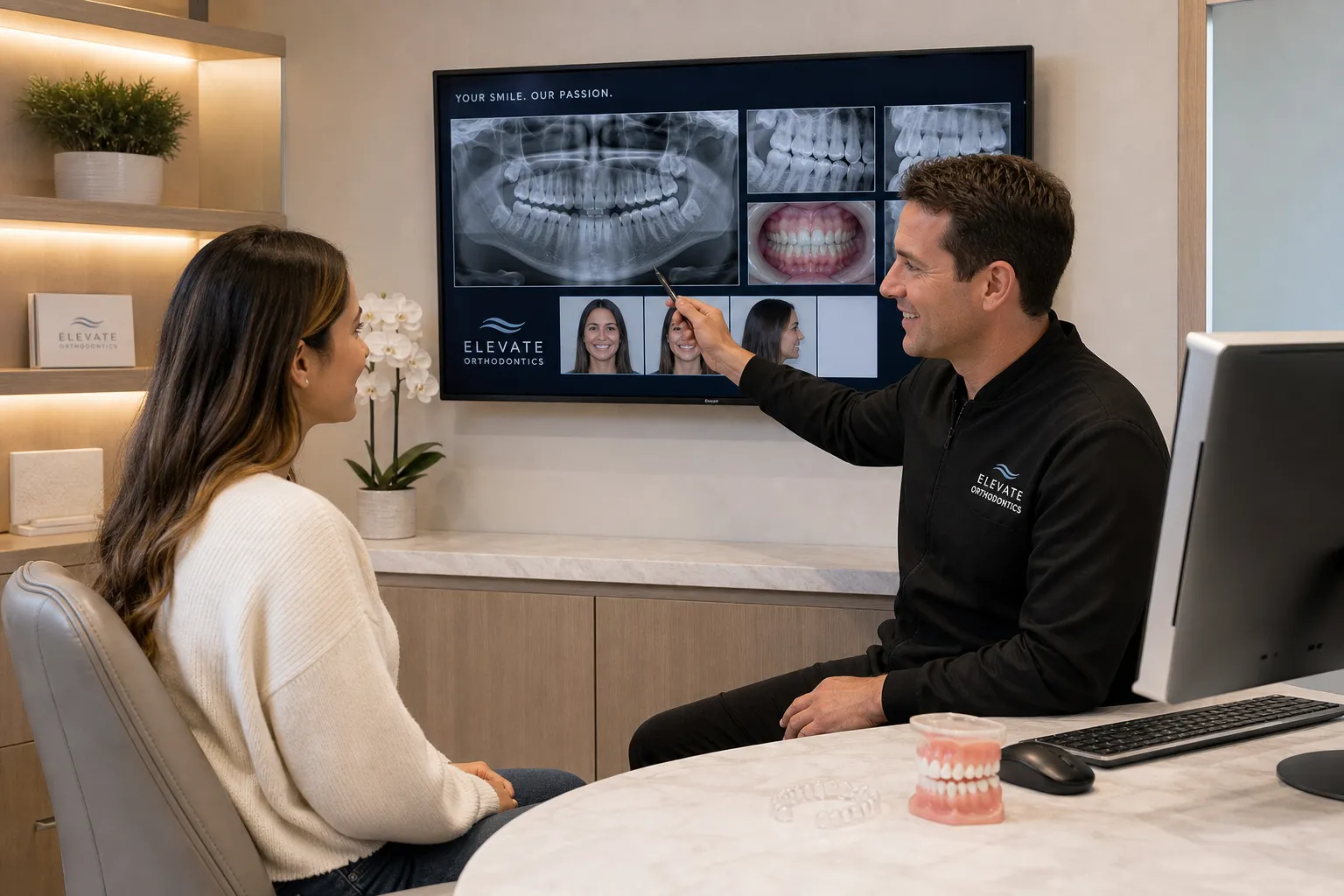
This first braces step is all about answers. You meet the orthodontist, share your concerns, and learn what treatment could look like.
What Happens During the Consultation
At this appointment, the orthodontic team will typically:
-
examine the teeth, bite, and jaw alignment
-
take photos of the smile and facial profile
-
capture digital scans or impressions
-
review any needed X-rays
-
discuss treatment goals and timing
-
explain your options for braces or clear aligners
For patients and parents, this is often the most reassuring appointment because it replaces uncertainty with a real plan.
At Eisenberger and Meister Orthodontics, consultations are complimentary. Families across Passaic, Bergen, and Essex counties can explore their options without pressure.
What the Orthodontist Is Looking For
The consultation is not just about crooked teeth. Your orthodontist evaluates:
-
crowding or spacing
-
overbite, underbite, open bite, or crossbite
-
jaw growth patterns
-
airway-related concerns when appropriate
-
gum and bone health
-
timing for treatment
Experience helps shape the plan. Eisenberger and Meister Orthodontics draws on 38 years in practice and more than 15,000 smiles treated to plan care for children, teens, and adults.
Step 2: Records, Scans, and Your Personalized Treatment Plan
After the consultation, the next braces step is creating a treatment plan tailored to your smile.
Digital Scans Instead of Messy Impressions
Many patients are glad to learn that digital scans can replace putty impressions. A scan creates a detailed 3D model of the teeth and bite.
That means:
-
more comfort
-
greater precision
-
better treatment visualization
-
improved customization
Choosing the Right Type of Treatment
Not every patient needs the same approach. Your plan may include:
-
traditional metal braces
-
clear ceramic braces
-
Invisalign
-
LightForce custom braces
-
early orthodontic appliances such as expanders
-
elastics or additional bite-correcting tools
For patients who want a more discreet aesthetic, ceramic braces or Invisalign may be appealing. For those seeking customization and efficiency, LightForce braces stand out.
Why LightForce Braces Get Attention
LightForce braces use custom 3D-printed ceramic brackets made for each patient.
Potential benefits can include:
-
highly precise tooth movement
-
fewer adjustments in some cases
-
a more aesthetic appearance
-
the possibility of faster treatment with fewer appointments for appropriate cases
For busy adults, parents, and teens in Passaic and nearby towns, fewer visits may make treatment easier to fit into daily life.
Step 3: Preparing for Braces
Before braces go on, some patients need a little preparation.

Common Pre-Braces Steps
Depending on the case, this may include:
-
a dental cleaning
-
cavity treatment
-
spacers or separators
-
tooth extractions in severe crowding cases
-
guidance for oral hygiene and diet
Not everyone needs these steps, but when they are necessary, they help make treatment smoother and more predictable.
Financial Planning Before Treatment Starts
This stage is also when many families finalize:
-
insurance coordination
-
payment plans
-
0% APR financing options
-
monthly budget expectations
High-quality care should feel within reach. Eisenberger and Meister Orthodontics offers flexible financing and 0% APR options, with no hard credit checks.
Step 4: Getting Braces Put On
This is the step many patients picture first. It can feel daunting, but placement is often easier than expected.
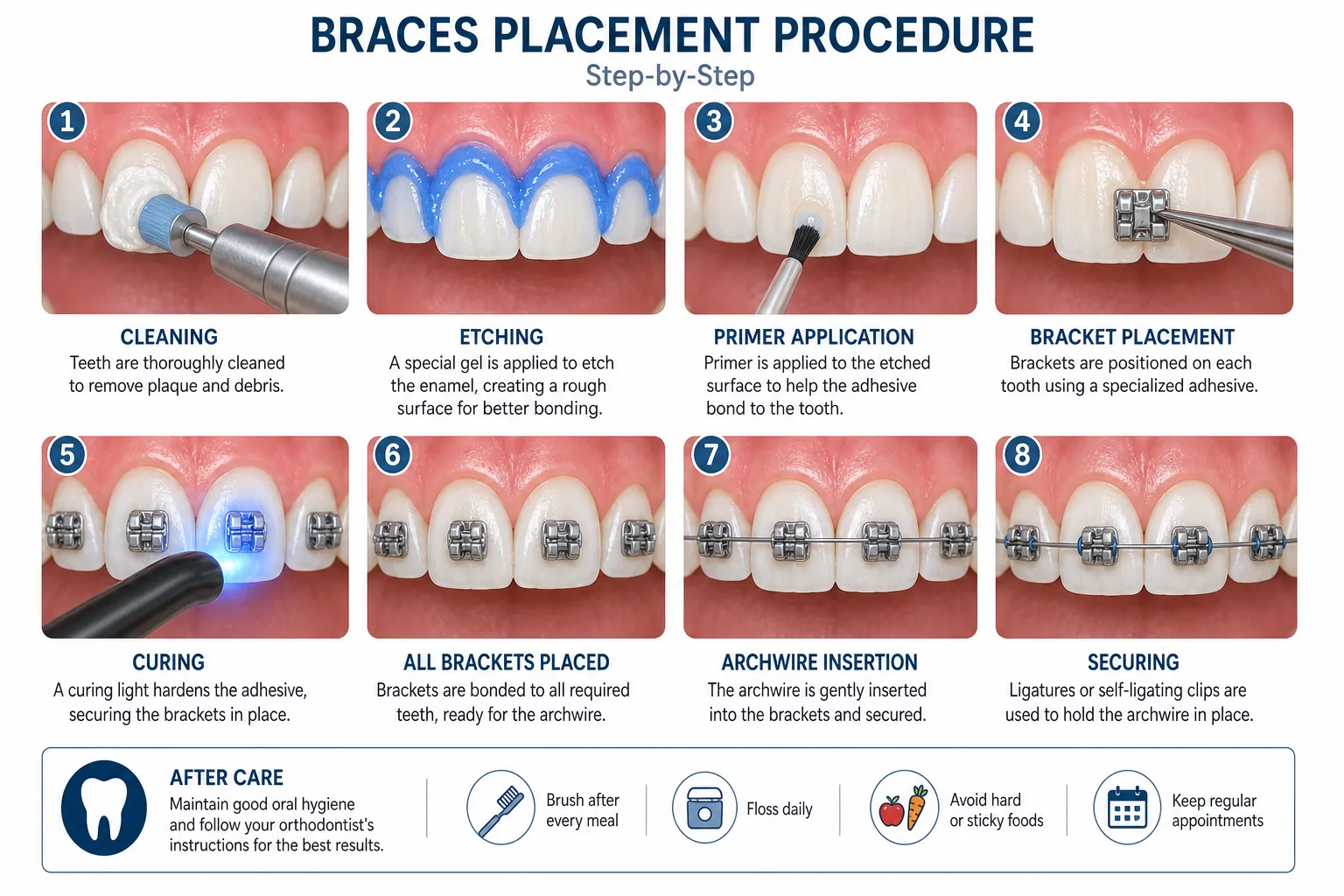
What Happens During Braces Placement
The process usually goes like this:
-
teeth are cleaned and dried
-
a bonding material is applied
-
brackets are placed carefully on each tooth
-
the adhesive is cured
-
the archwire is inserted
-
elastic ties are added if needed
The appointment often takes one to two hours depending on the treatment type.
Does It Hurt?
Braces placement itself usually does not hurt. Most patients feel pressure rather than pain. The soreness tends to begin several hours later as the teeth begin responding to gentle force.
That soreness is temporary and often managed with:
-
soft foods
-
cold drinks
-
orthodontic wax
-
over-the-counter pain relief if recommended
What You Leave With
Before you go home, you will usually receive instructions about:
-
brushing and flossing
-
foods to avoid
-
what to do if a wire pokes
-
how to wear elastics if prescribed
-
when your next visit will be
At Eisenberger and Meister Orthodontics, efficient scheduling helps keep visits on track for busy families across North Jersey.
Step 5: The First Week With Braces
The first week matters. A few simple habits can help you adjust to braces.
What the First Few Days Feel Like
Most patients notice:
-
mild pressure or soreness
-
lips and cheeks adjusting to brackets
-
a temporary change in speech
-
extra attention needed while eating
This is normal. The mouth adapts quickly.
Best Foods During the Adjustment Period
For the first few days, softer foods are usually easiest:
-
yogurt
-
pasta
-
mashed potatoes
-
smoothies
-
soup
-
eggs
-
oatmeal
Foods to Avoid
To protect brackets and wires, patients generally avoid:
-
hard candy
-
popcorn
-
gum
-
chewy caramel
-
ice
-
very crunchy chips
One broken bracket does not ruin treatment, but repeated breakage can slow progress.
Step 6: Regular Tightening and Adjustment Visits
This is the ongoing phase that gradually transforms the smile.
What Happens at Adjustment Appointments
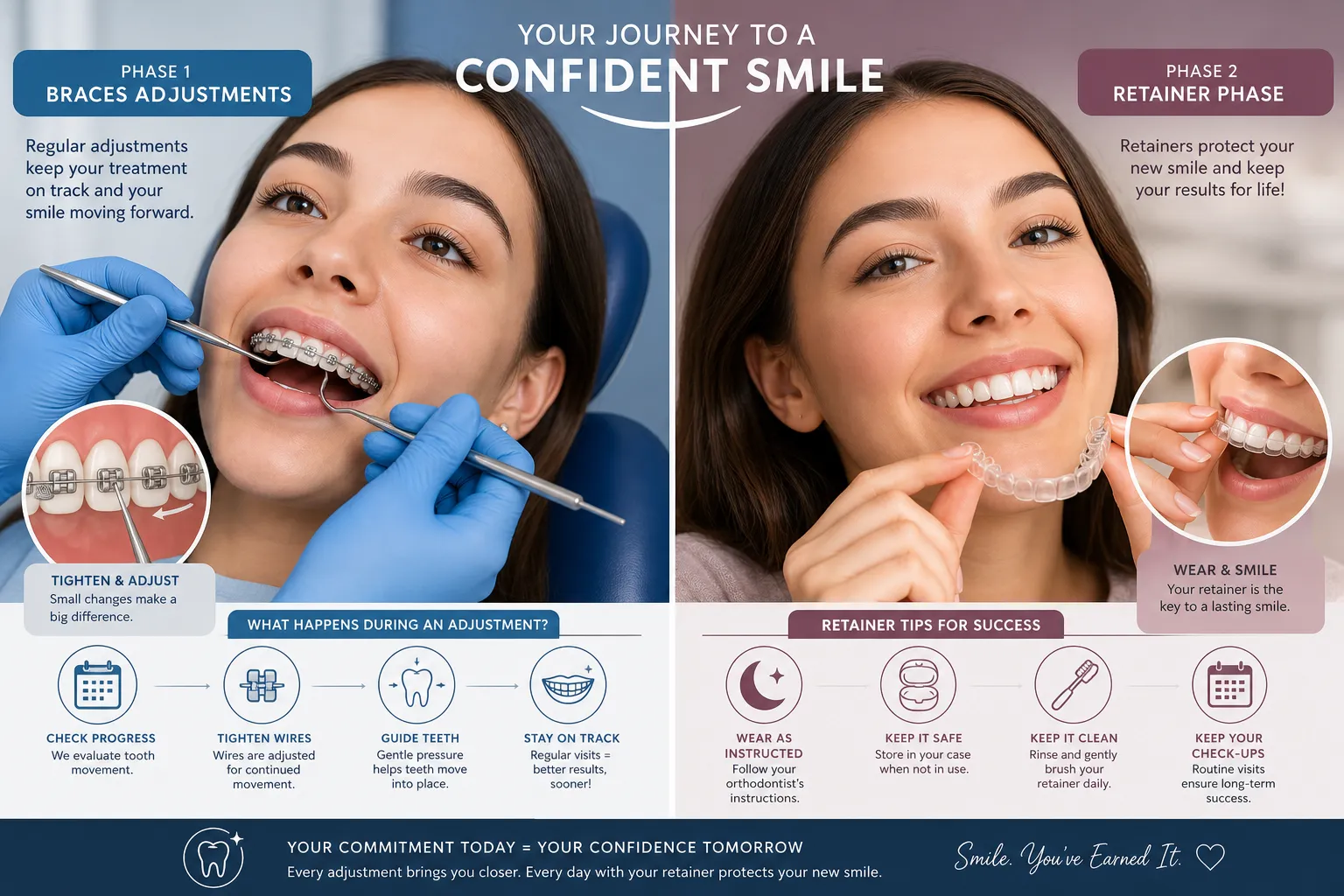
At routine visits, the orthodontist may:
-
check how teeth are moving
-
change wires
-
replace elastics
-
adjust bite mechanics
-
fix broken brackets
-
update instructions
These visits are usually much shorter than the day braces are placed.
How Often Are Appointments?
Most patients come in every four to eight weeks, though timing varies based on the treatment plan and technology being used.
How Dental Monitoring Changes the Experience
Eisenberger and Meister Orthodontics offers Dental Monitoring. Remote check-ins can cut down on unneeded office visits and make treatment easier to manage.
That is especially valuable for:
-
working adults
-
busy students
-
parents juggling multiple schedules
-
patients commuting from towns surrounding Passaic
With remote progress reviews, the process may feel less disruptive while still staying closely supervised.
Step 7: Daily Care While You Have Braces
Braces do their job best when home care is excellent.
How to Brush With Braces
Patients should generally:
-
brush after meals when possible
-
angle the brush above and below brackets
-
use fluoride toothpaste
-
spend extra time near the gumline
-
consider interdental brushes or water flossers
Why Oral Hygiene Matters So Much
Poor brushing during orthodontic treatment can lead to:
-
plaque buildup
-
swollen gums
-
white spot lesions
-
cavities
-
delays in treatment
The braces process is not only about straightening teeth. It is also about protecting the health of the smile during every stage.
Step 8: Bite Correction, Fine-Tuning, and Finishing Details
As treatment progresses, braces do more than line teeth up in a row.
What Fine-Tuning Means
In the later stage of treatment, the orthodontist works on:
-
how upper and lower teeth fit together
-
root positioning
-
midline alignment
-
spacing closure
-
final smile balance
This step is one reason orthodontic treatment is both science and artistry. The goal is not just straighter teeth, but a healthier, more balanced result.
Why Personalized Treatment Matters
No two smiles move the same way. Your orthodontist can use modern tools and clinical experience to tailor your care.
As a top 0.5% Invisalign Sapphire Provider, Eisenberger and Meister Orthodontics also brings elite-level planning expertise that benefits patients considering aligners or comparing them with braces.
Step 9: Braces Removal Day
This is the most exciting braces step for most patients.
What Happens When Braces Come Off
The orthodontic team will:
-
remove brackets
-
clean away adhesive
-
polish the teeth
-
take final records or scans
-
review the next stage of retention
The process is usually comfortable. Patients often describe pressure or vibration, not pain.
What You Notice Right Away
The most common reactions are:
-
teeth feel very smooth
-
the smile looks brighter
-
the mouth feels bigger or lighter
-
patients cannot stop looking in the mirror
That moment is one of the most rewarding parts of orthodontics for both patients and the clinical team.
Step 10: Retainers Protect the Result
Braces may be done, but the process is not truly complete until retainers are in place.
Why Retainers Matter
Teeth naturally want to drift after treatment. Retainers help hold them in their new positions while bone and surrounding tissues stabilize.
Types of Retainers
Depending on the case, retainers may be:
-
removable clear retainers
-
Hawley retainers
-
fixed bonded retainers behind the teeth
What to Expect With Retainer Wear
Your orthodontist will give specific instructions, but many patients wear retainers:
-
full-time at first
-
then nightly long-term
This stage is essential. Retainers protect the time, money, and effort invested in treatment.
Braces vs. Invisalign vs. Custom LightForce Braces
Some patients start by searching for braces steps and then realize they want to compare options. Here is a simple overview.
|
Treatment |
Best For |
Appearance |
Removable |
Key Advantage |
|---|---|---|---|---|
|
Traditional Braces |
Mild to complex cases |
Most visible |
No |
Reliable and versatile |
|
Clear Ceramic Braces |
Patients wanting a subtler look |
Less noticeable |
No |
Aesthetic fixed option |
|
Invisalign |
Many teens and adults |
Nearly invisible |
Yes |
Flexible and discreet |
|
LightForce Braces |
Patients wanting custom treatment |
Tooth-colored |
No |
Custom 3D-printed precision |
At Eisenberger and Meister Orthodontics, patients receive guidance based on what is best for their smile, lifestyle, and goals, not a one-size-fits-all recommendation.
How Long the Full Braces Process Usually Takes
Treatment length depends on age, bite complexity, compliance, and appliance type.
Typical Timeline
|
Phase |
Approximate Time |
|---|---|
|
Consultation and planning |
1–3 weeks |
|
Pre-treatment prep if needed |
1–4 weeks |
|
Active braces treatment |
12–30 months |
|
Retention phase |
Ongoing |
Some patients finish sooner. Others need more time for comprehensive bite correction or growth guidance.
What Makes the Process Feel Easier for Patients and Families
The technical steps matter, but so does the environment around them.
A Better Orthodontic Experience Includes More Than Good Clinical Results
Patients often appreciate:
-
complimentary consultations
-
less waiting time
-
efficient appointment scheduling
-
a warm, luxurious office environment
-
a team that explains every step clearly
-
financing that feels transparent and manageable
That is a meaningful distinction for families deciding where to begin treatment in and around Passaic.
Why Families in Passaic and Nearby Towns Choose Eisenberger and Meister Orthodontics
Choosing an orthodontist is about trust as much as treatment.
Eisenberger and Meister Orthodontics stands apart with:
-
38 years in practice
-
15,000+ smiles treated
-
treatment for children, teens, and adults
-
Invisalign Sapphire Provider status in the top 0.5% of specialists
-
LightForce custom braces technology
-
Dental Monitoring for added convenience
-
complimentary consultations
-
flexible financing with 0% APR and no hard credit checks
-
a comfortable, spa-like office setting
-
personalized plans designed around each patient
Passaic and Clifton Service Area
Families exploring braces in Passaic or Clifton also visit us from nearby North Jersey communities:
-
Passaic County: Passaic, Clifton, Paterson, Totowa, Woodland Park, Haledon, Prospect Park, and Hawthorne.
-
Bergen County: Garfield, Wallington, Wood-Ridge, Hasbrouck Heights, Rutherford, East Rutherford, Carlstadt, Little Ferry, Moonachie, Lyndhurst, Elmwood Park, Saddle Brook, Lodi, Hackensack, Teaneck, Maywood, Rochelle Park, and Fair Lawn.
-
Essex County: Nutley, Montclair, Bloomfield, Verona, Caldwell, West Caldwell, Belleville, Cedar Grove, and Glen Ridge.
-
Hudson County: Secaucus, North Bergen, and Kearny.
Wherever you are coming from, the team can help you compare braces, clear braces, Invisalign, and LightForce custom braces at a complimentary consultation in Passaic.
Final Thoughts
Understanding braces steps with pictures can make the whole process feel much less intimidating. From the first consultation and digital scan to braces placement, tightening visits, daily care, removal, and retainers, every stage has a purpose. When patients know what is coming, they tend to feel more relaxed, more confident, and more in control.
If you are ready to explore braces, clear braces, Invisalign, or LightForce custom braces for yourself or your child, Eisenberger and Meister Orthodontics offers the kind of advanced, personalized care that helps treatment feel smoother from day one. With a long-standing reputation, elite Invisalign expertise, modern technology, flexible financing, and a premium office experience, it is a practice designed around both exceptional results and patient comfort.
The next best step is simple: schedule a complimentary consultation and get a personalized plan for your smile.