
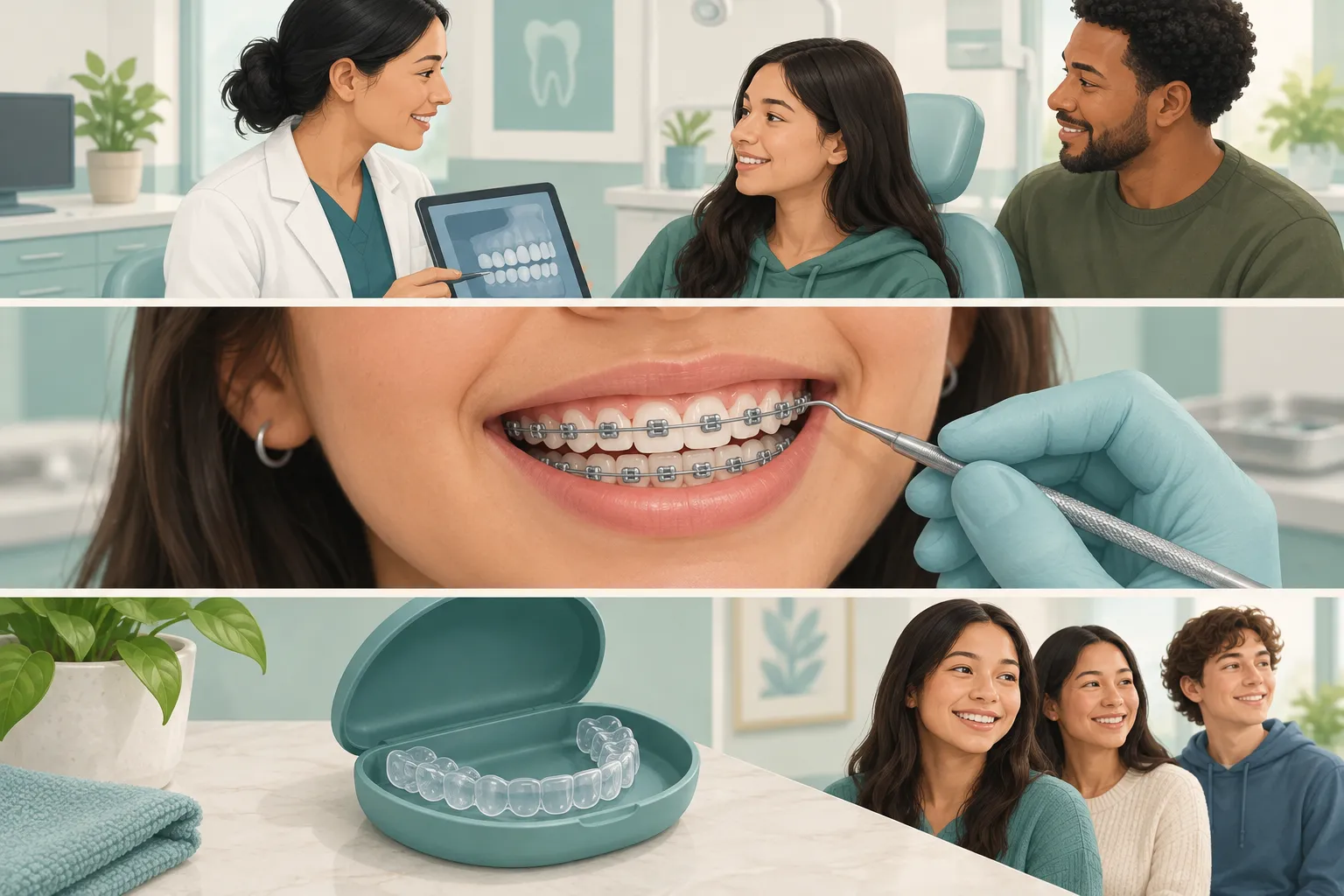
The timeline of braces begins with a consultation and continues through tooth movement, bite correction and retainer wear. Many people wear braces for roughly 12 to 24 months. If you need significant bite work, your schedule may differ from that of someone correcting a few crowded teeth. Your teeth may even look straight while there is still work to do.
These month markers show how treatment often unfolds. Your orthodontist will estimate your treatment time after examining your teeth and bite, then revise that estimate as needed.
How long do braces take? The timeline at a glance
|
Stage |
What usually happens |
What to keep in mind |
|---|---|---|
|
Before braces |
Exam, records, treatment plan and a placement appointment |
Your estimated finish date starts as an estimate, not a guarantee. |
|
First week to month 1 |
Brackets and wires go on; your mouth adjusts |
Soreness and rubbing tend to be most noticeable at the start. |
|
Months 2–3 |
Early tooth movement and routine visits |
Small changes may show in photos before they feel dramatic in the mirror. |
|
Months 4–6 |
Alignment continues; spaces and crowding may change |
A straighter front row does not mean the bite is done. |
|
Months 7–12 |
Further alignment and bite work as needed |
Elastics or other instructions may matter as much as the wire. |
|
Month 12 onward |
Finishing adjustments, removal when goals are met |
The last details can take time even when your smile looks ready. |
|
After removal |
Retainer fitting and ongoing wear |
Teeth can shift after braces unless you follow the retention plan. |
A systematic review of fixed-appliance treatment found an average duration of 19.9 months across the studies it analyzed. Individual treatment times varied.
“The mean treatment duration … was 19.9 months” – Tsichlaki et al., American Journal of Orthodontics and Dentofacial Orthopedics
Before month 1: consultation and getting braces on
At your first visit, the orthodontist looks at crowding or spacing and checks how your upper and lower teeth meet. You can also raise anything that worries you about treatment. Photos, X-rays and a scan or impressions help the team plan your care. Before you leave, ask which appliance is proposed, what your estimated treatment time includes, how often you may need visits and how appointments will fit into your routine.
You may need dental care or another preparatory step first. At the bonding visit, the team attaches brackets to your teeth and connects them with an archwire. You will feel pressure before you can see movement. Before you leave, ask the team to show you how to clean around the brackets and explain whom to call if a wire or bracket loosens.
Month 1: the first week and settling in
For the first few days, biting may make your teeth feel tender. Brackets may rub your cheeks or lips, too. Yogurt, eggs, pasta and soup are easier to eat while chewing feels awkward, and orthodontic wax can cover a rubbing spot. Follow your orthodontist’s advice on pain relief, particularly for a child who needs age-appropriate medication guidance.
Brush around each bracket and along the gumline, using the flossing method your team recommends. Hard or sticky foods can pull a bracket loose. A new wire may feel strange at bedtime; if it pokes or a bracket breaks, call the office rather than trying to fix it yourself.
Soreness should ease as your mouth adapts. Call sooner than your next visit if pain increases, swelling develops, you are injured, or wax cannot protect you from a sharp wire.
Months 2–3: adjustments and the first visible changes
Your team checks tooth movement at follow-up visits and may change a wire or replace ties. Appointments are often several weeks apart, depending on your appliance and what needs to move next. You might feel some tenderness afterward, though it is often easier to manage than the first days with braces.
You might spot a crowded tooth rotating or a small gap changing. Work on your back teeth or bite can be much harder to see. A photo from the same angle once a month gives you a better record than a daily look in the mirror. If nothing seems different after a few months, bring the photos to your next appointment and ask what the current wire is doing.
Months 4–6: alignment becomes easier to see
Your front teeth may look more even by now. You might also see a new space as teeth make room to move. If that gap worries you, ask your orthodontist what is planned for this phase.
Keep brushing carefully once braces feel routine. Food collects around brackets, while puffy gums make cleaning harder. Let the office know about loose parts promptly so a detached bracket does not interrupt the planned movement.
Months 7–12: bite correction and steady progress
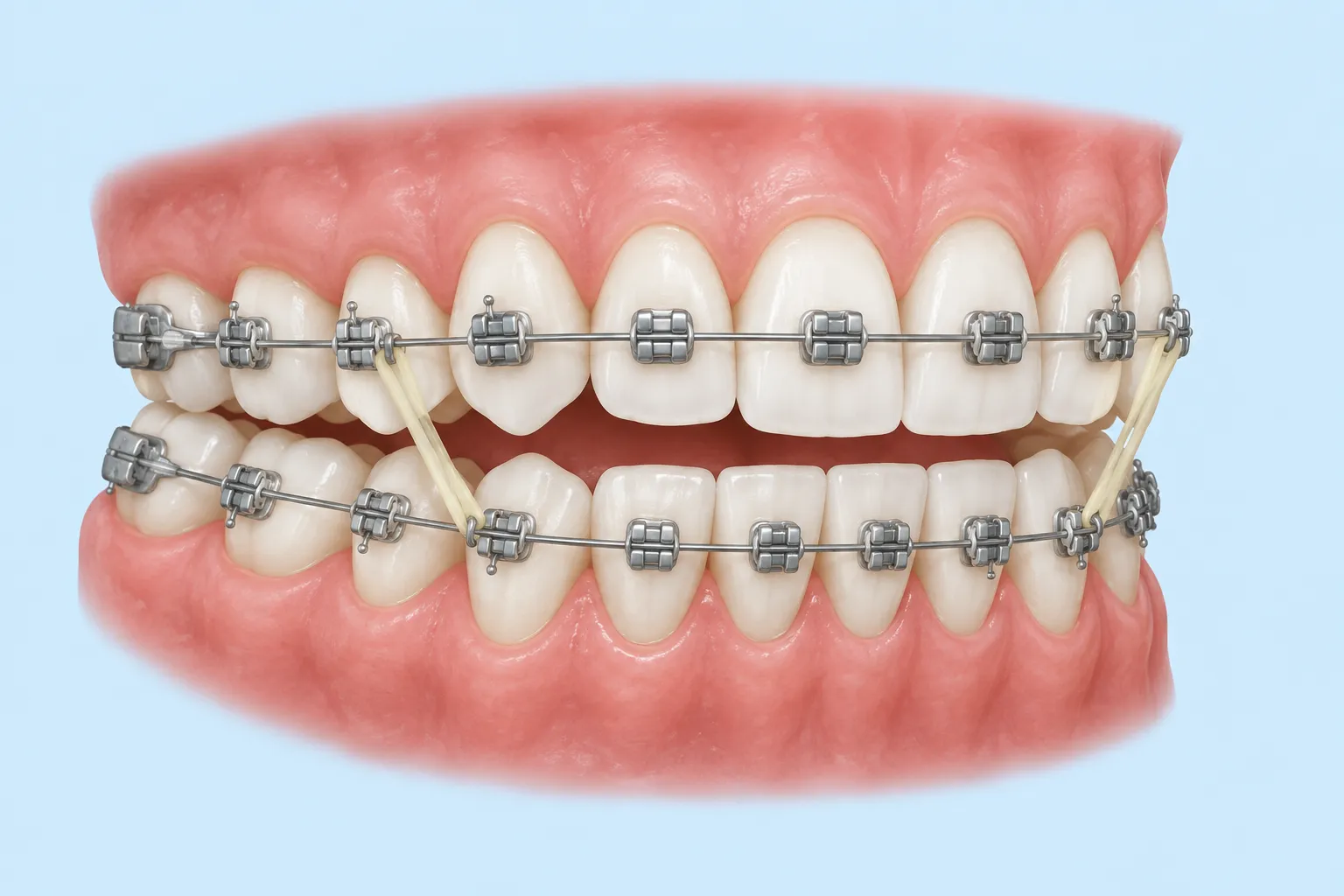
As your teeth line up, your orthodontist may turn more attention to your bite. Some patients need elastics to help the upper and lower teeth meet properly. If they are part of your plan, wear and replace them on the schedule you were given; occasional wear can slow progress.
Photos may show less change during bite work. Your orthodontist can tell you what remains to be corrected before removal. A protruding tooth, a deep bite or a crossbite may require a different sequence from simple crowding.
Month 12 onward: finishing work and removal
Near the end, your orthodontist checks individual tooth positions and where your teeth meet when you bite. You may still need small wire changes. Some patients finish before month 18 and others later, even if their front teeth have looked straight for a while. The deciding factor is whether the planned corrections are complete.
At the removal visit, the team takes off the brackets and adhesive, cleans your teeth and may take new records. They fit or arrange your retainers and explain the wear schedule. If your retainer will arrive later, ask how to protect your result in the meantime.
After braces: the retainer stage
Retainers help hold your teeth in position after active treatment. Yours may be removable and clear, made from wire and acrylic, or fixed behind some teeth. You may need to wear a removable retainer for longer hours at first, then switch to nights. Your orthodontist will set the schedule for you.
Clean your retainer and put it somewhere safe when it is out of your mouth. Call your orthodontist if it cracks, goes missing or stops fitting; do not force it over teeth that have shifted. You will need to keep wearing it long after the braces come off.
What affects how long braces take?
If you have mild spacing, you may need fewer movements than someone with crowded, crooked teeth and a bite problem. Dental work or additional appliances can add stages before or during braces. Teeth also move at different rates, even in people whose smiles look similar at the start.
Missed visits, broken brackets and inconsistent elastic wear can interrupt progress. Brushing and regular dental care keep teeth and gums healthy during treatment. Custom brackets and fast early movement cannot guarantee an early finish date.
Does the type of braces change the schedule?
Traditional metal braces and clear ceramic braces both use brackets and wires. Some practices also offer lingual braces, with brackets on the inside of the teeth. Clear aligners are removable and have a different wear and visit routine. Your alignment needs matter more to the finish date than the name of the appliance alone. Eisenberger and Meister offers metal braces, clear braces, LightForce ceramic braces and Invisalign aligners.
What if a child still has baby teeth?
An early orthodontic evaluation can catch a developing bite or space problem while a child still has baby teeth. Some children have an early phase of treatment and return for full braces once more permanent teeth come in. Others can wait. If your child needs two phases, the first phase is only part of the total treatment time. Adults usually begin with their adult teeth in place but may need different preparatory care.
|
If progress seems slow |
What to do |
|---|---|
|
Your front teeth look unchanged |
Ask which teeth or bite relationship the current wire is working on. |
|
A wire pokes or a bracket is loose |
Call for repair instructions instead of waiting for the next adjustment. |
|
You have trouble wearing elastics |
Tell your team what is getting in the way so they can help you follow the plan. |
|
A retainer feels tight after removal |
Contact the office before forcing it into place. |
Planning treatment in and around Passaic
Eisenberger and Meister Orthodontics treats children, teens and adults in Passaic, New Jersey. The team offers traditional and clear braces, including custom 3D-printed ceramic LightForce braces. LightForce customization may reduce appointments or treatment time for some patients; the movements your teeth need still determine your plan. Dental Monitoring can also make progress checks more convenient alongside your in-person visits.
Families from nearby Clifton, Garfield, Wallington, East Rutherford, Rutherford, Nutley and Wood-Ridge can also visit the Passaic office. The team has a combined 38 years in practice and has treated more than 15,000 smiles. At a complimentary consultation, you can discuss your treatment stages and financing options, including 0% APR options without hard credit checks. The warm, spa-like office and carefully scheduled visits help make repeat appointments easier to fit into family life.
The bottom line
You can plan for an adjustment period, months of tooth movement and bite work, then retainer wear after removal. Your orthodontist will judge progress at each visit rather than hold you to a month marker. For a timeline based on your own teeth, schedule a complimentary consultation with Eisenberger and Meister Orthodontics in Passaic.
FAQ
What is the time period for braces?
Many people wear braces for roughly 12 to 24 months, but the period varies with crowding, bite correction, growth and the way teeth respond. Your orthodontist can estimate your time after an exam and update it during treatment. Retainer wear follows braces removal.
Can braces fix an overbite?
Braces can be part of correcting an overbite, often with elastics or other appliances depending on the cause and severity. Your orthodontist needs to assess the bite to explain what correction is possible and how it affects the timeline.
What do first time braces look like?
Traditional braces have small brackets bonded to the teeth, connected by a wire; clear ceramic brackets are another option. In the first week, your teeth will generally look much as they did before placement, with the braces visible on top. Movement takes time.
What’s the worst day of braces?
The first few days after placement are often the most uncomfortable while teeth feel tender and cheeks adjust to brackets. Some people also notice brief tenderness after adjustments. Pain that increases or a wire that cuts your cheek warrants a call to the orthodontist.
How to sleep with braces?
You can sleep in your usual position with braces. If a bracket rubs your cheek at night, orthodontic wax may help; choose soft foods earlier in the day if your teeth are sore after an adjustment. Call the office if a sharp wire keeps you awake.