
Braces Transformation: Before and After Insights
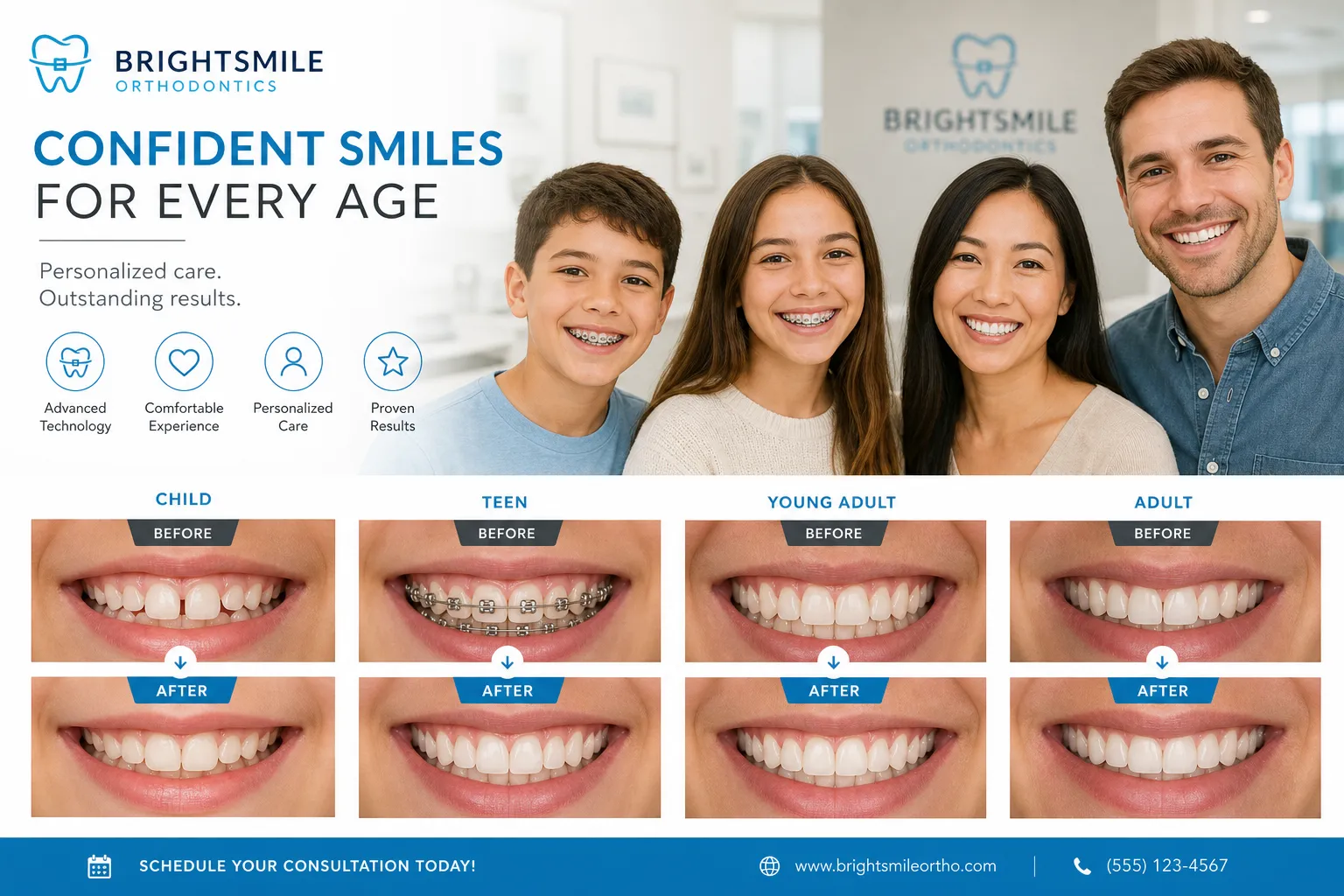
If you are researching a braces transformation before and after, you are probably asking the right practical questions: What will actually change, how long will it take, and will the results be worth it? For children, teens, adults, and families across Passaic County and nearby North Jersey communities, the best before-and-after result is one that looks real, feels comfortable, and improves both bite function and facial balance over time.
A true braces transformation is about far more than straighter teeth. It can improve bite function, facial balance, oral hygiene, speech, chewing comfort, and long-term dental health. It can also be life-changing for confidence. The biggest mistake patients make is expecting every smile to transform the same way; results depend on the bite issue being corrected, the patient’s age, treatment timing, and the technology used.
At Eisenberger and Meister Orthodontics, every treatment plan is built around the individual, not a generic template. With 38 years in practice, 15,000+ smiles treated, advanced diagnostics, custom LightForce braces, Dental Monitoring, and Invisalign Sapphire Provider expertise in the top 0.5% of specialists, the practice gives families in Passaic and surrounding towns a higher level of precision, comfort, and personalization from the very first visit.
What a Braces Transformation Actually Means
When people think of braces before and after, they usually picture crowded teeth becoming straight. That is part of it, but orthodontic treatment often does much more:
-
Aligns crooked or rotated teeth
-
Closes gaps or spaces
-
Corrects overbites, underbites, crossbites, and open bites
-
Improves how the upper and lower teeth fit together
-
Reduces uneven tooth wear
-
Makes brushing and flossing easier
-
Supports healthier jaw function
The most satisfying transformations usually combine cosmetic improvement with functional correction. That means the goal is not just a prettier smile, but a healthier one that is easier to maintain for years to come.
What Competitor Articles Usually Show, and What They Often Miss
Many before-and-after braces pages do a good job of showing dramatic results. They often highlight overbite correction, crowding improvements, gap closure, adult braces success stories, and elastics in more complex cases.
What they often miss is the proof-oriented context patients actually need: what the photos do show, what they do not show, and whether the change was cosmetic, functional, or both. Before-and-after photos can demonstrate alignment, bite improvement, and smile changes, but they cannot show how the teeth function, how stable the result will be, or what retention plan made the result last.
The Missing Details That Matter
|
What Patients Want to Know |
Often Missing Elsewhere |
Why It Matters |
|---|---|---|
|
How soon changes become visible |
Yes |
Helps set realistic expectations |
|
Which bite problem is actually being corrected |
Sometimes |
Explains why treatment plans differ |
|
Whether jaw changes are possible in adults vs. kids |
Often |
Timing can change treatment options |
|
How technology affects comfort and efficiency |
Often |
Modern braces can mean fewer appointments |
|
What happens after braces |
Often |
Retainers protect the result |
|
Whether premium, aesthetic brace options exist |
Often |
Adults and teens care about appearance |
|
How remote monitoring can reduce office visits |
Usually |
Busy families value convenience |
That is where a more complete guide helps.
The Most Common Problems Braces Can Correct
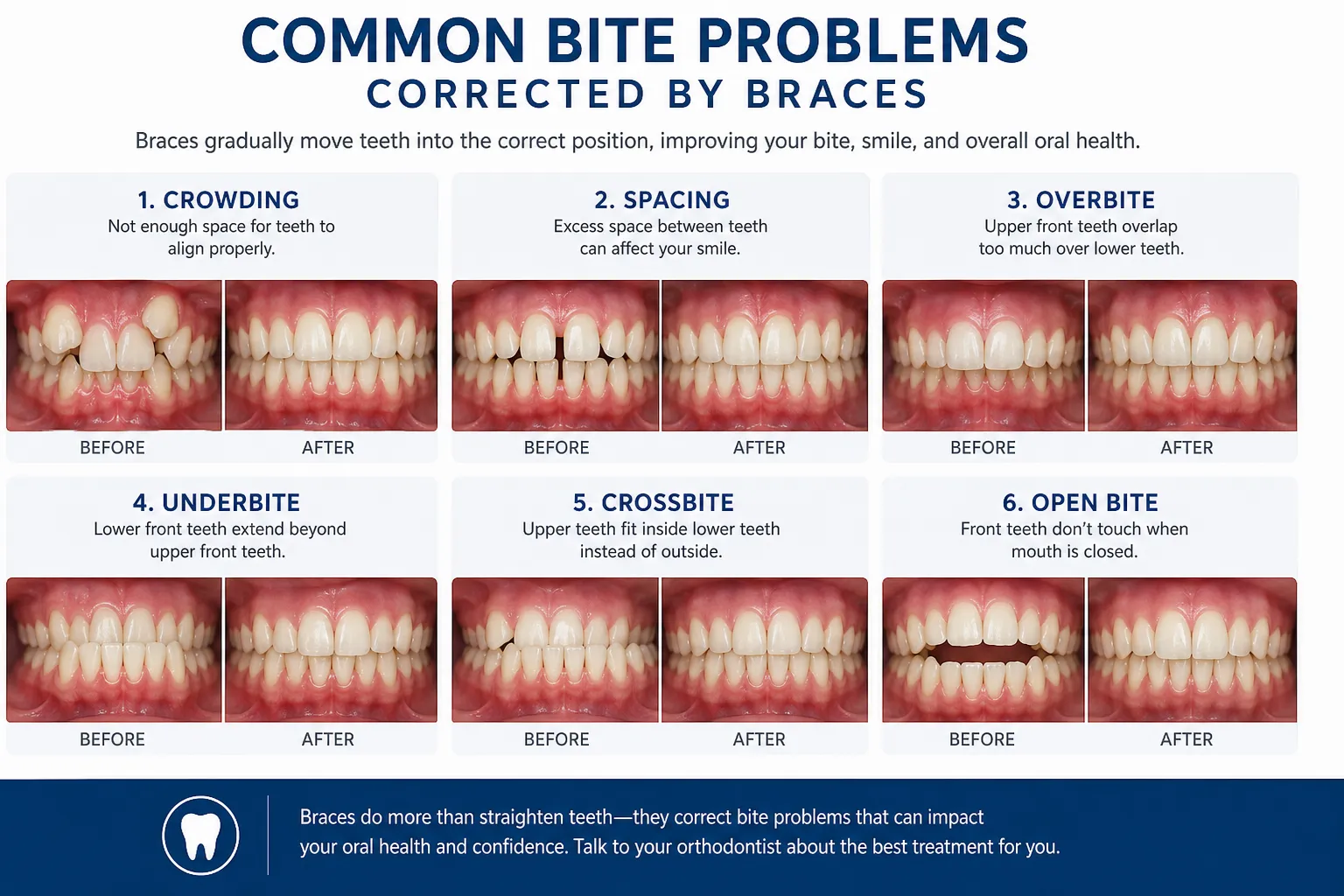
Crowding
Crowding happens when there is not enough room in the dental arch for all the teeth to fit properly. Teeth can overlap, twist, or erupt out of position.
Before: teeth may look uneven, hard to clean, or pushed forward
After: teeth line up more evenly, the smile broadens, and hygiene becomes easier
Spacing
Spacing means there is too much room between teeth. Some gaps are small and cosmetic; others affect bite stability.
Before: visible spaces between teeth
After: a more continuous smile line and better contact between teeth
Overbite
An overbite is when the upper front teeth overlap the lower front teeth too much. A mild overlap is normal, but a deep bite can lead to wear, gum irritation, or a less balanced smile.
Before: lower teeth may barely show
After: the bite looks more balanced and the front teeth relate more naturally
Underbite
An underbite is when the lower teeth sit in front of the upper teeth. This can affect appearance, chewing, and jaw comfort.
Before: the lower jaw may appear more prominent
After: the teeth and bite fit together more harmoniously
Crossbite
A crossbite happens when some upper teeth bite inside the lower teeth instead of outside them.
Before: the bite can look off-center or uneven
After: the arches relate correctly, often improving symmetry and function
Open Bite
An open bite means the upper and lower teeth do not meet properly when the mouth closes, often in the front.
Before: difficulty biting into foods like sandwiches or pizza
After: better front tooth contact and stronger function
What Before and After Changes Patients Usually Notice
A braces transformation is gradual, which can be reassuring. Most patients do not wake up one day looking completely different. Instead, they begin to notice small improvements that build into a major result.
Cosmetic Changes
-
Straighter front teeth
-
Improved smile symmetry
-
Reduced spacing
-
Better tooth display when smiling
-
Smoother arch shape
Functional Changes
-
Better bite contact
-
More comfortable chewing
-
Less strain on certain teeth
-
Easier cleaning between teeth
-
Better support for long-term oral health
Confidence Changes
This part is hard to measure but easy to recognize. Children often smile more in photos. Teens may feel less self-conscious at school. Adults frequently say they wish they had done it sooner.
Braces Before and After for Kids, Teens, and Adults
Children
For children, orthodontic treatment is sometimes about guiding growth as much as straightening teeth. Early evaluation can identify narrow arches, crossbites, or erupting teeth that may benefit from interceptive care.
The advantage of treating younger patients is that jaw growth may still be influenced. This can make some corrections simpler and more efficient.
Teens
Teen years are one of the most common times for braces because most permanent teeth are in place, but growth may still be on the patient’s side. This often allows for highly effective correction of crowding, bite problems, and alignment issues.
Teens also benefit from newer, more aesthetic options like clear braces and custom LightForce braces.
Adults
Adults make up a growing share of orthodontic patients, and their transformations can be remarkable. While adult jaw growth is complete, teeth still move very predictably with the right treatment plan.
Adults often seek treatment for:
-
Crowding that worsened over time
-
Relapse after not wearing retainers
-
Bite changes causing wear or discomfort
-
Cosmetic improvements before career or life events
At Eisenberger and Meister Orthodontics, adult patients often appreciate the practice’s spa-like office environment, efficient scheduling, and discreet treatment options that fit busy professional lives.
Realistic Braces Transformation Timelines
One of the biggest questions behind any braces transformation is timing. Here is a realistic view.
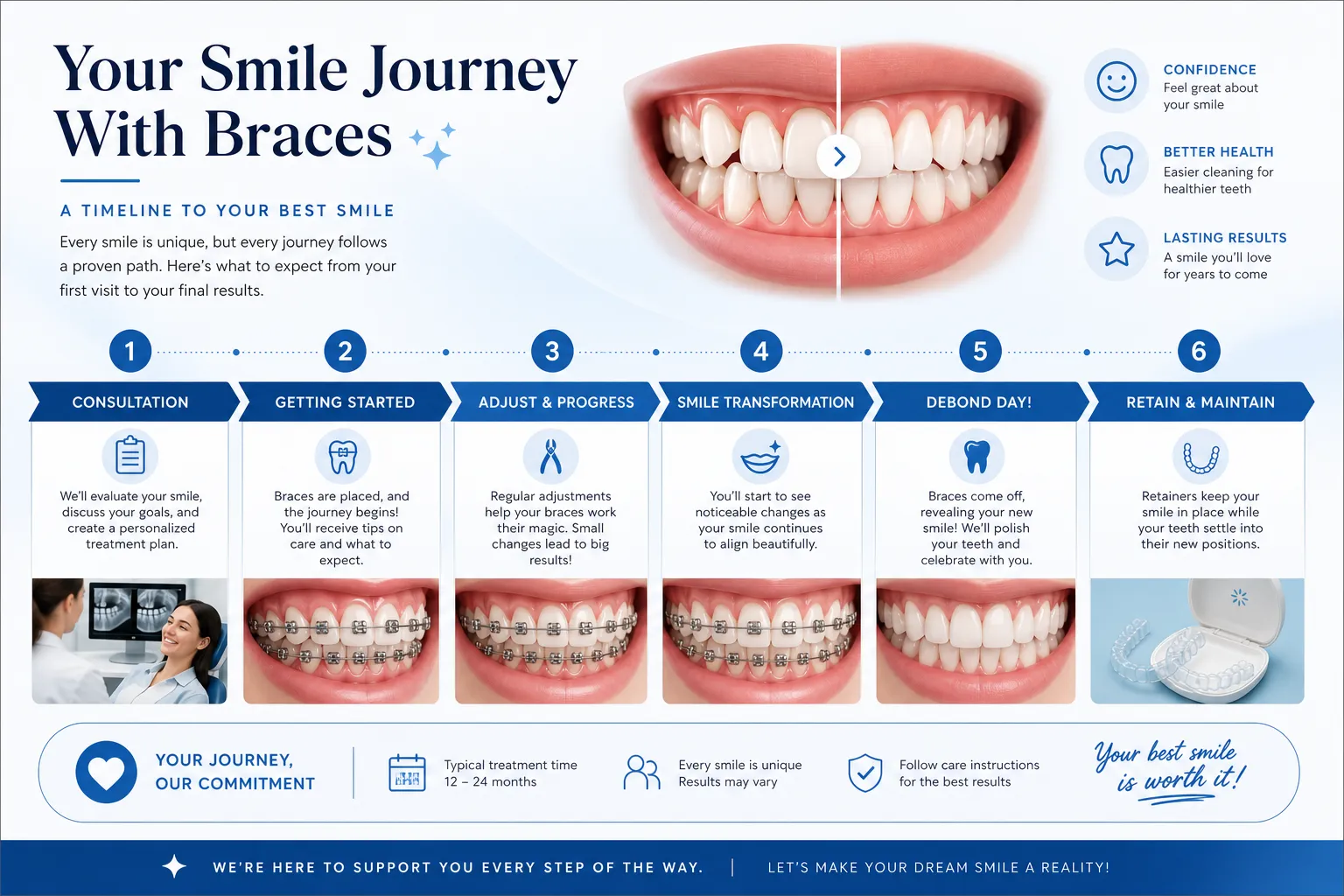
General Timeline
|
Stage |
What Usually Happens |
Approximate Timing |
|---|---|---|
|
Consultation |
Exam, photos, digital scans, treatment planning |
Day 1 |
|
Early movement |
Initial leveling and alignment begins |
6–12 weeks |
|
Noticeable cosmetic improvement |
Front teeth often start looking straighter |
2–6 months |
|
Bite correction |
Elastics, arch coordination, detailed finishing |
6–18 months |
|
Final detailing |
Fine adjustments for ideal contacts and aesthetics |
End of treatment |
|
Retention |
Retainers protect the result |
Ongoing |
Why Some Cases Move Faster Than Others
Treatment length depends on:
-
Severity of crowding or bite issues
-
Age and biology
-
Compliance with elastics or other instructions
-
Whether extra appliances are needed
-
Type of braces or aligner system used
-
Consistency with follow-up care
With custom LightForce braces, treatment may be more efficient because the brackets are designed specifically for the patient’s teeth, which can support more precise movement and potentially fewer appointments.
What Makes Modern Braces Different From Older Braces
Competitor articles often talk about braces as if all braces work the same way. They do not.
Traditional Braces
Traditional metal braces remain highly effective and are still a great option for many patients, especially for complex bite correction.
Clear Braces
Clear ceramic braces blend in more naturally with teeth, making them a popular option for image-conscious teens and adults.
LightForce Custom Braces
One of the most exciting advances in orthodontics is LightForce: fully customized, 3D-printed ceramic braces designed for the shape of each individual tooth. That level of customization can improve precision and may help reduce treatment inefficiencies.
For patients who want a premium treatment experience, this is a meaningful advantage.
Dental Monitoring
Another major difference is convenience. Dental Monitoring allows orthodontists to track progress remotely between appointments. For busy families and professionals in Passaic, Clifton, Montclair, Nutley, Bloomfield, Wayne, and surrounding communities, that can mean less hassle, fewer unnecessary visits, and more peace of mind.
Braces vs. Invisalign for Before and After Results
Since Eisenberger and Meister Orthodontics is an Invisalign Sapphire Provider, many patients naturally compare braces with Invisalign.
The Short Answer
Both can deliver beautiful transformations. The best option depends on your bite, goals, lifestyle, and level of compliance.
|
Factor |
Braces |
Invisalign |
|---|---|---|
|
Best for complex movements |
Excellent |
Very good to excellent depending on case |
|
Visibility |
More noticeable |
More discreet |
|
Compliance required |
Lower, since braces stay on |
Higher, since trays must be worn consistently |
|
Food restrictions |
Yes |
Minimal, trays remove for meals |
|
Aesthetic appeal |
Better with clear or LightForce braces |
Strong advantage |
|
Remote monitoring convenience |
Strong with Dental Monitoring |
Strong with Dental Monitoring |
For some patients, braces are still the best tool for the most efficient or controlled result. For others, Invisalign offers the ideal blend of discretion and flexibility.
How Orthodontic Treatment Can Affect the Face
A common PAA question is whether face shape changes after braces. The careful answer is that braces usually do not change your face shape dramatically, but they can improve facial balance by changing how the teeth and bite support the lips and jaw.
Common Appearance Changes
-
Lips may rest more comfortably
-
Teeth may show more evenly in the smile
-
The profile may look more balanced in certain bite corrections
-
The jaw may appear less strained or asymmetrical
These changes are typically subtle and healthy, not artificial. In growing children and teens, orthodontic guidance can have a more noticeable effect on facial balance because growth is still underway.
How to Read Before-and-After Photos the Right Way
It is easy to be impressed by dramatic photos, but smart patients look deeper.
Ask These Questions
-
What bite problem was corrected?
-
Was the patient a child, teen, or adult?
-
Did treatment involve braces alone or other appliances too?
-
Was the change mostly cosmetic, functional, or both?
-
What kind of retention plan followed treatment?
The best orthodontic consultation is one that translates those answers into your situation, not somebody else’s.
What Happens After Braces Come Off
A true braces transformation is not finished the day the brackets come off. Teeth can keep shifting for years if they are not held in their new position, which is why retention matters long after active treatment ends.
Retainers Protect the Investment
Without retainers, teeth can move gradually over time. That is true whether the original problem was crowding, spacing, or bite-related, and it is one reason some adults notice changes years after braces if retention was not maintained.
Retainers help hold the teeth while the bone and surrounding tissues stabilize around the new position, protecting the result you worked for.
Most patients receive a retention plan that may include:
-
Removable retainers
-
Fixed retainers in certain cases
-
Follow-up checks to confirm stability
This phase matters just as much as active treatment if you want your before-and-after result to last.
Why Families in Passaic and Surrounding North Jersey Communities Choose a More Personalized Orthodontic Experience
Patients searching for orthodontic care in and around Passaic often want more than just a straighter smile. They want expertise, transparency, comfort, and convenience.
Eisenberger and Meister Orthodontics is especially well-positioned for families and adults in Passaic, Clifton, Garfield, Wallington, East Rutherford, Rutherford, Wood-Ridge, Carlstadt, Hasbrouck Heights, Lodi, Hackensack, Saddle Brook, Elmwood Park, Fair Lawn, Paterson, Little Falls, Totowa, Wayne, Montclair, Woodland Park, Verona, Cedar Grove, Nutley, Belleville, Bloomfield, Glen Ridge, North Arlington, Lyndhurst, Kearny, Secaucus, Moonachie, South Hackensack, Rochelle Park, Bergenfield, Teaneck, Paramus, West Orange, Livingston, and nearby North Jersey communities who want high-touch care without sacrificing efficiency.
What Sets the Experience Apart
-
Complimentary consultations
-
Flexible financing, including 0% APR options and no hard credit checks
-
Advanced orthodontic technology
-
Personalized care for children, teens, and adults
-
Efficient scheduling with less waiting time
-
A luxurious, warm, spa-like office
-
Access to premium treatment options including LightForce and Invisalign
-
Long-standing trust built over 38 years and 15,000+ smiles treated
Treatment cost can vary based on case complexity, appliance choice, and overall treatment length, so the exact investment is different for every patient. Complimentary consultations and financing options can make care more manageable and help families choose treatment with confidence.
Signs You Are a Good Candidate for Braces
You may be a strong candidate if you have:
-
Crooked or crowded teeth
-
Gaps between teeth
-
An overbite, underbite, crossbite, or open bite
-
Shifting after past orthodontic treatment
-
Trouble cleaning between overlapping teeth
-
Jaw strain from an unbalanced bite
-
Concerns about smile aesthetics or confidence
The only way to know the best treatment path is with a full orthodontic evaluation, including digital imaging and a personalized treatment discussion.
Questions to Ask at Your Consultation
To make the most of your visit, ask:
-
What exactly is causing my bite problem?
-
What kind of before-and-after result is realistic for me?
-
Am I a better fit for braces or Invisalign?
-
Would LightForce braces offer any advantage in my case?
-
How often would I need appointments?
-
Can Dental Monitoring reduce office visits?
-
What will treatment cost, and what financing is available?
-
What type of retainer will I need afterward?
A high-quality orthodontic consultation should leave you feeling informed, not pressured.
Final Thoughts
A meaningful braces transformation is never just about cosmetic change. It is about correcting the right problem, at the right time, with the right technology and expertise. The best before-and-after result is one that looks natural, functions properly, and stays stable long after treatment ends.
For families and adults looking for a braces transformation before and after they can feel confident about, Eisenberger and Meister Orthodontics offers the combination that matters most: advanced treatment options, elite Invisalign expertise, highly personalized care, flexible financing, efficient appointments, and a premium patient experience designed around real life.
If you are ready to find out what your smile could look like, schedule a complimentary consultation with Eisenberger and Meister Orthodontics. It is the easiest way for patients from Passaic and surrounding North Jersey communities, including West Orange, Livingston, and nearby towns, to get a clear, honest view of what is possible for your smile, your bite, and your timeline.
FAQ
How long does it take to see noticeable changes with braces?
Many patients begin to see early movement within 6 to 12 weeks, especially in the front teeth. More obvious cosmetic changes often appear within 2 to 6 months, though full treatment takes longer depending on the complexity of the case.
Do braces make you look older or younger?
Braces themselves do not make you look older or younger, but a straighter smile can make your appearance look healthier, more balanced, and more confident. Many patients feel they look more refreshed once alignment improves.
Will your face shape change after braces?
Usually, braces do not dramatically change face shape. They can, however, create subtle improvements in facial balance by changing how the teeth and bite support the lips and jaw, especially in growing patients or when bite issues are being corrected.
Is $6,000 a lot for braces?
That can be a normal investment for orthodontic treatment, but the right answer depends on the complexity of the case, the appliance used, and how long treatment takes. The best way to judge value is to compare what is included, the expected result, and the financing options available.
Will teeth move 10 years after braces?
They can, especially if retainers are not worn as recommended. Teeth naturally want to shift over time, so long-term retainer use is what helps keep the result stable years after braces.
Do braces really improve bite function?
Yes, when treatment is planned to correct bite problems as well as alignment. A better bite can improve chewing comfort, reduce uneven wear, and support healthier long-term function.