
The cost of braces compared to Invisalign depends on the treatment your teeth need. Metal braces may have a lower starting quote; for some patients, Invisalign costs about the same. Compare the total fee for a plan that can deliver the result you need, after insurance, rather than the advertised monthly payment.
If you are comparing treatment for your teen or yourself, ask what each proposal includes. A short aligner plan and comprehensive braces treatment cover different amounts of care.
Is the cost of braces compared to Invisalign always lower?
Metal braces typically start with a lower quote than ceramic braces or Invisalign, but neither option always costs less. A complex braces case can still cost more than a limited aligner case, and an orthodontist may quote similar fees for comprehensive treatment with either appliance. Invisalign’s cost comparison also notes that case complexity and treatment length affect the price of both options.
|
Cost consideration |
Braces |
Invisalign |
|---|---|---|
|
What you pay for |
Brackets, wires, adjustments, clinical planning and supervision |
Digital planning, a series of custom aligners, clinical supervision and any included refinements |
|
Possible extra charges to clarify |
Broken-appliance visits, replacement components and retainers |
Lost aligners, additional aligners or refinements, and retainers |
|
Where costs can rise |
More complex movements, longer treatment or a different bracket type |
More complex movements, additional aligner stages or extended treatment |
|
Daily commitment |
Fixed to the teeth, with extra cleaning around brackets |
Removable, but effective treatment depends on wearing the aligners as directed |
Your written treatment agreement determines whether replacements, repairs, refinements and retainers cost extra.
What changes the price of braces or Invisalign?
The amount and type of tooth movement
A limited correction and a complex bite problem call for different treatment plans. Crowding, spacing and other bite problems affect the amount of tooth movement and the length of orthodontic treatment. Braces may be a better fit when particular movements are needed; other patients may have a choice. Ask whether both proposed appliances can deliver the same result before comparing fees.
The appliance and the plan behind it
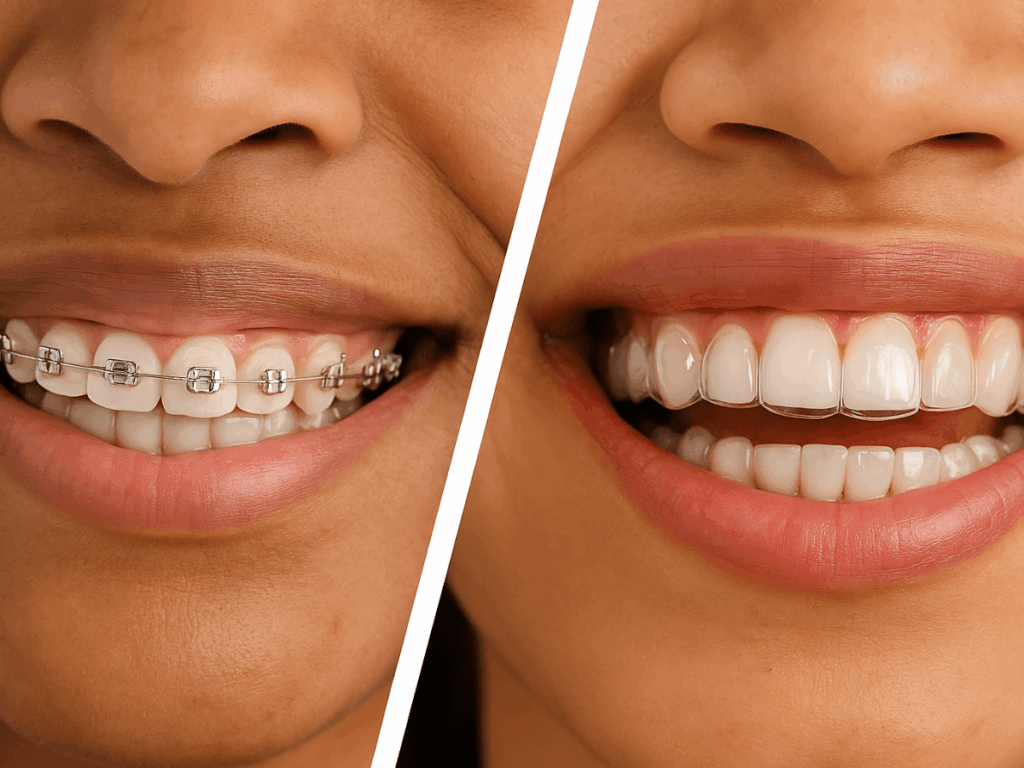
Traditional braces use metal brackets and wires to apply continuous pressure as they straighten teeth. Clear braces use ceramic brackets that can blend better with tooth color, but their fee need not match metal braces. Invisalign treatment uses a planned series of removable aligners to guide tooth movement, which may appeal to someone who wants a nearly invisible option. Plans differ in how much movement they are designed to accomplish and whether additional aligners are part of the quoted treatment. Compare plans with the same intended outcome rather than comparing a limited aligner quote with full braces treatment.
At Eisenberger and Meister Orthodontics, patients can discuss braces, clear braces, custom LightForce braces and Invisalign during a personalized consultation. Your choice needs to suit both your teeth and the routine you can maintain.
Visits, repairs, refinements and retainers
Braces need scheduled adjustments and, at times, a repair visit. Aligners may need additional stages if teeth do not track as planned. Both approaches require follow-up and retainers after active treatment. One office may include those services in its quote; another may charge for them separately.
Before signing, ask whether the fee covers scans or records, follow-up visits, broken brackets or lost trays, additional aligners, and the first set of retainers. Ask what happens to the fee if treatment takes longer than expected. Get the answers in writing.
How do insurance and financing affect what you pay?
Insurance coverage can reduce your out-of-pocket cost for orthodontic treatment. Your plan determines eligibility, limits and timing: it may have a lifetime orthodontic maximum or age restrictions, and network rules can affect payment. Request a benefits breakdown for the proposed treatment rather than assuming that Invisalign is excluded or braces are covered.
“Dental plans with orthodontic coverage usually cover traditional braces and clear aligners equally, but individual plans vary.” – American Association of Orthodontists
Compare the numbers in this order:
-
Total treatment fee: What is included from the first records through the end of active care?
-
Estimated insurance payment: How much is the plan expected to contribute, and when?
-
Your remaining balance: What will you owe if the estimate changes or coverage ends?
-
Payment schedule: What is due at the start, what are the monthly payments and is there any financing charge?
A longer payment term can lower the monthly bill without changing the treatment fee. Financing terms determine the amount you pay in total. Eisenberger and Meister Orthodontics offers complimentary consultations and flexible financing, including 0% APR options with no hard credit checks. Ask for the terms that apply to your own treatment proposal.
Timeline and daily convenience matter too
Treatment time depends on the movements needed and how the plan progresses. Neither appliance is faster for every patient. Braces remain attached to the teeth and apply pressure without anyone having to remember to put them back in. You do need to brush carefully and avoid hard, sticky foods that can damage brackets or wires.
Invisalign aligners come out for meals and oral hygiene, a convenience for many adults and teens. The American Association of Orthodontists says aligners are typically worn at least 22 hours a day. If the patient struggles to wear aligners consistently, progress can stall and the plan may need adjustment. That daily commitment can outweigh the convenience of taking them out.
Appointments and travel add a time cost even when they are part of the quoted fee. Ask how often you should expect to come in, whether remote monitoring is available for your case, and how urgent appliance problems are handled. Eisenberger and Meister Orthodontics offers Dental Monitoring, an option that can make follow-up more convenient for suitable patients. It does not replace the orthodontist’s judgment about necessary in-person visits.
How to compare two quotes fairly
Bring both written proposals to the same standard:
|
Ask each office |
Why it matters |
|---|---|
|
Is this limited or comprehensive treatment, and what bite issues are included? |
A smaller scope can produce a smaller quote without solving the same problem. |
|
Are records, visits, refinements and retainers included? |
These items can change the final amount you pay. |
|
What would trigger an additional fee? |
You can budget for lost aligners, repairs or extended care. |
|
What is the estimated insurance contribution? |
The relevant figure is your expected out-of-pocket balance. |
|
What are the deposit, monthly schedule and financing terms? |
Payment flexibility and total cost are different questions. |
Consider whether the patient can keep aligners in as directed or would do better with a fixed appliance. For plans with the same clinical goal, compare your balance and the day-to-day work involved. If the goals differ, ask why before comparing prices.
Braces vs. Invisalign: Which is the better investment?
Choose a plan you can follow through with. If braces and Invisalign both address your bite and alignment issues, compare the full out-of-pocket cost, expected appointments and what the fee includes. The right choice is the one that offers the best results for your treatment goals and routine, not simply the lowest starting quote. Invisalign’s aesthetic appeal may justify a higher fee for someone who values discretion and can wear the aligners as prescribed. Braces may save a teen who often misplaces removable items from replacement costs and interruptions.
Retainers help maintain tooth positions after treatment with either appliance. A lower quote that leaves out retainers or a needed stage of care may cost more by the time treatment is complete. The American Association of Orthodontists’ cost guidance recommends asking whether appointments and post-treatment retainers are part of the price.
Choosing care in and around Passaic
For families in Passaic and nearby Clifton, Garfield, Paterson, Wallington and East Rutherford, a consultation is the practical way to get a meaningful braces-versus-Invisalign price. Eisenberger and Meister Orthodontics can discuss options for children, teens and adults, including clear or custom braces and Invisalign, in a warm, comfortable setting.
The best-value treatment is one you can afford, follow through with and use to reach the orthodontic result you need. Start with the practice’s complimentary consultation to get a personalized plan, a written fee and payment options before choosing between braces and Invisalign. If you are planning for a child, the practice’s braces cost and payment overview provides local context.
FAQ
Is it cheaper to get regular braces or Invisalign?
Regular metal braces often have a lower starting fee, but the total cost depends on the complexity and scope of treatment. Compare written quotes for the same treatment goal, including insurance, follow-up care, possible extra fees and retainers.