
Broken Braces: What Patients Should Know First
If you or your child is dealing with broken braces, the first thing to know is this: it is usually fixable, manageable, and not a reason to panic. A loose bracket, poking wire, or shifted band can feel uncomfortable and alarming, but most orthodontic issues can be stabilized at home until you are seen by your orthodontist.
For families in Passaic and nearby New Jersey communities, the real question is not just how to fix braces temporarily, but when to call, what to avoid, and how to protect treatment progress. Knowing those basics can save you discomfort, prevent delays, and help you make smart decisions fast.
At Eisenberger and Meister Orthodontics, we help children, teens, and adults through these situations every day. With 38 years in practice, more than 15,000 smiles treated, advanced treatment technology, and efficient scheduling designed to reduce wait times, our team focuses on making unexpected orthodontic issues feel much less stressful.
“Approximately 4.5 million individuals in the United States are undergoing orthodontic treatment at any given time.” – Biology Insights
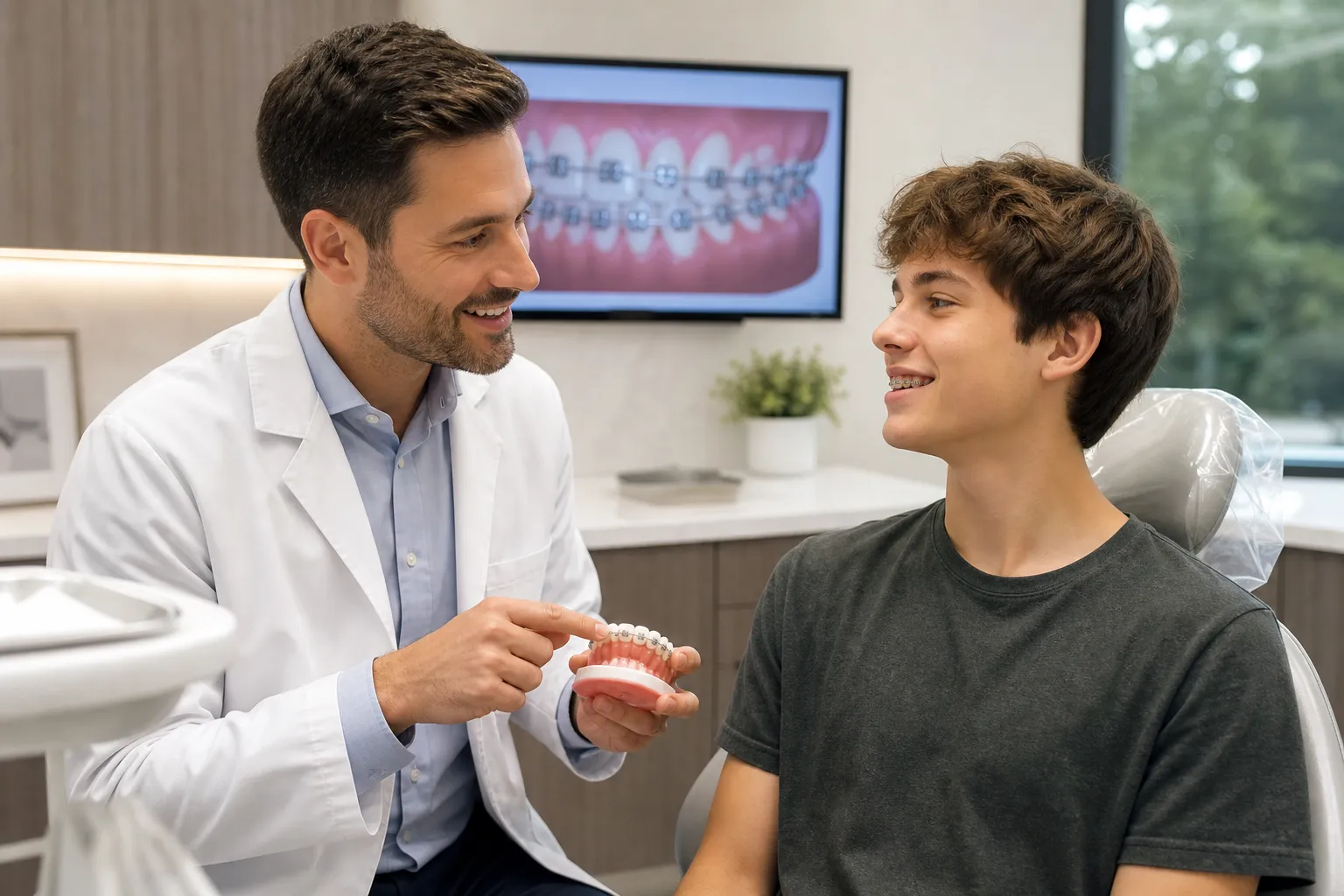
What Counts as Broken Braces?
“Broken braces” is a broad term. It can refer to several different orthodontic problems, some minor and some more disruptive.
Common types of braces damage
The most common issues include:
-
A loose or detached bracket
-
A wire that is bent, shifted, or poking
-
A rubber band or ligature that has popped off
-
A loose molar band
-
A broken or distorted orthodontic appliance, such as an expander or retainer component
Many patients assume any damage is an emergency. In reality, most problems are urgent only if they cause pain, bleeding, swelling, or risk of swallowing a piece.
What a broken bracket usually looks like
A broken bracket often stays attached to the archwire and slides back and forth. It may rotate, hang loosely, or feel like it is moving when you chew or brush. If the bracket comes off completely, remove it carefully from your mouth and keep it in a small container or bag to bring to your appointment.
Why Braces Break in the First Place
The top-ranking articles all emphasize food and accidents, but patients benefit from a more complete explanation. Braces do not usually break for one single reason. Often, several small factors combine.
The most common causes
Hard, crunchy, or sticky foods
Foods like popcorn kernels, hard candy, caramel, nuts, ice, crusty bread, and chewy gummies can place too much force on brackets and wires. If you need a refresher, following smart foods to avoid with braces guidance can go a long way toward preventing repeat breakage.
Biting into foods the wrong way
Even foods that seem safe can cause trouble if you bite directly into them. Apples, bagels, pizza crust, and raw carrots are better cut into small pieces.
Sports or accidental trauma
A fall, elbow, or ball to the face can loosen brackets or shift wires. This is one reason orthodontists strongly recommend a protective mouthguard.
“Mouthguard use has been shown to reduce the risk of sport-related dental injuries.” – American Dental Association
Teeth grinding or clenching
Nighttime grinding can place repeated pressure on braces, especially on front brackets and back molar attachments.
Deep bite or natural tooth contact
Some patients have an upper and lower bite pattern that makes certain brackets more vulnerable. In these cases, your orthodontist may adjust treatment mechanics to protect them.
Normal wear during treatment
As teeth move, pressure shifts across the appliance. Occasionally, a bracket bond may weaken and fail even when the patient did nothing wrong.
Signs You Should Not Ignore
Some orthodontic issues are irritating but manageable. Others deserve a prompt call.
Call your orthodontist soon if you notice:
-
A bracket that is fully detached
-
A wire poking into your cheek or gums
-
A loose band around a back tooth
-
Swelling, bleeding, or a sore that is worsening
-
Trouble eating because of the damage
-
A broken appliance affecting how your teeth fit together
-
A piece that came off and cannot be found
Seek urgent medical help if:
-
You have trouble breathing
-
You may have inhaled a piece of the appliance
-
There is significant facial trauma
-
Bleeding does not stop
What To Do Right Away at Home
The best first response is calm and practical. Do not try to fully repair braces yourself, but do take steps to make the area safe and comfortable.
Step 1: Inspect the area carefully
Use a mirror and good lighting. Look for:
-
Which tooth or teeth are involved
-
Whether the bracket is loose, hanging, or gone
-
Whether the wire is bent or protruding
-
Any cuts or irritation in the cheeks, lips, or gums
Step 2: Protect soft tissues with orthodontic wax
If the bracket or wire is rubbing, dry the area gently and place orthodontic wax over the spot. This often provides immediate relief.
Step 3: Reposition a loose wire if you can do so safely
Using clean tweezers or a cotton swab, you may be able to guide a displaced wire into a less irritating position. Do not force it.
Step 4: Rinse with warm salt water
A warm salt-water rinse can soothe soreness and help keep irritated tissue clean.
Step 5: Eat soft foods until you are seen
Good temporary choices include yogurt, eggs, soup, pasta, mashed potatoes, smoothies, oatmeal, and soft rice dishes.
What Not To Do
This is where many online articles stop too soon. Patients need a clear list of mistakes to avoid.
Avoid these common missteps
-
Do not glue a bracket back on yourself
-
Do not use household super glue or craft adhesive
-
Do not keep tugging on a loose bracket
-
Do not ignore a sharp wire that is cutting your cheek
-
Do not continue eating hard foods “carefully”
-
Do not throw away a detached bracket or appliance part
Trying to self-repair can damage enamel, distort the appliance, or make the professional repair more difficult.

Broken Braces by Type: What Each Problem Usually Means
Different problems call for different expectations. Here is a practical guide.
|
Problem |
What it feels like |
Temporary step |
How urgent is it? |
|---|---|---|---|
|
Loose bracket still on wire |
Sliding, spinning, mild annoyance |
Wax over bracket |
Usually not same-day urgent |
|
Bracket completely off |
Missing piece, tooth feels bare |
Save bracket, call office |
Prompt visit recommended |
|
Poking wire |
Sharp irritation to cheek or gum |
Wax or gently reposition |
Call soon if discomfort persists |
|
Loose ligature or elastic tie |
Feels different but often mild |
Leave it alone unless irritating |
Usually can wait briefly |
|
Loose molar band |
Back tooth feels unstable |
Avoid chewing there |
Should be evaluated promptly |
|
Broken appliance or expander part |
Pressure feels off, appliance shifts |
Stop forcing activation |
Call office soon |
Can You Wait to Fix a Broken Bracket?
Sometimes yes, but not indefinitely.
A loose bracket that is not painful may not require a same-day appointment. However, leaving broken braces unattended too long can slow tooth movement, reduce control over the bite, and increase the chance of further breakage. If the damaged part changes how the wire works, treatment can become less efficient.
That is one reason prompt evaluation matters, especially if you want to stay on schedule. At Eisenberger and Meister Orthodontics, we combine modern systems, efficient scheduling, and personalized treatment planning to help minimize avoidable delays. For patients already in active treatment, timely visits for a broken braces repair appointment help keep progress moving in the right direction.
What Happens at the Orthodontic Repair Visit?
Many patients worry the repair will be long or painful. Usually, it is neither.
A typical repair appointment may include:
-
Examining the damaged area
-
Removing the loose bracket from the wire if needed
-
Cleaning the tooth and bracket
-
Preparing the enamel surface
-
Bonding a new or cleaned bracket into place
-
Re-engaging or adjusting the archwire
If the damage is more involved, your orthodontist may also replace elastics, modify the wire, or adjust the appliance to prevent the same issue from happening again.
How Broken Braces Can Affect Treatment Time
A single loose bracket does not usually ruin treatment. Repeated breakage is different.
Repeated damage can lead to:
-
Slower tooth movement
-
More repair visits
-
Longer overall treatment time
-
Less predictable bite correction
-
More frustration for the patient
This is where advanced planning and customized systems can make a real difference. At Eisenberger and Meister Orthodontics, patients benefit from highly personalized care, including advanced braces options and digital monitoring tools that can improve convenience and reduce unnecessary office trips.
For some patients, modern treatment such as LightForce custom braces may support a more precise fit and fewer in-person adjustments, depending on the case.
Prevention: The Best Way to “Fix Braces” Is to Avoid the Break
A great repair strategy starts with prevention.
Daily habits that help protect braces
Choose brace-friendly foods
Soft, easy-to-chew foods place less stress on brackets and wires.
Cut food into smaller pieces
This matters especially for sandwiches, fruit, crusty bread, and pizza.
Brush thoroughly but gently
Good oral hygiene protects both your teeth and the adhesive bond around brackets.
Wear a mouthguard for sports
This is especially important for school athletics, recreational leagues, and active teens. If you or your child plays sports, a properly fitted orthodontic mouthguard can help reduce the risk of damage to braces and teeth.
Avoid chewing on objects
Pens, fingernails, ice, and bottle caps are all common culprits.
Keep routine orthodontic appointments
Regular visits allow your orthodontist to spot developing problems early.
Why the Right Orthodontic Practice Matters
When something breaks, patients want fast answers, clear guidance, and a team that makes the next step easy. That matters just as much as the repair itself.
At Eisenberger and Meister Orthodontics, families choose us not only for clinical experience, but for the full care experience:
-
38 years in practice
-
15,000+ smiles treated
-
Invisalign Sapphire Provider status, placing us among the top 0.5% of specialists
-
Advanced technology, including digital tools and customized treatment options
-
LightForce 3D-printed braces for select patients
-
Dental Monitoring for greater convenience and fewer hassles
-
Care for children, teens, and adults
-
A warm, luxurious, spa-like environment
-
Complimentary consultations
-
Flexible financing, including 0% APR options and no hard credit checks
-
Efficient scheduling with less waiting time
Even when this article focuses on broken braces, patients often discover that the bigger issue is whether their current orthodontic care feels modern, responsive, and personalized enough. If it does not, that is worth rethinking.
Final Thoughts
Broken braces are common, but they should never be ignored. In most cases, the right next step is simple: reduce irritation, protect the area, avoid further damage, and contact your orthodontist for guidance.
The good news is that most repairs are straightforward. With the right care team, they do not have to derail your treatment or your peace of mind. If you are in Passaic or nearby and want expert orthodontic support in a comfortable, high-end setting, Eisenberger and Meister Orthodontics is here to help with advanced treatment, responsive care, and solutions tailored to your smile.
If you are dealing with a loose bracket, poking wire, or other orthodontic issue, schedule a complimentary consultation or repair visit and let our team help you get back on track quickly and comfortably.
FAQ
What should you do if your braces broke?
If your braces broke, start by checking what came loose, then use orthodontic wax to cover any sharp area and rinse with warm salt water if your mouth is irritated. Avoid hard or sticky foods and contact your orthodontist so the appliance can be properly repaired.
Can you break a bracket without knowing?
Yes, especially if the bracket is only slightly loose at first. You may notice it later when it starts sliding on the wire, rotating, or feeling different while chewing or brushing.
How long can I go with a broken brace bracket?
A broken bracket is not always a same-day emergency, but it should not be left too long. If it is not painful, you may be able to wait a short time, but prompt professional repair helps prevent treatment delays and further damage.
How common is it to break a bracket on braces?
It is fairly common during orthodontic treatment. Brackets can loosen because of hard foods, sports injuries, clenching, or normal wear, which is why orthodontists regularly see and repair this issue.
How long can you leave a broken bracket on braces?
You should only leave a broken bracket in place temporarily while waiting for your orthodontic visit. Leaving it too long can reduce how effectively the wire moves your teeth and may extend treatment time.
How common is it to break your braces?
Minor braces problems are common enough that most orthodontic offices are prepared for them. While it can feel stressful, broken braces are usually manageable and fixable with the right temporary care and a timely repair appointment.