
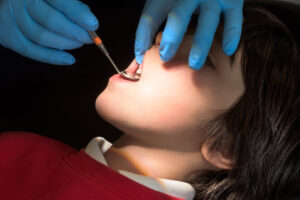
 Most parents focus on straighter teeth when they think about orthodontics, but the benefits of treatment can extend well beyond a beautiful smile. The way a child’s jaw and airway develop has a direct impact on how they breathe, and when those structures are out of alignment, children can experience disrupted sleep, chronic fatigue, and even behavioral issues that are often mistaken for ADHD or anxiety. Recognizing these signs early can make a life-changing difference.
At Eisenberger and Meister Orthodontics, airway orthodontics for children is a core part of our practice’s approach. Dr. Matthew Meister, a NYU-trained specialist in Orthodontics and Dentofacial Orthopedics, understands that the mouth, jaw, and airway are deeply interconnected. With a combined 35 years of orthodontic experience, our team at Eisenberger and Meister is uniquely equipped to evaluate these relationships and develop treatment plans that support the whole child, not just their teeth.
The Link Between Jaw Development and Airway Health
When a child’s jaw is underdeveloped or misaligned, it can narrow the airway passages and restrict proper airflow during sleep. This is especially common in children with high, narrow palates or significant overbites and underbites. A narrowed airway often leads to mouth breathing, snoring, and sleep-disordered breathing, all of which prevent children from reaching the deep, restorative stages of sleep their growing bodies need.
Sleep-disordered breathing in children is more common than many parents realize. According to the National Heart, Lung, and Blood Institute (National Institutes of Health), obstructive sleep apnea affects an estimated 1–5% of children, and many cases go undiagnosed for years. The consequences can include poor concentration, slower growth, and cardiovascular strain over time. Early orthodontic intervention offers an opportunity to address these root causes while the jaw is still actively developing.
What Airway-Focused Orthodontics Looks Like
Airway orthodontics is not a single treatment but rather a philosophy of care that prioritizes the function of the airway alongside the alignment of the teeth. For children, this often begins with a thorough evaluation of how they breathe, swallow, and position their tongue at rest. From there, several orthodontic approaches may be considered depending on the child’s anatomy and age.
Palatal expansion is one of the most common tools used in airway orthodontics. By gently widening the upper jaw, the nasal passages broaden as well, making nasal breathing easier and reducing the likelihood of nighttime obstruction. Because children’s jaw bones are still malleable, this type of expansion is significantly more effective at younger ages, which is why early evaluation matters. Functional appliances may also be used to reposition the lower jaw and guide forward growth, further opening the airway.
Signs That Your Child May Benefit From an Airway Evaluation
Not every child who snores has a serious airway issue, but certain patterns are worth bringing to an orthodontist’s attention. Parents often notice mouth breathing during the day or at night, restless sleep, frequent morning headaches, or a child who wets the bed past a typical age. Children who seem chronically tired despite a full night of sleep, or who struggle with focus and behavior at school, may also be experiencing the effects of disrupted breathing.
The following signs are commonly associated with airway concerns in children:
- Consistent mouth breathing, even when not congested
- Snoring or pauses in breathing during sleep
- Dark circles under the eyes or chronic fatigue
- A narrow, high-arched palate
- A recessed chin or underbite
These signs alone do not confirm a diagnosis, but they are meaningful data points. An evaluation with an airway-focused orthodontist can help determine whether the jaw structure is contributing to these symptoms and what options may be available.
Eisenberger and Meister Orthodontics: Care That Goes Beyond Straight Teeth
Dr. Meister completed advanced training in Orthodontics and Dentofacial Orthopedics at NYU College of Dentistry, where his research was recognized both nationally and internationally. That foundation drives the way he approaches each patient at Eisenberger and Meister Orthodontics, with a focus on personalized treatment that accounts for how the teeth, jaw, and airway all work together. Our team’s approach is grounded in the belief that orthodontic treatment, when done right, improves not just smiles but quality of life.
Located at Brook Haven Mall in Passaic, NJ, Eisenberger and Meister welcomes families from throughout the community who are looking for thoughtful, comprehensive orthodontic care. If you have noticed signs of airway concerns in your child or simply want a thorough orthodontic evaluation, we encourage you to reach out through our contact form to schedule a consultation. The right time to start is always earlier than you think.