
Clear orthodontic braces straighten teeth with tooth-colored ceramic brackets and a wire. Because they stay on your teeth, there are no trays to remember after lunch. If you want a less noticeable fixed appliance, ask whether ceramic braces can correct your bite and how their cost compares with your other options.
For families in Passaic and across North Jersey, an orthodontic assessment is the place to start. It gives you an answer about timing, suitable appliances, and the cost of a complete course of care.
What orthodontic braces do
Braces use brackets attached to teeth and an orthodontic wire that applies gentle pressure to move teeth over time. Your orthodontist adjusts the appliance as your teeth shift. Traditional braces typically have stainless steel brackets; clear braces generally use ceramic brackets that blend more closely with teeth. You will still see the wire and some other components. The American Association of Orthodontists explains how braces work and why treatment time varies by bite.
An orthodontist may recommend treatment for orthodontic issues such as crowded or spaced teeth, protruding teeth, or bite problems including overbite, underbite, crossbite, and open bite. Even if your teeth look straight, the orthodontist will assess how they meet. For children, jaw growth matters as well; for everyone, the ability to keep teeth clean is part of the picture.
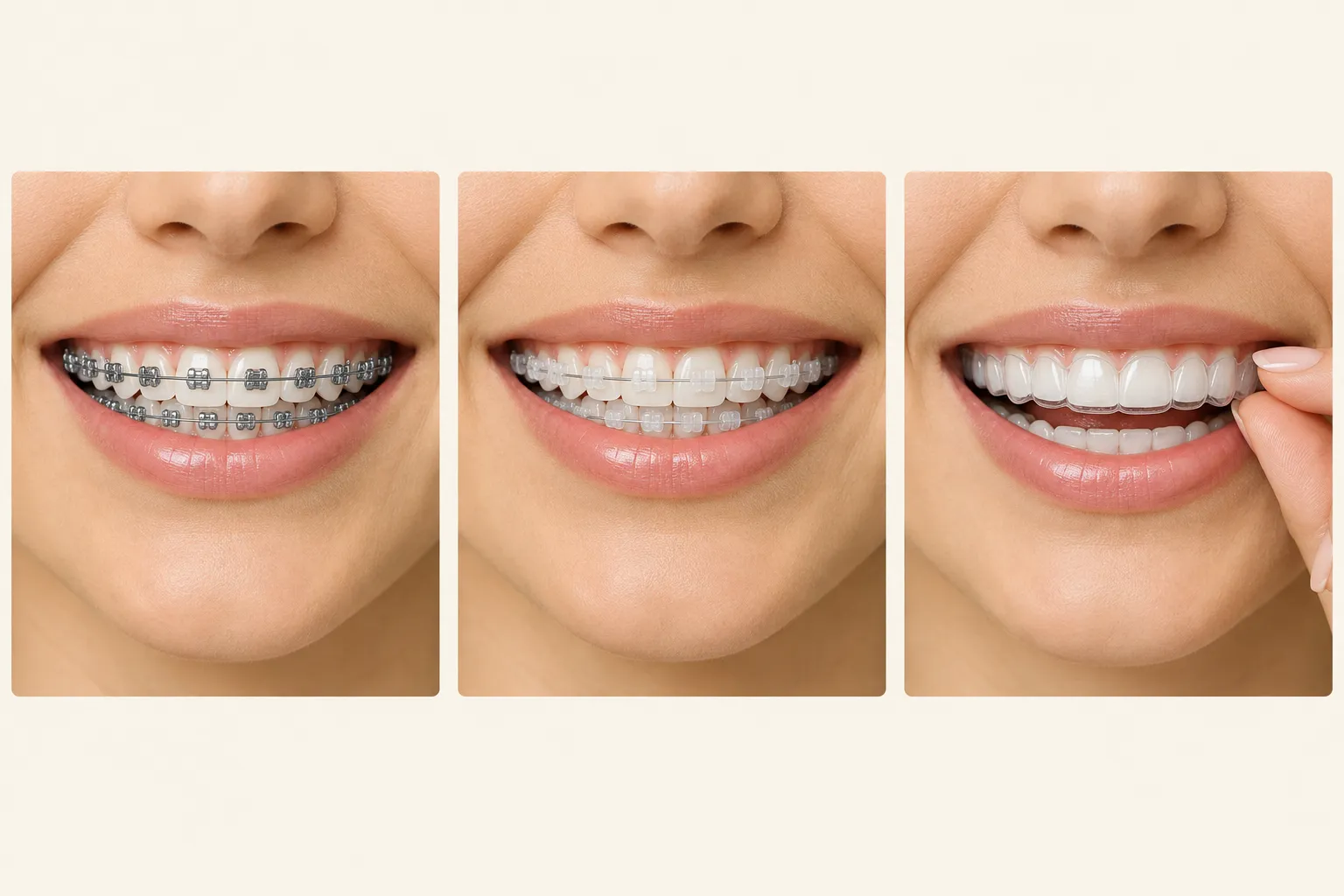
Types of braces: What changes in daily life?
|
Option |
What you see |
Daily routine |
Potential trade-off |
|---|---|---|---|
|
Traditional metal braces |
Metal brackets and wire |
Fixed to teeth; clean around brackets and avoid foods that can damage them |
Most noticeable fixed option |
|
Clear ceramic braces |
Tooth-colored or translucent brackets with a visible wire |
Same fixed-appliance habits as metal braces |
Less conspicuous, but not invisible; ceramic components can be more vulnerable to damage |
|
Custom ceramic braces, including LightForce |
Individually designed ceramic brackets and wire |
Fixed to teeth, with brushing and food precautions |
Customization does not guarantee a shorter timeline for every case |
|
Lingual braces |
Brackets and wire behind the teeth |
Cleaning and speaking may take adjustment |
Not suitable or available for every patient |
|
Clear aligners, including Invisalign |
Removable transparent trays |
Remove for eating and cleaning, and wear as directed |
Results depend heavily on consistent wear |
Clear orthodontic braces vs metal braces: Visibility comparison
Metal and ceramic braces both use brackets and wires. A clear bracket blends in better with teeth than a metal one. If you play a contact sport or wind instrument, or you are concerned about breakage or cleaning, mention it at the visit. Bracket material alone cannot predict your treatment time or cost.
Clear braces can also use visible metal wires or elastic ties. Food and drink can discolor some ties even when the ceramic bracket itself stays the same color. Ask how the appliance will look between adjustment visits.
Are clear braces the same as invisible braces?
“Invisible braces” can mean ceramic brackets, braces fitted behind teeth, or removable aligners. Each needs a different cleaning routine. Clear ceramic brackets sit on the front of teeth and show less from a distance than metal. Lingual braces sit behind teeth; aligners cover teeth and come out for meals. Ask to see the specific appliance before deciding.
Where custom LightForce braces fit
LightForce uses custom 3D-printed ceramic brackets planned for individual teeth. Eisenberger and Meister Orthodontics offers them alongside metal and clear braces. That planning may help the orthodontist schedule tooth movement and visits efficiently, although your bite still determines the timetable. Ask what custom brackets would change in your plan and total fee. The practice explains its approach to LightForce custom braces.
Braces or aligners: How is the choice made?
Your orthodontist maps the tooth movements and bite changes you need, then considers which treatment options can manage them. Aligner treatment can address many alignment problems and bite concerns, sometimes with small attachments on teeth. Braces stay in place, which takes tray wear out of the daily routine.
Think about a normal day, too. Frequent snacking or a habit of misplacing things may make braces appealing, even with the extra cleaning. If you want to take an appliance out for meals and can follow the prescribed wear schedule, aligners may fit better. For children, growth and developing teeth can affect when treatment starts.
What is better, Invisalign or clear braces?
Your orthodontist may favor fixed braces for a complex case. In other alignment cases, aligners may make the planned correction if you wear them as directed; mild issues may allow either option. Invisalign comes out while you eat and clean your teeth, then goes back in. With clear braces, you skip that step but spend more time cleaning around brackets.
Here are useful questions to bring to your appointment:
-
Can both braces and aligners correct my bite and tooth positions, or is one better suited to a particular movement?
-
If I choose clear brackets, which components will still be visible?
-
What daily cleaning, eating, and wear habits does each option require?
-
What is included if a bracket breaks, an aligner is lost, or treatment needs refinement?
What to expect during clear braces treatment
At the initial consultation, the orthodontist assesses your teeth and bite. If braces suit your needs, the team takes records and proposes a plan. Once the brackets are on, you return for adjustments and progress visits. Your teeth may feel tender after placement or an adjustment. Call the office if a wire pokes or a bracket comes loose.
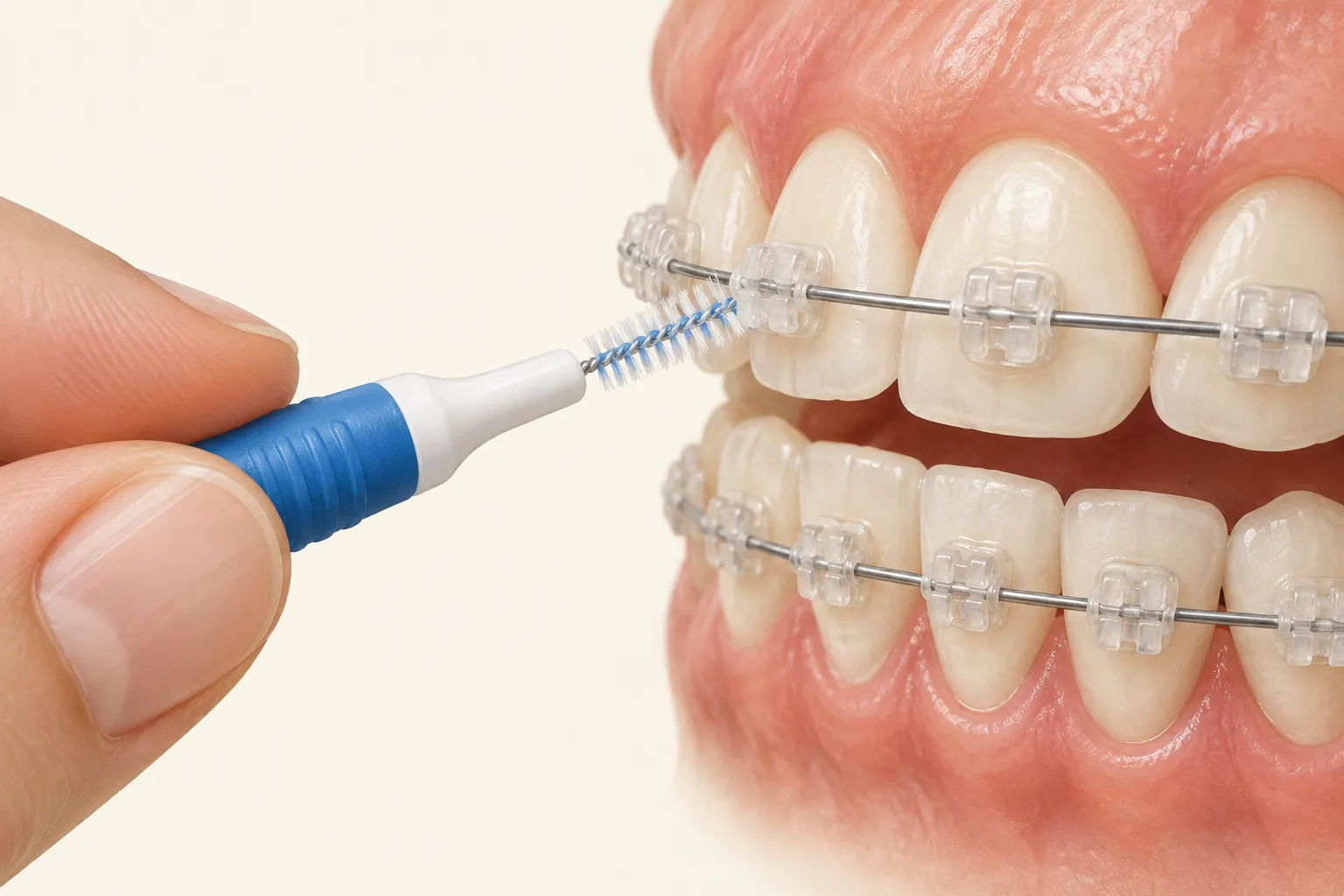
Your care team can show you how to brush around the brackets and gumline and clean between teeth. Food and plaque collect easily around the hardware, so oral hygiene takes more attention than usual. Avoid biting hard or sticky foods that can dislodge brackets. When active orthodontic treatment ends, the braces come off and you move to retainers.
How much do clear braces cost in New Jersey?
There is no single price for clear orthodontic braces in NJ. Correcting a bite and straightening a few teeth call for different treatment plans. Your quote also reflects whether you need one or both arches treated, the appliance, the visits, and what the practice includes. Ceramic or custom brackets may affect the price compared with metal braces, so compare the total treatment proposal.
Ask for an itemized explanation of records, appliance placement, routine visits, repairs, retainers, and follow-up care. Find out whether a longer treatment time could change the estimate. When comparing monthly payments, include the down payment, number of payments, financing terms, and total due.
|
Compare in your quote |
What to ask |
|---|---|
|
Appliance and visits |
Are records, placement, adjustments, and repairs included? |
|
After treatment |
Are retainers and follow-up care included? |
|
Payment terms |
What are the down payment, total due, and financing terms? |
Your dental plan may help pay for orthodontics. The amount depends on its lifetime limit, age restrictions, network rules, and whether you have already used the benefit. Removable aligners are neither automatically covered nor automatically excluded. An HSA or FSA may also help with eligible treatment expenses.
Eisenberger and Meister Orthodontics offers complimentary consultations and financing options for families, including qualifying 0% APR options without a hard credit check. You can discuss a case-specific proposal at that visit.
When should treatment start, and how long does it take?
Children can benefit from an orthodontic evaluation before losing every baby tooth. The orthodontist may spot a growth or bite issue that calls for attention, or recommend watching development and starting treatment later. Adults can seek an evaluation at any age if their dental health supports orthodontic movement.
“The American Association of Orthodontists recommends that a child’s first orthodontic check-up happen when an orthodontic problem is first recognized, and no later than age 7.” – American Association of Orthodontists
Active treatment commonly takes many months. Bite complexity, broken appliances, missed visits, and aligner wear can all affect the timetable. Straightening a small alignment concern may take less time than correcting an involved bite. Ask for your expected range, the milestones your orthodontist will monitor, and how often you will need appointments.
“While treatment length varies by individual and by bite problem, most people have their braces for 12-24 months.” – American Association of Orthodontists (linked above)
After braces or aligners, retainers help hold teeth in their new positions. Discuss the retainer cost, replacement terms, and wear schedule before you start. Your result still needs care after the braces come off.
Planning a consultation near Passaic
If you are looking for NJ braces, bring insurance information and a few notes about what bothers you. Mention concerns about appearance, school schedules, sports, or travel. The exam will show which movements your bite needs, alongside the changes you hope to see in your smile.
Eisenberger and Meister Orthodontics sees children, teens, and adults in Passaic. The practice offers metal braces, clear braces, custom LightForce braces, Invisalign, and follow-up care, with personalized treatment planning and a comfortable office setting. Families considering a visit from elsewhere in North Jersey can use this county-by-county guide to nearby communities:
-
Passaic County: Passaic, Clifton, Paterson, Haledon, Totowa, Little Falls, Woodland Park, Wayne, and Hawthorne.
-
Bergen County: Garfield, Wallington, Rutherford, East Rutherford, Lyndhurst, Lodi, Hasbrouck Heights, Hackensack, and Paramus.
-
Essex County: Nutley, Belleville, Bloomfield, Montclair, Newark, and West Orange.
-
Hudson County: Kearny, Harrison, Secaucus, North Bergen, and Jersey City.
-
Morris County: Lincoln Park, Montville, Pequannock, and Parsippany-Troy Hills.
-
Union County: Hillside, Elizabeth, Union, and Springfield.
Choose an appliance that can correct your bite and works with your daily routine. Clear braces suit some patients who want a less visible fixed option; metal braces or aligners may suit others better. If you are exploring orthodontic care in North Jersey, book a complimentary consultation with Eisenberger and Meister Orthodontics to discuss your options, expected timing, and actual cost.
FAQ
What are the key differences between traditional braces and aligners?
Traditional braces are fixed brackets and wires; aligners are removable trays. Braces stay in place while you eat and sleep, while aligners require consistent wear and must be removed for meals. Your bite and daily habits help determine which is appropriate.
How much do transparent braces cost?
There is no one price for clear ceramic braces. The fee depends on your treatment needs, the type of brackets, and what is included in the full plan. Request a case-specific quote that identifies retainers, visits, and financing terms.
Does insurance cover clear aligners?
Some dental plans include an orthodontic benefit that may apply to clear aligners, but benefits and limits vary by plan. The practice can review your policy and give you an estimate of your out-of-pocket cost before treatment begins.