
Yes, crooked teeth braces can straighten rotated or crowded teeth, close gaps and address related bite problems. Which appliance makes sense depends on your teeth, gums, jaw relationship and available space. A photo cannot show everything an orthodontist needs to know, even when just one front tooth bothers you.
If you or your child is thinking about braces, an orthodontic evaluation can tell you whether fixed braces or clear aligners suit the case. You should also leave knowing what happens after treatment to keep the teeth straight.
How do crooked teeth braces work, and what can they fix?
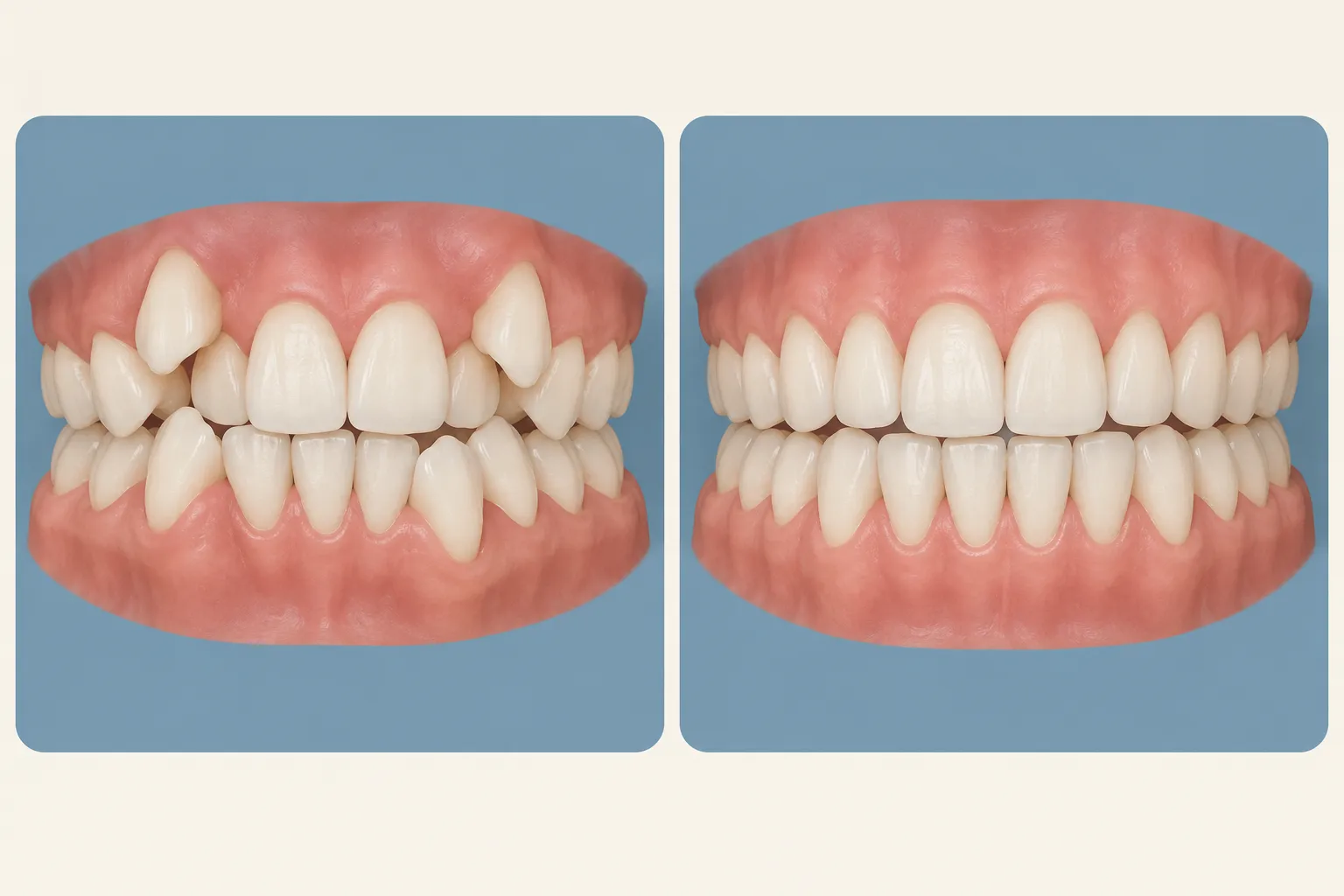
Traditional braces use metal brackets and an archwire to apply steady pressure. Orthodontists place brackets to guide teeth toward their planned positions, which may involve the bite as well as the front teeth. The American Association of Orthodontists explains how braces work on crooked and crowded teeth.
|
Concern |
What orthodontic treatment may need to do |
|---|---|
|
Crowding or overlapping teeth |
Create or manage space, then bring teeth into alignment |
|
A rotated or tilted tooth |
Turn or reposition it while keeping neighboring teeth in a workable relationship |
|
Gaps between teeth |
Move teeth together and assess why the space developed |
|
An uneven bite |
Coordinate how upper and lower teeth meet, not just how the smile looks |
Metal and tooth-colored ceramic braces both use fixed brackets for mild misalignment and more involved crowding or bite issues. Tooth shape, wear, a missing neighboring tooth or jaw position can also affect the appearance of a crooked smile. Those details change what treatment can accomplish.
How does an orthodontist make room for crowded teeth?
Crowded teeth lack the space needed to line up. An orthodontist looks at the space, tooth positions and bite before planning movement. Sometimes several teeth must move to give one prominent tooth room. Straightening only the tooth you notice could disrupt the bite or leave it without room to stay aligned.
Do crooked teeth really cause more cavities?
Overlapping teeth can leave spots that are hard to brush and floss, giving plaque a place to remain. Crookedness alone does not guarantee cavities. As Bupa Dental Care explains, correcting crooked teeth can make some areas easier to clean and may help improve oral health. Keep up with dental visits during and after treatment.
Is one crooked tooth worth an orthodontic evaluation?
Yes. Even one crooked tooth has a root, neighboring teeth and an opposing tooth to consider. Its twist may point to a larger space or bite problem. Or it may be a slight irregularity in an otherwise healthy, stable bite that needs little or no treatment. An examination helps make that distinction.
Tell the orthodontist what you notice: a tooth that recently shifted, for example, or a change since you stopped wearing a retainer. They will consider oral health and available space alongside appearance. Decay or gum disease may need dental care first. A child may only need growth monitored for now; an adult can pursue treatment if their teeth and gums are suitable.
“Children should have their first orthodontic check-up when a problem is recognized, and no later than age 7.” – American Association of Orthodontists
An early check-up gives the orthodontist a chance to recommend treatment or observation. It does not mean a child must get braces at seven.
Braces or clear aligners for crooked teeth?
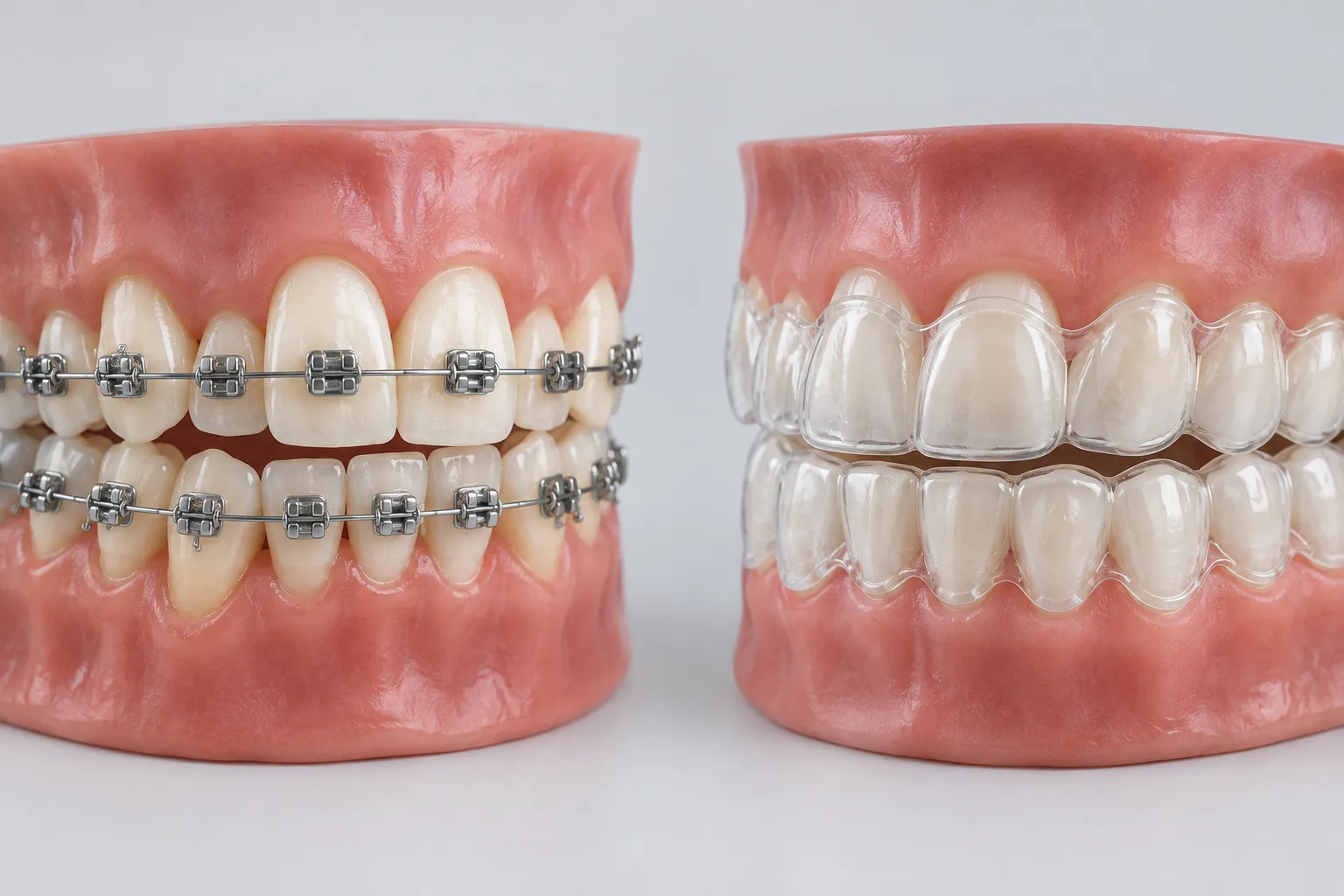
Braces and clear aligners both move teeth over time. Braces remain attached, while you remove aligner trays to eat and clean your teeth. The movements needed and how well the appliance fits your routine will shape the recommendation.
|
Consideration |
Braces |
Clear aligners |
|---|---|---|
|
Typical use |
A broad range of crowding, rotations and bite corrections; often useful when movement is complex |
Many mild to moderate alignment problems; some more complex cases may also be suitable after assessment |
|
Daily routine |
Fixed in place; extra care around brackets and wires |
Remove to eat and clean teeth; consistent daily wear is essential |
|
Appearance |
Metal is noticeable; ceramic brackets are less noticeable |
Transparent trays are discreet but may require visible attachments |
|
Food and cleaning |
Avoid foods that can damage the appliance; clean around hardware |
Remove trays for meals, then clean teeth and trays before reinserting |
|
Decision point |
Useful if a fixed appliance offers better control or wear compliance is a concern |
Useful if removability and appearance matter and the movements are suitable |
Metal braces, clear ceramic braces and custom brackets all deserve consideration if fixed treatment suits your case. Eisenberger and Meister Orthodontics offers custom 3D-printed ceramic LightForce braces and Invisalign. The practice describes its orthodontists as Invisalign Sapphire Providers, a top 0.5% designation. It says LightForce can shorten treatment and reduce visits, though no appliance guarantees a shorter plan for every patient. Ask how each option would change your treatment, including any tooth rotation. Veneers can change a tooth’s appearance; they cannot move it or correct the bite.
Lingual braces
Lingual braces attach to the lingual side, behind the teeth. These less visible fixed braces can take adjustment for cleaning and tongue comfort. Unlike removable clear aligners, sometimes called invisible braces, they stay in place. Eisenberger and Meister does not list lingual braces among its treatments.
How long does it take braces to straighten crooked teeth?
Treatment length depends on crowding, bite correction and how teeth respond. Cleveland Clinic gives about two years as an average for braces, with some cases ending in under a year and others taking up to three years. Your teeth may look straighter well before treatment of the bite is complete.
Braces need adjustment visits and careful cleaning. Broken brackets or missed appointments can interfere with progress; aligners rely on consistent wear. After examining you, the orthodontist can explain the expected stages.
Do braces hurt?
Tenderness for a few days after braces are fitted or adjusted is common; constant pain is not expected. Your cheeks or lips may need time to get used to the brackets. Soft foods and orthodontic wax can ease short-lived irritation. Call your orthodontic team if pain persists, a wire cuts your mouth or a bracket breaks.
Can adults get braces for crooked teeth?
Yes. There is no set age cutoff for straighter teeth. Adult orthodontics may differ because growth is complete and dental work or gum health can affect the plan. Children and teens need individual assessments, too.
How much do braces for crooked teeth cost?
Braces do not have one price for every crooked tooth. Cost depends on the tooth and bite movements, appliance and length of care. A tooth that looks slightly out of line might still need treatment involving several teeth. A written proposal should show what is included, any insurance contribution and payment options.
Eisenberger and Meister offers complimentary consultations and financing support, including 0% APR options with no hard credit checks. Its home page gives no single price for braces. Your proposal will be based on the treatment recommended for you.
Compare the cost of the full recommended treatment rather than a monthly payment or starting price. A cosmetic change cannot move teeth or fix a misaligned bite. Do not try to move teeth yourself with elastic bands or improvised devices.
What happens after the teeth are straight?
Teeth can shift after braces or aligners come off. A retainer helps hold their new positions; your orthodontist will advise on the type and wear schedule. Discuss retention at the start, particularly if your teeth shifted after past treatment.
Keep your dental cleaning appointments while you are in treatment. Brushing around brackets and flossing between teeth protect your teeth and gums as they move.
Find the right plan in Passaic
In Passaic, Eisenberger and Meister Orthodontics sees children, teens and adults across North Jersey who are considering braces or Invisalign. The practice reports a combined 38 years of experience and more than 15,000 smiles treated. It offers Dental Monitoring, a warm, spa-like office and carefully scheduled visits intended to reduce waiting. During a consultation, ask what causes the crookedness, which appliance suits the required movements, how long treatment may take and what retention will involve. Families in nearby Clifton, Garfield, Paterson, Wallington, Rutherford, East Rutherford, Nutley, Lodi, Wood-Ridge, Hasbrouck Heights, Little Falls and Woodland Park can discuss care and payment options.
Braces can straighten many crowded and rotated teeth. To find out if they suit your bite and oral health, book a complimentary consultation at Eisenberger and Meister Orthodontics. You can compare braces, clear braces and Invisalign with an orthodontist who can see the whole picture.
FAQ
Can braces fix really crooked teeth?
Often, yes. Braces can move crowded and rotated teeth and help correct related bite problems, but the plan depends on available space and the condition of your teeth and gums. An orthodontist must examine the whole bite before recommending treatment.
Is it too late to fix crooked teeth?
Not simply because you are an adult. Teeth can be moved later in life, although gum health, existing dental work and bite needs may affect the plan. An evaluation will show which options are appropriate.
Can I naturally fix my crooked teeth?
Home remedies cannot predictably move a crooked tooth into a healthy alignment. Braces and aligners apply planned force under professional supervision. If a tooth has shifted, get it assessed rather than trying to push it into place.
What is the cheapest way to fix crooked teeth?
The least expensive suitable option depends on whether you need tooth movement, bite correction or a different kind of dental care. Ask for a diagnosis and a full cost breakdown before comparing braces and aligners. A cosmetic shortcut will not correct a misaligned bite.
Can I realign my teeth myself?
No. Attempting to move teeth with household items or improvised elastics can harm teeth and gums. Orthodontic treatment needs an assessment, controlled forces and monitoring.