
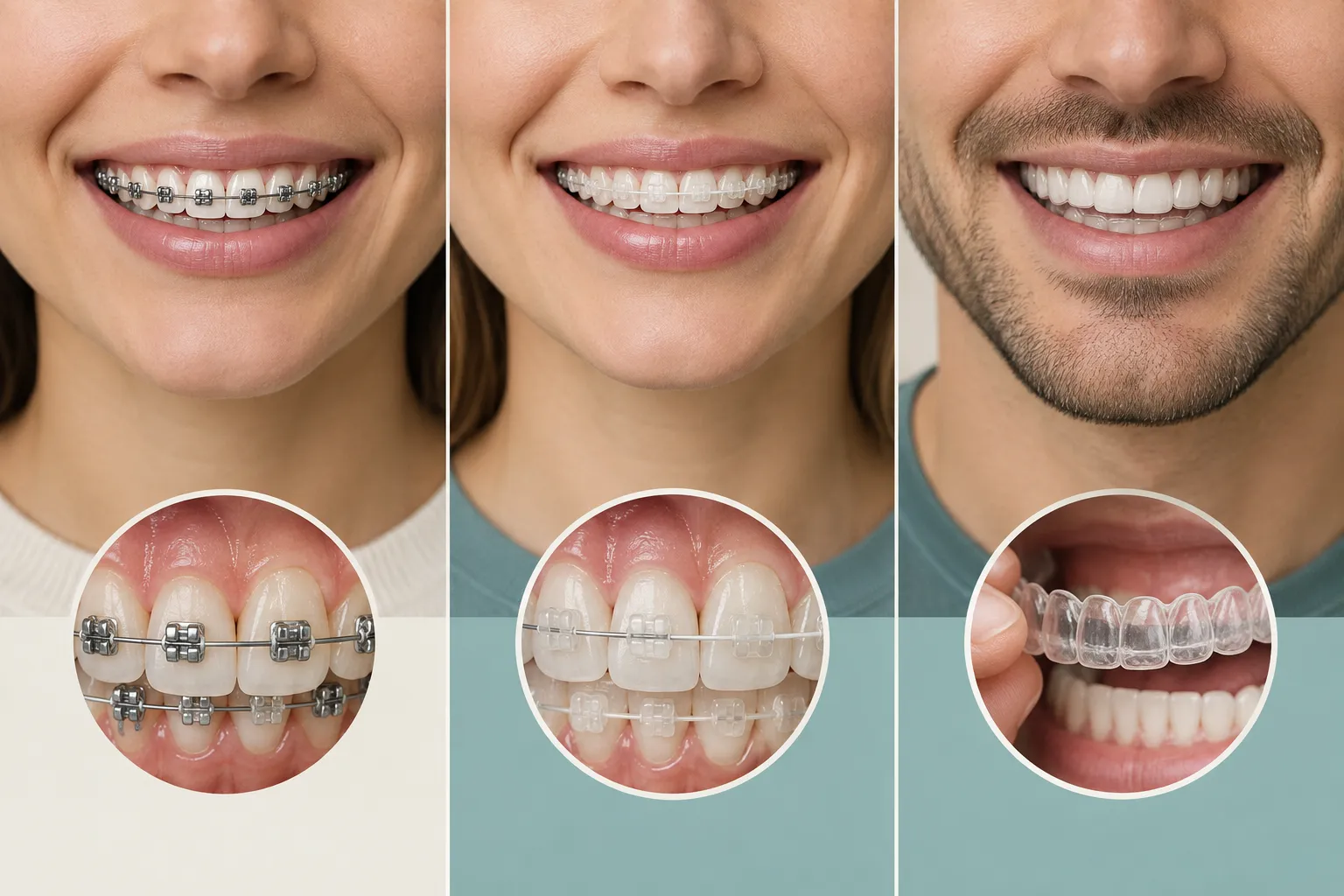
If you want straighter teeth, the safest starting point is an orthodontic exam of your teeth, gums, and bite. There are different ways to straighten your teeth: metal braces stay in place, ceramic braces are less noticeable, and clear aligners come out for meals and cleaning. The right choice depends on your dental health, what needs to move, and how your teeth meet.
A crooked front tooth might look like a small fix, but crowding or a bite issue may need attention too.
Orthodontic treatment options: different ways to straighten your teeth
|
Option |
Often a good fit when |
Daily commitment |
Main tradeoff |
|---|---|---|---|
|
Metal braces |
You need fixed control or do not want to manage trays |
Clean around brackets and wires; avoid foods that can break them |
Easy to see |
|
Ceramic braces |
You need fixed treatment and prefer brackets that blend in |
Take the same care with cleaning and food as with metal braces |
Brackets can be more fragile |
|
Clear aligners, including Invisalign |
Your case suits aligners and you can follow the wear schedule |
Wear trays as prescribed; remove them to eat and brush |
Leaving trays out delays progress |
The best option to straighten misaligned teeth addresses the bite and fits the habits you can keep. A child who needs help with jaw growth or width may also need an expander.
Metal braces: fixed control without tray wear
Metal brackets connect to a wire the orthodontist adjusts as teeth move. Fixed braces function without tracking tray wear time. They can address crowding, gaps, and complex alignment or bite problems.
Brackets catch plaque, so you’ll need to pay attention while brushing and flossing. Hard or sticky foods can damage them. If you prefer treatment that stays in place, metal braces may be the best way to get teeth straightened despite their visibility.
Ceramic braces: a quieter-looking fixed option
Ceramic braces use tooth colored brackets attached to a wire. They suit a teen or adult who wants fixed treatment with less visible brackets. Custom designed ceramic systems such as LightForce offer another option within this category.
You can still see ceramic brackets up close. They can be more fragile than metal ones and need the same careful cleaning. The bracket material alone does not determine how long treatment takes.
Clear aligners: removable, but not hands-off
Clear aligners are fitted, clear plastic trays that move teeth in stages. You can take them out to eat and brush twice daily. That can suit an adult who eats at work or a teen who can keep track of the trays.
The flexibility comes with a job: wear them for the hours your clinician prescribes, usually most of the day. Leave them out too often and treatment can fall behind. Your orthodontist needs to examine your bite to see whether Invisalign or another aligner can make the movements you need.
Other options for specific needs
Lingual braces sit behind the teeth, where other people are less likely to see them. You may need an adjustment period, and cleaning can take extra effort. A growing child who needs more room in the upper jaw may benefit from a palatal expander. Custom retainers, removable or fixed, normally hold teeth after treatment. For a small correction, an orthodontist may prescribe an active retainer; it cannot replace braces for a complex bite.
What makes straightening teeth safe?
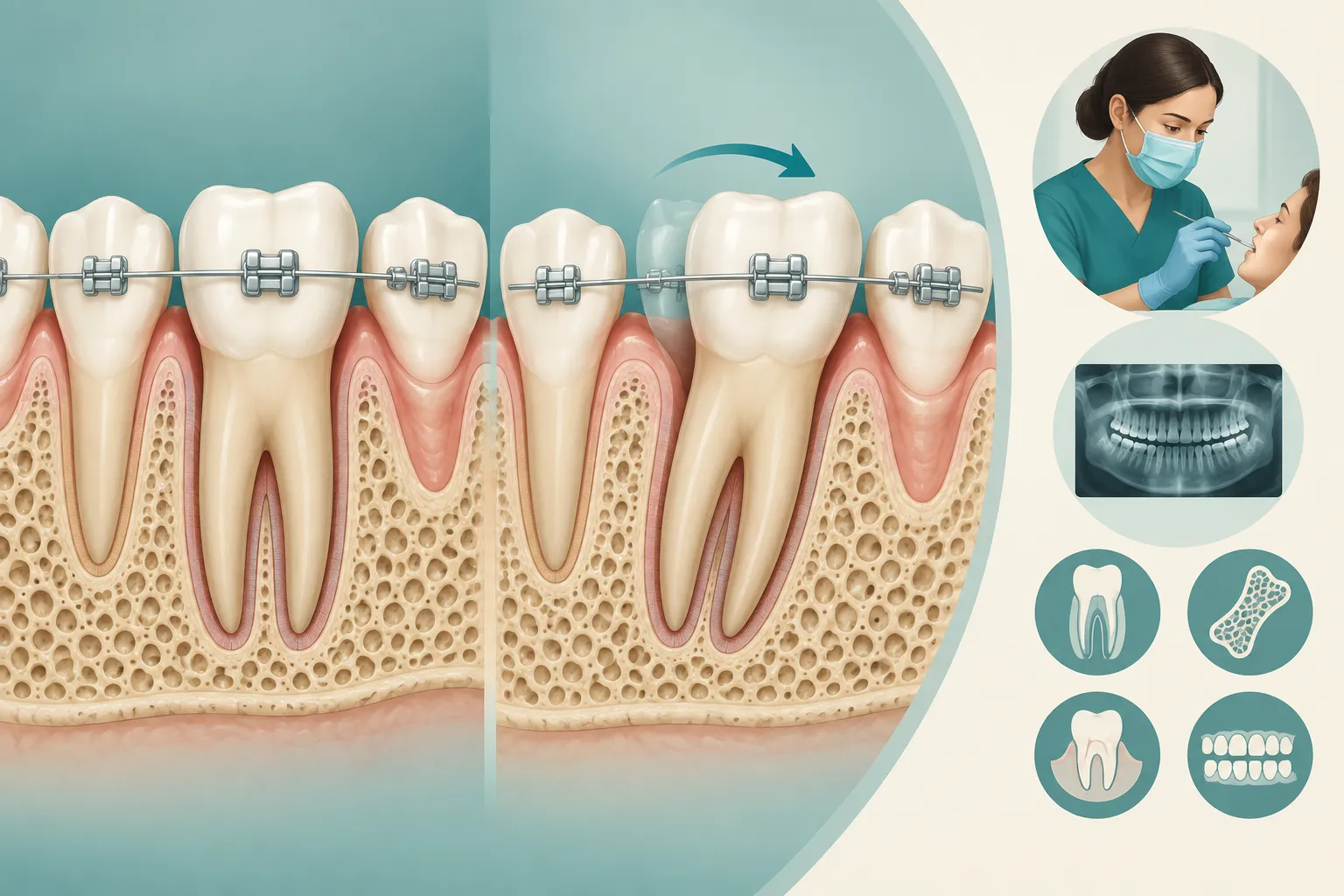
Your orthodontist examines the bite, teeth, gums, and supporting tissues before planning orthodontic treatment with images or digital scans. Decay or gum disease may need care first. A smiling photo cannot show what’s happening around the roots.
At follow-ups, your orthodontist checks whether teeth are moving as planned and how bite forces affect them. They also look at appliance fit and cleaning. Call the office if a bracket breaks or a tray stops fitting; do not force it. Once treatment ends, wear your retainer as directed to help hold the result.
An early exam can spot a child’s growth or bite issues even if treatment can wait. Adults can also move teeth, provided the plan accounts for gum health, dental work, and bone support.
Can you straighten teeth at home or overnight?
Teeth need time to move through bone, so no safe home trick can straighten them overnight. Rubber bands, filing, or reshaping a retainer yourself can hurt teeth and gums without correcting your bite. Whitening changes color; veneers and bonding change appearance without moving teeth.
Wearing prescribed aligners at home is part of supervised treatment. A mail-order device used without an adequate exam or follow-up leaves gum, root, and bite problems harder for a clinician to spot as they develop. If office visits are difficult to fit in, ask whether supervised remote check-ins are available.
The American Association of Orthodontists warns that unsupervised mail-order treatment can lead to irreversible harm, including tooth and gum loss or changes to the bite.
Which option fits your age and routine?
For a child: An early evaluation can reveal a crossbite, crowding, or a jaw-growth concern. Your child may only need monitoring. If an early appliance would help, the orthodontist can explain whether later treatment may still be needed.
“The American Association of Orthodontists recommends that a child’s first orthodontic check-up happen when an orthodontic problem is first recognized, and no later than age 7.” – American Association of Orthodontists
For a teen: Braces stay on, so there are no trays to lose. Aligners suit teens who can follow the wear schedule; ceramic braces are an option if they prefer fixed treatment with less visible brackets.
For an adult: Aligners may be the best way to get straight teeth if your case qualifies and you value removability. If you need fixed treatment, consider metal or ceramic braces. Mention any crowns, gum concerns, or past orthodontic work at your exam.
How long does it take, and what will it cost?
Treatment time and cost depend on your bite, the movements needed, and the appliance. Correcting a small relapse differs from correcting a complex bite. At your consultation, ask what’s included in the fee, how follow-ups work, and whether retainers cost extra.
At a complimentary consultation in Passaic, Eisenberger and Meister Orthodontics can discuss braces, LightForce custom ceramic braces, and Invisalign. The practice plans care for children, teens, and adults, with Dental Monitoring when appropriate and financing options to help families budget.
The right next step
Start with your bite. Metal braces may suit a case that needs fixed control; ceramic braces give you a less visible fixed option; aligners make sense if your teeth can be treated with them and you can follow the wear schedule. Each path calls for follow-up care and retainers.
In Passaic, Eisenberger and Meister Orthodontics can help you compare effective solutions for straighter smiles. Schedule a consultation to find a supervised plan that suits your smile, routine, and budget.
Nearby communities
Patients exploring orthodontic care in the Passaic and Clifton area may also come from communities across northern New Jersey:
-
Passaic County: Passaic, Clifton, Paterson, Woodland Park, Little Falls, Totowa, Haledon, North Haledon, Wayne, and Hawthorne.
-
Bergen County: Garfield, Wallington, Lodi, Rutherford, East Rutherford, Carlstadt, Hasbrouck Heights, Wood-Ridge, Saddle Brook, Elmwood Park, and Hackensack.
-
Essex County: Nutley, Belleville, Bloomfield, Montclair, Glen Ridge, Verona, Cedar Grove, and West Orange.
FAQ
How can I straighten my teeth quickly?
Start with an orthodontic exam. The time needed depends on the tooth movements and bite correction required, and faster is not automatically safer. Your orthodontist can explain a realistic plan after examining your teeth and gums.
How do I straighten my teeth without going to the dentist?
You should not try to move teeth without a qualified dental professional assessing your oral health and supervising treatment. Clinician-prescribed aligners can be worn at home, but they still require a diagnosis, a treatment plan, and follow-up.
Can I fix crooked teeth naturally?
No exercise or home remedy reliably moves crooked teeth into a healthy new position. Braces and properly planned aligners move teeth gradually; bonding or veneers may change their appearance but do not straighten their position.
What is the cheapest way to straighten teeth?
There is no universally cheapest safe option because cost depends on the treatment needed and what the fee includes. Compare clinically appropriate plans, follow-up care, retainers, and payment arrangements, rather than choosing an unsupervised shortcut on price alone.
How do I fix my teeth if I have no money?
Begin with an assessment so you know whether treatment is needed now and which options are appropriate. Ask about financing and insurance benefits; a consultation can help separate essential care from treatment that can wait.