
Underbite treatment without surgery in NJ is possible when tooth position, a functional shift, or remaining growth offers a path to a better bite. Braces or aligners can move teeth; growth-guiding appliances may help some children. If the jaws are substantially mismatched, orthodontics alone may not deliver the bite or facial change you want.
At Eisenberger and Meister Orthodontics in Passaic, an examination can show whether the reversed bite comes mainly from the teeth or jaw position.
Underbite treatment without surgery in NJ: when can it work?
Yes, in selected cases. The American Association of Orthodontists explains anterior crossbite: upper front teeth bite behind the lower teeth. Crooked teeth, jaw position, or a forward slide of the lower jaw can cause bite problems that look similar but need different care.
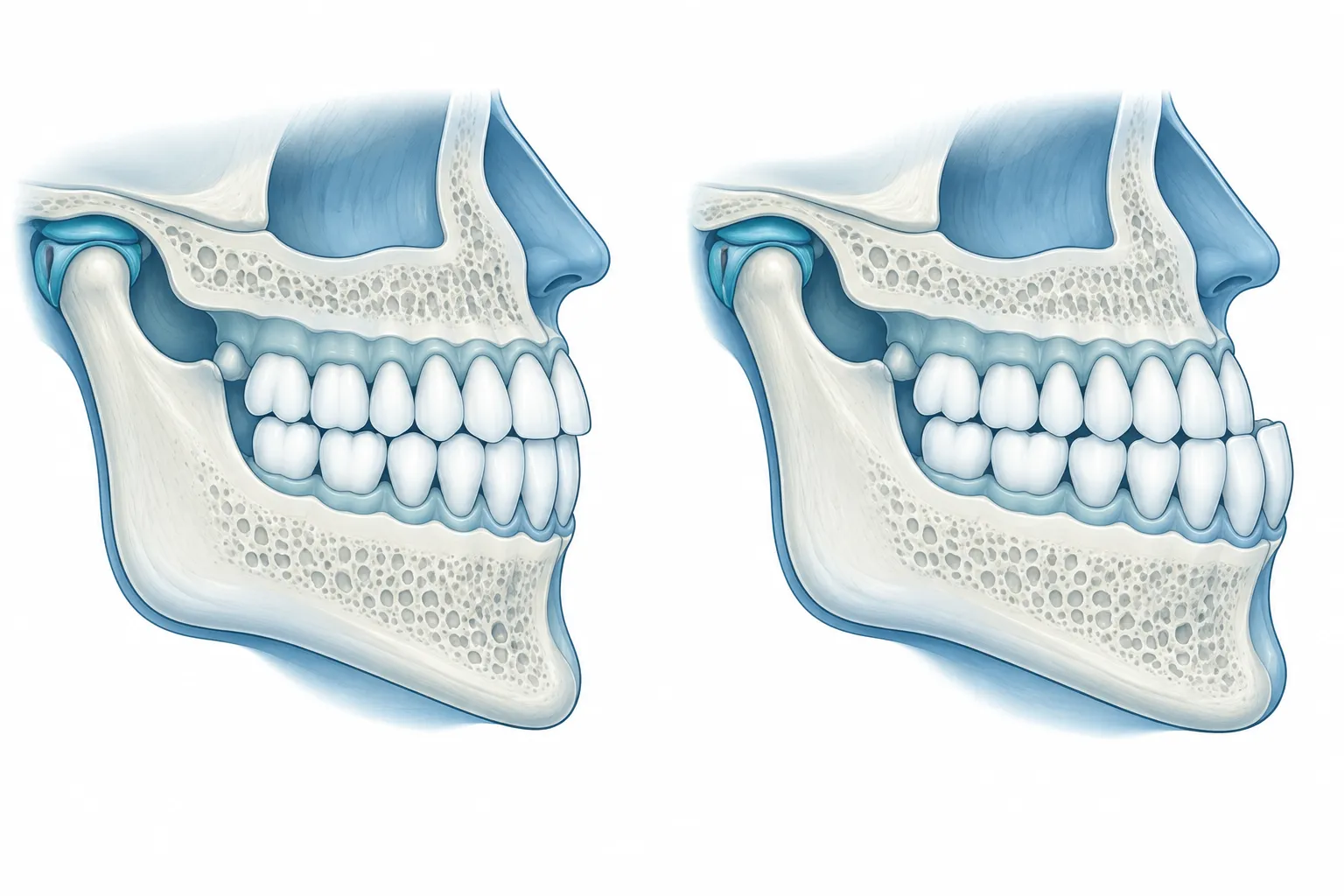
|
What is driving the bite? |
Possible non-surgical approach |
Important limit |
|---|---|---|
|
Tooth position is the main issue |
Braces or clear aligners, sometimes with elastics |
Teeth can move, but jawbones are not repositioned |
|
A growing child’s upper jaw needs guidance |
An expander and, in selected cases, a protraction facemask |
Growth response varies; later orthodontic treatment may still be needed |
|
The lower jaw slides forward to get past interfering teeth |
Correct the tooth interference and reassess the bite |
A functional shift can coexist with a skeletal difference |
|
Substantial skeletal jaw mismatch after growth |
Limited orthodontic camouflage may be considered |
Camouflage cannot correct the underlying jaw relationship |
An orthodontist checks how your teeth meet, whether the lower jaw slides forward, remaining growth, and the health of your gums and supporting bone. Imaging, photographs, and a scan may help distinguish a dental underbite from a skeletal difference. If you have periodontal disease, ask how it affects safe tooth movement. A photograph alone cannot establish which options are available.
Non-surgical underbite options for kids, teens, and adults
Children: use growth when it is available
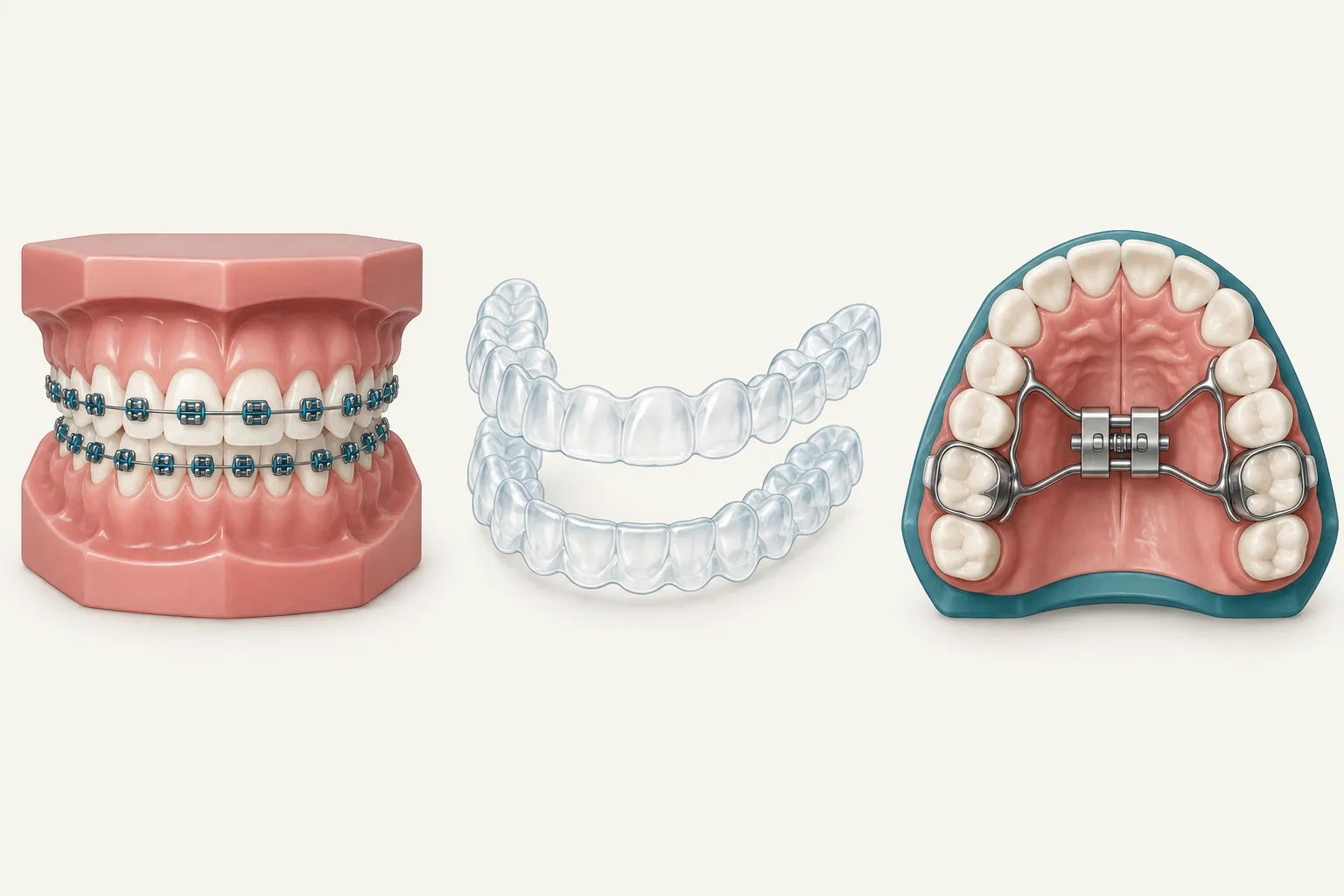
For children, an expander may widen a narrow upper arch; in selected cases a reverse-pull facemask may help guide upper-jaw growth. Other children need braces to bring the top teeth in front of the bottom teeth, or simply monitoring. Your child’s growth pattern determines what is realistic.
“The American Association of Orthodontists recommends a child’s first orthodontic check-up when a problem is first recognized, and no later than age 7.” – American Association of Orthodontists
Early treatment may improve the bite, but further orthodontics or a later discussion about surgery may still be needed.
Teens: consider growth and tooth movement together
Some teens still have growth to guide; others do not. Braces, including clear or custom brackets, can move teeth into a better relationship, sometimes with elastics.
Invisalign treatment can help selected teens and adults. The Invisalign process may include attachments or elastics and requires wearing trays as prescribed. Aligners can move teeth, not reposition an adult jawbone.
Adults: understand what camouflage can and cannot do
Adults may improve a dental underbite with braces or aligners. With some skeletal underbites, camouflage moves teeth to improve a misaligned bite without moving the jaws. Whether it is appropriate depends on your goals and the health of your gums and supporting bone.
Camouflage leaves the jaw difference in place. Ask how the expected bite and facial result compares with a surgery-based plan.
When should you discuss jaw surgery?
An orthodontist may suggest a surgical evaluation if tooth movement cannot adequately address the jaw mismatch, or if your goal involves changing jaw position or facial profile. Surgery is generally considered after growth is complete.
A consultation with an oral and maxillofacial surgeon does not commit you to surgery. Ask what non-surgical care could achieve and what it would leave unchanged.
What will a Passaic orthodontic consultation tell you?
Whether your general dentist noticed the underbite or you have concerns about chewing, tooth wear, or appearance, ask:
-
Is this underbite dental, skeletal, functional, or a combination?
-
Could growth guidance, braces, or Invisalign meet my bite goals?
-
What would non-surgical treatment leave unchanged?
-
Would a surgical opinion expand my options?
-
What are the estimated fees, timing, and financing choices?
Cost and timing depend on the bite and treatment plan. Ask whether an estimate includes retainers or separately billed procedures.
Eisenberger and Meister Orthodontics offers personalized orthodontic services for children, teens, and adults, including LightForce custom braces, Invisalign, and early care. Dental Monitoring may make the patient experience more convenient where appropriate. At a complimentary consultation, ask about your treatment choices and financing, including available 0% APR options without a hard credit check.
Communities near Passaic, NJ
Families come to Passaic from across North Jersey. The towns below are in or near an approximately 20-mile area around Passaic. Driving distances differ by route and by where you live within a town.
|
County |
Nearby communities |
|---|---|
|
Passaic County |
Passaic, Clifton, Paterson, Woodland Park, Little Falls, Totowa, Haledon, North Haledon, Prospect Park, Hawthorne, Wayne, Pompton Lakes, Wanaque, Ringwood, Bloomingdale |
|
Bergen County |
Garfield, Wallington, Lodi, Hasbrouck Heights, Wood-Ridge, Moonachie, Carlstadt, East Rutherford, Rutherford, Lyndhurst, North Arlington, Teterboro, Hackensack, Maywood, Rochelle Park, Saddle Brook, Elmwood Park, Fair Lawn, Glen Rock, Ridgewood, Paramus, River Edge, New Milford, Teaneck, Bogota, Bergenfield, Englewood, Fort Lee, Leonia, Palisades Park, Cliffside Park, Edgewater |
|
Essex County |
Nutley, Belleville, Bloomfield, Glen Ridge, Montclair, Verona, Cedar Grove, West Orange, East Orange, Orange, Newark, North Caldwell, Caldwell, Fairfield, Livingston, Maplewood, South Orange, Millburn |
|
Hudson County |
Secaucus, Kearny, Harrison, East Newark, Jersey City, Hoboken, Union City, Weehawken, West New York, North Bergen, Guttenberg |
|
Morris County |
Lincoln Park, Pequannock Township, Riverdale, Butler, Kinnelon, Montville, Boonton, Parsippany-Troy Hills, East Hanover |
|
Union County |
Hillside, Elizabeth, Union, Roselle Park, Kenilworth, Springfield |
Wherever you live in North Jersey, the examination should establish why the front teeth meet in reverse. That finding helps you weigh braces, aligners, growth guidance, and a surgical evaluation.
Your teeth, jaw position, growth, and oral health determine whether treatment without surgery makes sense. Families in Passaic and nearby North Jersey communities can schedule a complimentary consultation to learn what treatment could accomplish.
FAQ
What will an orthodontist do for an underbite?
They assess whether the problem is dental, skeletal, or functional, then discuss braces, aligners, growth guidance, monitoring, or a surgical evaluation as appropriate.
Can mewing fix my underbite?
Do not rely on tongue posture exercises to reposition jawbones. An examination can establish which treatment fits your bite.
Is it worth fixing an underbite?
It may be worth treating if the bite affects chewing, tooth wear, comfort, or your smile goals. Ask what each proposed plan would actually change.