
Looking for foods to eat with braces first week? Start with foods you can mash with a fork: yogurt, oatmeal, scrambled eggs, soup, mashed potatoes, soft pasta and flaky fish. Your teeth may be tender, and hard, sticky or crunchy foods can damage brackets. Small bites and softer textures make it easier to eat a full meal while your mouth adjusts.
Best foods to eat with braces during the first week
New braces can make your teeth sensitive to pressure. Begin with foods that require little chewing. As that tenderness eases, try moist, fork-tender pasta, cooked vegetables or finely shredded chicken. If chewing hurts, stay with softer choices a little longer.
With traditional metal braces or ceramic braces, including clear brackets, pressure can make chewing tender. Either type has brackets and wires to protect. You can eat solid food if it is soft enough to chew without strain.
Try mashing a bite with a fork. If it yields easily, it may be comfortable to eat. If you would need to tear it with your front teeth or pull it away from a bracket, cook it longer or choose something else. Smooth soup may work at first, with a soft rice bowl later in the week. Foods that can damage braces stay off the menu after soreness fades.
|
When eating feels… |
Try… |
Make it easier |
|---|---|---|
|
Very tender |
Yogurt, blended soup, applesauce, mashed potatoes, smoothies without seeds |
Let hot food cool and skip hard toppings |
|
Comfortable with light chewing |
Scrambled eggs, soft noodles, tender fish, cooked vegetables |
Flake or chop into small pieces and add sauce |
|
Ready for more texture |
Soft tortillas, moist shredded chicken, soft sandwiches, rice bowls |
Cut into bites instead of tearing with front teeth |
First-week meal ideas: breakfast, lunch, dinner and snacks
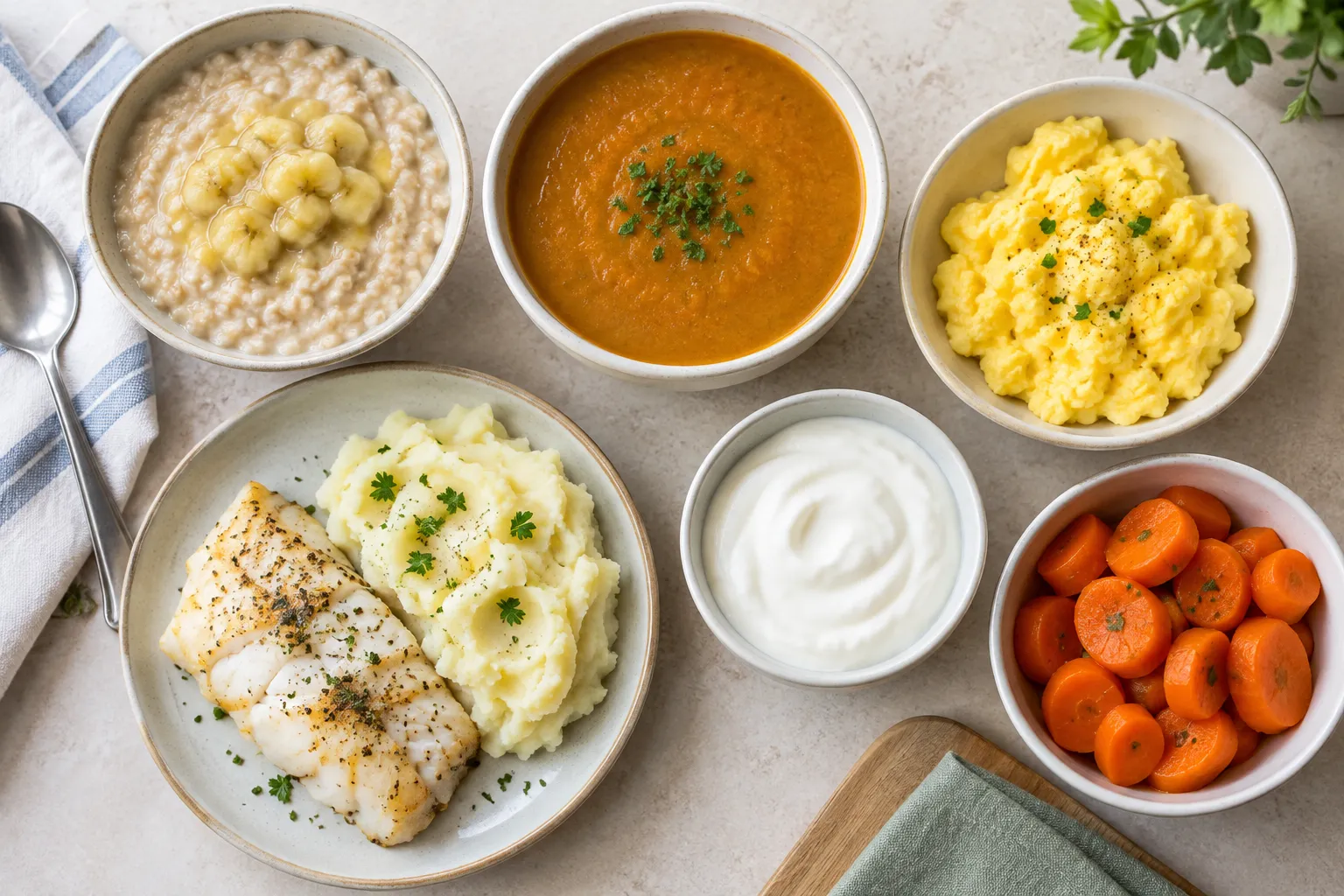
Pair protein and produce with oatmeal, pasta or potatoes so your soft-food meals keep you full. You can make several of the meals below from the same few groceries.
Breakfasts you can make while your teeth are sore
-
Creamy oatmeal with mashed banana and a side of scrambled eggs.
-
Plain or low-sugar Greek yogurt with smooth fruit puree. Leave out granola, seeds and whole nuts.
-
Soft pancakes cut into small pieces, with yogurt or mashed berries instead of a crunchy topping.
-
Blend milk or yogurt with banana and smooth nut butter. Use a cup if a straw rubs a sore spot.
Lunches that travel well
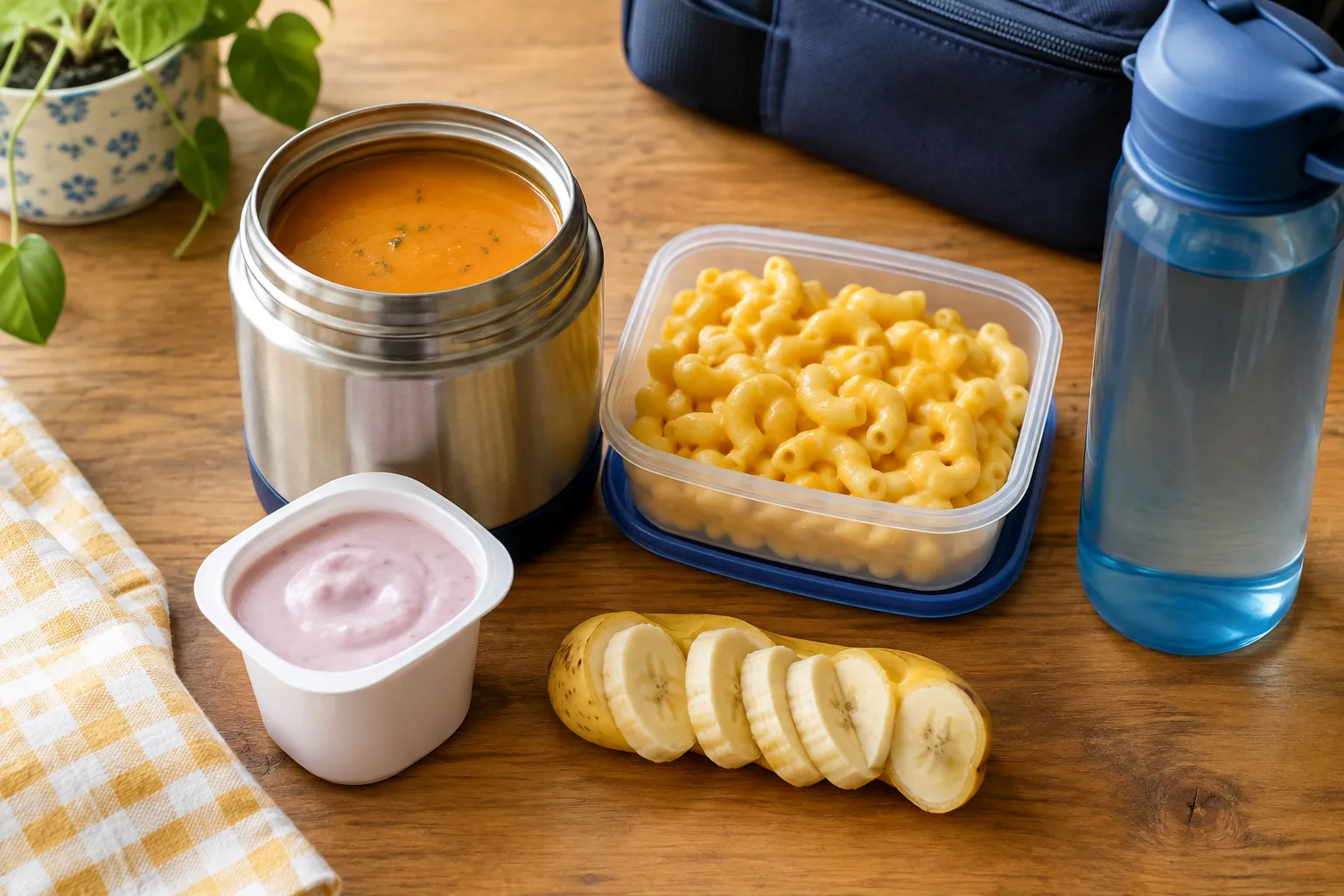
Pack blended vegetable soup in a thermos with soft cheese or an egg on the side. Once chewing gets easier, try macaroni and cheese, small pieces of bean-and-cheese tortilla, or rice with tender tofu and well-cooked vegetables. For sandwiches, use soft bread and moist fillings; remove any hard crust.
Yogurt, a ripe banana, applesauce and tender pasta also fit easily into a school or work lunch. Pack them separately and skip anything with a hard edge that requires a strong bite.
Dinners the whole family can share
For the first dinner, try mashed potatoes, flaky deboned fish and tender zucchini. As chewing improves, make soft spaghetti with smooth sauce and finely chopped meatballs, or add ricotta for a soft cheese spaghetti dish. Rice with beans, avocado and cooked vegetables is another option; soft vegetables or mashed sweet potato work on the side. If you serve shredded chicken, add broth or sauce so it is not dry. Leave crunchy croutons off the soup.
An easy day of meals could start with oatmeal and scrambled eggs. Have blended soup and a soft tortilla with mashed beans for lunch, then yogurt or applesauce for a snack. Dinner can be flaky fish, mashed potatoes and cooked carrots, with soft pasta or tofu if your family prefers those.
Safe snacks for new braces
Keep ripe bananas, cottage cheese, pudding, applesauce or yogurt ready for snack time. Hummus with soft bread works when you want something savory. Slice soft fruit such as a ripe peach into bite-sized pieces, or blend berries into a smoothie if chewing is uncomfortable; leave out seeds and crunchy add-ins. Plain ice cream or another smooth frozen dessert is fine as a treat if it has no nuts, candy pieces or hard mix-ins.
For groceries, pick up eggs, yogurt, cottage cheese, bananas, applesauce, oats, potatoes, soft pasta, broth, beans, tofu or flaky fish, and vegetables you can cook until tender. Keep water handy at meals and between snacks.
Foods to avoid with braces, and what to have instead
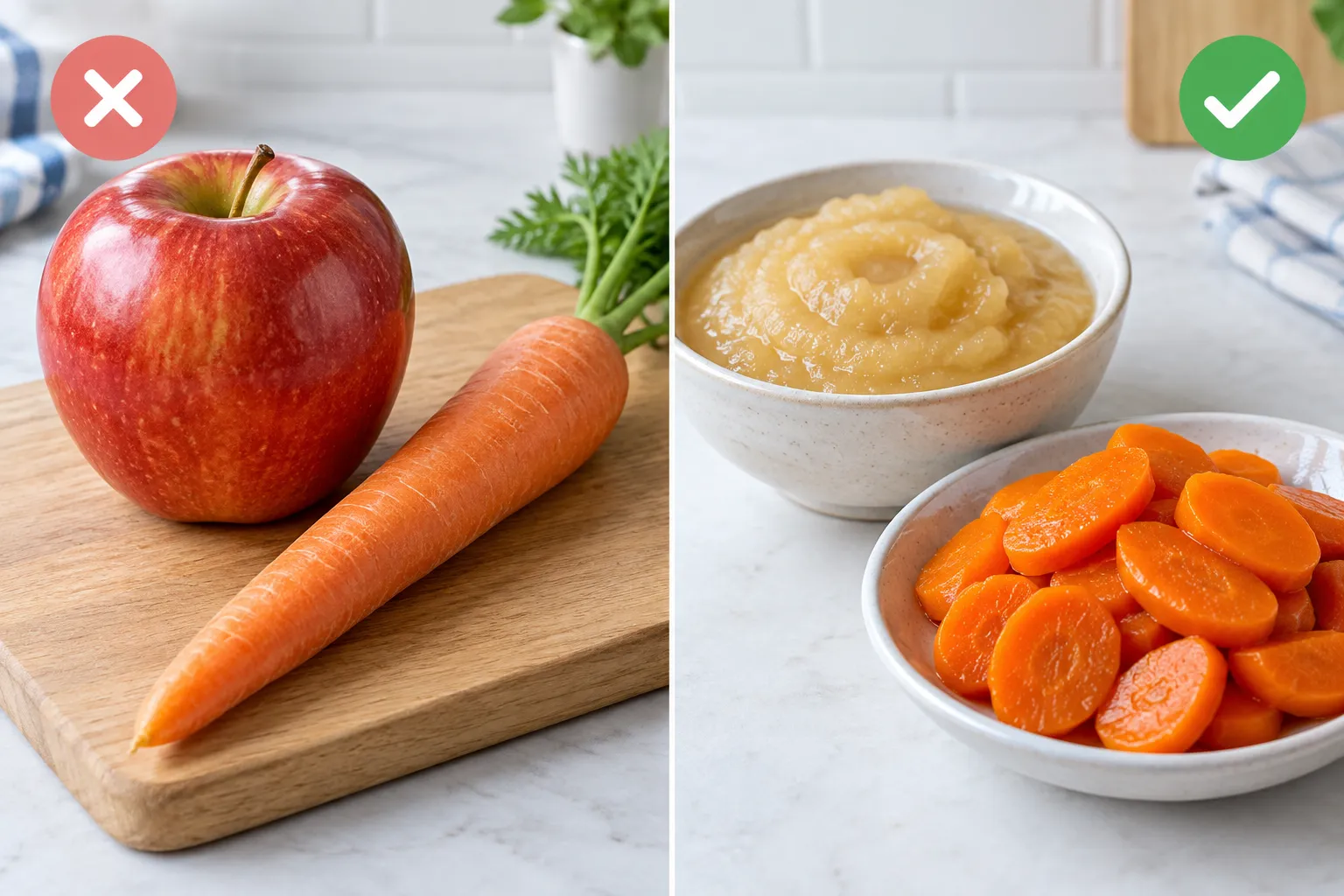
Hard or sticky food can cause damage by loosening a bracket or bending a wire long after your teeth stop hurting. During the first week, a forceful bite may hurt as well. Slice or cook firm foods, and take meat or corn off the bone or cob.
The American Association of Orthodontists’ eating guidance explains why sticky candy remains off limits:
“Sticky Candy: Taffy, caramel, and the like can adhere stubbornly to braces and may cause brackets to loosen.” – American Association of Orthodontists
|
Avoid |
Why it is a problem |
Safer alternative |
|---|---|---|
|
Popcorn, nuts, hard chips, pretzels and ice |
Hard pieces can damage brackets and wires |
Yogurt, soft cheese or hummus |
|
Caramel, taffy, gummy candy and chewing gum |
Sticky or stretchy food pulls on appliances |
Pudding or smooth chocolate that does not contain hard pieces |
|
Whole apples, raw carrots and corn on the cob |
Biting straight into them puts pressure on front brackets |
Applesauce, cooked carrots or corn cut off the cob |
|
Bagels, crusty bread, jerky and tough meat |
They take a lot of tearing and chewing |
Soft bread, tender fish or finely shredded, moist meat |
|
Crunchy cookies with hard chunks |
The hard bite is uncomfortable and can catch on brackets |
Soft cake or a soft cookie without nuts, eaten carefully once chewing is comfortable |
Soft sweets and sweet drinks can leave residue around brackets. Choose water as your everyday drink and clean your teeth after snacks. Watch for hard shells, hidden nuts and sticky fillings in foods that look soft.
The “not yet” list for the first week
Steer clear of hard, crunchy snacks and sticky candy throughout orthodontic treatment. As soreness settles, cut food into small pieces, cook firm vegetables until soft, and remove meat from the bone. You can still enjoy familiar meals without biting into a tough or hard piece.
How to eat comfortably and care for your braces
|
If you are eating… |
Try this instead |
|---|---|
|
An apple or sandwich |
Slice it into small bites rather than biting with your front teeth |
|
Pizza |
Cut it into bites instead of tearing off a slice |
|
Dry food |
Add broth or sauce to make chewing easier |
Chew with your back teeth and choose a temperature that helps you feel comfortable, but do not chew ice.
Orthodontic wax can cover a bracket that rubs your cheek. A warm saltwater rinse may soothe the sore area; your orthodontist can advise on pain relief for you or your child. A loose bracket, a poking wire or pain that worsens calls for a conversation with your orthodontic team.
Food particles lodge around brackets. Plaque buildup can contribute to tooth decay, so clean around the gumline and brackets after meals when you can. Use a floss threader or another orthodontic tool your team recommends to clean between teeth each day. If you cannot brush after a smoothie, soft starch or sweet snack, rinse with water. Keep up with regular dental cleanings to protect your oral health during orthodontic treatment.
For families around Passaic and North Jersey
At Eisenberger and Meister Orthodontics in Passaic, we help children and adults plan around the everyday parts of braces, including school lunches and meals after appointments. If you are coming from elsewhere in North Jersey, pack a soft snack for the trip home.
Families planning a visit to Passaic may be traveling from these nearby towns and cities:
-
Passaic County: Clifton, Paterson, Woodland Park, Little Falls, Totowa, Wayne, Haledon, North Haledon, Prospect Park, Hawthorne, Pompton Lakes and Wanaque.
-
Bergen County: Garfield, Lodi, Elmwood Park, Saddle Brook, Fair Lawn, Hackensack, Hasbrouck Heights, Rutherford, East Rutherford, Wallington, Lyndhurst, Paramus and Teaneck.
-
Essex County: Nutley, Belleville, Bloomfield, Montclair, Glen Ridge, Cedar Grove, Verona, West Orange, Newark, East Orange and Maplewood.
-
Hudson County: Secaucus, Kearny, Harrison, Jersey City, North Bergen, Union City and Weehawken.
-
Morris County: Lincoln Park, Pequannock, Montville, Riverdale, Butler and Kinnelon.
A comfortable start with braces
Choose foods you can mash at first, then add moist, tender meals as chewing gets easier. Hard, sticky and crunchy foods still pose a risk after soreness fades. If you cannot eat comfortably or a bracket feels loose, contact Eisenberger and Meister Orthodontics. For families in Passaic and across North Jersey considering braces, we offer a complimentary consultation and a personalized treatment plan.
FAQ
Can I eat Chick-fil-A with braces?
Choose a soft option that you can cut into small bites, and skip crunchy breading or a tough bun if your teeth are sore. Avoid biting into a whole sandwich with your front teeth. If chewing still hurts, a softer meal such as soup or eggs may be easier.
What foods should I avoid when I have braces?
Avoid hard, sticky and very chewy foods, including popcorn, nuts, hard candy, caramel and tough bread. Do not bite into whole apples or corn on the cob; cook, slice or remove the food from the cob instead.
What soft foods can I eat to ease the pain caused by braces?
Yogurt, smoothies without seeds, oatmeal, scrambled eggs, blended soup and mashed potatoes require very little chewing. Try a comfortable temperature and add protein, such as eggs, yogurt or soft beans, so a soft-food day is still filling.
Are Oreos ok for braces?
A crunchy cookie may be uncomfortable in the first week and can put pressure on brackets. Choose a softer dessert while your teeth are tender, and avoid hard cookie pieces or sticky fillings. Brush around your brackets after sweets.
How to get rid of braces soreness fast?
Choose soft foods, avoid forceful bites and use orthodontic wax if a bracket rubs your cheek. A warm saltwater rinse may soothe a sore spot. Contact your orthodontist if a wire pokes, a bracket comes loose or the pain worsens.