
Getting braces off on debonding day usually means feeling a brief squeeze on each tooth as its bracket pops free. After the wire and brackets come off, the team polishes away the bonding material, checks your bite, and arranges your retainer. Set aside about an hour for the full visit, though yours may take more or less time.
Tell the team if a tooth feels tender or you experience sharp pain. They can stop and examine that spot.
Getting braces off: does debonding day hurt?
For most patients, the uncomfortable part lasts a moment per tooth. An instrument squeezes the bracket to release its bond, and you may hear a click. A sensitive tooth might feel the pressure more keenly; it stops once the bracket comes away.
Adhesive cleanup may be the part you notice most. The polishing tool can vibrate, feel cool, and make a high-pitched sound as the team removes composite from the tooth surface. It should not feel like drilling into the tooth. Ask for a pause if one area hurts.
|
Part of the visit |
What you might feel |
What to say if it bothers you |
|---|---|---|
|
Wire and bracket removal |
Short bursts of pressure or clicking |
Point out a tooth that feels especially tender |
|
Adhesive removal and polish |
Vibration, water, air, or sensitivity to temperature |
Ask for a pause if the sensation becomes painful |
|
Retainer scan or impression, if needed |
A scanner moving around the mouth or brief pressure from impression material |
Mention a strong gag reflex or sore spot |
What happens at a debonding appointment?
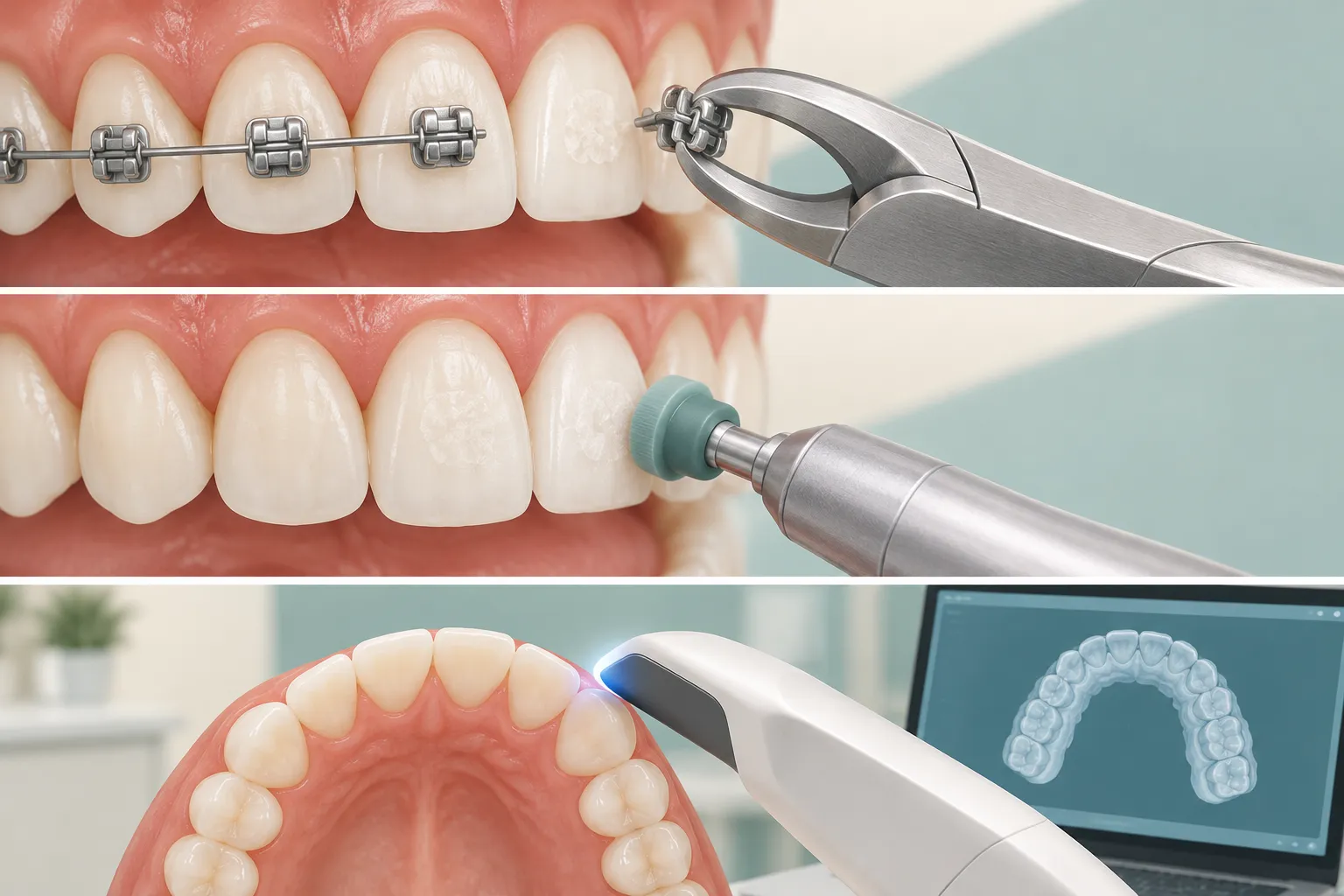
1. Your orthodontist checks the finish
The team checks your tooth positions and bite before removing anything. If treatment needs more time, your orthodontist may keep the braces on. Once your teeth are ready, they take out the wire, release the brackets with an orthodontic instrument, and remove any bands.
2. The remaining glue is removed and teeth are polished
Some bonding composite remains where each bracket sat. The team clears it and polishes your teeth until the surfaces feel smooth. Run your tongue over them and mention any rough patch. The polish removes adhesive, while routine cleanings and any assessment of a cavity or white spot still belong with your dentist.
3. Your new bite and retainer plan are reviewed
After cleanup, the orthodontist checks your bite and appearance again. You may have photos and a digital scan or impression for your retainer. Depending on the retainer and how it is made, you may receive it that day or later. Leave knowing when it will be ready, when to start wearing it, and whom to call if it does not fit.
How long does getting braces off take?
Plan for roughly an hour for the entire appointment. More attachments or adhesive can add time, as can sensitive teeth or retainer work. If you need to arrange school pickup or work, the office can tell you how long it has reserved for your visit.
The brackets may come off fast. Polishing and retainer planning often take more of the appointment.
Why might teeth feel sensitive afterward?
Without brackets in the way, you may notice cold air, water, your tongue, or certain foods against your teeth more than before. Gums that were irritated around the braces may be tender. Polishing can bring on brief sensitivity, and freshly smooth teeth can feel oddly slippery. Mild tenderness often eases within several hours to a few days.
If your teeth feel tender, start with softer foods and drinks at a comfortable temperature. Keep flossing and use a soft toothbrush. A fluoride toothpaste for sensitive teeth may help if cold drinks bother you. Ask the office about any rough spot rather than picking at it.
Call your orthodontist for severe or worsening pain, pain in one tooth, or pain that does not ease after a few days. Swelling, a chipped tooth, a painful bite, or a retainer that no longer fits also warrants a call. If you notice white patches or dark areas, ask your dentist to examine them.
Before you leave: know your retainer plan
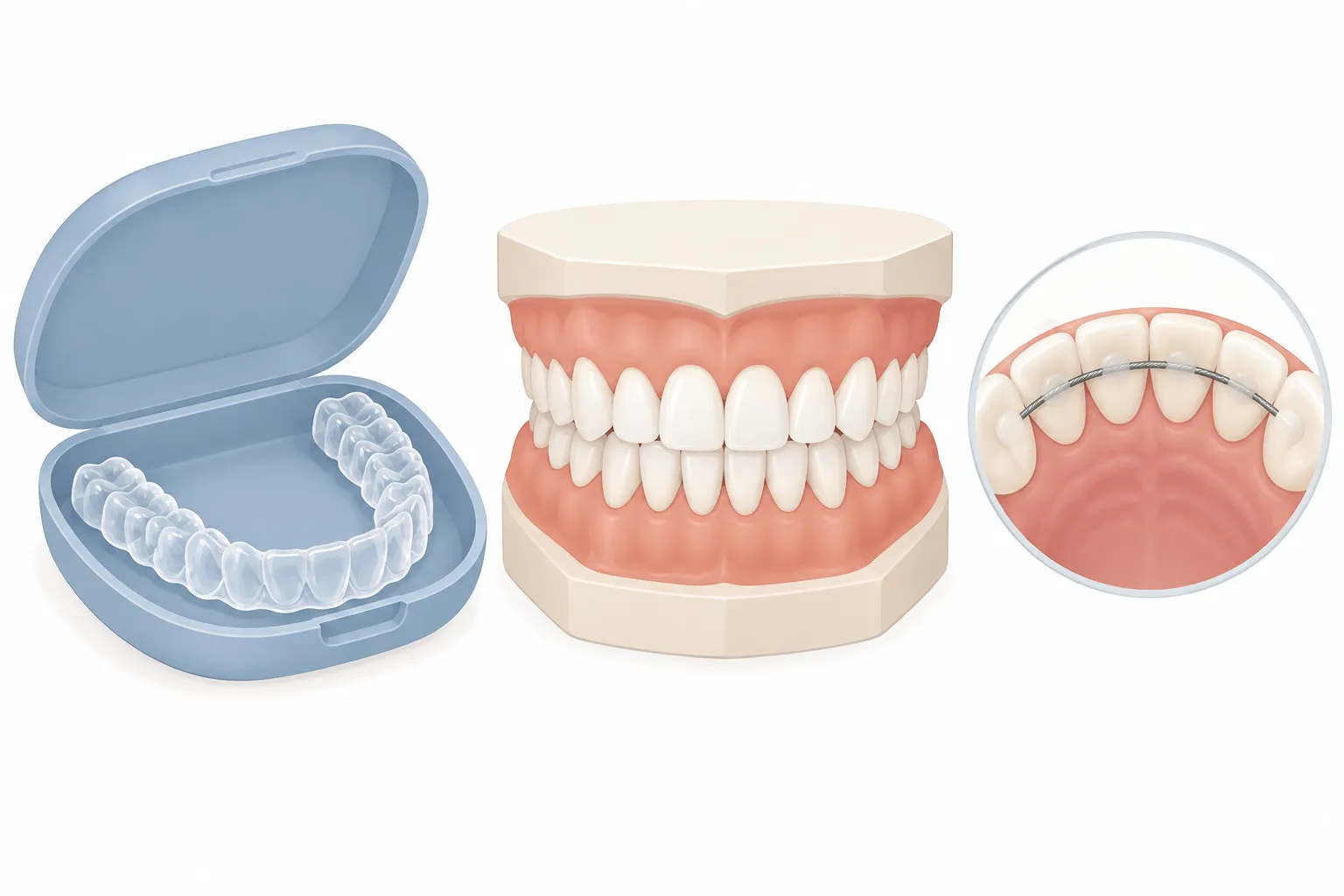
Your teeth need support to stay in their new positions. The American Association of Orthodontists (AAO) explains that teeth can shift after braces removal. Your orthodontist will recommend a removable retainer, a bonded retainer, or both for your case. A scan or impression records your tooth positions for a custom removable retainer; it is not a guarantee that the finished retainer is ready the same day.
“Your teeth naturally move and change position throughout your life, and even after orthodontic treatment, they can continue to shift.” – American Association of Orthodontists
Before leaving, get answers to these questions:
-
When will I receive my retainer, and what should I do until then?
-
How many hours a day should I wear it at first, and when does that schedule change?
-
How do I clean and store it, and who do I call if it cracks or feels tight?
-
Will there be a retention check, and when?
Wear your retainer on the schedule your orthodontist gives you. A new one may feel snug. If it will not seat or causes significant pain, do not force it.
The first days without braces
Brushing and flossing get easier without wires in the way. Keep up your oral hygiene: brush with fluoride toothpaste, floss daily, and go to your regular dental cleaning and exam appointments. Those habits protect your oral health even when your teeth look clean after debonding. Eat foods that feel comfortable if you have sore spots, and avoid chewing ice or other habits that can chip a tooth. Tell your orthodontist if one tooth hits hard before the others.
Taking care of your retainer becomes part of that routine. Put a removable retainer in its case when you take it out; a retainer wrapped in a restaurant napkin can end up in the trash. If a fixed retainer wire comes loose, contact the office instead of trying to glue it back yourself.
Debonding day for Passaic and North Jersey families
Children, teens and adults visit Eisenberger and Meister Orthodontics in Passaic, New Jersey. The team can explain your retainer plan as you finish treatment with metal or clear braces. Families considering orthodontic treatments can start with a complimentary consultation in the practice’s warm, spa-like office. A perfect smile may be the goal, but keeping your result depends on following your retainer plan.
These communities are in the broader area around Passaic. A 20-mile drive depends on your starting address and route; the county-by-county list is a geographic reference, not a list of office locations.
|
County |
Nearby towns and cities around Passaic |
|---|---|
|
Passaic County |
Passaic, Clifton, Paterson, Haledon, North Haledon, Prospect Park, Hawthorne, Woodland Park, Little Falls, Totowa, Wayne, Pompton Lakes, Bloomingdale, Wanaque, Ringwood, West Milford |
|
Bergen County |
Carlstadt, East Rutherford, Rutherford, Wallington, Wood-Ridge, Moonachie, Hasbrouck Heights, Teterboro, Lodi, Garfield, Elmwood Park, Saddle Brook, Fair Lawn, Paramus, Maywood, Rochelle Park, Hackensack, South Hackensack, Little Ferry, Ridgefield Park, Bogota, Teaneck, Englewood, Leonia, Fort Lee, Palisades Park, Ridgefield, Cliffside Park, Edgewater, North Arlington, Lyndhurst, Northvale, Bergenfield, New Milford, River Edge, Oradell, Emerson, Westwood, Hillsdale, Washington Township, Wyckoff, Franklin Lakes, Oakland, Ramsey, Mahwah, Allendale, Waldwick, Midland Park, Glen Rock, Ridgewood, Ho-Ho-Kus, Saddle River, Upper Saddle River |
|
Essex County |
Belleville, Nutley, Bloomfield, Glen Ridge, Montclair, Verona, Cedar Grove, West Orange, Orange, East Orange, Newark, South Orange, Maplewood, Livingston, Roseland, Essex Fells, Caldwell, North Caldwell, West Caldwell, Fairfield, Millburn |
|
Hudson County |
Secaucus, Kearny, Harrison, North Bergen, Union City, Weehawken, West New York, Guttenberg, Hoboken, Jersey City, Bayonne |
|
Morris County |
Lincoln Park, Montville, Pequannock, Riverdale, Butler, Kinnelon, Boonton, Boonton Township, Mountain Lakes, Parsippany-Troy Hills, East Hanover, Florham Park, Morris Plains, Morristown |
|
Union County |
Hillside, Union, Elizabeth, Roselle, Roselle Park, Kenilworth, Springfield, Summit, New Providence, Berkeley Heights, Mountainside, Westfield, Cranford, Garwood, Clark, Scotch Plains, Fanwood, Plainfield |
FAQ
How long are your teeth sore after getting braces off?
Mild sensitivity may last several hours to a few days as your teeth adjust to uncovered surfaces and the polishing process. If pain is severe, focused on one tooth, worsening, or not easing after a few days, contact your orthodontist.
What should you do after braces?
Follow your orthodontist’s retainer schedule, keep brushing and flossing, and attend regular dental visits. If you have not yet received your retainer, follow the office’s instructions for the interval between your scan and delivery; call if a retainer does not fit or breaks.