
Invisalign vs Braces: How Invisalign Works Differently
If you are asking what Invisalign does and how Invisalign works, the short answer is simple: Invisalign uses a series of clear removable aligners to gradually move teeth into healthier, more attractive positions. Choosing between Invisalign and braces can feel overwhelming, especially when you want the best mix of appearance, comfort, speed, and long-term results. If you are a parent exploring options for your child, a teen hoping for a discreet treatment, or an adult finally ready to improve your smile, understanding Invisalign how does it work compared with braces is the first step toward making a confident decision.
In most cases, Invisalign aligners are worn 20 to 22 hours per day so they can apply steady pressure while still fitting into daily life.
At Eisenberger and Meister Orthodontics, we help patients throughout Passaic, Clifton, Garfield, Rutherford, East Rutherford, Wallington, Wood-Ridge, Hasbrouck Heights, Carlstadt, Lyndhurst, Nutley, Bloomfield, Montclair, Little Falls, Woodland Park, Paterson, Elmwood Park, Saddle Brook, Fair Lawn, Hawthorne, North Arlington, Kearny, Belleville, Verona, Caldwell, West Caldwell, Totowa, Wayne, Secaucus, Newark, and surrounding New Jersey communities find the right treatment for their lifestyle and goals. With 38 years in practice, 15,000+ smiles treated, advanced orthodontic technology, and elite clear aligner expertise, our team is known for personalized care in a warm, spa-like environment.
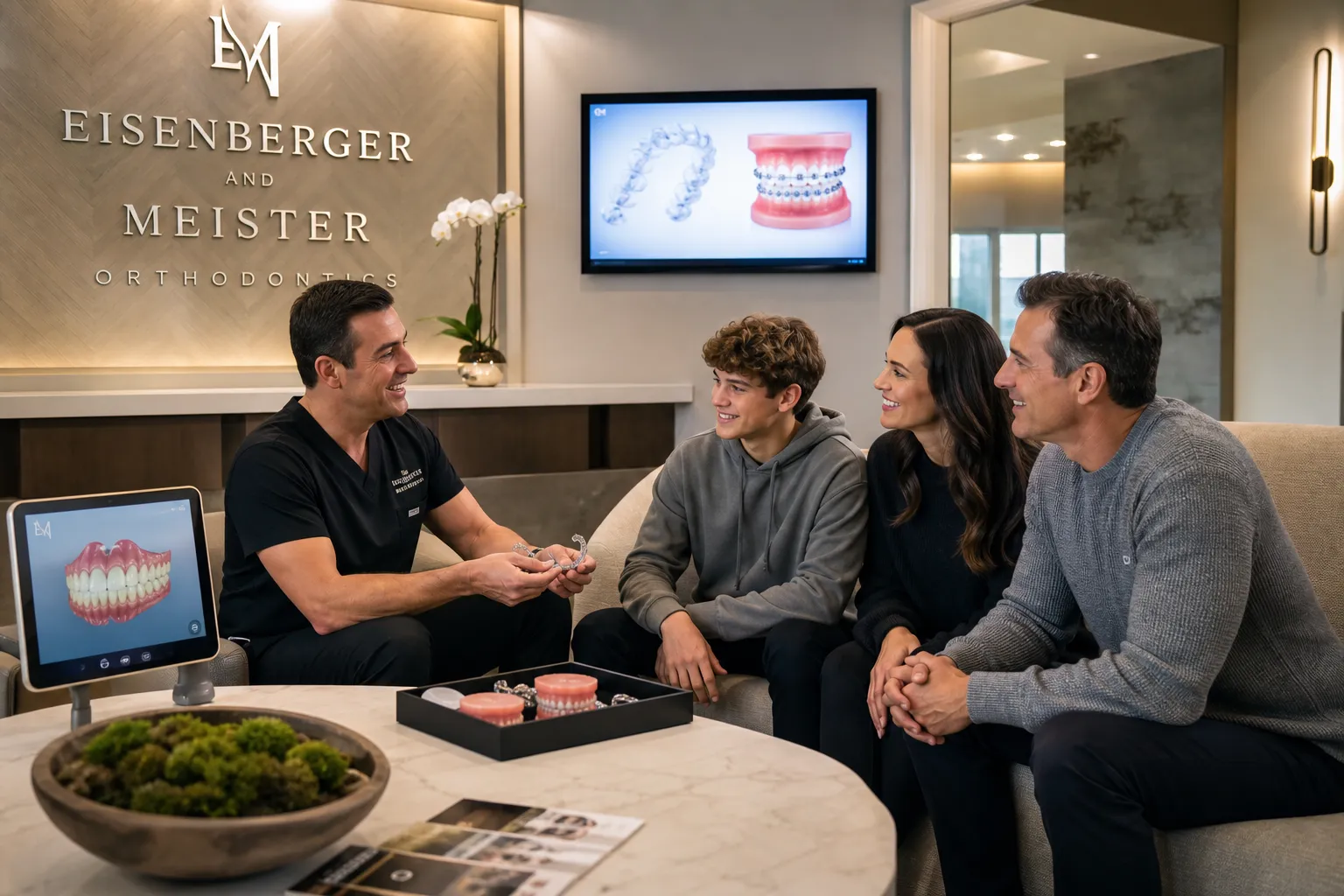
Why This Comparison Matters More Than Ever
Many articles compare braces and aligners in broad terms, but they often leave out the details that actually matter to real families:
-
How Invisalign moves teeth differently
-
Which cases are best for Invisalign first
-
When braces still have an advantage
-
How Invisalign can be used for children, teens, and adults
-
How airway-focused orthodontics and expansion may fit into treatment
-
What premium treatment planning can do for convenience and results
That is where expert guidance matters. At Eisenberger and Meister Orthodontics, we create highly customized plans using cutting-edge tools, including Dental Monitoring for fewer unnecessary office visits and LightForce custom braces for select cases that may benefit from more precise, efficient treatment.
Invisalign First: Start Here Before Comparing It to Braces
When families ask about early orthodontic care, it often makes sense to talk about Invisalign First before anything else. This system is designed for growing children and can help address crowding, spacing, and developing arch issues while a child still has a mix of baby teeth and permanent teeth.
For the right child, Invisalign First offers several advantages:
-
Clear, removable aligners instead of visible brackets
-
Easier brushing and flossing during early treatment
-
More comfortable day-to-day wear for many children
-
Early guidance of jaw and dental development
-
Better acceptance among kids who are sensitive to braces
Just as important, early orthodontics is not always only about straight teeth. In some children, treatment is also connected to airway development, oral habits, arch form, and space creation for erupting teeth.
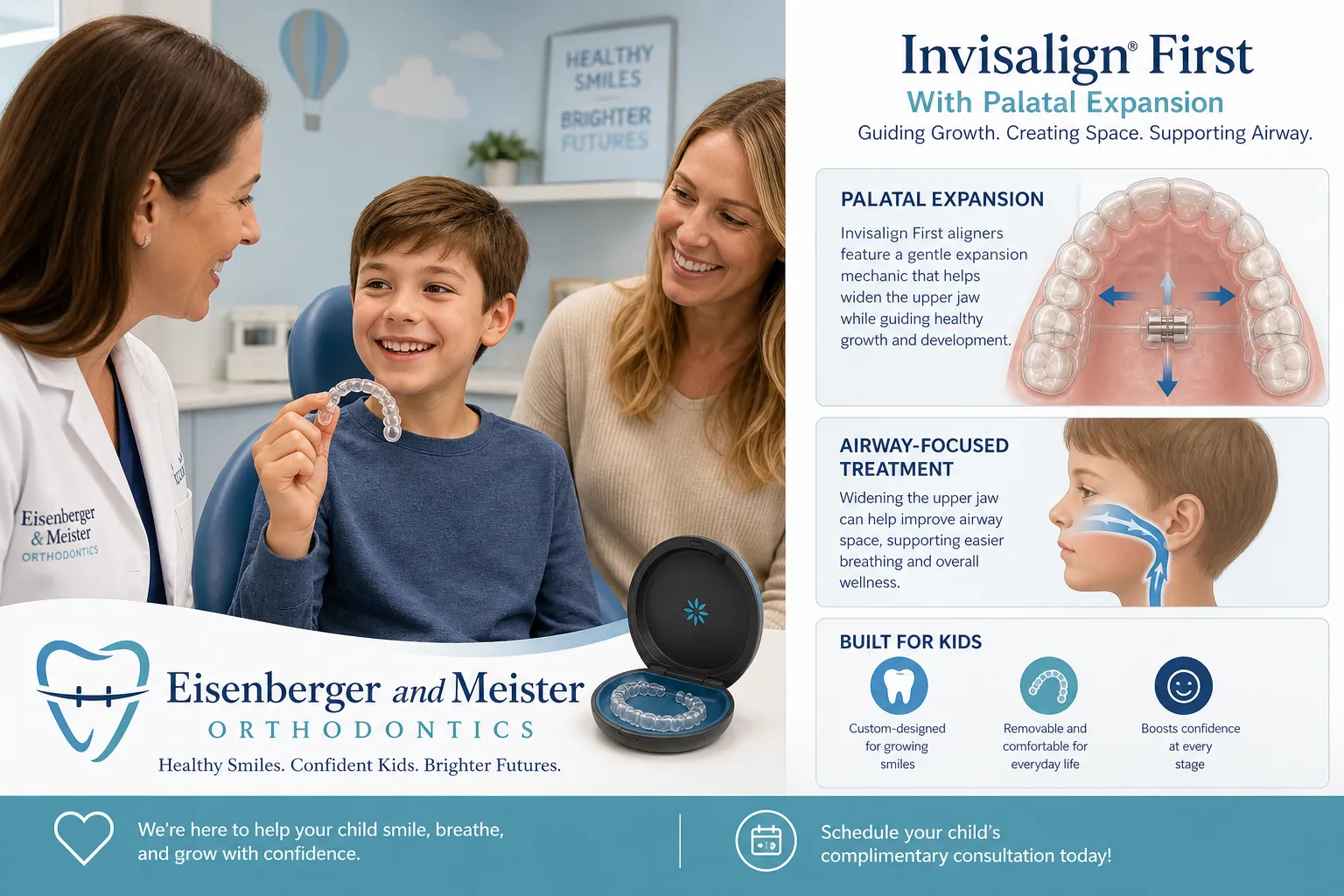
Invisalign RPE and Airway-Focused Orthodontics
One topic many competitor articles barely mention is expansion. Some children need more than alignment alone. They may need room for crowded teeth, improved arch development, or treatment that supports healthier growth patterns.
What Is Invisalign RPE?
RPE typically refers to rapid palatal expansion. Today, orthodontics is evolving, and in select cases, expansion concepts can be incorporated into clear aligner treatment planning. For growing patients, this can be especially meaningful when the goal is not just cosmetic straightening, but better development of the upper arch.
Why This Matters for Kids and Airway
A narrow upper jaw can contribute to:
-
Dental crowding
-
Crossbites
-
Poor tongue posture
-
Mouth breathing patterns
-
Developmental concerns that may affect airway health
At Eisenberger and Meister Orthodontics, we take a broader view of orthodontics. Our approach can include airway orthodontics, growth guidance, and age-appropriate treatment recommendations for children who may benefit from early intervention.
Invisalign Is Not Just for Adults
A common misconception is that Invisalign is only cosmetic or only for older teens and adults. In reality, Invisalign can be excellent for:
-
Growing children in the right cases
-
Teens with active school and sports schedules
-
Adults who want a subtle, professional look
-
Parents who value convenience and hygiene
Invisalign: What Does It Do?
If you are asking Invisalign what does it do, the simple answer is this: Invisalign uses a series of custom-made clear aligners to gradually move teeth into healthier, more attractive positions.
Depending on the case, Invisalign can help correct:
-
Crowding
-
Spacing
-
Rotated teeth
-
Overbite
-
Underbite
-
Crossbite
-
Open bite
-
Relapse after previous orthodontic treatment
Each aligner is designed with small, controlled tooth movements in mind. Over time, those movements add up to major smile changes.
Invisalign How Does It Work?
Invisalign works through a digital treatment plan that maps tooth movement from start to finish. Instead of using brackets and wires, the system relies on a sequence of aligners worn in order.
Each tray applies gentle, controlled force to specific teeth, and in some cases attachments or elastics may be used to help guide more precise movement. That is what makes the process both discreet and highly customizable.
Step-by-Step: How Invisalign Works
-
Consultation and digital records
Your orthodontist evaluates your bite, smile, facial balance, airway considerations, and goals. -
3D treatment planning
Advanced software is used to design the exact movements of your teeth. -
Custom aligner fabrication
A series of clear aligners is made just for you. -
Consistent wear
Aligners are typically worn 20 to 22 hours per day. -
Tray changes over time
You switch to a new set of aligners on schedule as directed. -
Monitoring and refinement
Your orthodontist checks progress and makes refinements if needed.
At Eisenberger and Meister Orthodontics, this process becomes even more convenient through Dental Monitoring, which allows many patients to have progress reviewed remotely. That can mean fewer interruptions to school, work, and family life.
After treatment, retainers are usually recommended to help keep your teeth in their new positions and protect your results for the long term.
How Braces Work Differently
Braces move teeth using brackets attached to the teeth and an archwire that applies force over time. Adjustments are made periodically in the office to continue guiding movement.
Braces remain a highly effective option, especially for:
-
More complex bite correction
-
Significant rotations
-
Teeth that need very controlled root movement
-
Cases where compliance with removable aligners may be difficult
The Biggest Difference
The key difference is not simply that one is clear and one is metal.
The deeper difference is this:
-
Invisalign depends on a removable series of custom trays and digital sequencing.
-
Braces depend on fixed hardware and in-office adjustments.
That affects everything from hygiene to appearance to patient responsibility.
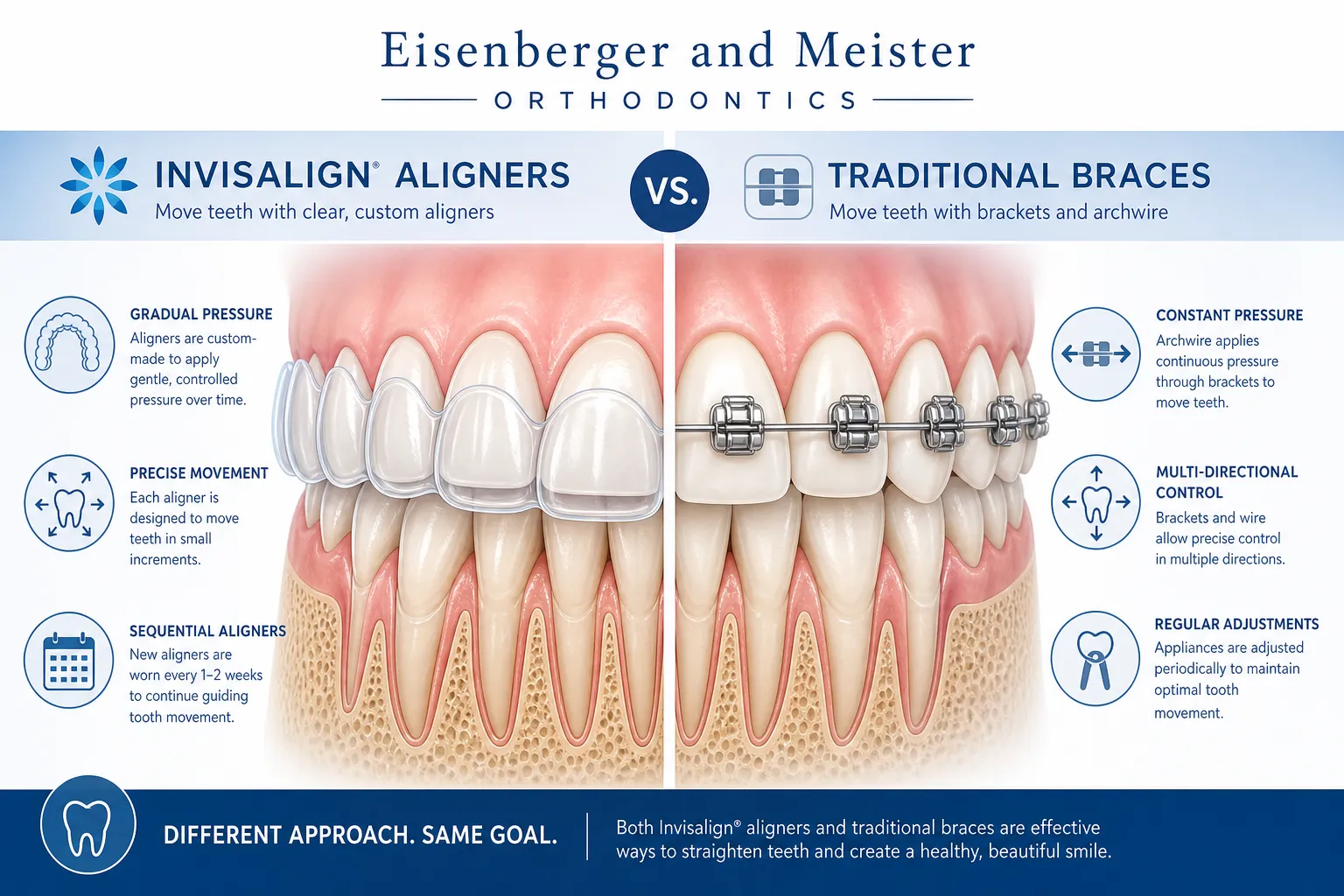
Invisalign vs Braces at a Glance
|
Feature |
Invisalign |
Braces |
|---|---|---|
|
Appearance |
Nearly invisible |
More noticeable |
|
Removability |
Yes |
No |
|
Eating restrictions |
Minimal, because aligners are removed |
Several food restrictions |
|
Brushing and flossing |
Easier |
More challenging |
|
Compliance required |
High |
Lower |
|
Office visits |
Often fewer with remote monitoring options |
Usually more frequent |
|
Best for mild to complex cases |
Many mild to complex cases, depending on expertise |
Excellent for mild to very complex cases |
|
Comfort |
No brackets or wires |
Can irritate cheeks and lips |
|
Ideal for athletes and musicians |
Often very convenient |
May require more adjustment |
Is Invisalign Better Than Braces?
There is no universal winner. The right choice depends on your goals, anatomy, growth stage, and lifestyle.
Invisalign May Be Better If You Want:
-
A discreet treatment
-
Better flexibility for meals and social events
-
Easier brushing and flossing
-
A more comfortable experience without brackets and wires
-
Fewer in-office visits when remote monitoring is available
Braces May Be Better If You Need:
-
Certain types of advanced bite correction
-
A non-removable option
-
Tooth movement that is more efficient with fixed appliances
-
Treatment that does not rely on remembering to wear aligners
What Competitor Articles Often Miss
Many comparisons stop at “clear vs metal.” That is too simplistic. Here are the real gaps families should know about.
1. The Skill of the Orthodontist Matters Enormously
Invisalign outcomes depend heavily on treatment planning expertise. A highly experienced orthodontist can often treat cases with Invisalign that less experienced providers may refer to braces.
At Eisenberger and Meister Orthodontics, our team holds Invisalign Sapphire Provider status and is recognized among the top 0.5% of specialists. We are also proud to be recognized as the #1 Invisalign Apex-level provider in all of New Jersey, reflecting exceptional experience, case volume, and results with clear aligner therapy.
2. Kids Can Be Great Invisalign Candidates
Many people still think aligners are only for image-conscious adults. In reality, children and preteens can be excellent candidates for early Invisalign treatment in the right cases.
3. Airway and Growth Matter
Orthodontics is not only cosmetic. Arch development, breathing patterns, and growth guidance can all be part of the conversation.
4. Luxury and Convenience Change the Treatment Experience
The orthodontic process should not feel stressful. Our office is designed to feel warm, polished, and welcoming, with efficient scheduling, less waiting time, and a patient-centered experience from start to finish.
Comfort, Lifestyle, and Everyday Practicality
Appearance
For many teens and adults, appearance is one of the biggest reasons to choose Invisalign. The trays are clear and low profile, which can feel more comfortable professionally and socially.
Eating
With braces, you need to avoid hard, sticky, or crunchy foods that may damage the appliance. With Invisalign, you remove the trays before meals, so your diet is far less restricted.
Oral Hygiene
This is a major advantage for aligners. You can brush and floss normally after meals before putting the trays back in.
Responsibility
This is also where Invisalign can become challenging. If aligners are not worn as prescribed, treatment can slow down or become less predictable.
Treatment Planning for Teens, Adults, and Busy Families
For Teens
Teens often love Invisalign because it is subtle, sports-friendly, and comfortable. It can also be easier for musicians who play wind instruments.
For Adults
Adults often choose Invisalign because it fits a professional lifestyle. Whether you are in meetings, on video calls, or attending events, Invisalign offers a more discreet look.
For Parents
Parents value treatment that balances results with convenience. With complimentary consultations, flexible financing, 0% APR options, and no hard credit checks, families can explore treatment without unnecessary pressure.
When We Recommend LightForce Braces Instead
In some cases, custom braces are simply the better tool. That is why we also offer LightForce braces, a fully customized 3D-printed ceramic braces system.
Potential advantages of LightForce include:
-
Highly customized bracket design
-
Precise treatment planning
-
Aesthetic ceramic appearance
-
Potential for faster treatment in select cases
-
Potentially fewer appointments in the right treatment plan
Rather than pushing one treatment for everyone, Eisenberger and Meister Orthodontics recommends what is genuinely best for the patient.
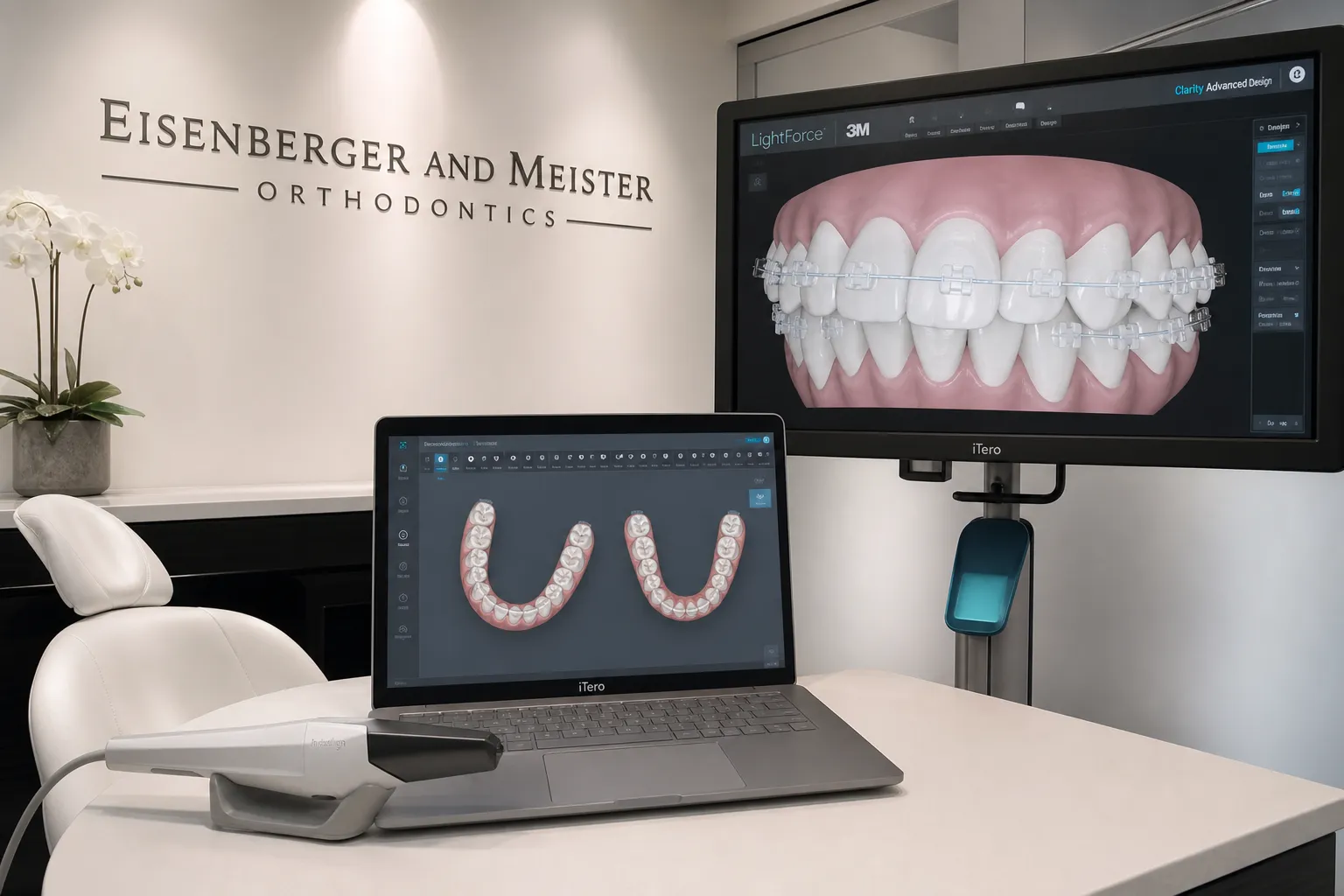
Invisalign vs Braces for Complex Cases
One of the biggest myths online is that braces are always better for serious issues. The truth is more nuanced.
With experienced orthodontic planning, Invisalign can often address much more than mild crowding. That said, there are still cases where braces or a hybrid plan may be the better solution.
Factors That Influence the Best Choice
-
Severity of bite discrepancy
-
Rotations and root positioning
-
Growth and age
-
Airway and arch development goals
-
Patient compliance
-
Aesthetic preference
-
Need for expansion or interdisciplinary care
This is why a customized consultation matters more than generic internet advice.
Cost Considerations
Invisalign and braces are often closer in cost than people expect. Pricing depends on:
-
Complexity of treatment
-
Length of care
-
Type of appliance
-
Whether early intervention is needed
-
Refinements or additional phases of treatment
At Eisenberger and Meister Orthodontics, we believe premium care should still feel accessible. We provide:
-
Complimentary consultations
-
Flexible financing options
-
0% APR plans for qualified arrangements
-
No hard credit checks
-
Clear help navigating affordability
Why Patients Across North Jersey Choose Eisenberger and Meister Orthodontics
Families from Passaic, Clifton, Garfield, Paterson, Elmwood Park, Saddle Brook, Fair Lawn, Rutherford, East Rutherford, Lyndhurst, Nutley, Bloomfield, Montclair, Little Falls, Wayne, Totowa, Woodland Park, Verona, Caldwell, Kearny, Belleville, Secaucus, Newark, Carlstadt, Hasbrouck Heights, Wallington, and nearby towns choose our practice because they want more than generic orthodontic care.
They want:
-
A practice with 38 years of experience
-
15,000+ smiles treated
-
Elite Invisalign expertise
-
Advanced orthodontic technology
-
Personalized treatment plans
-
A warm, luxurious, spa-like office atmosphere
-
Efficient appointments with less waiting
-
Options for children, teens, and adults
-
A team that respects their time, goals, and budget
Final Verdict: How Invisalign Works Differently
Invisalign works differently because it is built around digital precision, removable aligners, customized sequencing, and lifestyle flexibility. Braces remain a powerful and trusted option, but Invisalign offers a distinctly modern orthodontic experience for many children, teens, and adults.
If you want a discreet, comfortable, and highly personalized treatment plan from one of New Jersey’s most experienced orthodontic teams, Eisenberger and Meister Orthodontics is ready to help. As the #1 Invisalign Apex-status leader in New Jersey with elite provider-level expertise, we are proud to help patients discover whether Invisalign, braces, LightForce, or early airway-focused care is the right fit.
Schedule your complimentary consultation with Eisenberger and Meister Orthodontics and let us create a smile plan designed around your life.
FAQ
Does Invisalign work as well as braces?
Yes, in many cases Invisalign can work just as well as braces, especially when treatment is planned by an experienced orthodontist. For more complex movements or bite corrections, braces or a hybrid approach may still be the better option.
What is the 30 minute rule with Invisalign?
The 30 minute rule usually means you should put your aligners back in within about 30 minutes after eating or drinking anything other than water. Staying close to that window helps you maintain the recommended wear time and keep treatment on track.
How painful is Invisalign on a scale of 1 to 10?
Most people rate Invisalign discomfort around a 2 to 4 out of 10, with brief soreness when starting a new tray or after attachments are adjusted. It usually feels more like pressure than pain, and it tends to ease within a few days as you adapt. Wearing your aligners as directed helps each new set feel more predictable.
What are the negatives of Invisalign?
The main negatives are that Invisalign requires discipline, can be removed too often, and may not be the best choice for every complex bite problem. Some patients also experience temporary speech changes or minor soreness when switching trays.
What I wish I knew before Invisalign?
Many people wish they had known that success depends on wearing the aligners 20 to 22 hours a day and keeping up with attachments, checkups, and refinements. It also helps to expect a learning curve with eating, cleaning, and remembering to put the trays back in. The more consistent you are, the smoother treatment usually feels.
What disqualifies you from Invisalign?
No one is automatically disqualified, but severe bite issues, very complex tooth movements, poor aligner wear, or treatment needs that are better handled with fixed appliances may make braces a better option. A consultation is the best way to know whether Invisalign is a good fit for your smile.
Why do dentists not recommend Invisalign?
At what age do most people get Invisalign?
Invisalign can be a good option for many teens and adults, and in the right cases it may also be used for younger children. It works best when the patient can wear the aligners consistently for 20 to 22 hours a day and follow instructions closely. The right age depends on the child’s growth, dental needs, and treatment goals, which can be evaluated during a consultation for families in Passaic and nearby North Jersey communities.
Invisalign is popular with teens and adults, but many younger children can also benefit from Invisalign First when early orthodontic treatment is appropriate. The best age depends more on dental development and treatment needs than on a specific number.