
If you had braces before, can you get them again? Yes. A small shift may need only a replacement retainer; more movement may call for aligners or braces. Your teeth, bite, and gum health shape the plan.
If your old retainer suddenly feels tight or will not seat fully, do not force it. An orthodontist can tell whether you have a small alignment change or a bite problem that needs a new treatment plan.
Why do teeth move back after braces?
One of the common reasons teeth shift is that you didn’t wear your retainer as directed, or it broke. Age-related changes, tooth wear, and grinding may also affect alignment. Tooth loss can let nearby teeth tip into the gap; gum issues and bone loss can cause new spacing. An exam can establish the reason teeth shift in your case rather than assuming daily habits, such as nail biting, are to blame.
Note when you first saw crowding, a broken fixed retainer, or a change in how your back teeth meet. Tell your orthodontist if your bite feels different.
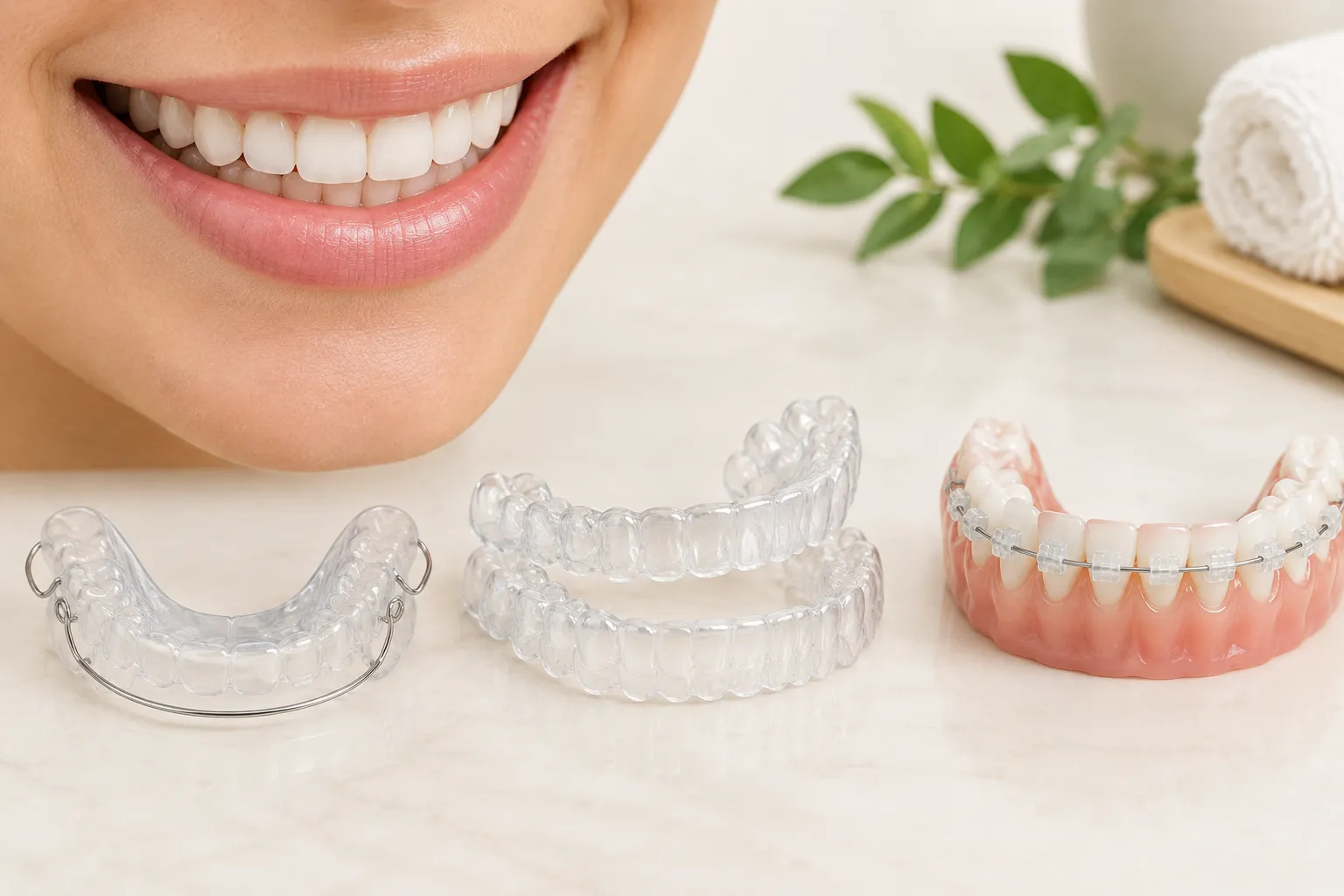
Options for second-time orthodontic treatment
|
Option |
When it may be considered |
What it cannot solve on its own |
|---|---|---|
|
New or repaired retainer |
Teeth are acceptably aligned, or an orthodontist determines a small change can be managed with a retainer plan |
A retainer made to hold teeth generally cannot be counted on to correct significant crowding or a changed bite |
|
Clear aligners |
Tooth movement is needed and the orthodontist judges the case suitable for removable trays |
They require consistent wear and may not be the best tool for every bite or tooth movement |
|
Braces, including traditional braces or clear or custom brackets |
More involved movement or bite correction better served by fixed appliances |
They still require a retention plan after active treatment |
When a new retainer may be enough
If your teeth still look and function well, a new retainer may hold them in place; a broken bonded wire may need repair. If teeth have moved, an orthodontist must determine whether a retainer can manage the change or would only hold the new position. Do not force a retainer that will not seat or causes notable pain.
When aligners or another course of braces makes sense
Clear aligners may suit some movements; modern braces may suit more involved bite correction. Lingual braces, placed behind the teeth, are another discreet option to ask about, though suitability depends on your case. A front tooth that moved a little bit may call for limited orthodontic treatment, but correcting only that tooth could miss a changed back-tooth bite.
What the evaluation should check before you commit
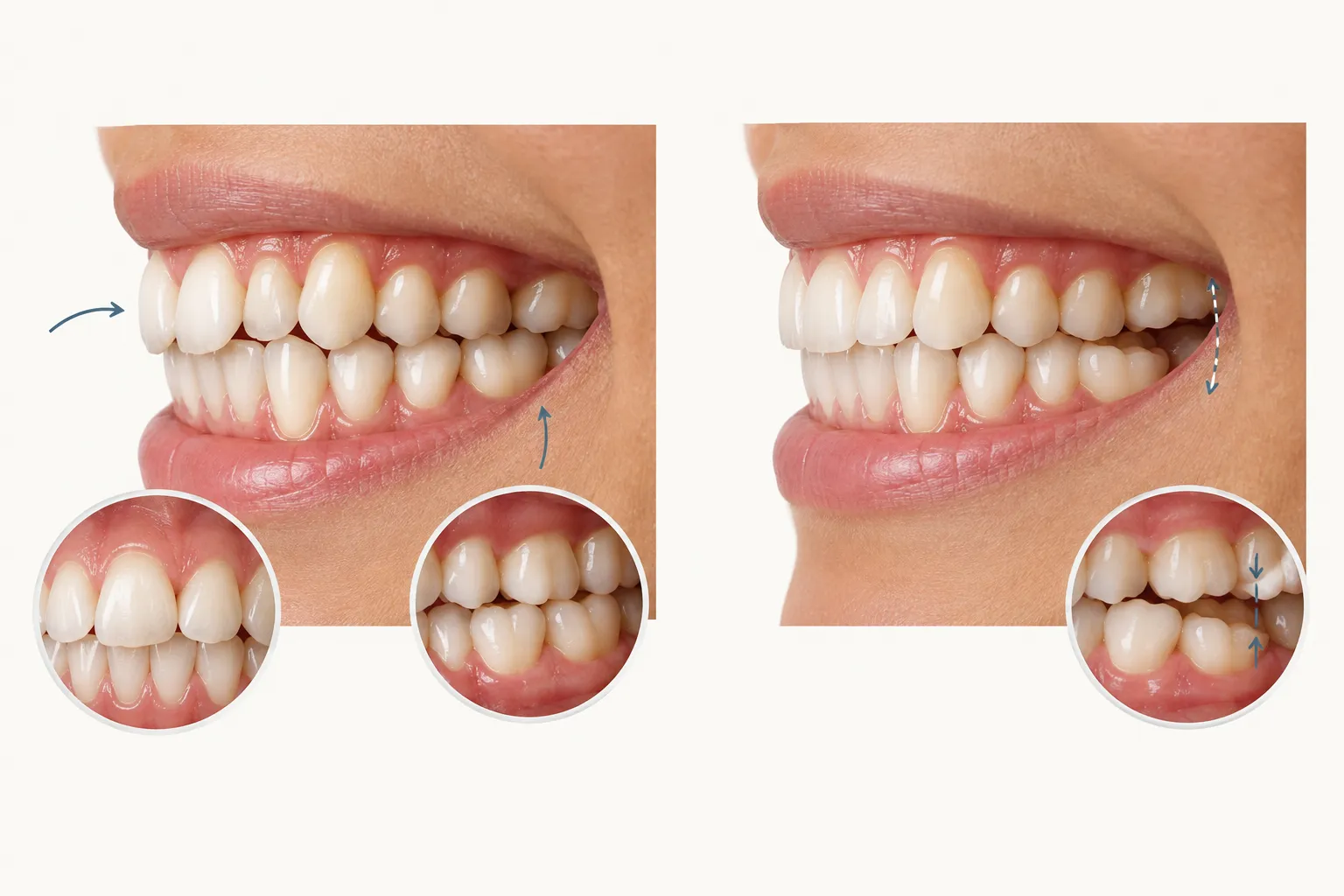
Bring your old retainer and explain when you last wore it or whether a fixed wire came loose. The examination should cover:
-
Where teeth moved, how they meet now, and whether the concern is appearance, function, or both.
-
Whether gum inflammation, tooth damage, or another dental issue needs attention before treatment.
-
Whether current images or other records are needed to assess the roots, supporting structures, and planned movements.
-
The result you want, which appliance can deliver it, and how you will retain it.
Tell the orthodontist if a tooth feels loose, your gums bleed, or your bite has changed noticeably. These findings may affect which care comes first.
If you had braces before, can you get them again safely?
You can be a candidate if your oral health supports the planned movements. Your orthodontist will assess your teeth, gums, and supporting structures; dental care may need to come first. A small shift might take less work than your original treatment, but a bite problem could make retreatment more involved.
Will it cost less this time?
There is no automatic discount for having worn braces before. Ask whether your estimate covers active treatment and retainers; a replacement retainer and comprehensive retreatment are different services.
A practical next step in Passaic and North Jersey
Eisenberger and Meister Orthodontics offers complimentary consultations in Passaic for children, teens, and adults. Bring your retainer to discuss whether you need a replacement, Invisalign, clear braces, or LightForce custom ceramic braces. If active treatment is needed, ask about Dental Monitoring and financing.
Patients considering a second round of braces can visit the Passaic office from across North Jersey. Communities in the surrounding counties include:
-
Passaic County: Passaic, Clifton, Paterson, Woodland Park, Wayne, Little Falls, Totowa, Haledon, Hawthorne, and Ringwood.
-
Bergen County: Garfield, Wallington, Lodi, Hasbrouck Heights, Rutherford, East Rutherford, Carlstadt, Hackensack, Paramus, Fair Lawn, Ridgewood, Teaneck, Fort Lee, and Englewood.
-
Essex County: Nutley, Belleville, Bloomfield, Montclair, Newark, East Orange, West Orange, Glen Ridge, and Livingston.
-
Hudson County: Secaucus, Kearny, Harrison, North Bergen, Union City, Hoboken, and Jersey City.
-
Morris County: Montville, Parsippany, Morristown, Denville, and Dover.
-
Union County: Elizabeth, Union, Hillside, Springfield, and Westfield.
FAQ
Do braces last 2 years?
No. Treatment length depends on the movements and bite correction needed, and results still need retention afterward.
Can I get braces for free a second time?
No. Prior braces do not automatically make retreatment free. Ask for a treatment-specific estimate.