
Insurance Coverage Invisalign: What Patients Should Know
If you are researching insurance coverage Invisalign options, you are probably asking a very practical question: Will my dental plan actually help pay for treatment, or will most of the cost come out of pocket? The answer is that many plans do help, but the amount varies widely based on your orthodontic benefits, age limits, lifetime maximums, deductibles, and whether your treatment is handled by an in-network or out-of-network provider.
For families and adults in Passaic, Clifton, Garfield, Wallington, Rutherford, East Rutherford, Carlstadt, Wood-Ridge, Hasbrouck Heights, Lodi, Saddle Brook, Elmwood Park, Paterson, Little Falls, Totowa, Wayne, Bloomfield, Nutley, Lyndhurst, North Arlington, Kearny, Newark, Montclair, Verona, Cedar Grove, Glen Ridge, Belleville, Secaucus, and surrounding New Jersey communities, understanding coverage before starting treatment can make the process feel far less stressful.
At Eisenberger and Meister Orthodontics, patients appreciate having these financial questions answered clearly during a complimentary consultation. With 38 years in practice, 15,000+ smiles treated, and Invisalign Sapphire Provider status placing the practice in the top 0.5% of Invisalign specialists, the team helps children, teens, and adults understand not only which treatment fits their smile – but also how to make it fit their budget.
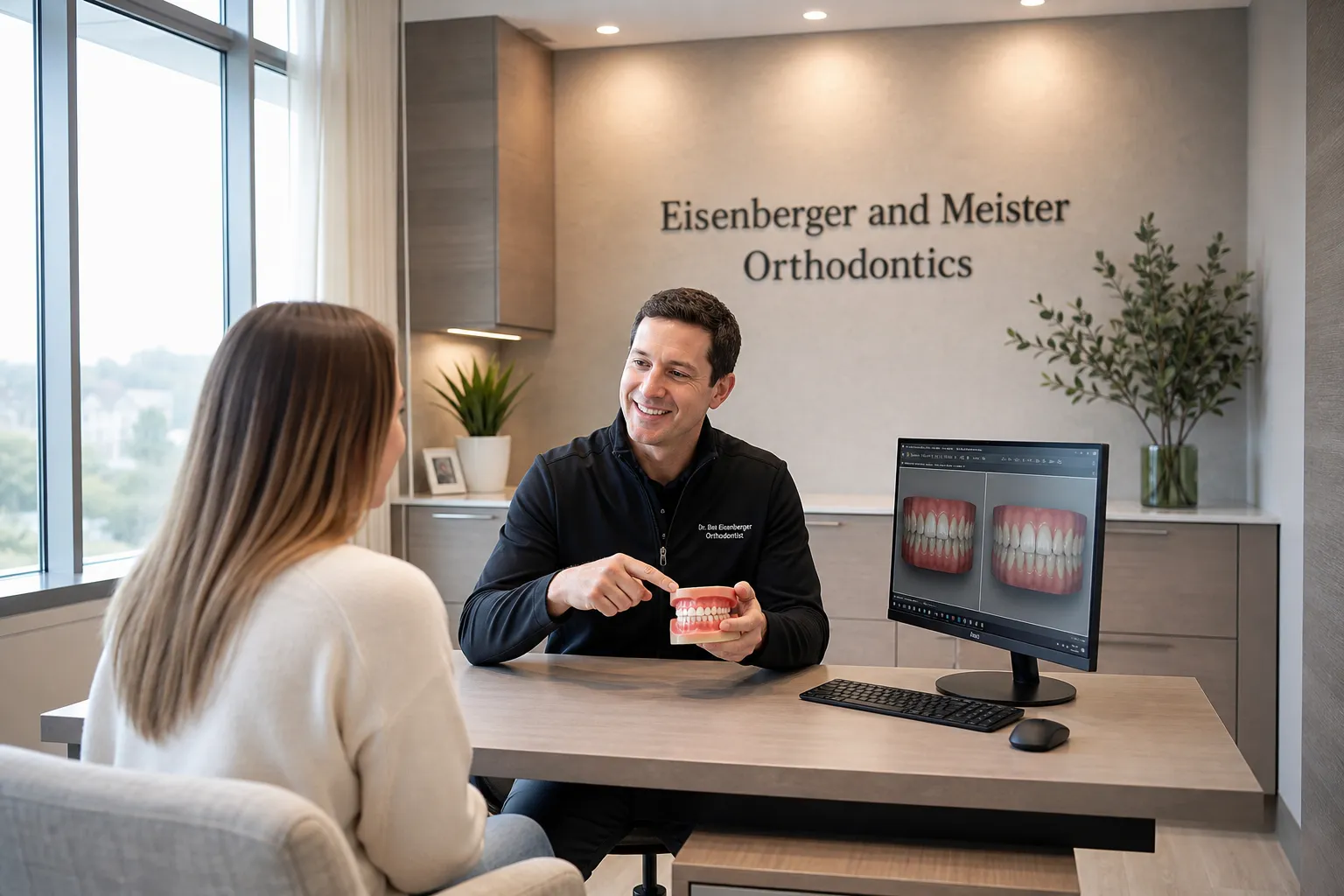
The Short Answer: Does Insurance Cover Invisalign?
Often, yes. Many dental insurance plans treat Invisalign similarly to braces under orthodontic benefits. That means coverage is usually not automatic, but it may be available if your plan includes orthodontics.
In real-world terms, coverage usually falls into one of these categories:
|
Coverage Scenario |
What It Usually Means |
|---|---|
|
Full orthodontic exclusion |
Your plan does not cover braces or Invisalign at all |
|
Braces covered, Invisalign also covered |
Invisalign may be included under the same orthodontic benefit |
|
Braces covered, Invisalign limited |
The plan may pay only a portion, or apply a lower allowance |
|
Child-only orthodontic coverage |
Coverage may apply to minors but not adults |
|
Lifetime orthodontic maximum |
Insurance pays up to a set total amount, then stops |
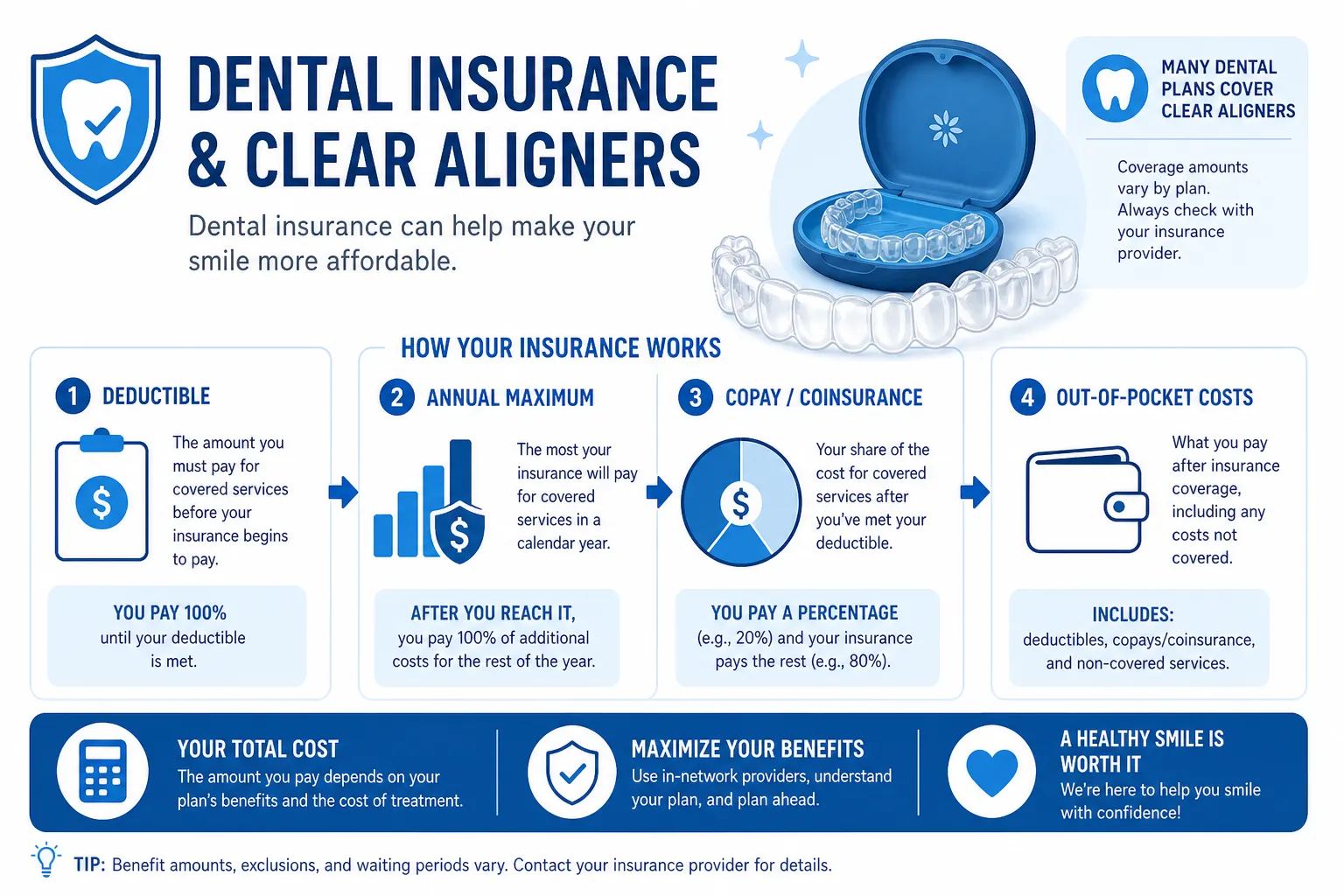
The most important takeaway: do not assume coverage based on a general dental plan alone. Orthodontic benefits are often separate from preventive dental benefits like cleanings and exams.
Why Invisalign Coverage Can Be Confusing
Many competing articles explain that “some plans cover Invisalign,” but they often stop there. What patients really need to know is why the answer changes from one policy to another.
1. Orthodontic benefits are separate from routine dental care
A plan may cover cleanings, X-rays, and fillings very well, yet provide little or no orthodontic coverage.
2. Adult coverage is often more limited
Some plans cover orthodontics only for dependent children. Adults may have no benefit at all – even if they have strong overall dental insurance.
3. There may be a lifetime cap
Orthodontic insurance frequently comes with a lifetime maximum benefit instead of an annual one. Once that amount is used, there is no additional orthodontic coverage available under that plan.
4. Network rules can affect reimbursement
Even when Invisalign is covered, your out-of-pocket costs can differ depending on whether your orthodontist is in-network, out-of-network, or submits claims on your behalf.
What Insurance Usually Pays For
When Invisalign is covered, insurance typically pays in one of two ways:
Percentage-based coverage
Some plans pay a percentage of the orthodontic fee, such as 25% or 50%, up to the plan maximum.
Flat-dollar orthodontic benefit
Other plans pay a specific dollar amount toward treatment, such as $1,000, $1,500, $2,000, or more.
A common misunderstanding is that insurance will reduce every monthly payment equally. In many cases, orthodontic benefits are instead paid over time, or in scheduled installments, until the lifetime maximum is reached.
“Coverage amount averaged $1,772 USD, with 92% qualifying for up to $3,000 USD and 77% qualifying for up to $2,000 USD in coverage for orthodontic treatment.” – Align Technology / OrthoFi data
That does not mean every patient will receive those amounts, but it does show why it is worth checking benefits before ruling treatment out.
The Biggest Factors That Affect Insurance Coverage for Invisalign
Whether your plan includes orthodontics
This is the first and most important question. If your plan excludes orthodontics entirely, Invisalign is usually not covered.
Your age
Many plans are more generous for children and teens than for adults. If you are an adult considering Invisalign, checking the fine print matters.
Medical necessity vs. cosmetic perception
Although Invisalign can greatly improve appearance, orthodontic treatment is often about more than cosmetics. Crowding, bite problems, spacing, and alignment issues can affect oral health, function, and long-term maintenance. Some plans may be more favorable when the case clearly addresses functional orthodontic concerns.
Severity and complexity of the case
More complex treatment does not always increase insurance payment, but it can affect the total treatment fee and therefore your out-of-pocket balance.
Prior orthodontic use
If a patient has already used orthodontic benefits under the same plan, there may be little or no remaining benefit available.
What to Check Before You Start Treatment
Before beginning Invisalign, ask your insurance company or orthodontic office these questions:
-
Does my plan include orthodontic benefits?
-
Is Invisalign covered the same way as traditional braces?
-
Is there an age limit for orthodontic coverage?
-
Is there a waiting period before benefits begin?
-
What is my lifetime orthodontic maximum?
-
Is there a deductible?
-
Do I have to see an in-network provider?
-
Are pre-authorization or pretreatment estimates required?
-
How are benefits paid – upfront, monthly, or in stages?
-
Have I already used part of my orthodontic maximum?
This is where an experienced orthodontic team becomes especially valuable. At Eisenberger and Meister Orthodontics, patients benefit from individualized guidance, efficient scheduling, and a team that understands how to simplify what can otherwise feel like a very technical insurance process.
Typical Out-of-Pocket Costs: What Patients Should Expect
Even with insurance, most patients should expect some out-of-pocket responsibility. That amount depends on:
-
Total treatment fee
-
Insurance contribution
-
Deductible
-
Co-insurance or co-pay
-
Remaining orthodontic maximum
-
Down payment and financing structure
Example cost breakdown
|
Example |
Amount |
|---|---|
|
Total Invisalign fee |
$6,000 |
|
Insurance orthodontic benefit |
$2,000 |
|
Patient responsibility |
$4,000 |
|
Paid over 24 months |
About $167/month |
This is only an example, but it shows why Invisalign may be more manageable than many people assume – especially when paired with flexible financing, 0% APR options, and no hard credit checks when available through the practice.
Invisalign vs. Braces: Is Coverage the Same?
Often yes, but not always.
Many plans state that they cover orthodontic treatment generally, which means both braces and Invisalign may qualify. However, patients should still verify that their plan does not treat clear aligners differently.
At Eisenberger and Meister Orthodontics, the conversation is never just about “what insurance covers.” It is also about what treatment is best for your specific smile.
For some patients, Invisalign is ideal because it is discreet and removable. For others, custom LightForce braces may be a better solution. These advanced 3D-printed ceramic braces are designed around each patient’s anatomy and may offer faster treatment and fewer appointments in appropriate cases.
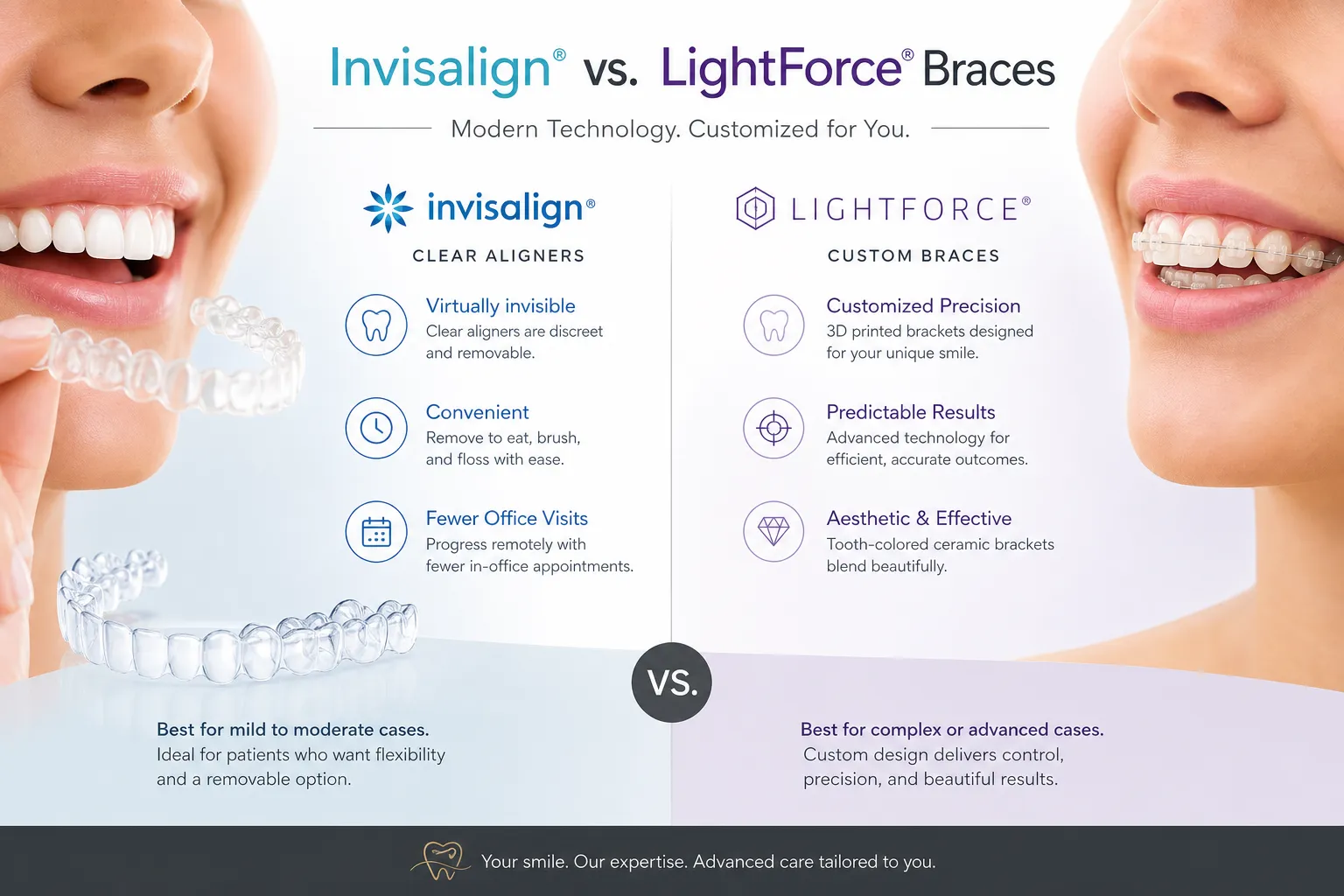
How Invisalign Costs Compare With Other Options
Invisalign
Best for patients who want a nearly invisible, removable option and are committed to wearing aligners as instructed.
Traditional braces
A dependable option for many orthodontic cases, especially where full-time tooth control is helpful.
Clear braces
Aesthetic braces that offer a more discreet appearance than metal braces.
LightForce custom braces
A modern, highly personalized option using 3D-printed ceramic brackets tailored to the patient, with the potential for greater efficiency.
The “right” choice depends on more than insurance alone. Lifestyle, age, treatment goals, complexity, and compliance all matter.
Ways to Make Invisalign More Affordable If Insurance Falls Short
Many articles mention financing briefly, but this is one of the most important sections for real patients making real decisions.
Flexible financing plans
Monthly payments can spread the cost over time and make treatment much more accessible.
0% APR options
For qualified patients, interest-free plans can help reduce financial strain.
No hard credit check financing options
This can be especially helpful for families who want predictable payments without adding unnecessary stress.
HSA and FSA funds
If eligible, these accounts allow you to use pre-tax dollars toward orthodontic treatment.
Family budgeting across multiple treatments
If more than one family member needs treatment, an orthodontic office with experience in family care can help structure timing and payment in a more manageable way.
At Eisenberger and Meister Orthodontics, affordability is approached the same way as treatment planning: personally, thoughtfully, and transparently.
What Competitor Articles Often Miss
After reviewing common Invisalign insurance content, several gaps stand out:
They oversimplify adult coverage
Many articles say “insurance may cover Invisalign,” but fail to emphasize how often adult orthodontic benefits are limited or excluded.
They do not explain payment timing
Patients often want to know not just how much insurance pays, but when it pays. Orthodontic benefits are frequently distributed in stages.
They focus only on Invisalign, not treatment fit
Insurance matters, but choosing the right orthodontic method matters just as much. An experienced orthodontist should guide both conversations together.
They rarely address convenience
For busy patients in Passaic County and nearby Bergen and Essex County communities, convenience matters. Dental Monitoring can reduce unnecessary in-office visits and add flexibility for families, professionals, and students.
They ignore the treatment experience
Orthodontic care is not only a financial decision. The quality of care, communication, comfort, and office atmosphere can significantly affect the overall experience. A warm, luxurious, spa-like office environment can make treatment feel far less clinical and far more personal.
Why Expertise Matters When You Are Using Insurance for Invisalign
Insurance is only one part of the value equation. The provider’s experience can influence case design, efficiency, communication, and patient confidence throughout treatment.
At Eisenberger and Meister Orthodontics, patients benefit from:
-
Invisalign Sapphire Provider expertise in the top 0.5% of specialists
-
38 years of trusted orthodontic care
-
15,000+ smiles treated
-
Advanced treatment for children, teens, and adults
-
Custom LightForce braces and other cutting-edge options
-
Dental Monitoring for added convenience
-
Complimentary consultations
-
Flexible financing
-
Efficient appointments with less waiting time
-
A premium, welcoming atmosphere designed around comfort
For patients in Passaic and neighboring towns such as Clifton, Garfield, Wallington, Rutherford, East Rutherford, Carlstadt, Wood-Ridge, Hasbrouck Heights, Lodi, Saddle Brook, Elmwood Park, Paterson, Little Falls, Totowa, Wayne, Nutley, Bloomfield, Belleville, Montclair, Verona, Cedar Grove, Glen Ridge, Lyndhurst, North Arlington, Kearny, Newark, and Secaucus, that combination of expertise and convenience can make a meaningful difference.
Questions to Ask at Your Consultation
A consultation should leave you with clarity, not confusion. Consider asking:
|
Question |
Why It Matters |
|---|---|
|
Is Invisalign the best option for my case? |
Treatment fit comes first |
|
Will my insurance apply to Invisalign? |
Confirms benefit eligibility |
|
How much will I owe out of pocket? |
Helps with budgeting |
|
Are there financing options? |
Makes care more manageable |
|
Would LightForce braces or clear braces be better? |
Compares alternatives fairly |
|
Can Dental Monitoring reduce office visits? |
Adds convenience for busy schedules |
Final Verdict
Yes, insurance coverage Invisalign benefits are often available – but they are rarely one-size-fits-all. The exact amount depends on your plan’s orthodontic coverage, age restrictions, deductibles, network rules, and lifetime maximums. That is why the smartest next step is not guessing online – it is getting a professional evaluation and benefits review.
If you want answers tailored to your smile, your insurance, and your goals, Eisenberger and Meister Orthodontics offers the kind of advanced, patient-centered experience families across Passaic and surrounding New Jersey communities are looking for. With top-tier Invisalign expertise, custom treatment options, a beautiful office environment, and flexible financing support, the practice makes it easier to move from uncertainty to a confident plan.
FAQ
How do I know if my insurance would cover Invisalign?
Review your plan’s orthodontic benefits and confirm whether Invisalign is covered the same way as braces. The most reliable next step is to ask your insurance company directly or schedule a complimentary consultation so an orthodontic team can help verify your benefits.
What disqualifies you from getting Invisalign?
Not everyone is disqualified, but some patients may be better served by braces if their case is especially complex or if they may struggle to wear aligners consistently. The best way to know is through a professional exam that looks at your bite, tooth movement needs, and lifestyle.
Is $6000 too much for Invisalign?
$6,000 can be a normal fee depending on case complexity, provider expertise, and what is included in treatment. What matters most is your final out-of-pocket cost after insurance, financing options, and whether the treatment plan is customized to your needs.
Can I leave my Invisalign out for 3 hours?
It is generally best to avoid leaving Invisalign out that long on a regular basis because aligners work best when worn as instructed for most of the day. Occasional delays happen, but repeated extended wear gaps can affect tracking and may slow progress.