
Invisalign How Long Until You See Results?
If you’re researching Invisalign, you probably want a straightforward answer to one question: when will I actually notice my teeth moving? For most patients, the first subtle changes can appear within a few weeks to about 2 months, while more obvious cosmetic improvements often show up around the 2- to 6-month mark. Full treatment takes longer, and the exact timeline depends on your bite, crowding, spacing, consistency, and treatment goals.
For patients and families in Passaic and nearby New Jersey communities, that answer matters. Whether you live in Clifton, Garfield, Wallington, Wood-Ridge, Carlstadt, East Rutherford, Rutherford, Lyndhurst, Nutley, Bloomfield, Montclair, Little Falls, Woodland Park, Paterson, Elmwood Park, Fair Lawn, Saddle Brook, Lodi, Hasbrouck Heights, Hackensack, Prospect Park, Totowa, Wayne, Verona, Cedar Grove, Belleville, Newark, Kearny, Secaucus, North Arlington, Bergenfield, Paramus, or Glen Rock, knowing what to expect helps you choose treatment with confidence.
At Eisenberger and Meister Orthodontics, we guide children, teens, and adults through that process with advanced diagnostics, personalized treatment planning, and one of the highest levels of Invisalign expertise available. As an Invisalign Sapphire Provider in the top 0.5% of specialists, with 38 years in practice and 15,000+ smiles treated, our team focuses on efficient, highly customized care in a warm, premium, spa-like environment.
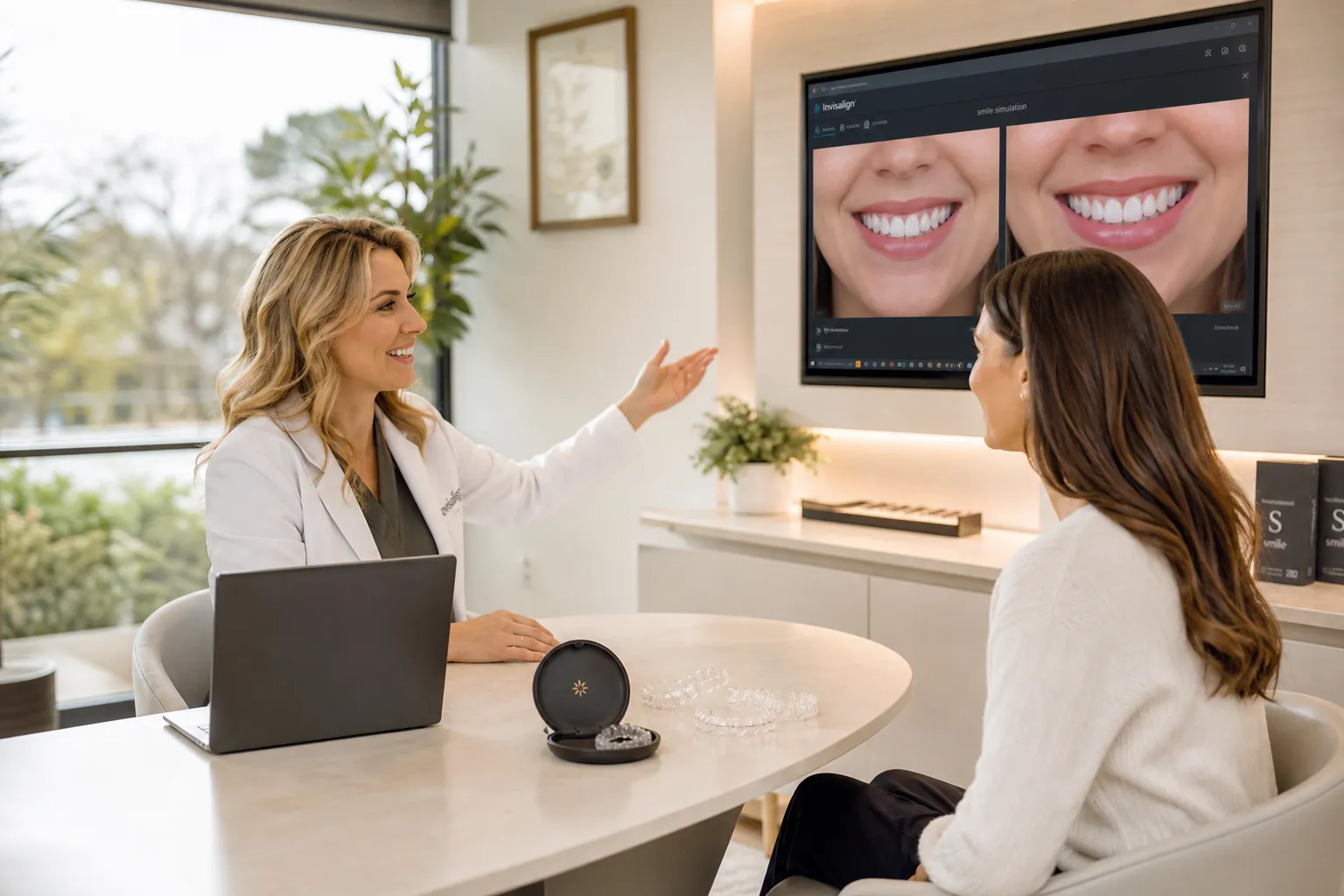
The Short Answer: Invisalign When Do You See Results?
Most people asking “Invisalign when do you see results?” are really asking two different things:
-
When do teeth start moving?
-
When do changes become visible to me or other people?
Those are not always the same.
What most patients can expect
|
Stage |
What you may notice |
|---|---|
|
First 1–3 weeks |
Tightness, pressure, tiny tooth movements beginning |
|
4–8 weeks |
Small visible changes, especially in front teeth or small gaps |
|
2–3 months |
Noticeably straighter teeth in mild-to-moderate cases |
|
4–6 months |
More obvious smile improvement and bite progress |
|
6–18+ months |
Full treatment or refinement phase depending on complexity |
In other words, if you are searching “Invisalign how long until you see results,” the most accurate answer is: subtle early movement may begin quickly, but meaningful visible change usually builds gradually over several months.
Why Invisalign Timelines Vary So Much
One reason competitor articles often feel vague is that they give a single timeline without explaining why it changes so much from person to person. In reality, Invisalign treatment is highly individualized.
Your starting bite and alignment matter
Mild spacing or minor crowding can respond relatively quickly. More complex concerns usually take longer, such as:
-
Deep bite
-
Crossbite
-
Open bite
-
Significant crowding
-
Rotated teeth
-
Teeth that need vertical movement
-
Cases involving previous orthodontic relapse
The more complex the tooth movement, the longer it generally takes before dramatic cosmetic changes show.
Front teeth often show changes before the bite is finished
Patients often notice early movement in the teeth they see most when smiling. That can be encouraging, but it does not mean treatment is almost done. Often, the later stages involve fine-tuning the bite, root position, symmetry, and long-term stability.
Compliance changes everything
If aligners are not worn consistently, treatment slows down. Even a well-designed Invisalign plan depends on steady daily wear.
Biology is personal
Teeth do not move at exactly the same speed for every patient. Bone density, age, gum health, attachments, and previous dental work can all influence how quickly progress becomes visible.
A Realistic Invisalign Timeline, Step by Step
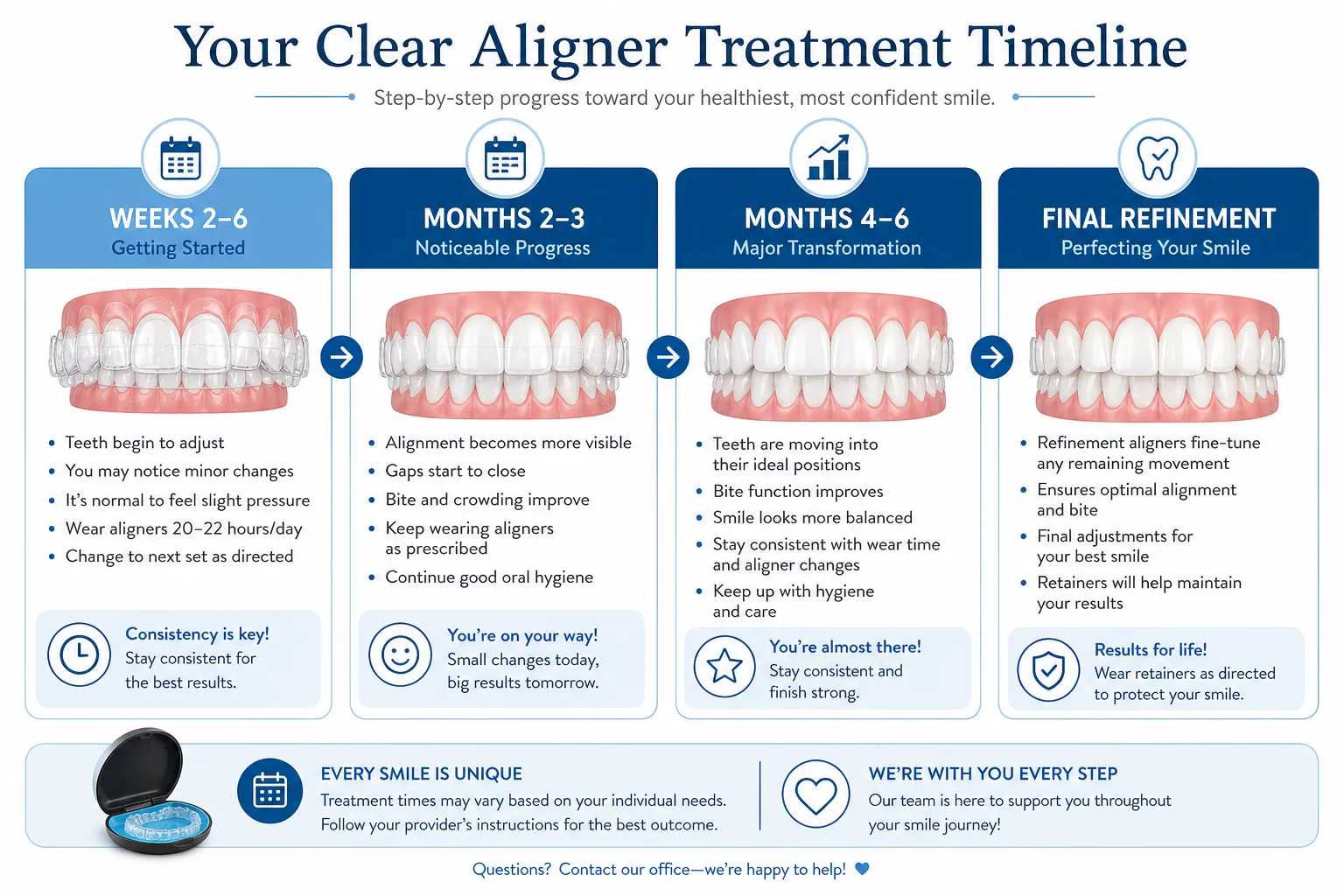
Weeks 1–2: The adjustment phase
In the first couple of weeks, most patients feel pressure when starting a new tray. You may not see much in the mirror yet, but movement has typically begun. This is when developing good habits matters most.
You will usually do best if you:
-
Wear aligners as directed
-
Remove them only for meals and cleaning
-
Switch trays on schedule
-
Keep follow-up visits or virtual monitoring check-ins
Weeks 3–6: Early changes begin
This is often the first phase where patients begin to say, “I think I can see something.” The changes are usually subtle:
-
Slight straightening of front teeth
-
Small gaps beginning to close
-
Reduced overlap in crowded areas
-
A more even-looking smile line
For some patients, especially with mild cosmetic concerns, this is when progress becomes encouragingly visible.
Months 2–3: Noticeable progress
At this point, visible movement is more common. Friends or family may begin to comment, especially if the front teeth were the main concern. If you started with mild crowding or spacing, the transformation can feel significant by now.
Months 4–6: Bigger cosmetic payoff
This is where many patients feel their smile is really changing. Teeth often look straighter in photos, and your bite may feel more balanced. However, if your case involves more complex corrections, this midpoint may still be part of the broader process rather than the finish line.
Final months: Refinement and finishing details
This phase is often underexplained elsewhere, but it is important. Even after major progress, small details may remain. Refinement trays help perfect:
-
Tooth angulation
-
Minor spacing
-
Final bite fit
-
Symmetry
-
Edge alignment
These adjustments are a big part of what separates an acceptable result from an exceptional one.
What Affects How Fast You See Invisalign Results?
Wear time
This is one of the biggest factors. If trays are left out too long each day, your teeth may not track properly, which can delay visible progress and extend treatment.
Case complexity
Small cosmetic movements often show sooner than bite correction. The more complex the orthodontic issue, the more strategic and gradual the movement.
Attachments and elastics
Some Invisalign cases require tooth-colored attachments or elastics. These tools help create movements that clear aligners alone cannot always accomplish efficiently. They may make treatment more effective, but they can also indicate a more advanced case.
Age
Teens and younger patients may sometimes respond faster biologically, but adults can absolutely achieve outstanding results. In fact, adults are often very consistent with wear, which can be a major advantage.
Provider expertise
This is another major content gap in many articles. Invisalign is not just a product; it is a treatment system that depends heavily on the skill of the orthodontist designing and managing the plan.
At Eisenberger and Meister Orthodontics, every plan is built around the individual patient, not a one-size-fits-all template. Our top 0.5% Invisalign Sapphire Provider status reflects deep experience with efficient aligner mechanics, complex cases, and beautiful finishing details.
Mild, Moderate, and Complex Cases: What Results Usually Look Like
Mild cases
These may involve:
-
Minor crowding
-
Small spaces
-
Relapse after past orthodontic treatment
-
Cosmetic front-tooth alignment concerns
Visible results: often within the first 1–2 months
Typical treatment length: often around 6–9 months
Moderate cases
These may include:
-
More noticeable crowding
-
Multiple gaps
-
Some bite correction
-
Several rotated teeth
Visible results: often within 2–3 months
Typical treatment length: often around 9–15 months
Complex cases
These may involve:
-
Significant bite discrepancies
-
Severe crowding
-
Teeth that need difficult rotational or vertical movements
-
Interdisciplinary planning with restorative dentistry
Visible results: sometimes later, depending on what is being corrected first
Typical treatment length: often 12–18+ months, occasionally longer
Invisalign vs. Braces: Which Shows Results Faster?
Patients often compare aligners and braces when deciding what to do next. The better question is not just which moves faster, but which is best for your specific smile goals.
|
Factor |
Invisalign |
Braces |
|---|---|---|
|
Appearance |
Clear and discreet |
More visible |
|
Removability |
Yes |
No |
|
Early visible movement |
Often subtle at first |
Can appear more obvious sooner in some cases |
|
Best for |
Many mild to complex cases with the right provider |
Mild to very complex cases |
|
Hygiene |
Easier to brush and floss |
More cleaning around brackets and wires |
|
Convenience |
Excellent for adults and teens |
Reliable fixed treatment |
It is also worth noting that Eisenberger and Meister Orthodontics offers custom LightForce braces, a highly advanced option using 3D-printed ceramic brackets designed specifically for each tooth. In some cases, LightForce can support faster treatment and fewer appointments, making it an excellent alternative for patients who want aesthetic treatment with powerful mechanics.
Signs Invisalign Is Working, Even Before Big Visual Changes
Not all progress is dramatic at first. Here are common signs your aligners are doing their job:
-
New trays feel snug for a day or two
-
Teeth feel slightly different when biting together
-
Floss slides differently between certain teeth
-
Minor gaps start appearing as crowding unravels
-
Attachments and trays continue to fit as expected
-
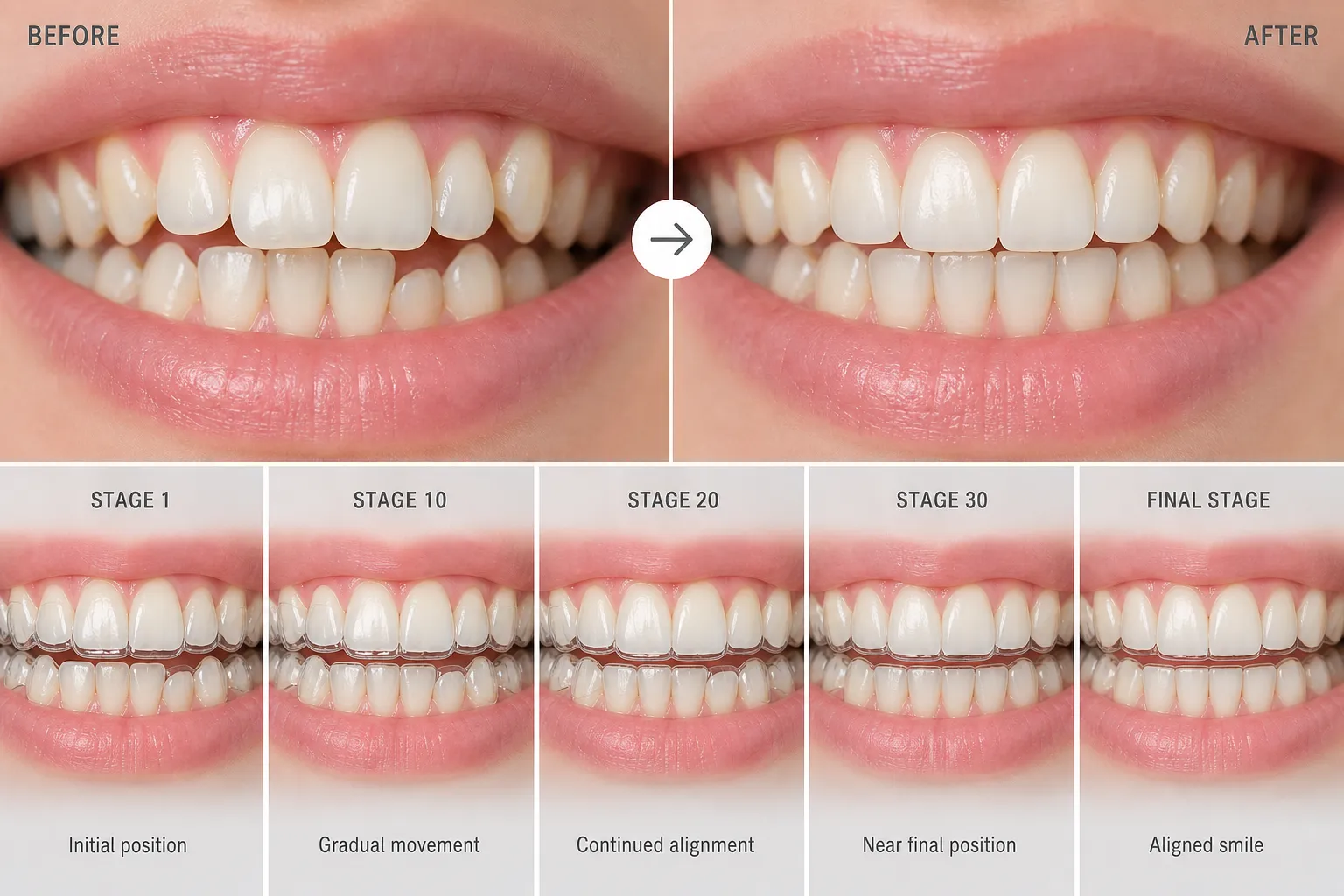
Progress photos show gradual changes you may not notice day to day
One of the smartest things patients can do is take a photo every 2 weeks. Looking in the mirror daily can make changes hard to spot. Photos tell a clearer story.
Common Reasons Invisalign Results May Seem Slow
Inconsistent wear
If aligners are not in your mouth enough hours per day, teeth may lag behind the plan.
Switching trays too early or too late
Changing trays without guidance can disrupt progress. So can forgetting to change them on time.
Lost or damaged aligners
A missed week can create avoidable delays.
Complex movements happening “behind the scenes”
Sometimes treatment starts with bite work that is not as visible from the front. That does not mean nothing is happening.
Needing refinements
Refinements are common and not a sign of failure. They are part of precision orthodontics.
How to Get Faster, Better Invisalign Results
Patients often want to know whether there is any safe way to speed up progress. The answer is yes, to a point: you cannot rush biology, but you can avoid delays.
Best practices that keep treatment on track
-
Wear aligners exactly as instructed
-
Keep trays clean
-
Use chewies if recommended
-
Attend all in-person visits or remote check-ins
-
Follow instructions for attachments or elastics
-
Brush and floss consistently
-
Store trays safely when removed
Choose an orthodontist with advanced systems
This is where a premium practice can make a major difference. Eisenberger and Meister Orthodontics uses advanced orthodontic technology to make care more efficient, more comfortable, and more personalized.
That includes:
-
Detailed treatment planning
-
High-level Invisalign expertise
-
Dental Monitoring for added convenience and fewer unnecessary visits
-
Efficient scheduling with less waiting time
-
Treatment options for children, teens, and adults
-
Personalized recommendations between Invisalign, clear braces, and LightForce braces

What Competitor Articles Often Miss
Many articles on this topic repeat the same basic timeline, but leave out key points patients actually care about. Here are the most important gaps to understand.
Seeing movement is not the same as finishing treatment
You may notice movement early, but great orthodontic results require proper finishing. The last phase often matters as much as the first.
Orthodontist skill has a huge impact
A highly experienced orthodontic team can often plan more efficiently, anticipate tracking issues earlier, and choose the right treatment option from the beginning.
Not every patient is best served by Invisalign
Some smiles are better suited to braces or custom LightForce treatment. A truly patient-centered office should tell you that honestly.
Convenience affects success
Remote check-ins, organized scheduling, and a calm, well-run office environment are not luxuries alone; they help patients stay compliant and complete treatment more smoothly.
Why Patients in Passaic and Surrounding Towns Choose Eisenberger and Meister Orthodontics
Families from Passaic, Livingston, West Orange, and throughout nearby communities want more than straight teeth. They want expertise, clarity, efficiency, comfort, and confidence in the process.
That is exactly where Eisenberger and Meister Orthodontics stands apart.
Advanced expertise without a one-size-fits-all approach
As an Invisalign Sapphire Provider in the top 0.5%, our team offers elite-level experience while still tailoring every plan to the person in the chair.
Options for every age and stage
We provide orthodontic care for:
-
Children needing early evaluation
-
Teens wanting discreet treatment
-
Adults seeking a polished, professional smile
-
Families looking for long-term value and trusted guidance
Premium experience, practical convenience
Patients appreciate our:
-
Luxurious, spa-like office environment
-
Efficient scheduling and minimal waiting
-
Complimentary consultations
-
Flexible financing
-
0% APR options and no hard credit checks
-
Dental Monitoring for less hassle
Proven trust over time
With 38 years in practice and 15,000+ smiles treated, Eisenberger and Meister Orthodontics combines long-standing experience with cutting-edge technology and highly personalized care.
Final Verdict: Invisalign How Long Until You See Results?
If you are wondering how long until you see results with Invisalign, the honest answer is that many patients notice subtle changes within weeks, visible improvement within 1 to 3 months, and more dramatic transformation over several months to a year or more, depending on complexity.
The right treatment plan can make that journey smoother, more predictable, and more rewarding. At Eisenberger and Meister Orthodontics, we combine elite Invisalign expertise, advanced technology, personalized planning, and a premium patient experience to help you see progress clearly and feel confident every step of the way.
If you live in Passaic, Clifton, Garfield, Wallington, Wood-Ridge, Carlstadt, East Rutherford, Rutherford, Lyndhurst, Nutley, Bloomfield, Montclair, Little Falls, Woodland Park, Paterson, Elmwood Park, Fair Lawn, Saddle Brook, Lodi, Hasbrouck Heights, Hackensack, Prospect Park, Totowa, Wayne, Verona, Cedar Grove, Belleville, Newark, Kearny, Secaucus, North Arlington, Bergenfield, Paramus, Glen Rock, Livingston, West Orange, or other surrounding communities, now is an excellent time to schedule a complimentary consultation and find out what your personal Invisalign timeline could look like.
FAQ
Can Invisalign make a difference in 3 months?
Yes, many patients see noticeable improvement within 3 months, especially in mild to moderate cases. Front teeth often begin to look straighter first, although full bite correction and finishing details usually take longer.
Is $6,000 a lot for Invisalign treatment?
$6,000 can be a normal range for Invisalign, depending on case complexity, treatment length, and provider expertise. What matters most is the value of personalized planning, experienced orthodontic supervision, and financing options that make care more manageable.
Can Invisalign change face shape?
Invisalign can create subtle facial changes by improving tooth position and bite alignment, which may affect lip support and smile balance. It does not dramatically reshape the face in most cases, but it can enhance overall facial harmony.