
If you notice your Invisalign aligner not tracking, it may leave a visible gap over a tooth or refuse to seat. Invisalign refinements are new aligners planned from your current tooth positions when the original sequence no longer fits your goals. A new tray can feel tight at first. If the gap persists, grows, or appears on successive trays, call your orthodontist before changing trays. Your clinician may adjust how you wear or seat the current aligner, or recommend refinements after examining your teeth.
What does it mean when an Invisalign aligner is not tracking?
Tracking describes how closely your teeth follow the positions built into each aligner. If a tooth lags behind, the plastic may sit away from its edge. You might see a space patients call an “air gap” or “halo.”
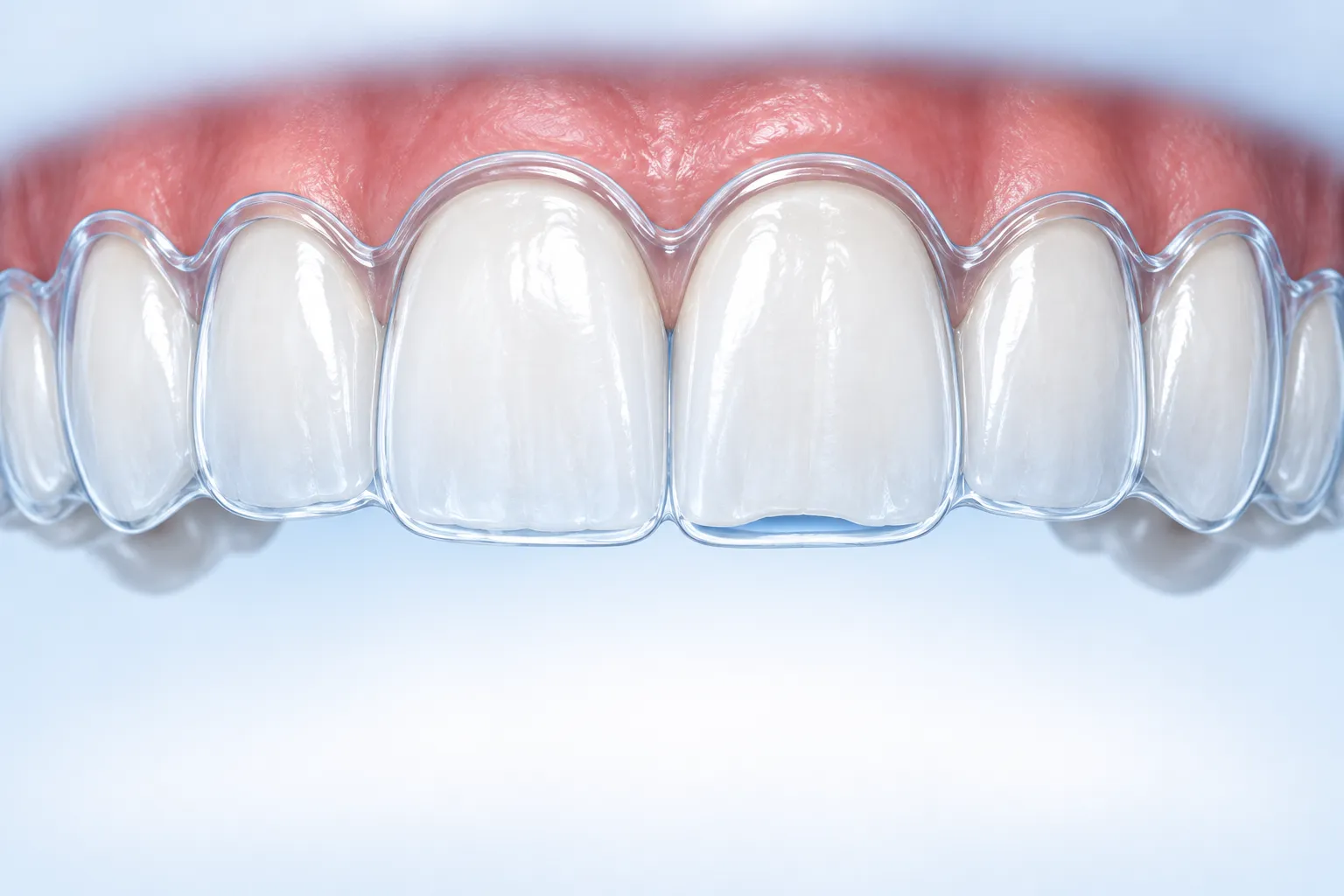
A slight space on the first day with a new tray may settle with wear. Notice where it appears and whether the tooth moves closer to the plastic. If the space grows as you progress through the series, tell your orthodontist. Do the same if the back of the tray lifts, an attachment slips out of its matching recess, or the aligner will not stay seated.
|
What you notice |
What it may mean |
Sensible next step |
|---|---|---|
|
New tray feels snug and seats with gentle pressure |
Expected adjustment to a new stage may be underway |
Follow your prescribed wear and change schedule |
|
A space remains over one tooth or grows over several trays |
That tooth may be lagging behind the plan |
Contact your orthodontist before advancing |
|
Tray rocks, is cracked, or no longer fits around an attachment |
The tray or its grip may be compromised |
Tell the office what happened and bring the tray to the visit |
|
Teeth look straighter but your bite feels different |
Fit alone does not show how upper and lower teeth meet |
Ask for a bite assessment |
Why do aligners stop tracking?
Wear time or tray changes do not match the plan
Teeth need consistent aligner wear to reach each planned position. Invisalign says people typically wear aligners 20 to 22 hours a day for best results; your doctor sets your instructions in its patient FAQs. Long meals without the trays or a forgotten night can leave a tooth behind. If you switch trays early, the next one may assume movement that has not happened. Stick to your prescribed change interval.
The tray is not fully seated
An aligner can look close to fitting while one edge stays lifted. Your orthodontist may suggest a seating aid, sometimes called a chewie, to help the tray fit against the teeth. Use it as directed. If the plastic still will not settle, ask the team to find out why rather than pressing harder.
An attachment is missing or the aligner is damaged
Small tooth-colored attachments give the aligner extra grip for certain movements. If one comes loose, the tray may lose its hold on that tooth. A distorted, cracked, or incorrectly positioned tray can cause a similar gap. Bring the tray and its case to your appointment so the team can inspect them.
Tooth movement is less predictable than the digital plan
Rotations, vertical movements, and bite corrections can challenge an aligner more than simple straightening. A tooth may respond differently from the digital plan even if you follow your instructions. Your orthodontist can compare its position with the planned movement and decide what should happen next.
What should you do if an Invisalign tray does not fit?
-
Note the tray number and where you see the gap. Did it appear when you changed trays or later during wear? A front and side photo can help you describe it.
-
Check that the tray is facing the right way and seat it gently. Look for a crack or missing attachment. Leave the plastic intact, avoid pushing on a painful tooth, and keep to your prescribed change schedule.
-
Call your orthodontist if the gap persists or the tray will not stay in place. Ask which aligner to wear until your visit; your clinician can decide whether to keep the current tray, go back, or change plans.
|
If you see this |
What to tell the office |
|---|---|
|
A gap on a newly changed tray |
When you changed trays and whether the gap settles with prescribed wear |
|
A gap that persists or grows |
Which tooth is affected and whether earlier trays fit differently |
|
A tray that rocks, hurts, or will not stay seated |
Whether it is cracked, an attachment is missing, or you cannot wear it as instructed |
Call sooner if an aligner causes significant pain, cuts your mouth, or cannot be worn as instructed. Swelling, fever, or signs of infection call for prompt dental or medical care.
How does an orthodontist evaluate a tracking problem?
At an appointment, your orthodontist checks how the tray seats across the full arch and whether a particular tooth engages the plastic. They look for loose attachments, tray damage, and changes in spacing, rotation, or bite.
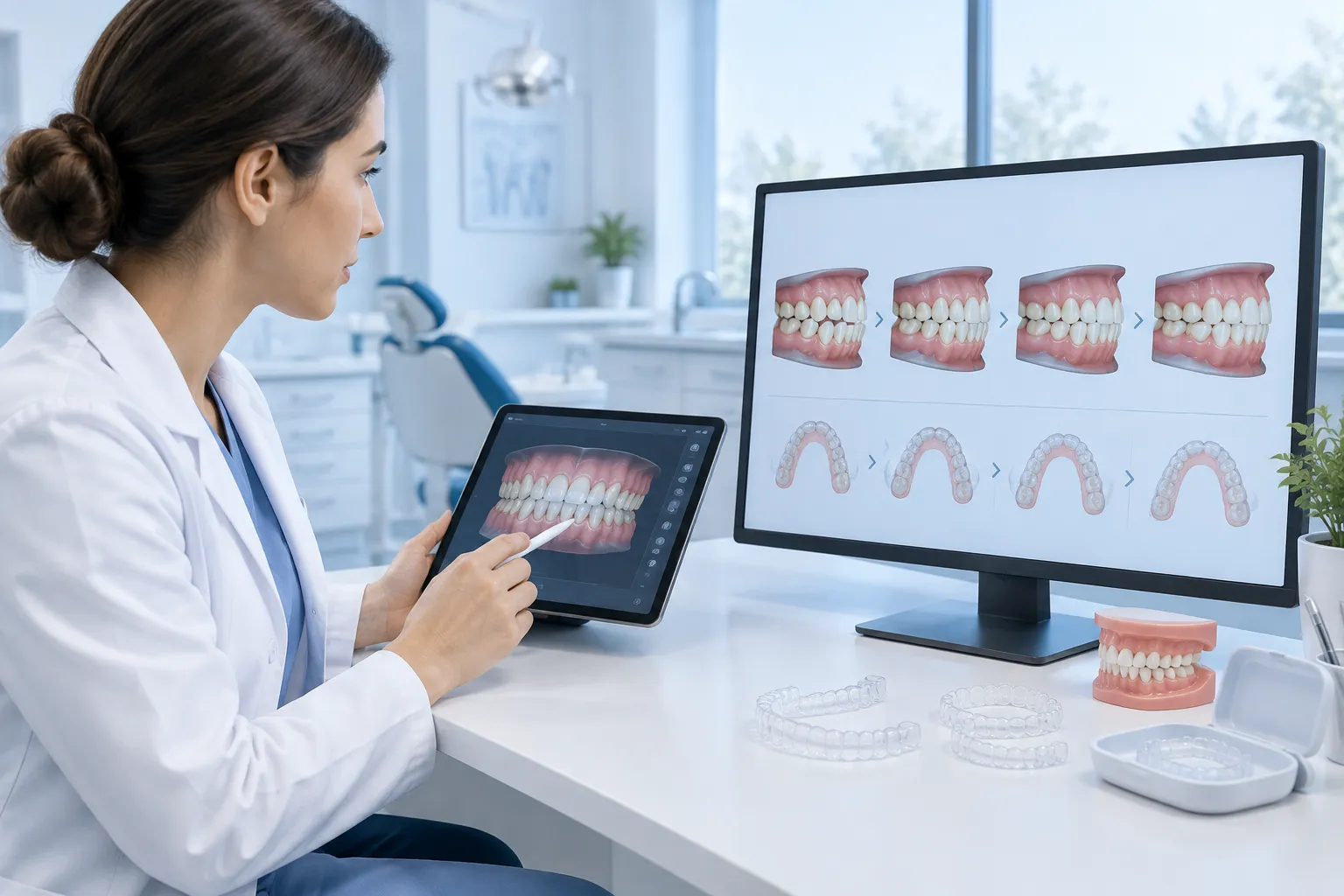
The team will ask which tray you are wearing, how long you have worn it, your daily wear time, and when the fit changed. They can compare your teeth with the planned stages and previous records. If they need a clearer picture of the current positions, they may take a new digital scan.
After checking your fit, the orthodontist can tell you whether the tray needs better seating, the tooth needs more time, or the plan needs changing. They will also assess your bite. A tray that fits the front teeth may still leave contacts between the upper and lower teeth needing attention.
Invisalign refinements explained: aligner not tracking
Refinements are additional, custom-planned aligners based on your current tooth positions. Your orthodontist may recommend them if a tooth stops tracking, a rotation or space remains, or the bite needs more work. Patients may receive refinements after an initial set of trays. Your orthodontist can also reassess a tracking problem before you finish that set.
The response depends on the fit and the remaining movements:
|
Response |
When it may fit |
What changes |
|---|---|---|
|
Improve seating or wear consistency |
The tray is sound and the mismatch is limited |
The orthodontist gives a specific plan for the current stage |
|
Adjust the tray sequence or attachments |
The existing plan may still work with a clinical adjustment |
The orthodontist directs which tray to wear and addresses attachment fit |
|
Rescan and order refinement aligners |
Current tooth positions no longer match the remaining planned trays, or finishing goals remain |
A revised sequence targets the movements still needed |
If you need refinements, your orthodontist examines your teeth and bite, takes an updated scan or impression, and plans the remaining movements. You then wear the new sequence as instructed and return for follow-up assessments. The movements required determine the number of trays and added time. You do not necessarily repeat the original course of treatment.
Refinements address the remaining treatment goals, not just the tooth with the most visible gap. For example, your orthodontist may check whether a space has closed and whether your upper and lower teeth meet as intended. That is why a tray that appears to fit can still lead to a discussion about additional aligners. Conversely, one poorly fitting tray does not automatically mean you need a new set.
What happens while new refinement trays are made?
Your orthodontist will tell you what to wear while you wait. You may continue with a current tray, depending on its fit and condition. Wear the aligner the team specifies; leaving it out can let teeth shift before the new set arrives. Tell the team if that interim tray becomes loose or painful.
Does one tooth not tracking always require a rescan?
No. A small gap may settle when you seat and wear a sound tray as directed. A stubborn rotation or a gap that grows across stages may call for a new scan. Your orthodontist considers whether later trays can still fit. They may also recommend refinements for a bite issue, even if the visible gap looks minor.
Are refinements included in the price? Your Invisalign package and treatment agreement determine what you pay. Ask your provider whether additional scans or aligners carry a charge and how a change affects your finish date. Once your teeth and bite reach their planned positions, your clinician will discuss retainers to help maintain them.
North Jersey communities near Passaic
Passaic sits near several North Jersey county lines. These towns and cities are in the surrounding roughly 20-mile area. The list uses a regional radius, so driving distances will differ; Eisenberger and Meister Orthodontics has its office in Passaic.
-
Passaic County: Passaic, Clifton, Paterson, Haledon, Prospect Park, Hawthorne, North Haledon, Totowa, Woodland Park, Little Falls, Wayne, Pompton Lakes, Riverdale, Bloomingdale, and Wanaque.
-
Bergen County: East Rutherford, Rutherford, Wallington, Carlstadt, Wood-Ridge, Moonachie, Hasbrouck Heights, Teterboro, South Hackensack, Hackensack, Lodi, Garfield, Elmwood Park, Saddle Brook, Fair Lawn, Maywood, Rochelle Park, Paramus, Ridgewood, Glen Rock, Wyckoff, Franklin Lakes, Oakland, Ramsey, Allendale, Waldwick, Ho-Ho-Kus, Oradell, River Edge, New Milford, Teaneck, Bogota, Englewood, Leonia, Fort Lee, Palisades Park, Ridgefield, Ridgefield Park, Little Ferry, Lyndhurst, North Arlington, Edgewater, Cliffside Park, Emerson, Hillsdale, Park Ridge, Westwood, Bergenfield, Dumont, Tenafly, and Englewood Cliffs.
-
Essex County: Nutley, Belleville, Bloomfield, Montclair, Glen Ridge, Cedar Grove, Verona, West Orange, Orange, East Orange, Newark, North Caldwell, Caldwell, West Caldwell, Fairfield, Livingston, Roseland, Essex Fells, South Orange, Maplewood, Millburn, and Irvington.
-
Hudson County: North Bergen, Secaucus, Kearny, Harrison, East Newark, Jersey City, Union City, Weehawken, West New York, Guttenberg, Hoboken, and Bayonne.
-
Morris County: Lincoln Park, Pequannock, Butler, Kinnelon, Montville, Boonton, Boonton Township, Mountain Lakes, Parsippany-Troy Hills, Denville, Morris Plains, Morristown, East Hanover, Hanover, Florham Park, Chatham, Chatham Township, and Madison.
-
Union County: Hillside, Elizabeth, Union, Roselle Park, Kenilworth, Springfield, Summit, New Providence, and Mountainside.
If you live elsewhere in North Jersey and your aligner will not seat, contact the Passaic office for guidance on which tray to wear and when the team can assess its fit.
Get a clear plan for the next tray
If your tray lifts or a tooth seems to have stopped moving, have an orthodontist examine the fit before you change trays. Eisenberger and Meister Orthodontics provides personalized care for children, teens, and adults in Passaic. The practice offers Dental Monitoring for more convenient follow-up. Contact the team about a fit assessment, or book a complimentary consultation if you are considering Invisalign and want to discuss treatment and financing.
FAQ
How to tell if Invisalign is tracking?
A tracking aligner generally seats against the teeth as planned. A persistent or growing space over one tooth, a tray that rocks, or a tooth that no longer fits into its intended pocket may indicate a problem. Your orthodontist can distinguish an ordinary new-tray fit from a true movement mismatch.
What is the refinement stage of Invisalign?
Refinement is an additional planned sequence of aligners made after your orthodontist reassesses your current teeth and remaining goals. It can address a tooth that has not tracked, an unclosed space, a rotation, or a bite detail that still needs work.