
Invisalign reviews can help you decide whether aligners fit your life, if the reviewer says what happened and when. Soreness after a new tray is different from an aligner that stops seating or a bite that feels wrong at the end of treatment. Those details matter when you are planning around work or a teen’s school day.
Note any complaint you can picture happening to you, then bring it to an orthodontist. Their answer can account for your tooth movements, wear habits and follow-up plan.
What can Invisalign reviews actually tell you?
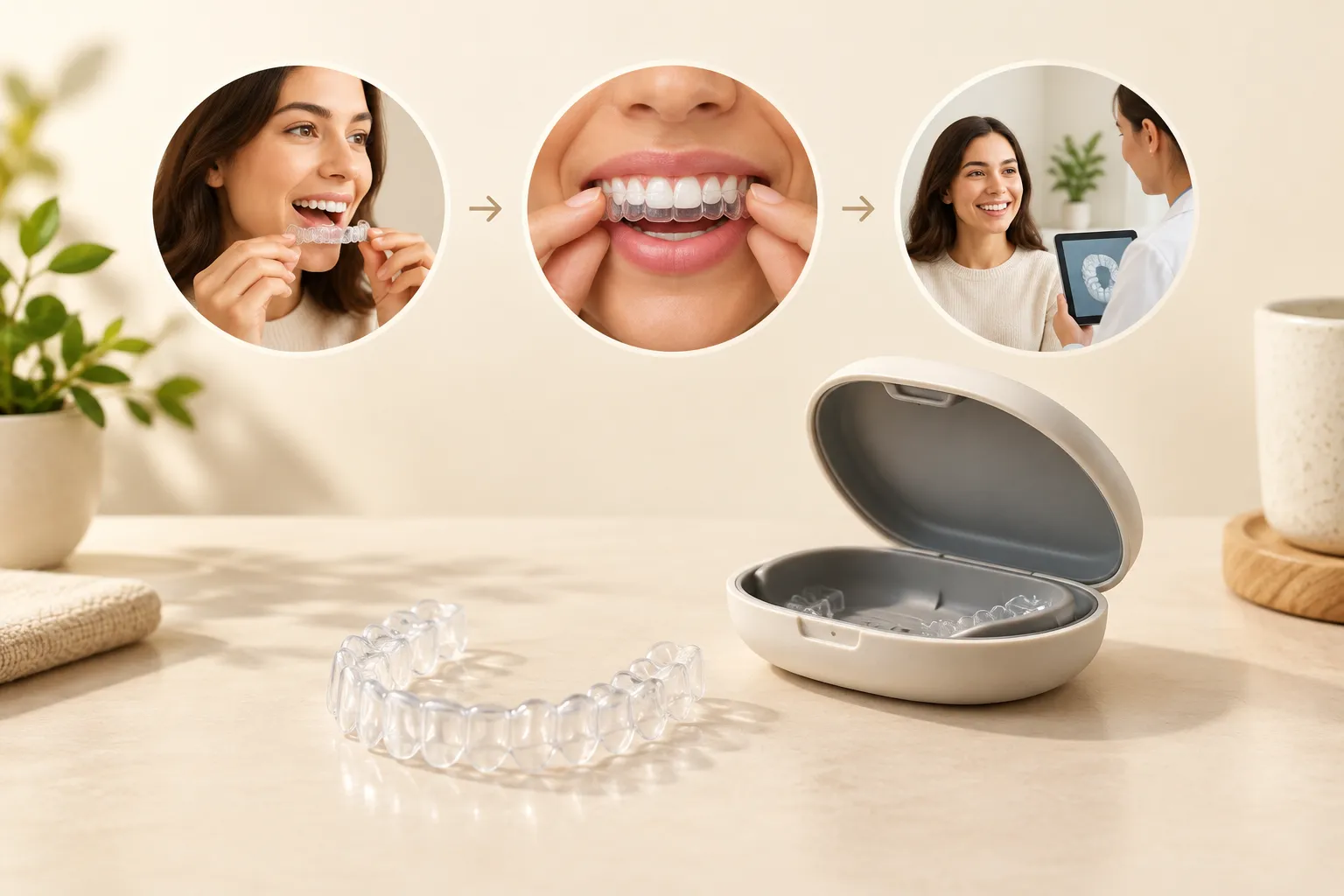
Invisalign treatment moves teeth through a series of removable, custom-made clear aligners. Your orthodontist may plan small tooth-colored attachments to help move certain teeth or create space between them. You will need to wear the trays as directed, even though they are less conspicuous than metal braces. Invisalign’s list of treatable cases includes spacing, crowded teeth and certain bite issues; your examination determines whether aligners suit your case.
First, place the experience in the treatment timeline:
-
Starting treatment: Pressure, speech changes or difficulty taking trays out may describe an adjustment period.
-
Mid-treatment: A persistent gap between a tooth and its tray, broken or lost aligners, or repeated missed wear time deserves a different conversation.
-
Finishing treatment: Questions about the bite, additional aligners and retainers concern the final plan, not merely the first set of trays.
Photos show how teeth look, while the written account may tell you what a photo cannot: whether the bite feels comfortable, the retainer fits, or the orthodontist addressed a problem. Even a five-star review can leave these details out.
Common Invisalign complaints, translated into useful questions
One complaint can point to several causes. Use the questions below to start a conversation with your orthodontist.
|
What the review says |
What it could mean |
What to ask your orthodontist |
|---|---|---|
|
“The new trays hurt.” |
Tooth pressure can follow a change of aligners; sharp rubbing or severe pain is a different issue. |
“What discomfort is expected, and when should I call?” |
|
“The aligner doesn’t fit anymore.” |
A tray may not be fully seated, may be distorted, or teeth may not be tracking as planned. |
“How will you detect tracking problems, and what happens if a tray stops fitting?” |
|
“I had to wear attachments.” |
The plan needed extra grip for certain movements; attachments can affect how visible or easy to remove a tray feels. |
“Where would my attachments go, and what movements are they for?” |
|
“It took longer than promised.” |
The original estimate may not include additional aligners or interruptions in wear. |
“What might change my timeline, and how do refinements affect the fee?” |
|
“My bite feels off.” |
Bite changes need an in-person assessment rather than a judgment based on photos. |
“How will you assess my bite throughout treatment and before I finish?” |
|
“I’m constantly cleaning my teeth.” |
Removable trays make meals and brushing a recurring task. |
“What routine will work with my workday or my child’s school day?” |
Pain, speech changes and sharp spots
Pressure when you start a new tray may settle as you adjust. A sharp edge, worsening pain or a tray that will not seat is worth a call to the practice; do not force or alter the tray yourself.
In Invisalign aligners reviews, a lisp or a bulky feeling may sound minor until you picture a full day of client calls or your child speaking at school. Ask what the office would do if it persisted. In the review, note how long it lasted and whether the provider helped.
Tracking problems and refinements
“Tracking” is the term for whether your teeth are following the planned movement closely enough for the aligner to fit. A gap between a tooth and its tray gives your orthodontist a specific fit concern to assess.
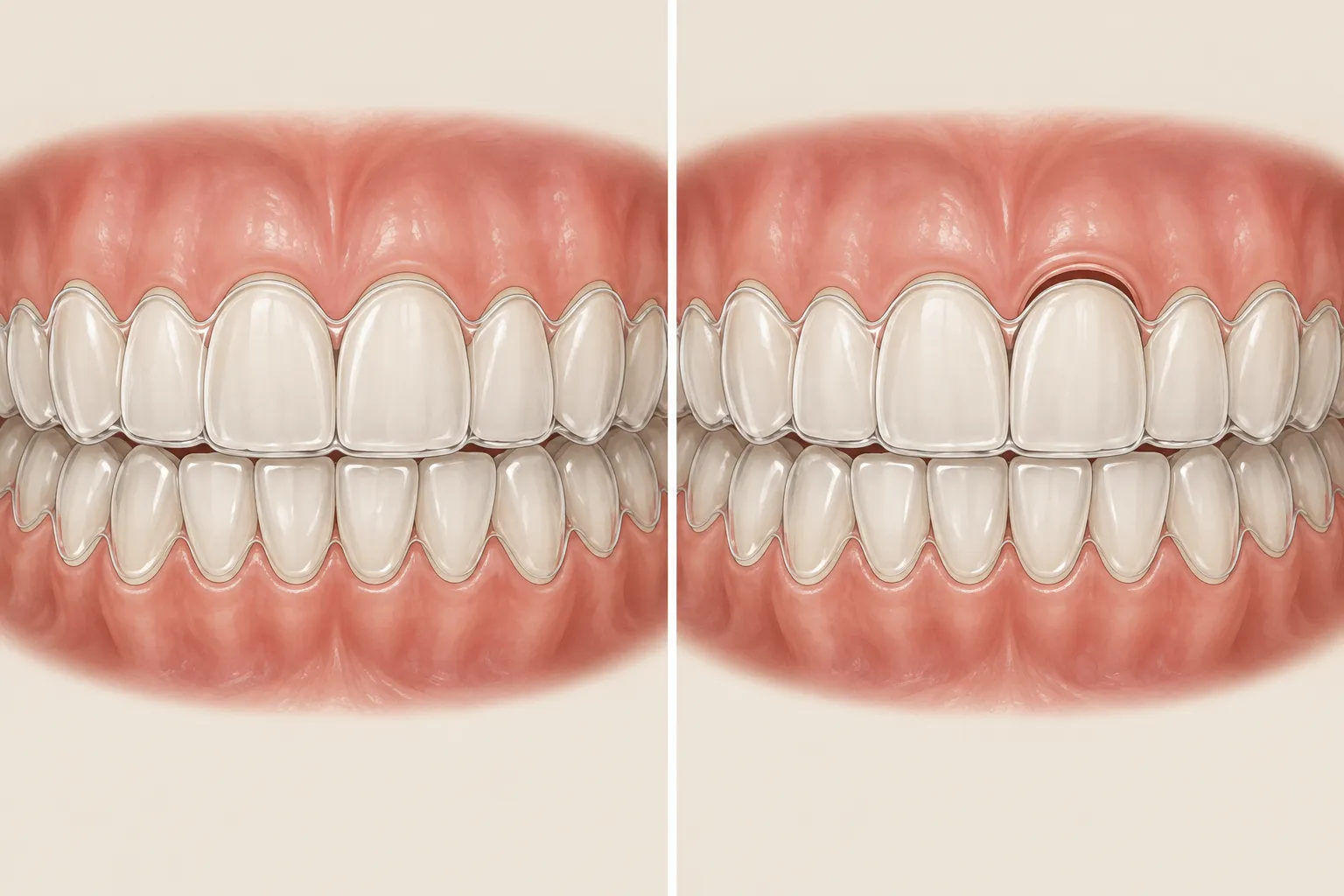
After the initial series, your orthodontist may prescribe additional aligners called refinements to adjust tooth movements. Find out when they would rescan, who reviews your progress between visits and whether the quote covers extra aligners. The estimated finish date may change.
A clinical scoping review indexed by PubMed found differences in how predictably aligners achieved particular tooth movements. The authors also warned that a digital prediction might not reflect the bite immediately after treatment. Ask how your clinician will judge progress in your mouth as well as on a screen.
Wear time, meals and oral hygiene

The American Association of Orthodontists’ clear-aligner guidance gives a general target of 20 to 22 hours a day, or as prescribed by your orthodontist. You have to fit meals, drinks other than water and cleaning into the remaining hours. If a reviewer kept forgetting to put trays back in, consider whether that could happen in your routine too.
“at least 22 hours a day” – American Association of Orthodontists
Picture breakfast and coffee before work, lunch away from home, then dinner out. Each time you eat, the trays come out; each time they go back in, you need to think about cleaning your teeth. For a teen, that also means finding a safe place for the case at lunch. If this sounds unmanageable, ask about traditional braces.
Follow your clinician’s instructions for brushing and flossing before reinserting aligners after eating. Food particles left against teeth make oral hygiene important. If a reviewer developed cavities, ask about cleaning and dental checkups, but do not assume the review establishes the cause.
Bite concerns and jaw symptoms
An uneven bite or new jaw discomfort deserves more than a guess about the cause. Tell your orthodontist about jaw pain or clicking you already have, then ask how they will assess the bite as teeth move. You can also ask what they would do if your teeth looked straighter but no longer met comfortably.
If you have significant pain, swelling or an aligner that cannot be worn, contact your treating clinician promptly rather than waiting for the next routine visit.
How to read positive reviews without overlooking the work
A happy patient might describe the smile at the end and say little about getting there. Look for a starting concern like yours, the wear routine, and how the practice handled changes in the plan. Mentions of attachments or extra aligners give you more to discuss than a photo alone.
Ask about retainers before treatment ends: which type, what wear schedule, and what replacements cost. If a retainer stops fitting, you should know whom to call. A review posted as soon as trays end cannot show whether the result lasts, and a photo may include whitening or cosmetic bonding as well as tooth movement.
Is Invisalign worth it for your schedule and your case?
If you feel self-conscious about metal braces, the less visible aligners may appeal to you. Their removability demands steady wear and cleaning, though. For a child who loses things or an adult who grazes, fixed braces may make the day simpler, even with the work of cleaning around brackets. Your orthodontist can explain which appliance gives them the control your teeth need.
|
Decision point |
Invisalign aligners |
Fixed braces |
|---|---|---|
|
Visibility |
Clear trays are less noticeable, though attachments may show. |
Brackets and wires are visible; clear-bracket options may be available. |
|
Daily responsibility |
Wear, remove, store and clean the trays as directed. |
Appliance stays on; clean around brackets and wires. |
|
Meals |
Remove trays to eat, then clean teeth before reinserting. |
No trays to remove; follow instructions on foods that could damage braces. |
|
Adjustments |
An ill-fitting tray or incomplete movement may require review and additional aligners. |
Broken hardware or planned wire changes require office attention. |
|
Fit for a particular bite |
Depends on the movements needed and the treatment plan. |
Also depends on the case; ask why one approach is recommended. |
A low price in a review may belong to a simpler case. For your own plan, ask for a written estimate showing scans, appointments, additional aligners, retainers and replacement costs. Then discuss payment options and how dental insurance applies.
For a child or teen, discuss who monitors wear and what happens if trays go missing. For yourself, consider meetings, travel and meal habits. Tell the orthodontist about gum disease, other unresolved dental problems or jaw concerns during the assessment.
Bring the complaint, not just its star rating, to the consultation
Save a few reviews about concerns you share. At your consultation, ask:
-
Does this complaint apply to my teeth? Which movements and bite changes are planned, and why choose aligners over braces?
-
How will you know the plan is working? Who checks tray fit, how often, and how should I report a problem between appointments?
-
What happens if it stops working as expected? Who decides on a rescan or refinement, what does it add to the schedule, and is it covered by the quoted fee?
-
What is the end point? How will the bite be checked, what retainers are planned, and what ongoing wear will they require?
-
Can my household sustain the routine? Walk through meals, cleaning, storage and missed-wear days honestly.
At the consultation, ask your orthodontist to explain the trade-offs for your bite. Eisenberger and Meister Orthodontics in Passaic offers complimentary consultations, with Invisalign, clear braces and LightForce custom braces among its treatment options. The practice cites 38 years of experience and more than 15,000 smiles treated. It is an Invisalign Sapphire Provider, a designation it says places it among the top 0.5% of specialists. Dental Monitoring may make check-ins more convenient, and qualifying financing plans include 0% APR options with no hard credit checks. Aligner wear remains your daily responsibility.
For the separate decision of whom to see, read the practice’s seven signs of expert Invisalign care. Families in Clifton, Garfield, Wallington, East Rutherford, Rutherford, Wood-Ridge, Lodi and Hasbrouck Heights can bring these review questions to a consultation in Passaic. The practice also welcomes patients from Paterson, Woodland Park, Little Falls, Totowa, Wayne, Carlstadt, Nutley, Belleville, Bloomfield, Montclair, North Bergen, Secaucus and Kearny.
The bottom line
An Invisalign complaint becomes more useful once you know when it happened and how the orthodontist responded. A plan that suits both your teeth and your day is worth pursuing. Bring the reviews that concern you to a complimentary consultation with Eisenberger and Meister Orthodontics in Passaic.
FAQ
How long does Invisalign take?
It depends on the movements needed, how consistently the aligners are worn and whether additional aligners are needed. Ask for an estimate for your case and what would change it; another patient’s timeline is not a reliable forecast.
What’s the average cost of Invisalign?
A national average will not tell you what your treatment includes. Ask for a written quote that spells out scans, follow-ups, refinements, retainers and replacement charges, then compare the total and payment options.
Is Invisalign covered by insurance?
Some dental insurance plans include orthodontic benefits that may apply to Invisalign, but coverage depends on the policy. Ask your insurer for the orthodontic benefit and have the practice show how any benefit applies to your written treatment estimate.
What are the benefits of Invisalign?
The trays are less noticeable than conventional brackets and can be removed for meals and brushing. That flexibility also means the wearer must consistently put them back in and keep them clean.
What disqualifies you from Invisalign?
Eligibility depends on the movements needed and your dental and bite health, not a single online rule. If consistent wear is unlikely or another appliance would give the orthodontist better control of your case, ask why braces might be recommended instead.
How painful is Invisalign on a scale of 1 to 10?
There is no reliable score for everyone: tooth pressure after a new tray differs from sharp rubbing or severe pain. Describe where it hurts and when it began to your treating orthodontist, especially if a tray does not fit or symptoms worsen.