
Invisible Braces: Which Option Fits Your Smile?
Exploring invisible braces types for yourself or your child? You may wonder whether clear aligners work as well as braces, how discreet ceramic braces look, and which option feels best. The right answer depends on your smile, not just what sounds appealing online.
For families and adults in Passaic and nearby New Jersey communities, the key is matching the treatment to the person. Your bite, goals, schedule, and comfort all matter.
At Eisenberger and Meister Orthodontics, every plan is personal. The practice brings 38 years of experience, 15,000+ smiles treated, and Invisalign Sapphire Provider status to your care. Patients also have access to custom LightForce braces, Dental Monitoring, complimentary consultations, and flexible financing with 0% APR options and no hard credit checks. You can expect advanced care in a warm, spa-like setting.

What Counts as “Invisible Braces”?
When most people say “invisible braces,” they usually mean one of two main options:
-
Clear aligners, such as Invisalign
-
Ceramic braces, sometimes called clear braces or tooth-colored braces
There is also a third category worth knowing about:
-
Lingual braces, which sit behind the teeth
All three are designed to make orthodontic treatment less noticeable than traditional metal braces. But they differ quite a bit in how they work, how they feel, and what kinds of cases they handle best.
The Main Invisible Braces Types Explained
Clear Aligners
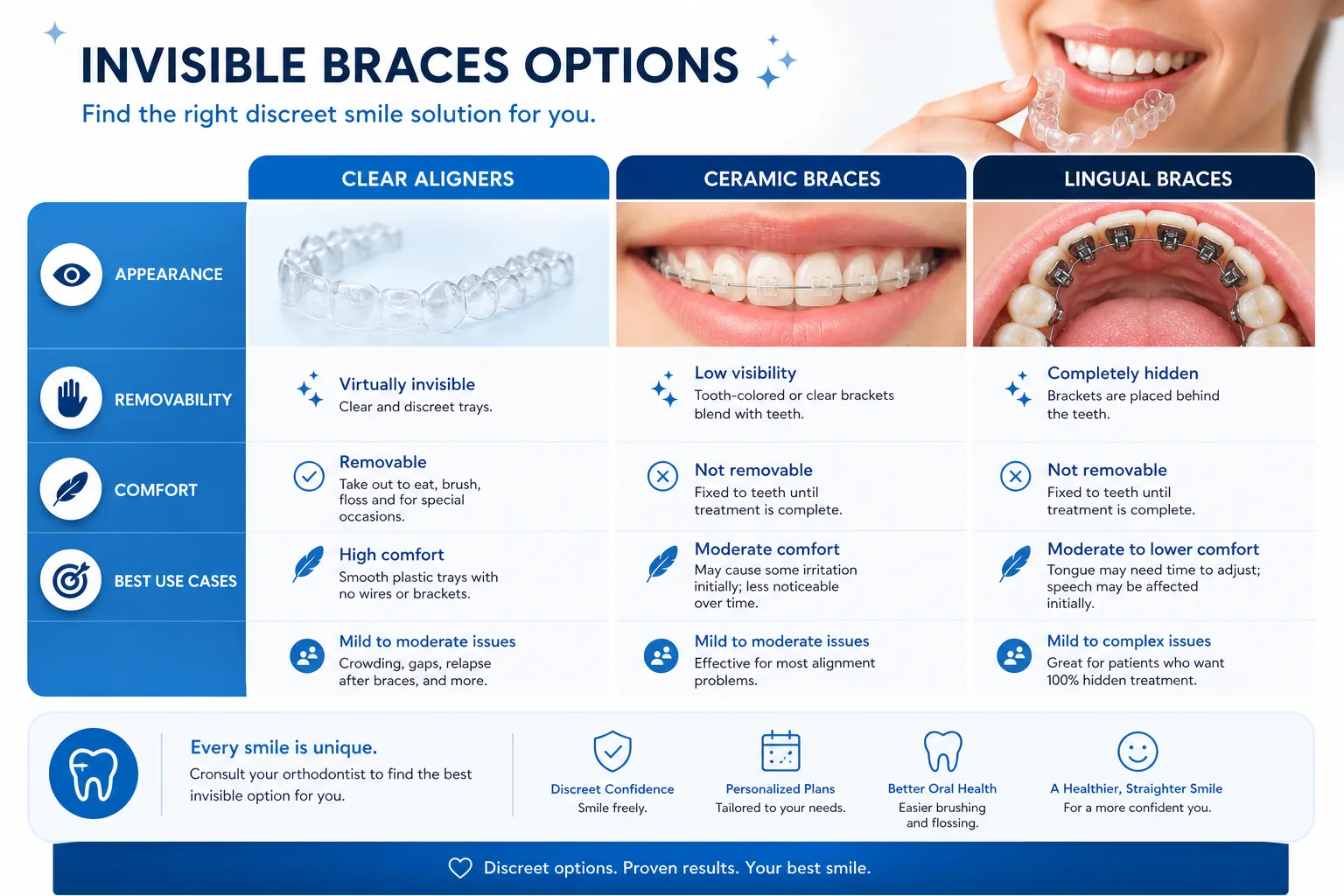
Clear aligners use a series of custom-made trays that fit over your teeth and gradually move them into better alignment. They are removable, nearly invisible, and especially popular with adults and teens who want a discreet option.
At Eisenberger and Meister Orthodontics, Invisalign plans account for your bite, facial balance, and daily life, not just your front teeth. As a Sapphire Provider, the practice treats children, teens, and adults with clear aligners.
Ceramic Braces
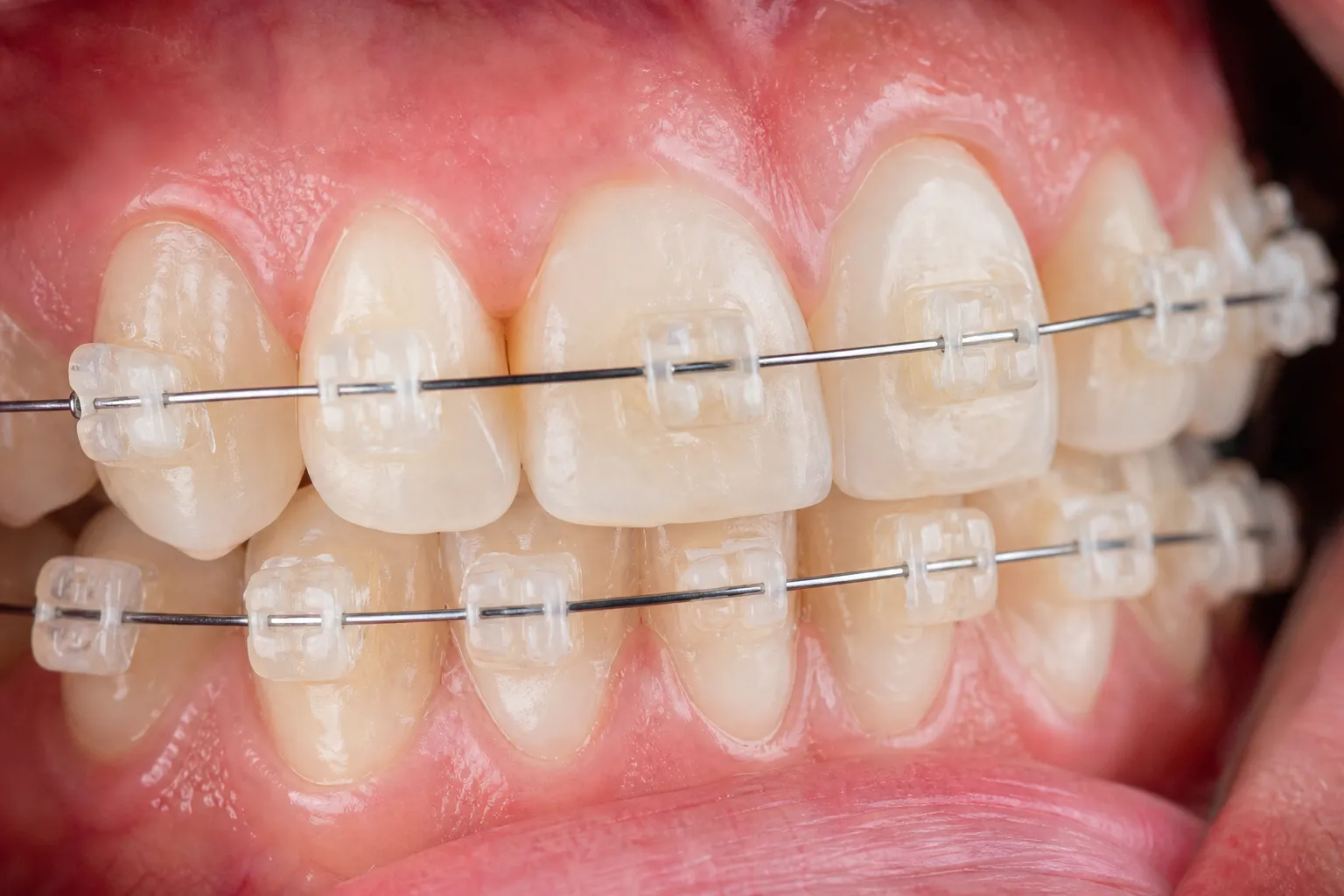
Ceramic braces work like traditional braces, but use brackets that blend more closely with the natural color of your teeth. They are fixed in place, so you do not need to remember to wear them.
For patients who want something subtle but need the control of braces, ceramic braces can be an excellent middle ground.
Lingual Braces
Lingual braces are attached to the back surfaces of the teeth, so they stay hidden from the front. They can be effective, but they are less commonly chosen because they may affect speech at first, can feel bulkier, and are not ideal for every case.
In many modern practices, clear aligners or advanced ceramic braces are more commonly recommended because they often provide a better balance of esthetics, comfort, and predictability.
Clear Aligners vs Ceramic Braces: The Biggest Differences
Looks and comfort matter, but so do tooth movement, consistent wear, and daily convenience.
At-a-Glance Comparison
|
Feature |
Clear Aligners |
Ceramic Braces |
|---|---|---|
|
Appearance |
Very discreet, tray-based |
Subtle, tooth-colored brackets |
|
Removable |
Yes |
No |
|
Eating |
Remove before meals |
Food restrictions apply |
|
Brushing & flossing |
Easier |
More technique required |
|
Discipline needed |
High |
Lower |
|
Great for adults |
Yes |
Yes |
|
Great for teens |
Yes, if compliant |
Yes |
|
Complex bite correction |
Sometimes |
Often better for more control |
|
Emergency visits |
Fewer in many cases |
Possible for loose wire/bracket issues |
|
Visibility up close |
Low |
Low to moderate |
How Each Option Actually Moves Teeth
How Clear Aligners Work
Clear aligners move teeth in stages. You change trays as your orthodontist directs. A digital plan can show you a preview of the intended result.
Even a case that looks simple needs a sound bite plan. Your orthodontic team can check your progress and adjust treatment when needed.
How Ceramic Braces Work
Ceramic braces use brackets and wires to deliver continuous force around the clock. Since they are fixed, treatment does not depend on remembering to put trays back in after meals or sports.
This constant engagement can be especially helpful for more difficult tooth movements, rotations, vertical changes, or more complex bite issues.
Where LightForce Changes the Conversation
Eisenberger and Meister Orthodontics also offers LightForce custom 3D-printed braces. Each bracket is made for a specific tooth. This can support precise movement and may mean fewer appointments for some patients.
For patients who want a discreet fixed option with advanced planning, custom clear braces may be a compelling solution.
Who Is Usually a Good Fit for Clear Aligners?
Clear aligners are often a strong choice if you:
-
Want the least noticeable treatment option
-
Have mild to moderate crowding, spacing, or bite concerns
-
Can wear aligners consistently, usually 20 to 22 hours per day
-
Prefer easier brushing and flossing
-
Have a busy work, school, or social schedule
-
Want fewer interruptions from food restrictions
-
Value convenience, especially when paired with remote check-ins like Dental Monitoring
For adults in particular, clear aligners often fit naturally into professional and social life. For responsible teens, they can also be an excellent option.
Who Is Usually a Good Fit for Ceramic Braces?
Ceramic braces may be the better fit if you:
-
Want a less noticeable look than metal braces
-
Need the control of fixed orthodontic treatment
-
Have more complex tooth movement or bite correction needs
-
Do not want to rely on remembering trays
-
Have a child or teen who may struggle with consistent aligner wear
-
Prefer a treatment that works continuously
Ceramic braces are also helpful for patients who love the idea of invisible treatment, but realistically know they would not want the responsibility of removable trays.
What About Children, Teens, and Adults?
Children
For children, timing matters as much as straight teeth. The orthodontist may consider growth, airway development, and spacing. Early care can include an expander, monitoring, or limited treatment before braces or aligners.
Teens
Teens may like the look of both options. If a teen can wear aligners as directed, they may be a good fit. Otherwise, fixed ceramic braces may be a better choice.
Adults
Adults often want discreet care that fits their schedule. Aligners are popular, but ceramic braces or custom LightForce treatment may suit more complex needs. Braces can still offer a subtle look.
Appearance: Which Option Is Least Noticeable?
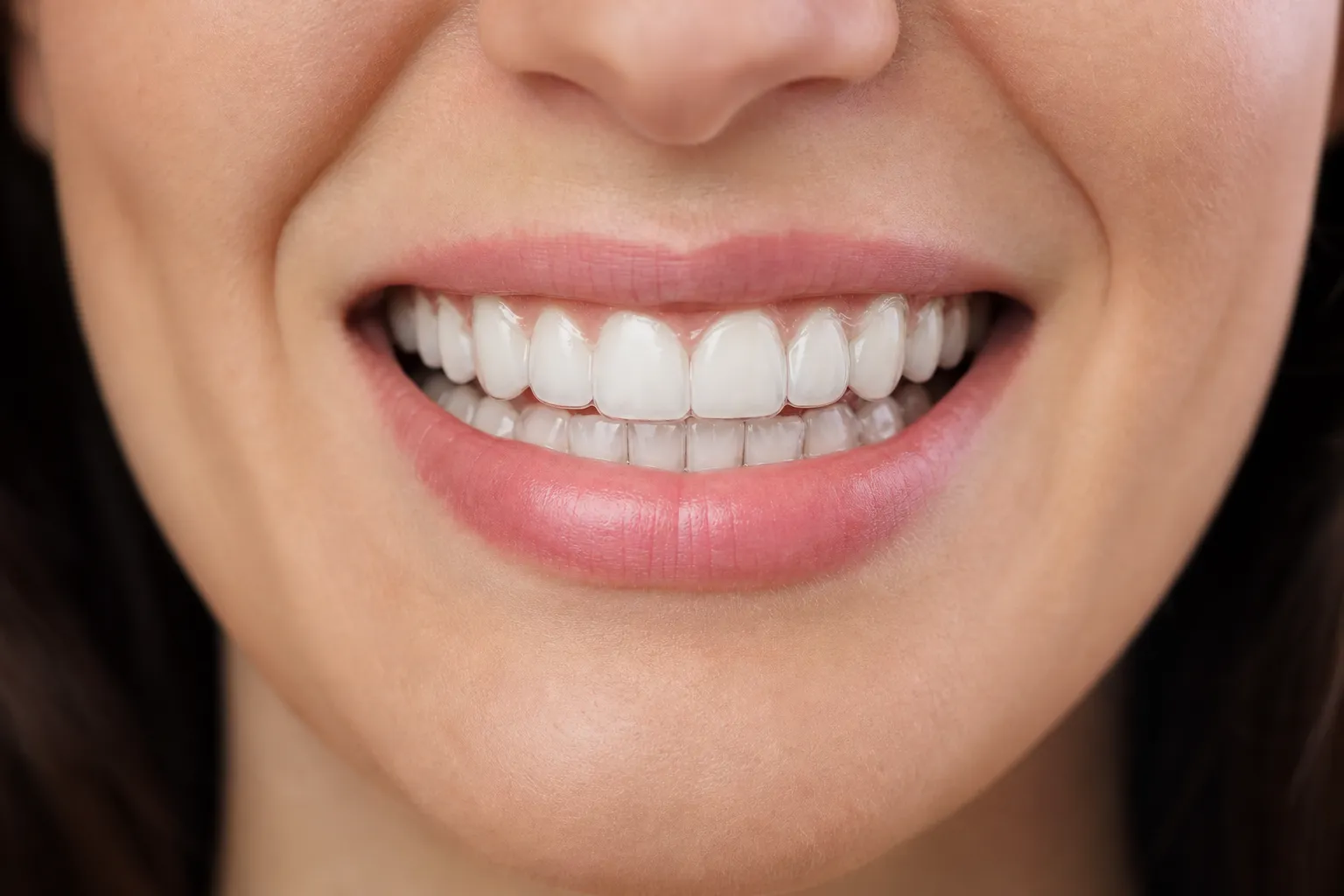
If pure visibility is your top concern, clear aligners usually win. From conversational distance, they are often hard to notice.
Ceramic braces are still discreet, but not fully invisible. Up close, the brackets and wire are visible, especially under certain lighting. That said, many patients find them far more subtle than they expected.
Lingual braces are hidden from the front, but their feel and maintenance can make them less appealing for many people.
Comfort: What Feels Better?
Clear aligners tend to feel smoother because there are no brackets or wires against the cheeks and lips. Patients usually describe the sensation as pressure rather than rubbing.
Ceramic braces can cause some irritation at first, especially after adjustments. Orthodontic wax and a brief adjustment period usually help.
That said, comfort is not only about the appliance itself. It is also about how efficiently treatment is planned. Advanced treatment systems and close monitoring can reduce unnecessary friction in the process.
Removability and Daily Life
This is often the deciding factor.
Clear Aligners Offer More Flexibility
You remove them to eat, brush, floss, and for certain special moments. That means:
-
No food restrictions
-
Easier oral hygiene
-
Less interference with photos, events, and presentations
But with flexibility comes responsibility. If aligners stay out too long, treatment slows down or becomes less effective.
Ceramic Braces Offer More Consistency
Because they stay on your teeth, they are always working. That can be reassuring for patients who want a more hands-off system. The tradeoff is adapting your eating habits and cleaning routine.
Treatment Planning: The Part Patients Rarely Hear Enough About
A major content gap in many articles is the difference between a product and a treatment plan.
Invisible braces do not work well just because they are clear. They work well because an experienced orthodontist designs a plan that accounts for:
-
Bite function
-
Jaw relationships
-
Tooth shape and root position
-
Esthetics and smile arc
-
Growth in children and teens
-
Refinements and retention afterward
As the American Association of Orthodontists explains, the skill behind your treatment matters more than the appliance brand. That is why a personal plan and ongoing care matter, whether you choose Invisalign or ceramic braces.
At Eisenberger and Meister Orthodontics, patients receive personalized plans, advanced technology, and efficient scheduling. Care is designed to feel clear and convenient from the start.
Are Invisible Braces Effective?
Yes – when matched to the right case and managed properly.
Clear aligners can be highly effective for many mild to moderate cases and some more advanced ones. Ceramic braces are also highly effective and often preferred when more continuous control is needed.
The better question is not “Do invisible braces work?” It is: Which invisible braces option will work best for your specific bite and lifestyle?
Common Tradeoffs Patients Should Know Before They Book
Clear Aligners Tradeoffs
-
Must be worn consistently
-
Easy to misplace
-
Not ideal for every complex case
-
Attachments may be needed, making them slightly more visible up close
-
Refinement trays are sometimes necessary
Ceramic Braces Tradeoffs
-
Fixed to the teeth
-
Food restrictions apply
-
Brushing and flossing take more effort
-
Brackets are subtle, but not invisible
-
Some staining risk exists around elastics if habits are poor
Cost Questions: Are Invisible Braces More Expensive?
Cost depends on your case, treatment length, and the system used. Clear aligners do not always cost more than ceramic braces.
The best way to get a real answer is an exam and treatment plan.
Eisenberger and Meister Orthodontics makes that step easier with complimentary consultations, plus flexible financing, 0% APR options, and no hard credit checks. For many families, this turns a treatment idea into a realistic next step.
Why Patients Often Prefer In-Office Orthodontic Care Over Mail-Order Options
Searching for invisible braces online? It helps to know the difference between ordering aligners and getting supervised care. As Invisalign’s guide to clear aligners explains, doctor-directed treatment starts with an in-person exam. That matters when your plan involves bite correction, root movement, or jaw development.
In-office orthodontic care offers:
-
Clinical examination before treatment
-
X-rays and imaging
-
Customized planning
-
Monitoring of fit and progress
-
Adjustments when teeth do not track as expected
-
Better protection for your bite and long-term result
That is especially important for children, teens, and adults with anything more than minimal cosmetic alignment goals.
How Dental Monitoring Improves Convenience
For busy parents, professionals, and students, convenience matters. Eisenberger and Meister Orthodontics offers Dental Monitoring, which can reduce unnecessary office visits and make treatment more efficient.
That means less hassle, more flexibility, and better visibility into how your smile is progressing between appointments. For many patients, it is one of the biggest quality-of-life upgrades in modern orthodontics.
What to Expect at a Complimentary Consultation
A consultation should leave you feeling informed – not pressured.
At Eisenberger and Meister Orthodontics, the goal is to understand:
-
What bothers you about your smile
-
Whether clear aligners, ceramic braces, or another option makes the most sense
-
How long treatment may take
-
What your financing options look like
-
How to make treatment fit your family’s routine
Patients also appreciate the luxurious, warm, spa-like office environment, which helps make orthodontic care feel far more comfortable than many expect.
Serving Passaic and Surrounding New Jersey Communities
Eisenberger and Meister Orthodontics welcomes patients from Passaic and Clifton and nearby Passaic County communities, including Paterson, Little Falls, Woodland Park, Totowa, and Elmwood Park. Families also visit from Bergen County towns such as Garfield, Wallington, Wood-Ridge, Carlstadt, East Rutherford, Rutherford, Lyndhurst, North Arlington, Lodi, Hasbrouck Heights, Hackensack, Teaneck, Bergenfield, Rochelle Park, Paramus, Maywood, River Edge, Ridgefield Park, Saddle Brook, and Fair Lawn.
In nearby Essex and Hudson counties, patients come from Nutley, Belleville, Bloomfield, Montclair, Verona, Cedar Grove, Newark, and Harrison, as well as Secaucus and Hoboken. For families comparing clear aligners and ceramic braces in North Jersey, the best starting point is a consultation tailored to your bite and goals.
If you are searching from one of these nearby towns, the most helpful next step is an in-person assessment of your smile, bite, and goals.
Final Verdict: Which Option Fits Your Smile?
If you want the most discreet removable option and are confident you will wear it as directed, clear aligners may be the right fit.
If you want something subtle but fixed, especially for more complex movement or a lower-maintenance daily routine, ceramic braces may be the better choice.
If you want the most precise answer, not just a generic internet comparison, Eisenberger and Meister Orthodontics offers the kind of expertise that changes the experience: 38 years of trusted care, 15,000+ smiles treated, top-tier Invisalign expertise, custom LightForce braces, Dental Monitoring, complimentary consultations, and flexible financing designed around real families.
For children, teens, and adults who want advanced orthodontic care in a welcoming, high-end environment, this is where confidence starts.
FAQ
What’s better, smile set or Invisalign?
For patients who want the safest and most predictable result, Invisalign with in-office orthodontic supervision is typically the better option. Invisalign treatment at an experienced practice includes exams, treatment planning, monitoring, and adjustments that direct-to-consumer systems usually cannot match.
Does Invisalign change the way you smile?
Yes – in a good way, Invisalign can improve how your smile looks by aligning teeth and refining your bite. During the first few days of each new aligner, some patients notice temporary pressure or a slight speech adjustment, but this usually fades quickly.
Which teeth are hardest to move with Invisalign?
Rotated teeth, teeth that need vertical movement, and certain back teeth can be more challenging with aligners in some cases. That is why case selection and provider expertise matter so much when deciding between Invisalign and other orthodontic options.
Why is my dentist pushing Invisalign?
Sometimes it is because Invisalign is a strong option for your goals, especially if you want something discreet and removable. But the right recommendation should always be based on your bite, lifestyle, and treatment needs – not on selling one system to everyone.