
Lingual and ceramic braces use fixed brackets and wires, but you wear them on opposite sides of the teeth. Lingual brackets are hidden behind your smile. Clear or tooth-colored ceramic brackets sit on the front and show up close. Your bite matters first; then consider whether you would rather see some hardware or feel it against your tongue when you speak.
The key difference: where the brackets go
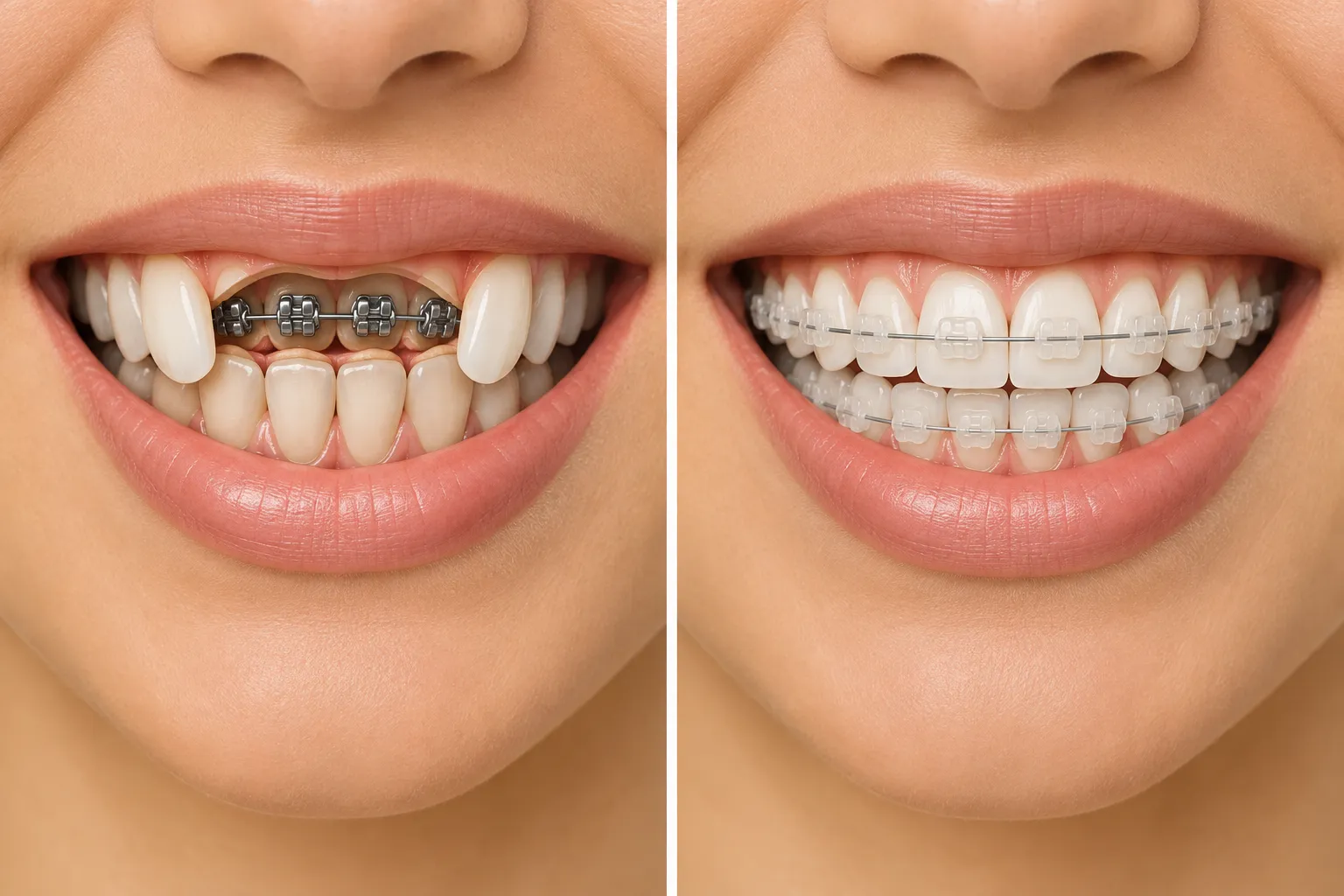
“Lingual” tells you where the brackets sit, on the tongue side. “Ceramic” tells you what the brackets are made of; clear ceramic braces usually sit on the front. Lingual ceramic braces can be a confusing phrase because an inside-bracket system may use different materials. Invisible lingual braces are hidden from the front, though someone might see them from another angle.
“placed behind the teeth.” – American Association of Orthodontists
Both braces stay on when you eat. Invisalign uses removable clear aligners. Your bite and daily habits help determine which approach fits.
Lingual and ceramic braces vs Invisalign
|
Question |
Lingual braces |
Clear ceramic braces |
Invisalign aligners |
|---|---|---|---|
|
Where is the appliance? |
Brackets and wire behind the teeth |
Tooth-colored brackets and wire on the front |
Removable trays over the teeth |
|
What shows when you smile? |
Usually little to no front-facing hardware |
Brackets and wire can show, especially close up |
Trays may show; attachments may also be visible |
|
What may feel unfamiliar? |
Tongue contact and possible early changes in speech |
Contact with lips or cheeks and general tooth soreness |
Wearing and removing trays; possible early speech adjustment |
|
How do meals work? |
Appliance stays on; food choices and cleaning matter |
Appliance stays on; food choices and cleaning matter |
Trays come out for eating and drinking anything other than water |
|
Cleaning task |
Reach the hidden bracket surfaces as well as between teeth |
Clean around visible brackets and between teeth |
Clean teeth and trays before putting them back |
|
Main commitment |
Accept a more demanding inside-the-mouth cleaning and adjustment routine |
Accept some visible hardware |
Wear trays as prescribed and keep track of them |
The table helps with daily-life decisions. It cannot tell you how long your treatment will take or what the result will be. Traditional metal braces also sit on the front of the teeth, with brackets that stand out more than ceramic ones. Your orthodontist needs to assess the tooth movements and bite correction involved.
What daily life can feel like
Speech and tongue comfort with lingual braces
With lingual inside braces, the tongue meets the brackets when you speak and swallow. A lisp or a sore spot can follow fitting or an adjustment, and people take different amounts of time to adapt. Call your treating orthodontist if a wire pokes, a bracket keeps rubbing or soreness gets worse.
Ceramic brackets may rub your cheeks or lips, and your teeth can feel tender after an adjustment. That is a different adjustment period from getting used to hardware behind the teeth. New aligner trays can feel unfamiliar too. Tell your orthodontist if you speak for long stretches at work before choosing hidden brackets.
Cleaning, meals and repairs
Food collects around fixed brackets and wires. Behind the teeth, it can be hard to see the spots you missed in a mirror. Brush around the brackets and along the gumline, use the between-teeth tools your orthodontist recommends, and keep up with dental visits. The American Association of Orthodontists’ cleaning advice applies to fixed braces on either side of the teeth. Front ceramic brackets need that care too; ties and buildup can make them stand out even though the brackets themselves do not change color like teeth.
With either fixed option, avoid biting into food that could knock a bracket loose and follow your team’s food instructions. You can brush without attached hardware when you use removable aligners, but you need to take the trays out to eat and keep them safe. Every option calls for regular cleaning.
What about clear aligners?
Ceramic and lingual braces work while bonded to your teeth. Invisalign trays come out for meals and cleaning. This type of orthodontic treatment requires you to wear the trays as directed and remember to put them back after meals. If removable items tend to go missing in your household, fixed braces may suit you better.
Suitability and cost: ask for a plan, not a generic price
Lingual placement does not suit every bite. Your orthodontist will consider tooth shape and position, space behind the teeth, bite contacts and the movements required. Clear ceramic braces offer fixed treatment without brackets against your tongue. Invisalign offers removability if you can follow its wear schedule. The American Association of Orthodontists explains how braces work; your orthodontist can assess which treatment option fits your teeth and bite.
Lingual treatment may cost more than front ceramic braces because inner-surface hardware can call for custom work and specialist time. It does not follow that your treatment will take longer. Ask for a written estimate covering the appliance, visits, repairs, retainers, payment terms and changes to the plan. The full fee tells you more than the monthly payment does.
A decision checklist to bring to your consultation
-
Visibility: Must the braces be hidden from a straight-on view, or would subtle front brackets be enough?
-
Speech and comfort: Would temporary tongue contact or speech changes interfere with work, school or performances?
-
Hygiene: Can you realistically clean behind brackets each day, or would front access or removable trays suit you better?
-
Removability: Would taking aligners out for meals help you, or make adherence harder?
-
Clinical fit: What movements does your bite need, and which options are appropriate for that plan?
-
Total commitment: What is included in the quoted fee, and what will you need to do after active treatment to maintain the result?
Tell the orthodontist what matters to you at the appointment. A well-hidden appliance can still demand more from your tongue and cleaning routine.
Discreet treatment at Eisenberger and Meister Orthodontics
Eisenberger and Meister Orthodontics in Passaic offers clear braces, custom LightForce ceramic braces and Invisalign for patients seeking a less visible option. LightForce uses ceramic front brackets; it is not a lingual system. The practice treats children, teens and adults. Some orthodontists offer lingual treatment, but Eisenberger and Meister Orthodontics has not confirmed that it does. If you want brackets behind your teeth, ask about availability before settling on a plan.
At a complimentary consultation, North Jersey patients can discuss whether front ceramic brackets or removable aligners suit their bite and routine. The practice offers personalized planning and financing support; your written proposal will spell out the treatment and payment details.
Nearby North Jersey communities
Families in several surrounding communities travel to the Passaic office. These selected towns appear in the practice’s surrounding communities listing. The list does not imply other offices or a fixed service boundary:
|
County |
Nearby towns and cities |
|---|---|
|
Passaic County |
Clifton, Paterson, Woodland Park, Little Falls, Totowa, Wayne |
|
Bergen County |
Garfield, Lodi, Hasbrouck Heights, Hackensack, Rutherford, Paramus |
|
Essex County |
Nutley, Bloomfield, Montclair, Belleville, Newark, West Orange |
|
Hudson County |
Secaucus, Kearny, North Bergen, Jersey City, Hoboken |
For this North Jersey selection, “nearby” means approximately within a 20-mile straight-line radius of central Passaic. Road mileage and travel time vary with your starting point and route.
Choosing your next step
If front-facing hardware is a dealbreaker and you can manage inside-bracket cleaning and tongue adjustment, ask whether your bite qualifies for lingual braces. Ceramic braces offer a discreet fixed choice with more accessible brackets. If you want to remove your appliance for meals, ask whether Invisalign fits your case. Eisenberger and Meister Orthodontics can discuss its clear-braces, LightForce and Invisalign choices at a complimentary consultation in Passaic, then build a plan around your needs without promising a particular result.
FAQ
Do lingual braces cost more?
They may cost more than front ceramic braces because inside placement can require specialized fitting and adjustments. Your actual fee depends on the treatment plan, so compare written estimates that include visits, repairs and retainers.
What are the differences between ceramic braces and metal braces for adults?
Both can be fixed to the front of teeth and use brackets and wires, but tooth-colored ceramic brackets are less conspicuous than metal ones. Placement matters too: lingual braces sit behind the teeth and can affect tongue comfort and speech, whether you are an adult or a teen.
What do ceramic braces cost?
There is no reliable single price without an examination and a defined treatment plan. Ask what the written fee covers, including adjustments, repairs and retainers, and compare the total rather than the monthly installment alone.