
Brackets and wires trap plaque and get in the way of your usual brushing and flossing. This oral hygiene braces guide shows you how to clean above and below each bracket, thread floss between teeth each day, and keep dental appointments alongside orthodontic visits. These habits help you protect your teeth and gums throughout treatment.
Keep a small cleaning kit for school or work, and make time for a thorough clean at home. That combination is manageable even on busy days.
Watch the American Association of Orthodontists demonstrate brushing and flossing around fixed braces:
Why oral hygiene braces routines need extra care
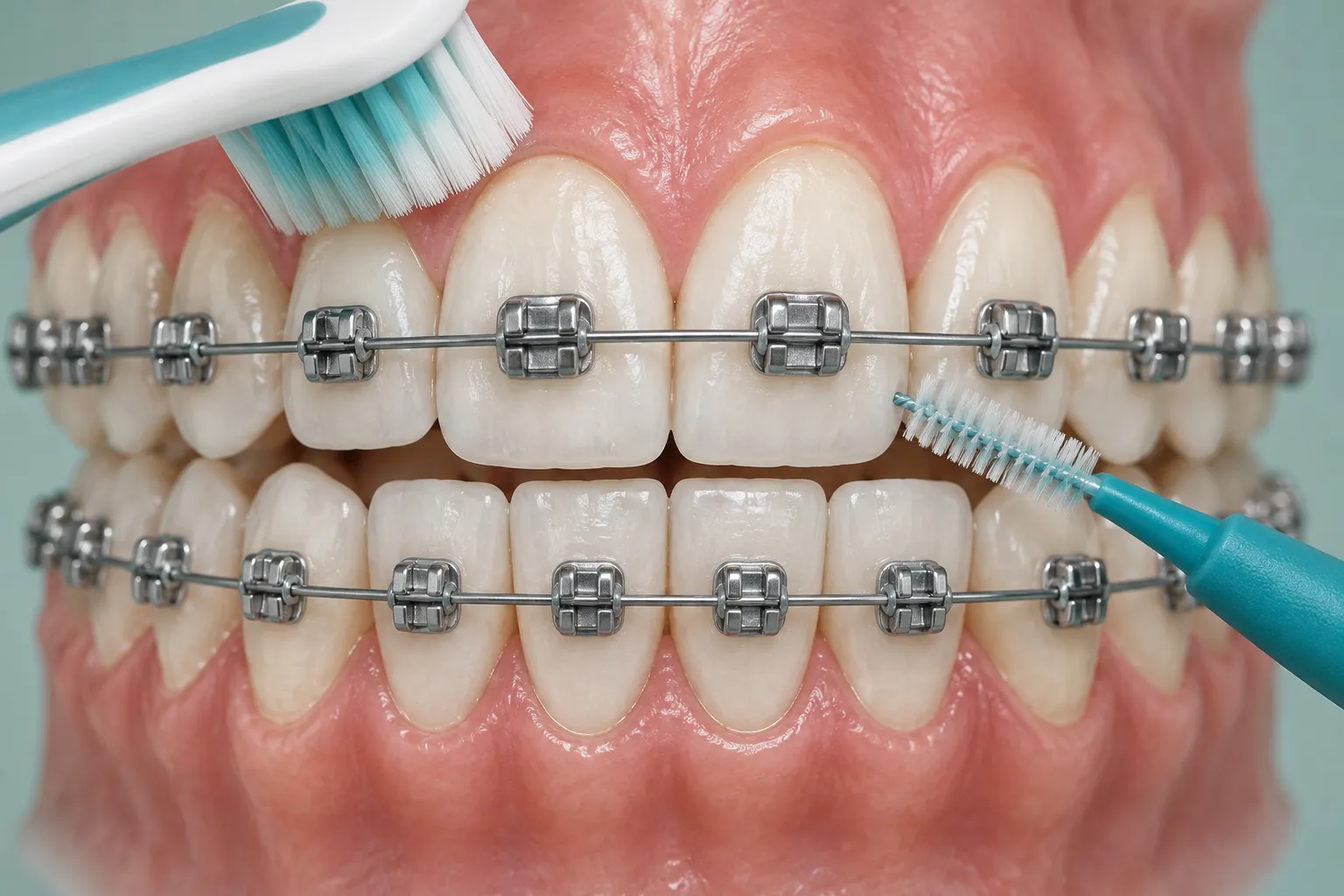
Brackets sit on the front of the teeth, with a wire running through them. Braces create extra places for food debris to catch and plaque to collect, even when you cannot see food particles. If plaque stays there, gums may become inflamed and enamel can develop chalky white areas. Persistent plaque may also contribute to bad breath, cavities and gum disease. To reach the tooth, aim your brush around the bracket rather than across its front. The American Association of Orthodontists explains why white spots can form when plaque is left on enamel.
Your brush needs to reach the gumline and the tooth above and below each bracket. Dental floss needs to reach the spaces between teeth beneath the archwire. An interdental brush, also called an interproximal brush, helps around the hardware, while floss cleans between close-fitting teeth.
Build a routine around an ordinary day
|
When |
What to do |
If you are short on time |
|---|---|---|
|
Before leaving home |
Brush with fluoride toothpaste, paying attention to the gumline and both sides of the brackets. |
Clean carefully rather than scrubbing hard. |
|
After meals or snacks at school or work |
Brush when possible; remove trapped food around brackets with an interdental brush. |
Swish with plain water if you cannot brush, then brush when you can. |
|
Before bed |
Brush around every bracket and along the gums; floss between teeth under the wire. |
Keep this as the full clean of the day, even if lunch was rushed. |
Morning at home
Choose a soft manual or powered brush that feels easy to control. Spend two minutes brushing with fluoride toothpaste. First angle the bristles toward the gums, then tilt the brush to clean the tooth at both edges of each bracket. Gentle circular motions work better here than one sweep across the wire. Check your work in the mirror, including the back teeth.
If your child is still learning those angles, look at the bracket edges and gums together after brushing. You may spot the same missed tooth a few mornings in a row, which gives you a place to focus.
Lunch at school or work
Put a travel toothbrush, fluoride toothpaste, an interdental brush and a mirror in your bag. After lunch, brush if you have a sink and a moment. Use the interdental brush to dislodge food under the wire before class or a meeting. Without a chance to brush, swish with water to clear some debris, then brush when you get home.
Water is a useful everyday drink. Frequent sugary or acidic drinks expose teeth to more risk, particularly when liquid lingers around brackets. Hard candies, hard pizza crust and sticky foods can damage the appliance. Cut firmer foods into manageable pieces rather than biting into them with the front brackets.
The evening reset
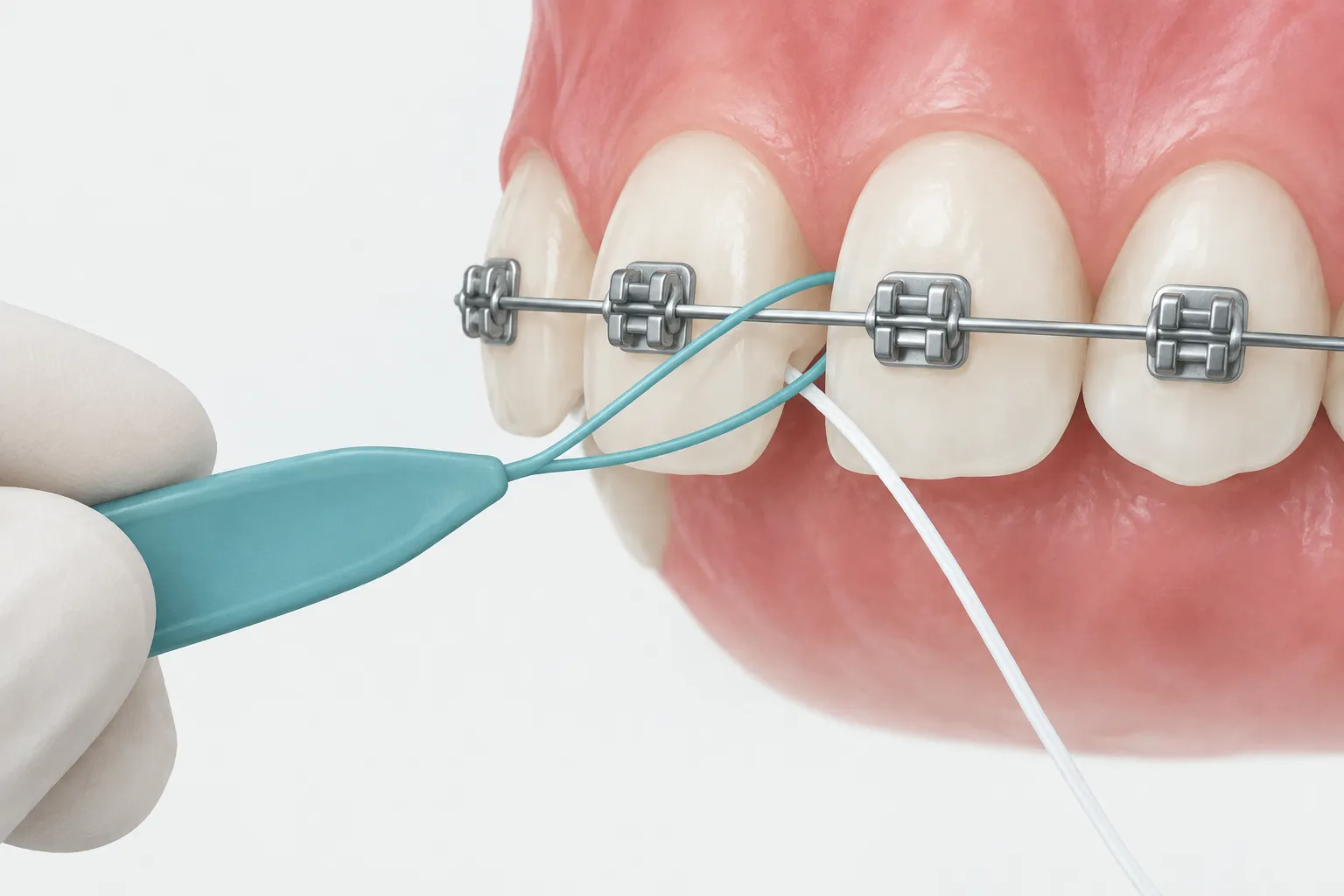
At night, allow time for the part that takes practice: flossing beneath the wire. Remove elastics or other removable parts as your orthodontist directs and brush every surface. A floss threader or stiff-ended orthodontic floss helps you pass floss under the archwire. Curve it around one tooth and move it gently up and down near the gumline, then clean its neighbor. Re-thread for the next space. Use a light and mirror to catch debris you missed during the day.
Tools for the spots a regular brush cannot reach
|
Tool |
Best use with fixed braces |
Limitation |
|---|---|---|
|
Soft manual or powered toothbrush |
Cleans gumline and tooth surfaces around brackets |
Cannot clean the contact surfaces between teeth |
|
Floss and threader or orthodontic floss |
Passes under the wire to clean between teeth |
Takes practice and time |
|
Interdental brush |
Sweeps around brackets and beneath the wire |
Does not replace floss between close-fitting teeth |
|
Water flosser |
Flushes loose debris from difficult areas |
Use as a supplement rather than assuming it replaces floss |
|
Fluoride mouthwash |
Adds fluoride exposure when your dental team recommends it |
Cannot remove sticky plaque instead of brushing and flossing |
Mouth rinse is optional for many patients. If your dentist or orthodontist recommends a fluoride rinse, it may help when white spots are a concern. Brushing alone cannot clean between close-fitting teeth, and rinsing does not remove plaque stuck to them. Keep using fluoride toothpaste and floss.
Know when a sore spot needs attention
An appliance may rub when it is new. Orthodontic wax can cover a rubbing bracket temporarily. Tell your orthodontist if a sore keeps returning, a wire pokes or a bracket comes loose; contact your dentist if your gums stay swollen or bleed despite careful cleaning, or if you suspect a cavity. Call before your next scheduled visit if pain worsens or makes eating difficult.
Watch for chalky white areas near brackets or the gumline. They can signal early loss of minerals from enamel. Ask your dentist or orthodontist to look at a new white spot rather than scrubbing it; they can help you address plaque that keeps building up there.
Continue seeing your dentist and hygienist during orthodontic treatment. They provide professional cleaning and check ups for the teeth and gums, while your orthodontist monitors tooth movement and the appliance. Plan on dental cleanings at least every six months, or more often if your dentist recommends it. The American Association of Orthodontists advises regular dental cleanings during braces treatment.
“See your dentist for a cleaning and check-up at least every six months during orthodontic treatment, or more often if recommended.” – American Association of Orthodontists
Whether you live in Passaic, Clifton, Garfield, Wallington, Rutherford, East Rutherford, Nutley, Lodi, Lyndhurst or Hasbrouck Heights, you need a routine that works through commutes, school days and tired evenings. If food keeps catching in the same place, ask Eisenberger and Meister Orthodontics to show you how to clean that area on your own braces. Tell the team what you can manage at home so your orthodontic care plan fits your day.
Fixed braces require more attention around brackets and under the wire. Brush thoroughly at home, carry a small kit for meals away and keep regular dentist visits to help protect a healthy smile. If you are considering braces for yourself or your child, Eisenberger and Meister Orthodontics in Passaic can help you choose a treatment and care routine that fits.
FAQ
Can an oral hygienist do braces?
A dental hygienist can clean your teeth while you have braces and help you improve brushing and flossing around the appliance. Your orthodontist handles the braces and tooth movement; keep appointments with both your dental and orthodontic teams.
Can I skip a night of brushing my teeth with braces?
Try not to: the evening clean is your chance to remove plaque from around brackets and between teeth after the day’s meals. If you miss once, resume your usual brushing and flossing routine rather than scrubbing harder the next morning.
How often should you get dental cleanings with braces?
Continue regular visits with your dentist and hygienist while wearing braces. At least every six months is a common recommendation, but your dentist may suggest more frequent cleanings based on your gum and cavity risk.
How common is tooth decay with braces?
There is no single rate that predicts your own risk. Brackets can trap plaque and make cleaning harder, so cavities are a concern when plaque is left around them; careful brushing, daily cleaning between teeth and regular dental visits help protect your teeth.