
Orthognathic surgery and orthodontics work together when jaw misalignment cannot be corrected by moving teeth alone. An orthodontist aligns the teeth; an oral and maxillofacial surgeon repositions one or both jaws when needed. The usual sequence is orthodontic preparation, surgery and orthodontic finishing.
When orthognathic surgery and orthodontics work together
An underbite, overbite, open bite or facial asymmetry may reflect tooth position, jaw alignment or both. An exam helps determine whether orthodontic treatment alone can correct misalignment or whether moving the facial bones is the better treatment option. Jaw growth, injury or birth defects can also affect the bite.
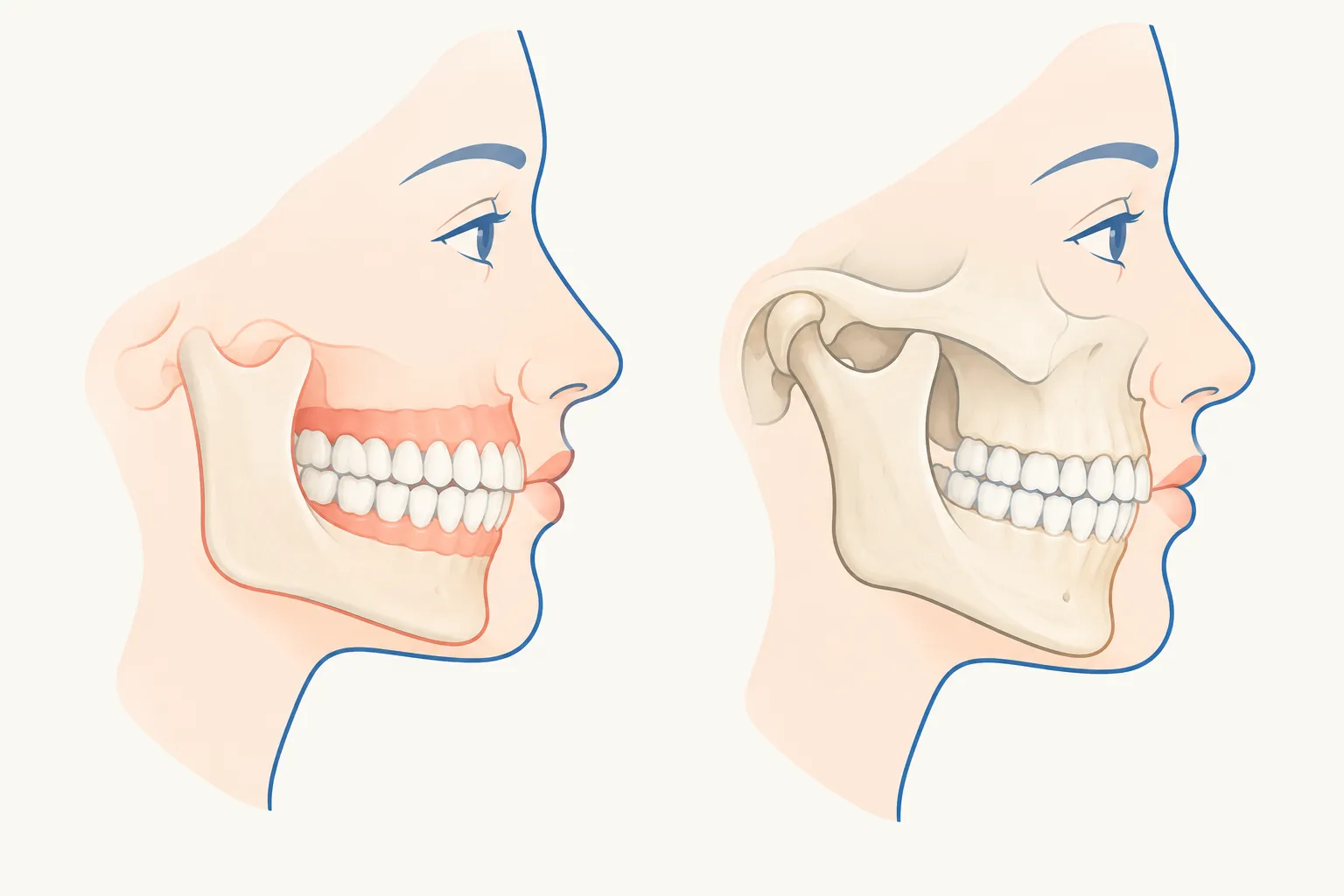
Tell your orthodontist if you struggle with biting food or have excessive tooth wear, a receding chin, headaches or temporomandibular joint (TMJ) pain. Chronic mouth breathing, dry mouth or sleep apnea also deserve evaluation, but none of these symptoms alone establishes a need for surgery.
|
Approach |
What it changes |
When it may fit |
|---|---|---|
|
Orthodontics alone |
Tooth position and the way the teeth fit together |
The jaw relationship allows a workable bite without moving bone |
|
Orthodontics with orthognathic surgery |
Tooth position and the position of one or both jaws |
A skeletal discrepancy prevents orthodontics alone from achieving the planned bite |
For children and teens, early assessment can identify a concern, although surgery is generally planned after jaw growth stops. Adults can also be evaluated.
From evaluation to retainers: how combined treatment works
-
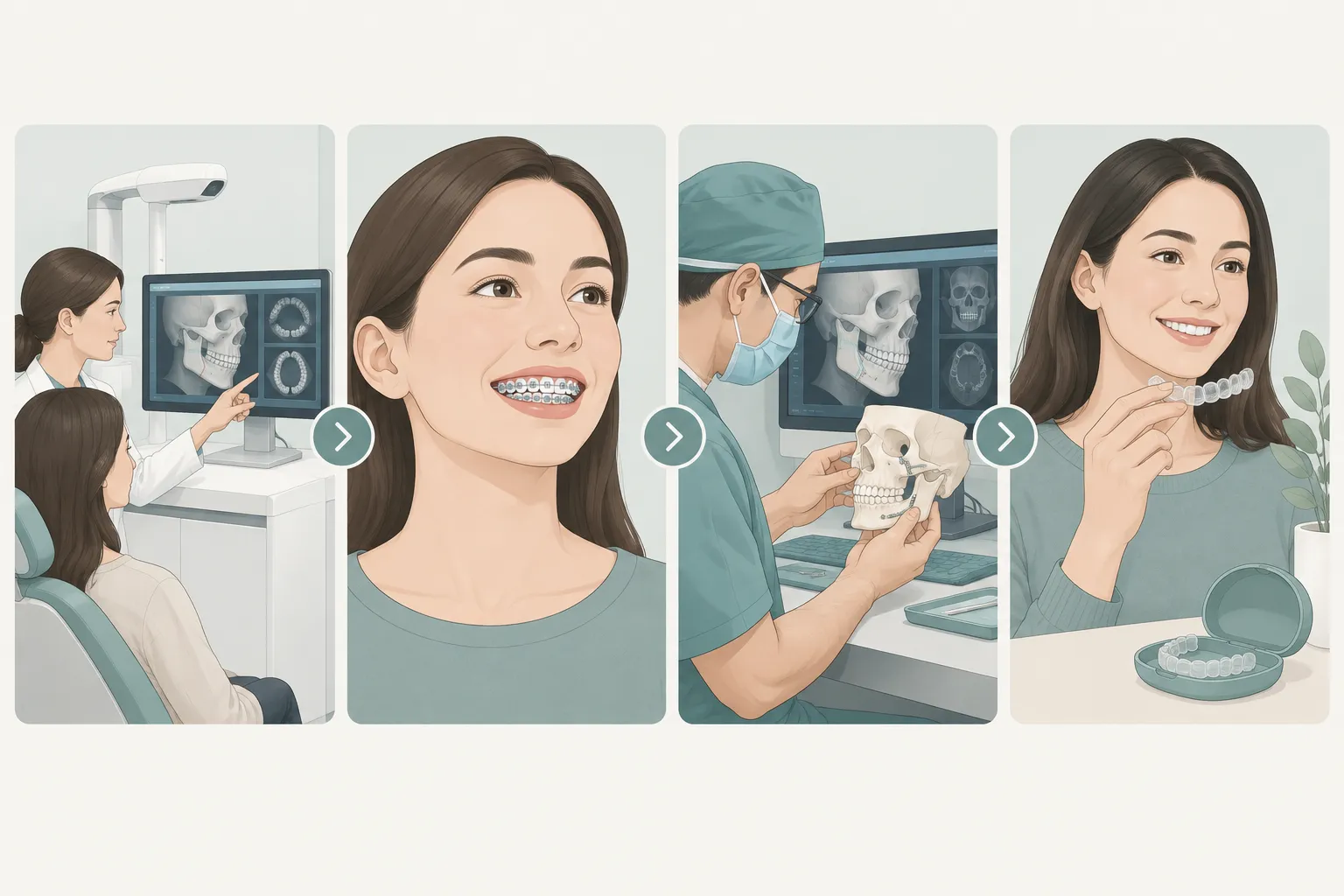
Evaluation: Your orthodontist reviews your bite, health history and digital imaging. If surgery might help, an oral and maxillofacial surgeon assesses the proposed jaw movements. Computerized treatment planning can help the team check how the upper and lower teeth will meet. Ask what orthodontics alone could achieve.
-
Orthodontic preparation: Braces move teeth into positions that will fit after surgery, so your bite may temporarily feel worse. According to Mayo Clinic’s jaw surgery guide, braces usually stay on for 12 to 18 months before surgery, although individual timelines vary. Aligners may fit some plans, but they cannot replace surgery for a skeletal problem.
-
Surgery: The surgeon repositions the upper jaw, lower jaw or both, usually under general anesthesia; fixation may include titanium plates and screws. Ask which jaw will move and what risks apply to your procedure. The American Association of Oral and Maxillofacial Surgeons’ guide to corrective jaw surgery explains the surgeon’s role.
-
Finishing: Once cleared by the surgeon, your orthodontist fine-tunes the bite. Retainers maintain tooth alignment while surgical follow-ups monitor healing.
Recovery, timing and costs
Swelling, fatigue and a restricted diet are common early concerns. Lower-jaw surgery can leave numbness around the lip or chin that improves slowly or persists. Follow your surgeon’s instructions for food, hygiene and activity. Contact the surgical team for worsening bleeding, fever or increasing pain; seek urgent help for breathing trouble.
Mayo Clinic notes that initial jaw healing usually takes about six weeks and full healing can take up to 12 weeks. Ask your surgeon about time away from school or work and your individual risks, including infection, bleeding, anesthesia and altered sensation. Combined care takes longer than orthodontics alone, so request milestones and separate estimates for orthodontic and surgical charges. Medical and dental insurance may cover different portions.
Orthodontic care in Passaic
With 38 years of experience and more than 15,000 smiles treated, Eisenberger and Meister Orthodontics is an established New Jersey orthodontic practice for patients exploring preparation for orthognathic surgery. At a complimentary consultation in Passaic, children, teens and adults can discuss whether braces, clear braces or Invisalign fit their bite and whether a surgical opinion is warranted. An oral and maxillofacial surgeon performs any jaw operation; the practice provides orthodontic treatment before and after surgery as the coordinated plan requires.

The Passaic, NJ office also welcomes patients from surrounding towns:
-
Passaic County: Clifton and Paterson.
-
Bergen County: Garfield, Wallington, Rutherford, East Rutherford, Wood-Ridge, Lodi and Carlstadt.
-
Essex County: Nutley, Belleville and Bloomfield.
Common questions
What is the best age for jaw surgery?
Surgery is generally planned after jaw growth stops. There is no single best age: adults, including people in their 30s, can be evaluated based on their health, bite and goals.
Can Invisalign be used with orthognathic surgery?
Possibly, depending on the surgical plan and how the orthodontist and surgeon coordinate treatment. Braces may be needed for surgical guidance, and Invisalign cannot replace surgery when the issue is skeletal.
How long does jaw surgery recovery take?
Mayo Clinic says initial jaw healing usually takes about six weeks, with full healing taking up to 12 weeks. Your surgeon can explain what that means for eating, work or school in your case.