
Phase 1 Braces and Phase 2 Explained
If you’ve been told your child may need phase 1 braces, or you’re wondering whether phase 2 orthodontics will come later, you’re not alone. For many parents in Passaic and nearby New Jersey communities, the idea of braces phase 1 and 2 can feel confusing at first. Why treat a child so young? Why not wait until all the adult teeth are in? And what exactly happens between the first phase of braces and the second?
The short answer is this: some children truly benefit from early, targeted orthodontic treatment, while many others do best with a single full treatment later on. The key is understanding when early treatment helps, what it can prevent, and what to expect if your child needs phase one braces now and phase 2 of braces later.
At Eisenberger and Meister Orthodontics, we help families make sense of these decisions every day. With 38 years in practice, 15,000+ smiles treated, advanced digital technology, and highly personalized care for children, teens, and adults, our team is focused on recommending what is best for your child, not what is most aggressive. Whether you’re in Passaic, Clifton, Garfield, Paterson, Wallington, Wood-Ridge, Hasbrouck Heights, Lodi, Elmwood Park, Saddle Brook, Rochelle Park, Fair Lawn, Nutley, Belleville, Bloomfield, Lyndhurst, Rutherford, East Rutherford, Carlstadt, Moonachie, Little Ferry, Hackensack, Teaneck, Ridgefield Park, Secaucus, Kearny, Newark, Montclair, Verona, Cedar Grove, Wayne, Totowa, or beyond, this guide will help you understand the full picture.
What Are Phase 1 Braces?
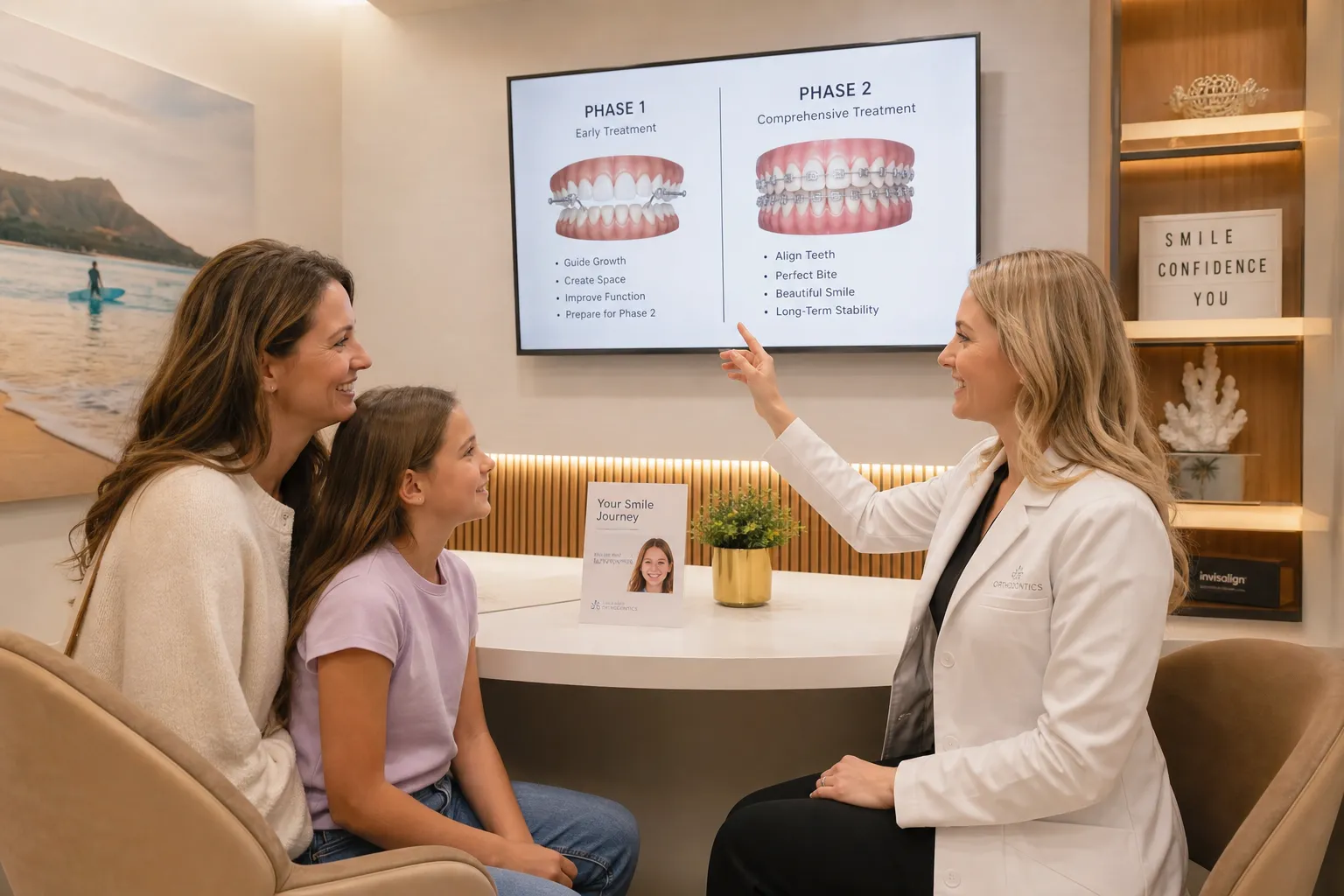
Phase 1 braces are early orthodontic treatment used while a child still has a mix of baby teeth and permanent teeth. You may also hear this called phase one braces, phase i braces, or the first phase of braces.
The purpose is not usually to create a perfect final smile right away. Instead, the goal is to fix a developing problem at the best possible time, while the jaws and bite are still growing.
Phase 1 treatment often helps with:
-
Crossbites
-
Severe crowding
-
Narrow upper jaws
-
Protruding front teeth
-
Harmful oral habits like thumb sucking
-
Eruption problems
-
Jaw growth imbalances
-
Certain airway-related concerns
In many children, early treatment can create space, guide jaw development, and reduce the risk of bigger problems later.
What Is Phase 2 of Braces?
Phase 2 of braces begins later, usually when most or all permanent teeth have come in. This is the stage most people picture when they think of orthodontic treatment.
During braces phase 2, the focus is on:
-
Straightening all permanent teeth
-
Fine-tuning the bite
-
Aligning the smile
-
Improving long-term function and stability
If Phase 1 is about shaping the foundation, phase 2 braces are about finishing and refining the result.
Why Some Children Need Braces Phase 1 and 2
Not every child needs two phases. That’s important.
Some children can wait and do beautifully with one comprehensive treatment as preteens or teens. Others benefit from braces phase 1 and 2 because a problem exists now that is easier, safer, or more predictable to correct during growth.
Common reasons a child may need both phases
|
Issue |
Why early treatment may help |
Why phase 2 may still be needed |
|---|---|---|
|
Crossbite |
Corrects jaw shift and uneven growth early |
Final alignment later |
|
Severe crowding |
Creates space for incoming permanent teeth |
Straightens remaining teeth |
|
Narrow upper jaw |
Expansion is easier during growth |
Bite detailing later |
|
Protruding front teeth |
Lowers trauma risk and improves function |
Full smile refinement later |
|
Underbite or jaw imbalance |
Growth guidance works best in childhood |
Final correction once growth continues |
|
Eruption problems |
Helps guide teeth into better positions |
Comprehensive finishing later |
A good recommendation for braces phase 1 should always answer one question clearly: What problem is being improved now that would be harder to fix later?
The Ideal Age for an Orthodontic Check
Children do not need braces at age 7 just because they are 7. But they should be evaluated by then.
The American Association of Orthodontists recommends an orthodontic check-up no later than age 7.
By this age, enough permanent teeth are usually present for an orthodontist to spot developing problems, even if everything looks normal to a parent.
At Eisenberger and Meister Orthodontics, complimentary consultations make it easy for families to get answers early without pressure. Sometimes the right next step is treatment. Sometimes it’s simply observation.
Does Every Child Need Two-Phase Orthodontics?
No. In fact, most do not.
“For many children, a single phase of comprehensive orthodontic treatment is still the right path.” – American Association of Orthodontists
This is one of the biggest content gaps in many articles: they explain the mechanics of two phases, but not clearly enough that two-phase care is selective, not automatic.
A trustworthy orthodontist should explain:
-
What problem exists now
-
Why waiting may be less ideal
-
What success looks like after Phase 1
-
Whether Phase 2 is expected later
How Phase 1 Braces Work
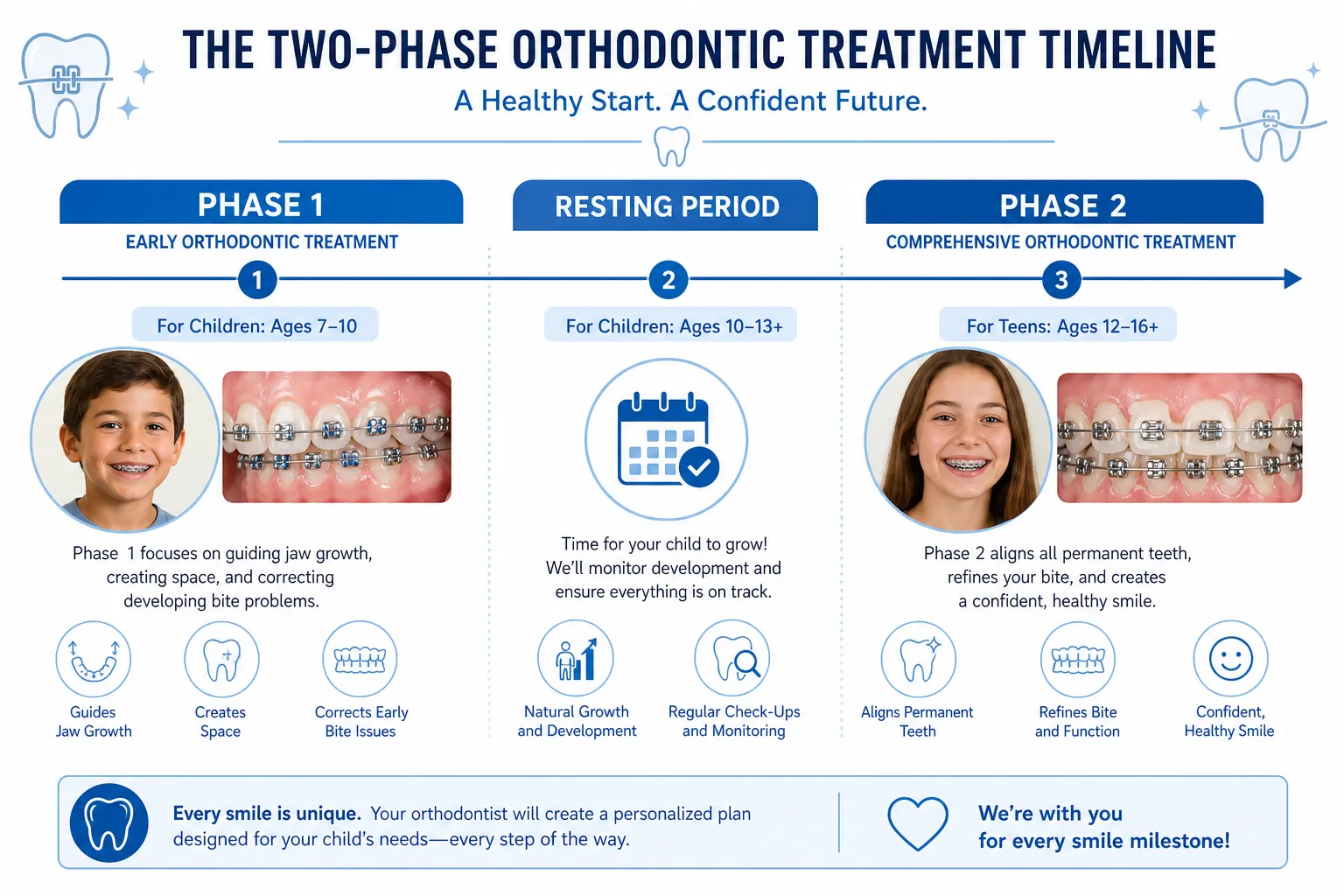
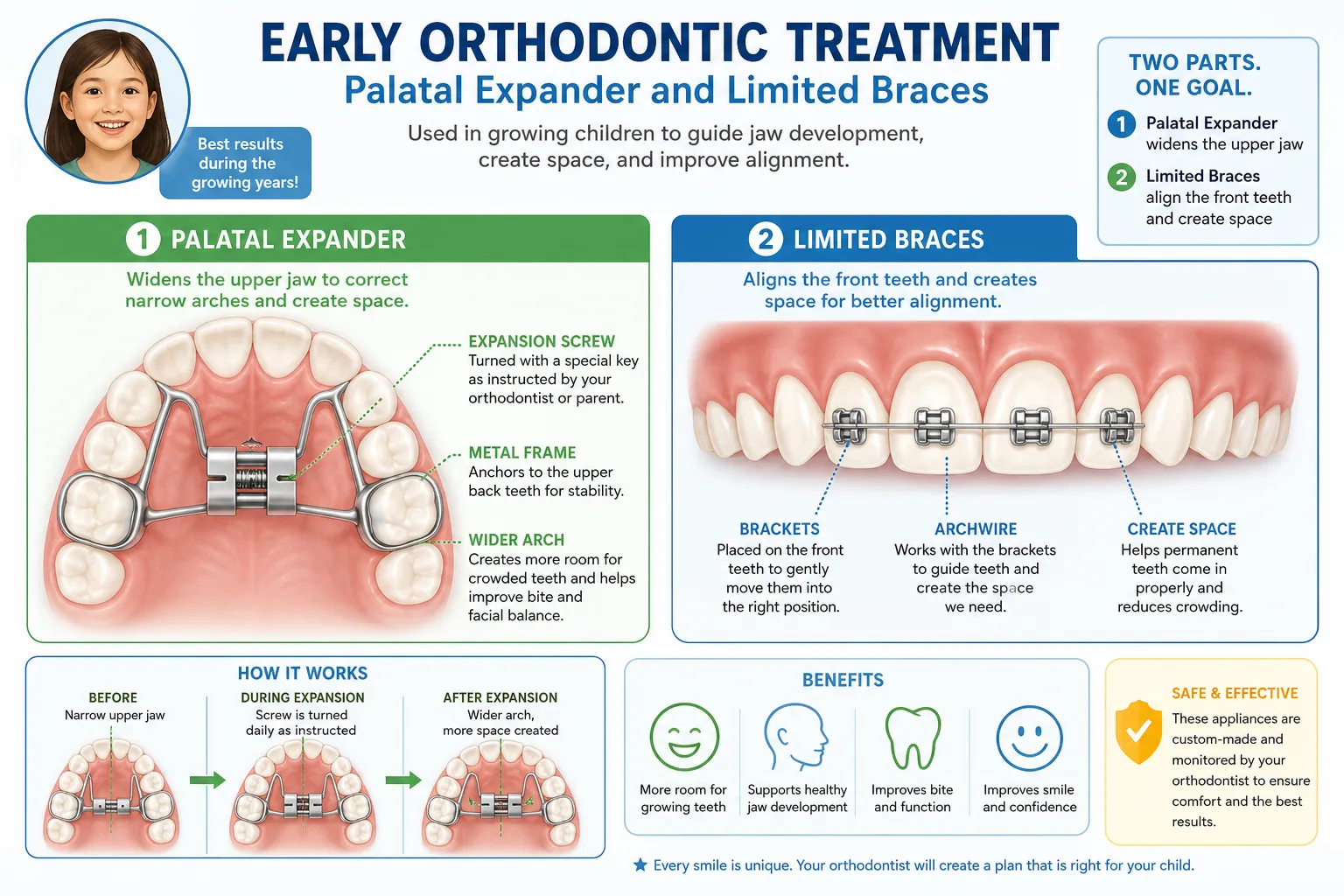
Phase 1 treatment usually starts when a child is between about 6 and 10 years old, depending on the issue. Treatment may last around 6 to 18 months.
Appliances used in phase 1 braces
-
Limited braces on certain teeth
-
Palatal expanders
-
Space maintainers
-
Habit appliances
-
Growth-guidance appliances
-
In some cases, removal of selected baby teeth
What parents can expect during the first phase of braces
The first phase of braces is usually more focused than full treatment. Your child may have appointments for:
-
Digital records and photos
-
X-rays or 3D imaging
-
Appliance placement
-
Progress visits
-
Oral hygiene monitoring
-
Bite and growth checks
At Eisenberger and Meister Orthodontics, advanced orthodontic technology helps make this process more precise and more comfortable. Our office combines a warm, spa-like setting with efficient scheduling and less waiting time, which matters a lot when you’re balancing school, work, and family life.
What Happens Between Phase 1 and Phase 2?
One of the most misunderstood parts of treatment is the resting period.
After braces phase 1, there is usually a break before phase 2 orthodontics begins. This is not wasted time. It is a planned monitoring period while the jaw continues to grow and the remaining permanent teeth erupt.
During this resting phase, your child may:
-
Wear a retainer or space maintainer
-
Visit for periodic growth checks
-
Be monitored for tooth eruption
-
Wait until the timing is right for full treatment
This period can last from several months to a few years, depending on your child’s age and development.
How Phase 2 Orthodontics Works
Phase 2 orthodontics usually begins between ages 11 and 14, when most adult teeth are in place. This phase is comprehensive and focuses on final alignment and bite correction.
Treatment options in phase 2 braces may include:
-
Traditional metal braces
-
Clear braces
-
Invisalign for teens
-
Custom LightForce braces
At Eisenberger and Meister Orthodontics, Phase 2 care is highly customized. For many patients, LightForce custom 3D-printed ceramic braces offer a more aesthetic and efficient option, with the potential for faster treatment and fewer appointments. For others, Invisalign may be ideal, especially with our distinction as an Invisalign Sapphire Provider, placing our team in the top 0.5% of specialists.
Dental Monitoring adds convenience
Another advantage for busy families is Dental Monitoring, which allows certain progress checks to happen remotely. That can mean fewer in-office visits, less disruption, and more flexibility without compromising close supervision.
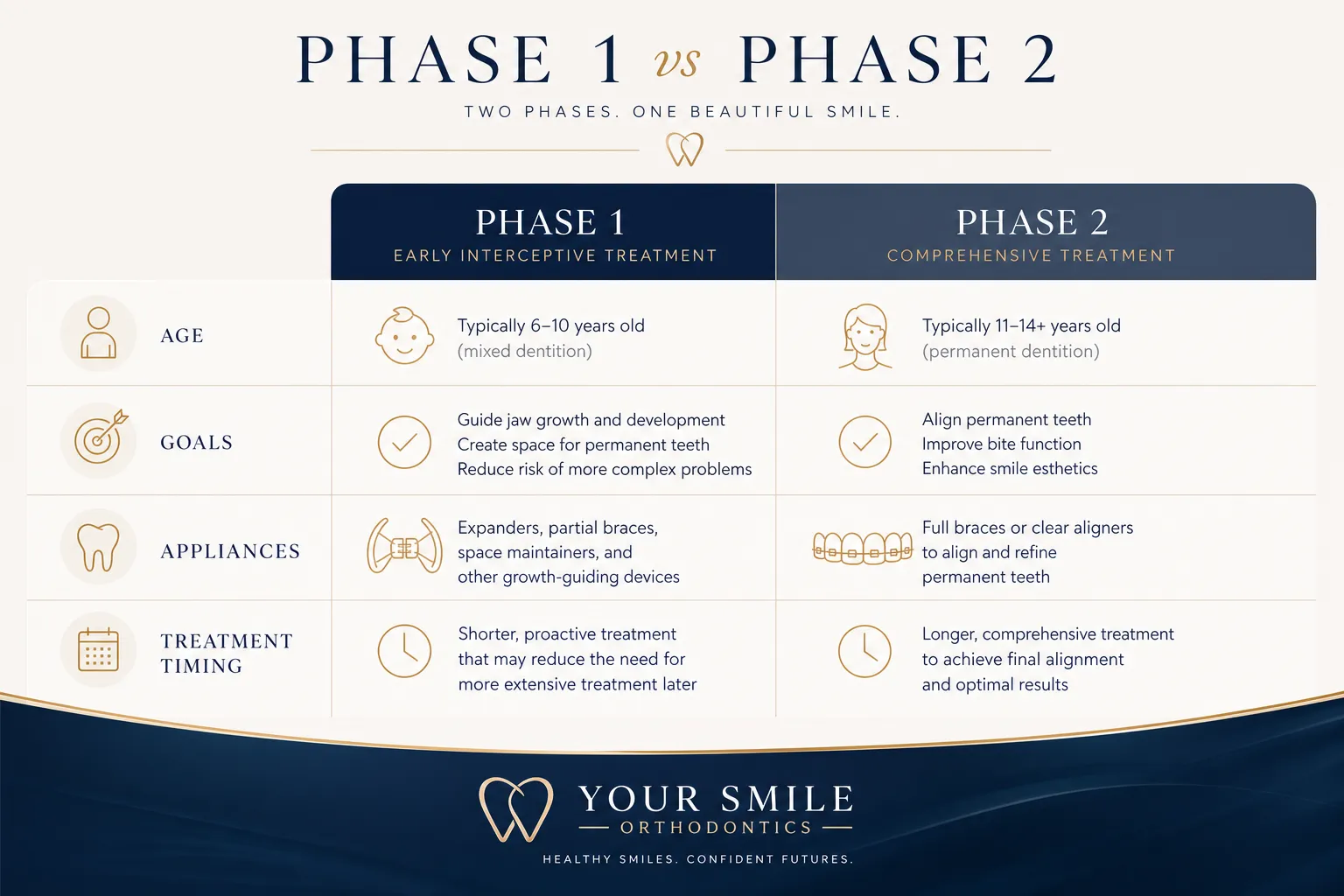
Phase 1 vs Phase 2: Simple Comparison
|
Feature |
Phase 1 Braces |
Phase 2 Braces |
|---|---|---|
|
Typical age |
6–10 |
11–14+ |
|
Teeth present |
Mixed baby and adult teeth |
Mostly/all permanent teeth |
|
Main goal |
Correct key developmental problem |
Final alignment and bite refinement |
|
Scope |
Limited, problem-focused |
Full comprehensive treatment |
|
Common appliances |
Expanders, partial braces, habit appliances |
Full braces or Invisalign |
|
Timing |
Earlier growth stage |
Later finishing stage |
Benefits of Phase One Braces
When recommended for the right child, phase one braces can provide meaningful advantages.
1. Better jaw development
Early intervention can guide growth while bones are still more adaptable.
2. Space for incoming teeth
This may reduce crowding and help permanent teeth erupt more favorably.
3. Lower risk of trauma
Protruding front teeth can be at greater risk for chips or fractures.
4. Improved bite function
Correcting certain bite problems early can support chewing, speech, and comfort.
5. Potentially simpler later treatment
Phase 2 may be more efficient when major structural problems were addressed early.
6. Better confidence during childhood
While early treatment is not primarily cosmetic, visible improvements can help some children feel more comfortable socially.
Possible Downsides Parents Should Understand
A balanced article should also cover what competitors often mention only briefly.
Considerations include:
-
Two separate treatment periods can feel like a bigger commitment
-
Good oral hygiene is critical
-
Some children are not emotionally ready yet
-
Phase 1 does not always eliminate the need for later braces
-
Costs may be spread across two phases instead of one
This is why honest diagnosis matters. If early treatment will not meaningfully improve the outcome, waiting may be the better choice.
Are Braces Put on Baby Teeth?
Sometimes, yes.
This surprises many parents, but in selected cases, braces can be placed on baby teeth during braces phase 1 to help guide eruption, hold space, or support bite correction. When used properly, this is a standard and safe orthodontic strategy.
The purpose is functional, not cosmetic. It is done to improve development, not just appearance.
Will My Child Definitely Need Phase 2 After Phase 1?
Often, yes. But not always in the same way or for the same length of time.
Most children who have phase 1 braces will still need some form of phase 2 of braces later because Phase 1 is not designed to complete every detail of orthodontic treatment. It is designed to make development healthier and future treatment more manageable.
A successful Phase 1 does not mean “done forever.” It means “the right problem was treated at the right time.”
What Makes a Child a Good Candidate for Phase 1?
A child may be a strong candidate if they have:
-
A front or back crossbite
-
Severe early crowding
-
An underbite or major overbite issue
-
A narrow palate
-
Tooth eruption problems
-
Oral habits affecting bite development
-
Noticeable jaw asymmetry
-
Airway-related orthodontic concerns
At Eisenberger and Meister Orthodontics, we also look at the child as a whole person, not just a bite. That includes growth pattern, comfort, readiness, goals, and lifestyle.
How Eisenberger and Meister Orthodontics Approaches Two-Phase Care
Families in Passaic and surrounding towns want more than technical treatment. They want clarity, convenience, and confidence.
That is exactly where our practice stands apart.
Why families choose Eisenberger and Meister Orthodontics
-
38 years of trusted experience
-
15,000+ smiles treated
-
Complimentary consultations
-
Personalized treatment plans
-
Advanced imaging and orthodontic technology
-
Invisalign Sapphire Provider expertise
-
LightForce custom braces
-
Dental Monitoring for convenience
-
Warm, luxurious, spa-like office environment
-
Flexible financing with 0% APR options
-
No hard credit checks
-
Efficient scheduling and less waiting
For children, teens, and adults alike, we believe premium orthodontic care should still feel welcoming, transparent, and family-friendly.
Cost Considerations for Braces Phase 1 and 2
Costs vary widely depending on the complexity of the case, the appliances used, and whether one or two phases are needed.
Important things to ask during a consultation
-
Is Phase 1 truly necessary now?
-
What does Phase 1 aim to prevent or improve?
-
Will Phase 2 definitely be needed later?
-
What financing options are available?
-
How will insurance apply across treatment phases?
At Eisenberger and Meister Orthodontics, we help families understand treatment costs upfront and offer flexible financing with 0% APR options and no hard credit checks, so care can fit more comfortably into a real household budget.
Questions Parents Should Ask Before Saying Yes
Before starting phase 1 braces or planning for phase 2 orthodontics, ask:
-
What exact problem are we treating now?
-
What happens if we wait?
-
What result do you expect from Phase 1?
-
How long is the resting period likely to be?
-
What might Phase 2 involve later?
-
How will this affect school, sports, and daily life?
-
Are there alternatives?
Clear answers should make you feel more confident, not more pressured.
Final Thoughts: When Two Phases Make Sense
The best way to think about braces phase 1 and 2 is this: early treatment is not about doing more treatment for the sake of it. It is about doing the right treatment at the right time.
For some children, that means watching and waiting. For others, it means acting early to guide growth, create space, and prevent a more difficult problem later. Then, when the permanent teeth are ready, phase 2 braces complete the smile.
If you’re in Passaic, Clifton, Garfield, Paterson, Wallington, Wood-Ridge, Hasbrouck Heights, Lodi, Elmwood Park, Saddle Brook, Rochelle Park, Fair Lawn, Nutley, Belleville, Bloomfield, Lyndhurst, Rutherford, East Rutherford, Carlstadt, Moonachie, Little Ferry, Hackensack, Teaneck, Ridgefield Park, Secaucus, Kearny, Newark, Montclair, Verona, Cedar Grove, Wayne, Totowa, or nearby, Eisenberger and Meister Orthodontics is here to help you make that decision with confidence.
A complimentary consultation with our team can give you real answers, advanced diagnostics, and a personalized recommendation in a practice known for clinical excellence, comfort, and convenience.
FAQ
How long between phase 1 and phase 2 braces?
The time between phases is often several months to a few years, depending on your child’s growth and when the permanent teeth erupt. This resting period is planned and allows the orthodontist to monitor development before starting phase 2 braces.
Is it worth doing Phase 1 braces?
Yes, if your child has a problem that benefits from early correction, such as a crossbite, narrow jaw, severe crowding, or jaw imbalance. For the right child, Phase 1 can improve function, guide growth, and make later treatment more predictable.
Is there a Phase 3 for braces?
Most orthodontic treatment is discussed as Phase 1 and Phase 2, followed by retention. While some patients may need additional refinement or retainer adjustments later, this is usually not formally called Phase 3.
Is phase 2 of braces cheaper than phase 1?
Not usually. Phase 2 orthodontics is often more comprehensive and may involve full braces or Invisalign on all permanent teeth, so it can cost more than a limited early phase. The exact cost depends on the complexity of treatment and the appliances used.