
The moment your child’s dentist mentions the word “orthodontist,” questions start racing through your mind: Is my child ready? What will treatment involve? How do I help them through it? Starting orthodontic treatment is a significant milestone, and knowing how to prepare as a parent makes all the difference between a stressful experience and a seamless one.
At Eisenberger and Meister Orthodontics, we work with families every day who want to feel confident before their child’s first appointment. With over 35 combined years of experience serving the Passaic area and beyond, our team understands what parents need to know to set their children up for success. If you are beginning to explore early orthodontic care for your child, this guide will walk you through exactly what to expect.
What to Expect Before the First Appointment
Preparing your child emotionally is just as important as gathering the right paperwork. One of the best things you can do is walk them through the process before the visit. Let them know the orthodontist will take a look at their teeth and jaw to see how everything is growing, and that the first appointment is simply about gathering information, not jumping straight into treatment.
Preparing Emotionally
Children pick up on parental anxiety quickly, so approaching the consultation with a calm, positive attitude helps your child feel the same way. Frame the visit as exciting rather than intimidating. You might talk about how braces have helped other kids they know, or focus on the end result: a smile they will feel proud to show off. Avoid language that suggests the appointment will be painful or scary, since even well-intentioned warnings can plant unnecessary worry.
Gathering Health Information
Before the consultation, it helps to have your child’s dental records and any X-rays on hand if your general dentist has provided them. Your orthodontist will likely take new images during the visit, but previous records offer helpful context, especially if your child has had prior dental work or extractions. Come prepared with questions about the estimated treatment timeline, what appliance options might be appropriate, and what you can expect month to month.
Understanding Treatment Options for Children
Not every child will need the same approach. The right treatment depends on age, jaw development, bite pattern, and the specific concerns being addressed. For younger children, early intervention is sometimes recommended to guide jaw growth before permanent teeth fully come in. For older children and teens, more comprehensive options become available, giving us greater flexibility to precisely address alignment and spacing.
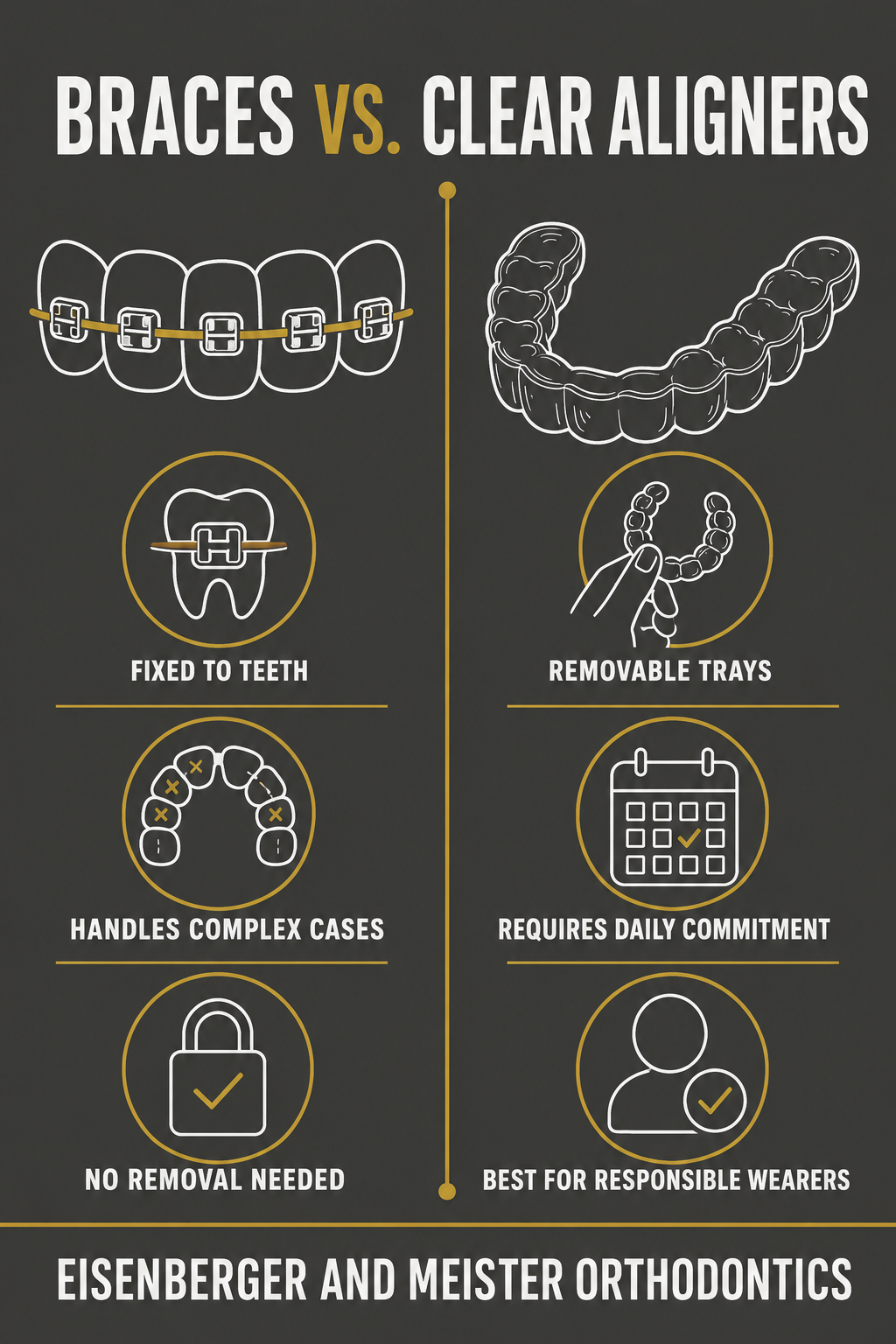
Braces vs. Clear Aligners
Traditional braces remain one of the most reliable tools in orthodontics, offering precise control for a wide range of bite and alignment issues. Clear aligners like Invisalign are another option for children who are responsible enough to wear them consistently, since aligners require a genuine commitment to keeping the trays in for the recommended hours each day. Your orthodontist will help weigh the pros and cons based on your child’s specific needs and lifestyle before recommending a path forward.
Timing Matters
The American Association of Orthodontists recommends that children have their first orthodontic evaluation by age seven. At this stage, enough permanent teeth have emerged to identify potential issues early, even if treatment does not begin right away. Proactive evaluation is one of the most valuable things a parent can do, and research reinforces why it matters. According to the CDC, approximately 34 million school hours are lost each year in the United States due to unplanned and emergency dental care, underscoring how much preventive and timely oral health interventions can protect a child’s daily life.
How to Support Your Child During Treatment
Once treatment begins, your role as a parent shifts from preparing to supporting. There will be adjustments, occasional discomfort after appointments, and dietary changes to navigate. Keeping communication open with your child and with the orthodontic team makes the entire process smoother for everyone.
Building Good Habits at Home
Help your child develop a consistent hygiene routine that works around their orthodontic appliances. The following habits are essential for protecting both the appliances and your child’s oral health throughout teen orthodontic treatment:
- Brushing thoroughly after every meal
- Flossing carefully around brackets or aligners
- Avoiding sticky, hard, or chewy foods that can damage appliances
- Rinsing with water after eating, when brushing is not immediately possible
Making these routines feel normal rather than burdensome keeps your child on track and reduces the likelihood of setbacks during treatment.
Staying Consistent with Appointments
Regular check-in appointments are essential to keeping treatment on schedule. Missing visits can extend timelines and make corrections harder to achieve. If something feels off between appointments, such as a loose bracket or a shifted wire, reach out to the office right away so the team can address it before it becomes a bigger issue.
Start Your Child’s Orthodontic Journey with Eisenberger and Meister Orthodontics
We believe an informed, prepared family is a confident family. Dr. Matthew Meister completed his advanced specialization in Orthodontics and Dentofacial Orthopedics at NYU College of Dentistry, where he earned the prestigious Hyman J. Schorr Award for outstanding achievements. His commitment to personalized, patient-centered care means your child will receive a treatment plan designed specifically for their needs, in a welcoming environment where families always feel at home.
If you are ready to take the first step, we invite you to contact our office and schedule your child’s consultation. Our team is here to answer every question and help your family move forward with confidence.