
Properly aligned teeth fit together when you bite, including the back teeth. Even if your front teeth look straight, one side may hit first or chewing may feel awkward. An orthodontist can help you better understand whether this reflects an alignment issue or another cause.
This video discusses when to consider straightening teeth:
What properly aligned teeth look and feel like
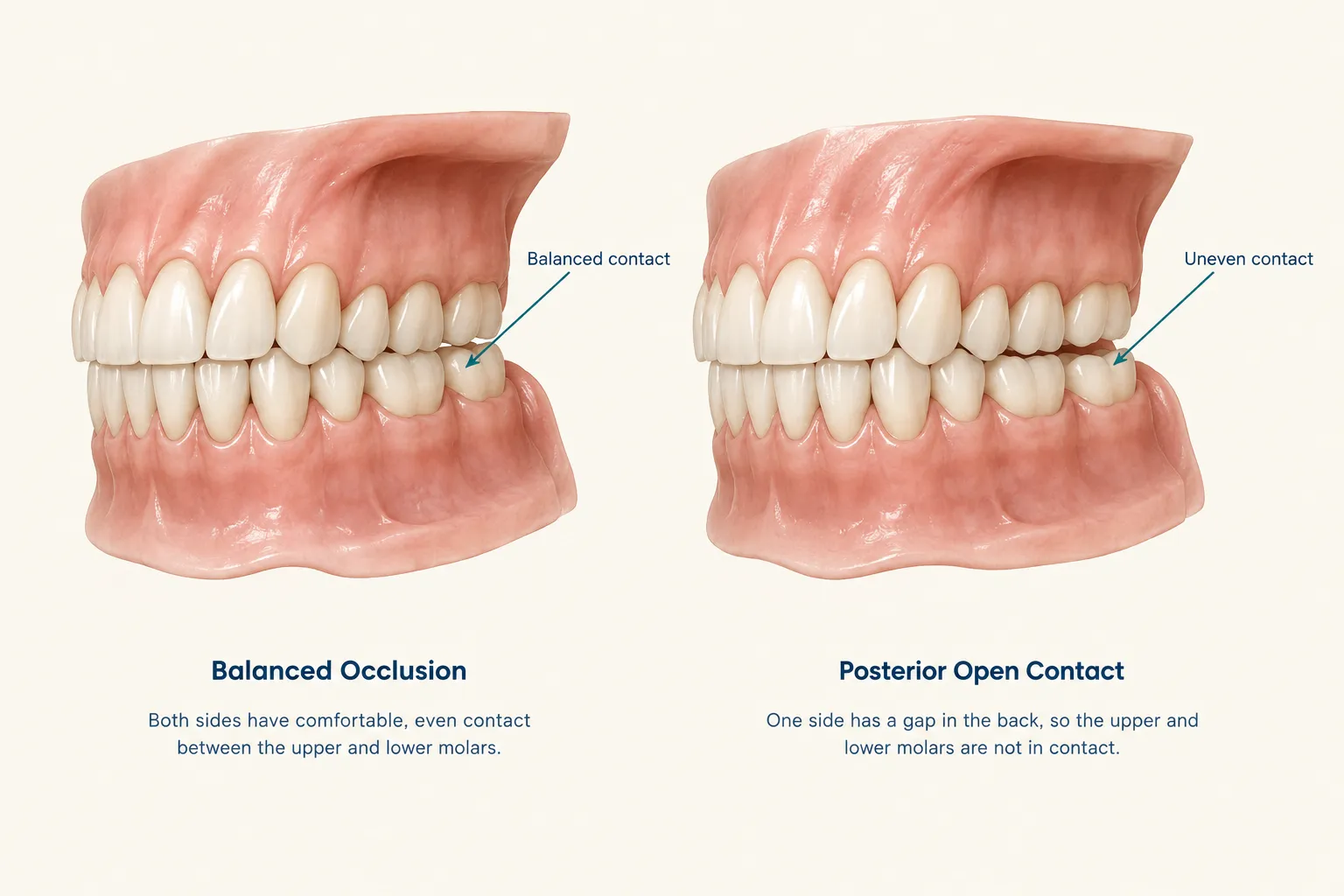
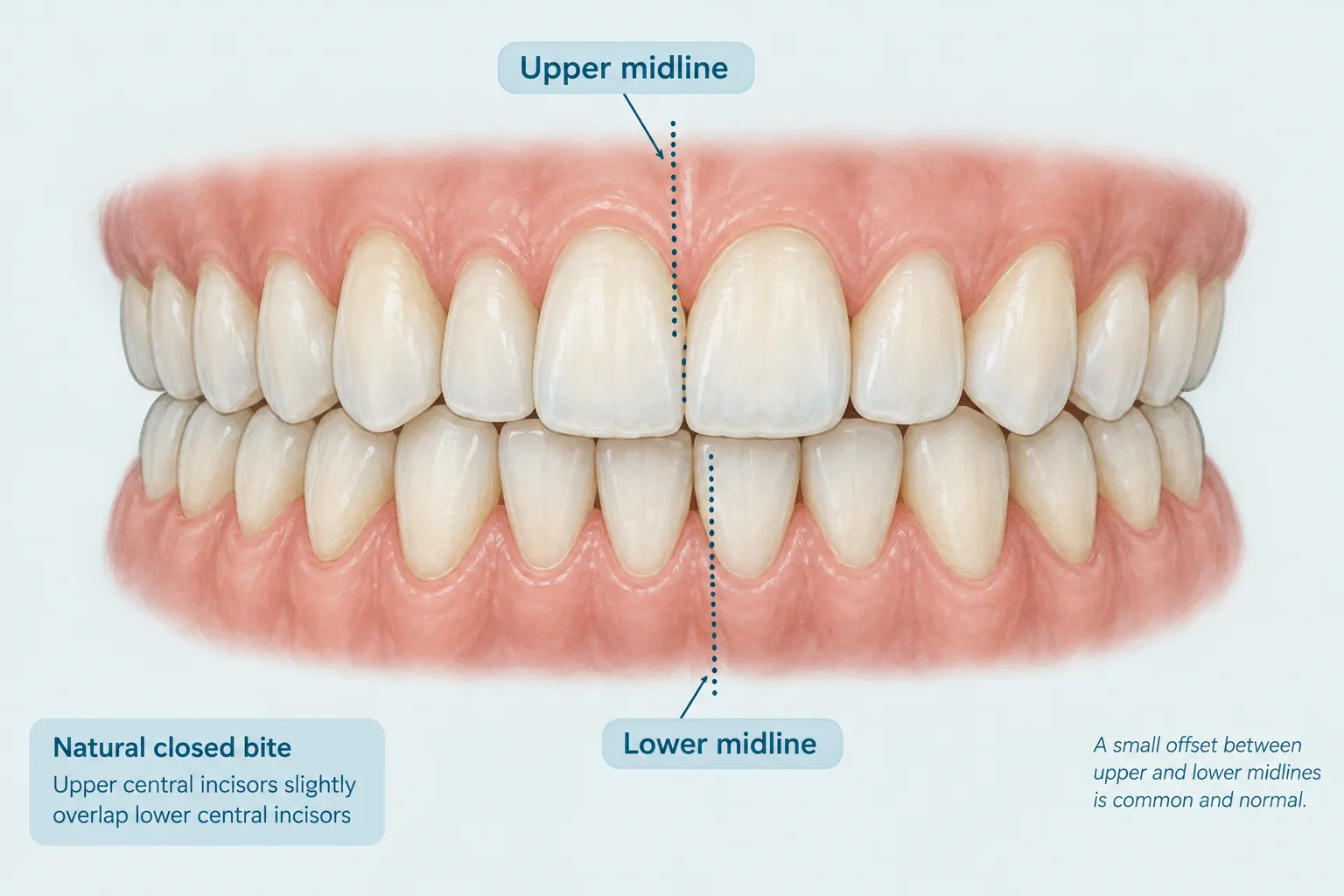
Bring your teeth together as you normally would. The upper front teeth typically sit a little in front of and overlap the lower front teeth. In back, the teeth should meet comfortably on both sides. You do not need to hold your teeth together when your jaw is at rest.
Your front teeth cannot show you every back-tooth contact. An orthodontist looks at where teeth sit within each arch and how the two arches meet:
|
What you notice |
What it may mean |
What matters more than appearance |
|---|---|---|
|
Crowding or gaps |
Individual teeth may not sit in a balanced position |
Whether cleaning is difficult and whether the bite is comfortable |
|
Upper teeth overlap lower teeth |
A small overlap is typical |
Whether the overlap is unusually deep or the front teeth do not meet at all |
|
Back teeth touch differently on each side |
Bite contacts may be uneven |
Whether you consistently shift your jaw or struggle to chew |
|
Front tooth centerlines do not match |
The dental midlines differ |
Whether there is also a bite or jaw-position concern |
Do the upper and lower midlines have to match?
The midline runs between the two front teeth in each arch. An orthodontist looks at it alongside the rest of your bite. A slight difference between the upper and lower midlines can coexist with a comfortable bite. Your smile need not be perfectly symmetrical: tooth shape, tooth position, and jaw position all affect what you see. Mention a new or pronounced difference, especially if your bite also feels uneven.
What an uneven bite can look like
An overbite describes how much the upper front teeth cover the lower front teeth vertically; a very deep overlap may merit assessment. In an underbite, the lower front teeth sit ahead of the upper front teeth. A crossbite occurs when some upper teeth close inside their lower counterparts. With an open bite, some opposing teeth do not meet when other teeth are together. An examination can establish which pattern, if any, applies to you.
The American Association of Orthodontists’ descriptions of common bite problems can help you name what you see, but a photo or diagram cannot diagnose your bite.
How bite alignment affects daily life
Proper alignment supports comfortable daily functions such as biting and chewing. When back teeth do not meet evenly, chewing efficiency may suffer; you might favor one side or notice uneven wear. Misaligned teeth may also make brushing and flossing harder, which can affect oral health and increase the risk of problems such as gum disease. Tell your clinician what you notice; these signs alone cannot establish the cause of a dental health problem. The American Association of Orthodontists explains how tooth alignment relates to bite function.
Ask a clinician about jaw joint discomfort too. Pain can have several causes, and moving teeth will not necessarily relieve jaw symptoms. A single crooked tooth does not by itself mean you have a bad bite.
A quick bite self-check
Face a mirror and close gently into your normal bite. Avoid pushing your lower jaw forward to make the teeth line up.
-
Look at the front: do the upper front teeth sit slightly ahead of the lower ones? Do the teeth overlap heavily, or is there a gap between them when you bite?
-
Look at each side: do the back teeth make contact on both sides, or does one side seem to hit first? Does your jaw move sideways before the teeth settle?
-
Notice everyday use: do you regularly avoid chewing on one side, catch your cheek while eating, or have trouble cleaning crowded areas?
A mirror cannot show every molar contact or explain an off-center midline. Note what you see so you can describe it at an appointment. If a tooth suddenly feels high after dental work, or you have pain or a broken tooth, contact your dentist. Avoid trying to adjust the bite yourself; jaw exercises cannot replace an examination of the teeth and bite.
When to arrange an orthodontic evaluation
Arrange an assessment if your back teeth seem to miss on one side, your jaw shifts as you close, or your front teeth cannot meet comfortably. A tooth that wears or chips at a contact point also deserves attention. You can bring up crowding that interferes with brushing and flossing, persistent cheek biting, or a changing bite. None of these signs alone establishes a need for braces or aligners.
Children’s bites can look uneven as their teeth change. An early orthodontic evaluation can identify a crossbite or crowding and determine whether to act now or monitor it. Adults should also seek an opinion about a new bite change, even if their teeth used to look straight. For facial pain or headaches, seek a clinical assessment rather than assuming tooth alignment is the cause.
“A child’s first orthodontic checkup is recommended when a problem is recognized, and no later than age 7.” – American Association of Orthodontists
What the evaluation can clarify
An orthodontist examines where your teeth touch in your usual bite and compares the upper and lower arches. They also consider tooth and jaw position. That assessment can tell you whether an uneven-looking smile needs care for a functional or dental reason.
Some bites need monitoring, while a dental issue may call for care from your dentist. Your orthodontist can discuss orthodontic treatment if the findings warrant it. Braces and clear aligners can move teeth; your bite, alignment issues, and individual needs guide the choice. Straight teeth alone do not guarantee a comfortable bite. Treatment stages are covered in Tooth Alignment Process: What to Expect in 2026.
Where traditional braces fit
Traditional braces use brackets attached to teeth and a wire; braces apply gentle, sustained pressure to move teeth over time. Clear aligners are another possibility for some patients. An orthodontist considers back-tooth contacts, your bite pattern, and your goals before recommending either option.
A next step for Passaic-area families
Eisenberger and Meister Orthodontics offers personalized assessments for children, teens, and adults in Passaic, New Jersey. At a complimentary consultation, you can discuss braces, clear braces, Invisalign, and custom LightForce braces if appropriate. You can also ask about financing and appointment convenience. The team can explain how your teeth meet and whether your bite needs care in a welcoming office.
Families in Passaic, Clifton, Garfield, Wallington, Rutherford, East Rutherford, Carlstadt, Lodi, Hasbrouck Heights, Wood-Ridge, Lyndhurst, Nutley, Belleville, and Bloomfield can bring an uneven bite concern to the practice. Properly aligned teeth should work together; they need not look identical. If your bite feels off even though your teeth look straight, ask Eisenberger and Meister Orthodontics for a personalized assessment.
FAQ
How should perfectly aligned teeth look?
The upper front teeth usually sit slightly ahead of and overlap the lower front teeth, while the back teeth meet comfortably on both sides when you bite. Perfect visual symmetry is not required; how the bite functions matters too.
How rare are perfectly aligned teeth?
There is no single visual standard for “perfectly aligned,” so a rarity figure would not tell you whether your own bite needs care. A small midline difference or natural differences in tooth shape can coexist with a comfortable bite. An orthodontist can assess whether a visible difference is accompanied by a functional concern.
How do I know if my teeth are aligned properly?
Gently close into your normal bite and notice whether the back teeth meet on both sides, the upper front teeth slightly overlap the lower ones, and your jaw does not slide to find a fit. This self-check cannot diagnose an alignment problem; an orthodontic examination can evaluate the contacts and jaw position.