
Switching from braces to Invisalign mid-treatment may be possible. Your orthodontist will need to assess your bite, identify the movements left to make, and decide whether aligners can finish the job. If braces are bothering you, ask for that assessment before having the brackets removed.
Expect a new treatment plan and a discussion about cost and your finish date. If aligners can handle the remaining work and you can keep up with the wear schedule, a change may suit you.
Is switching from braces to Invisalign possible mid-treatment?
Yes, if aligners suit the remaining part of your treatment. Your original braces plan tells the orthodontist where you started, but your bite today determines the next step. Someone close to finishing major corrections faces a different choice than someone with substantial bite work ahead.
Some patients use braces for difficult tooth movements and aligners for the finishing stages. Your orthodontist can tell you whether that sequence fits your current teeth and bite, regardless of how long you have been in braces.
When does switching make sense?
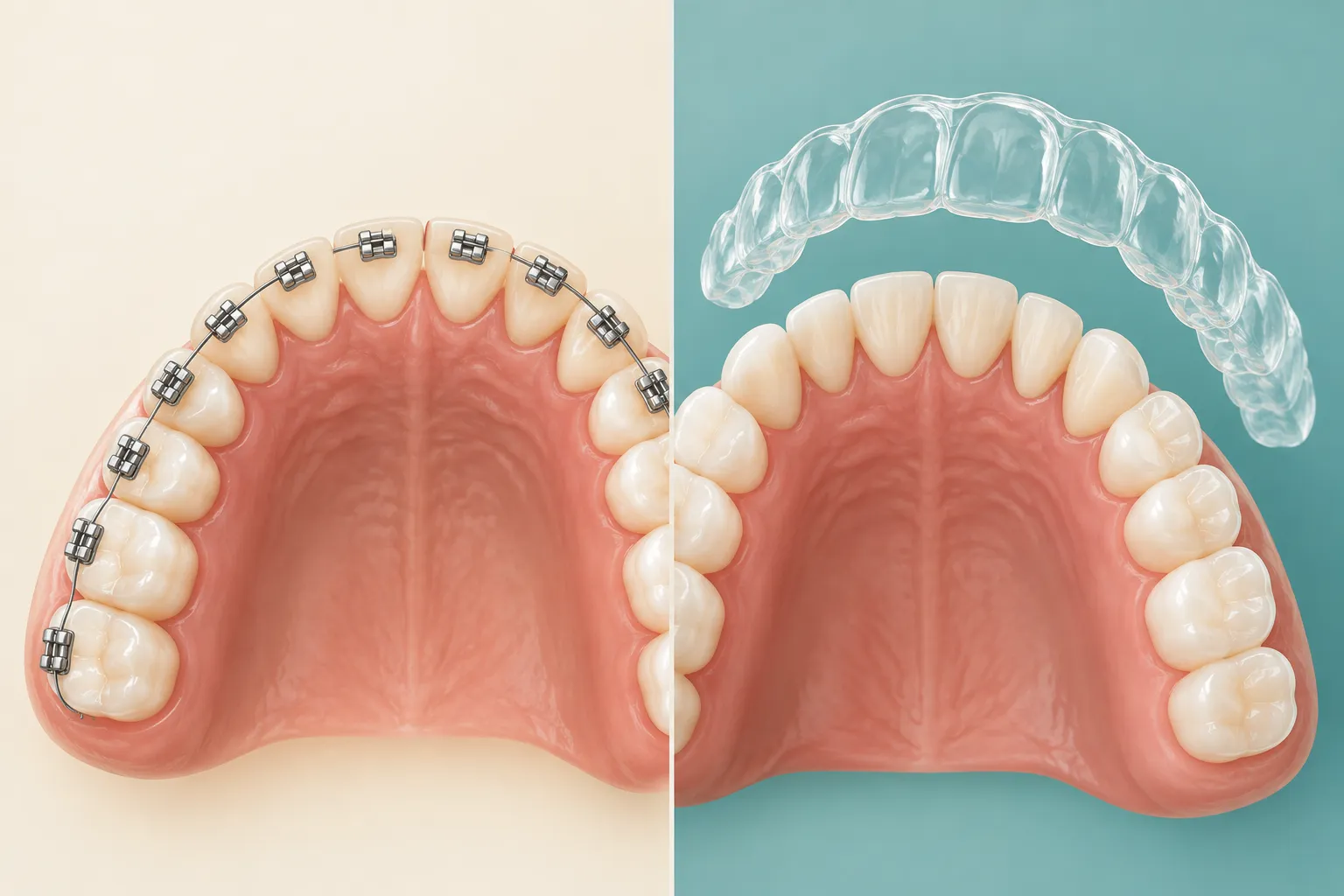
Clear aligners are removable and less noticeable than traditional metal braces. You may prefer them if you dislike wearing braces at work or find oral hygiene around brackets difficult. Invisalign trays require consistent wear: remove them for food and drinks other than water.
“Typically, each aligner is worn for 1 week at a time, at least 22 hours a day.” – American Association of Orthodontists
Complex bite issues or tooth movements may call for the control of fixed braces. The American Association of Orthodontists notes that some cases are treated more predictably with braces. If wearing the trays consistently is difficult, staying with braces may spare you a detour.
|
Consideration |
Staying with braces |
Switching to Invisalign |
|---|---|---|
|
Daily routine |
Braces require cleaning around brackets and wires and avoiding sticky foods |
Remove aligner trays for meals, clean teeth and trays, and follow the prescribed wear schedule |
|
Appearance |
Metal brackets remain visible; ask whether a less visible fixed option is suitable |
Clear trays are less noticeable, though attachments may be needed |
|
Case demands |
May be preferable for movements your orthodontist wants to control with fixed appliances |
Depends on whether the remaining movements and bite goals suit aligners |
|
Planning |
Continues under the existing plan, subject to normal adjustments |
Requires a new assessment and aligner plan; timing and charges can change |
If appearance is your main concern, ask whether clear braces or custom LightForce braces could work for you. Your orthodontist will still need to assess the movements left to make.
What must be re-evaluated before a switch?
Your orthodontist should compare your current teeth with the original orthodontic treatment goals. Straight-looking front teeth do not tell the whole story. An assessment includes:
-
Remaining tooth movements: Which teeth still need to move, how much control is needed, and whether aligner attachments or other aids would be required.
-
Bite and jaw relationship: Whether the upper and lower teeth meet properly, and what bite adjustments still need to happen.
-
Current oral health: Whether the teeth and gums are healthy enough to proceed with the proposed plan.
-
The treatment record: Current photos and digital scans, with imaging if clinically indicated, to plan from where your teeth are today.
-
Your routine: Whether you can wear and care for removable trays as prescribed, and whether compliance issues might make fixed braces a better fit.
A photo or the number of months you have worn braces cannot settle the question. Your bite may still need work, even if your teeth look straighter.
How does the change from braces to aligners work?
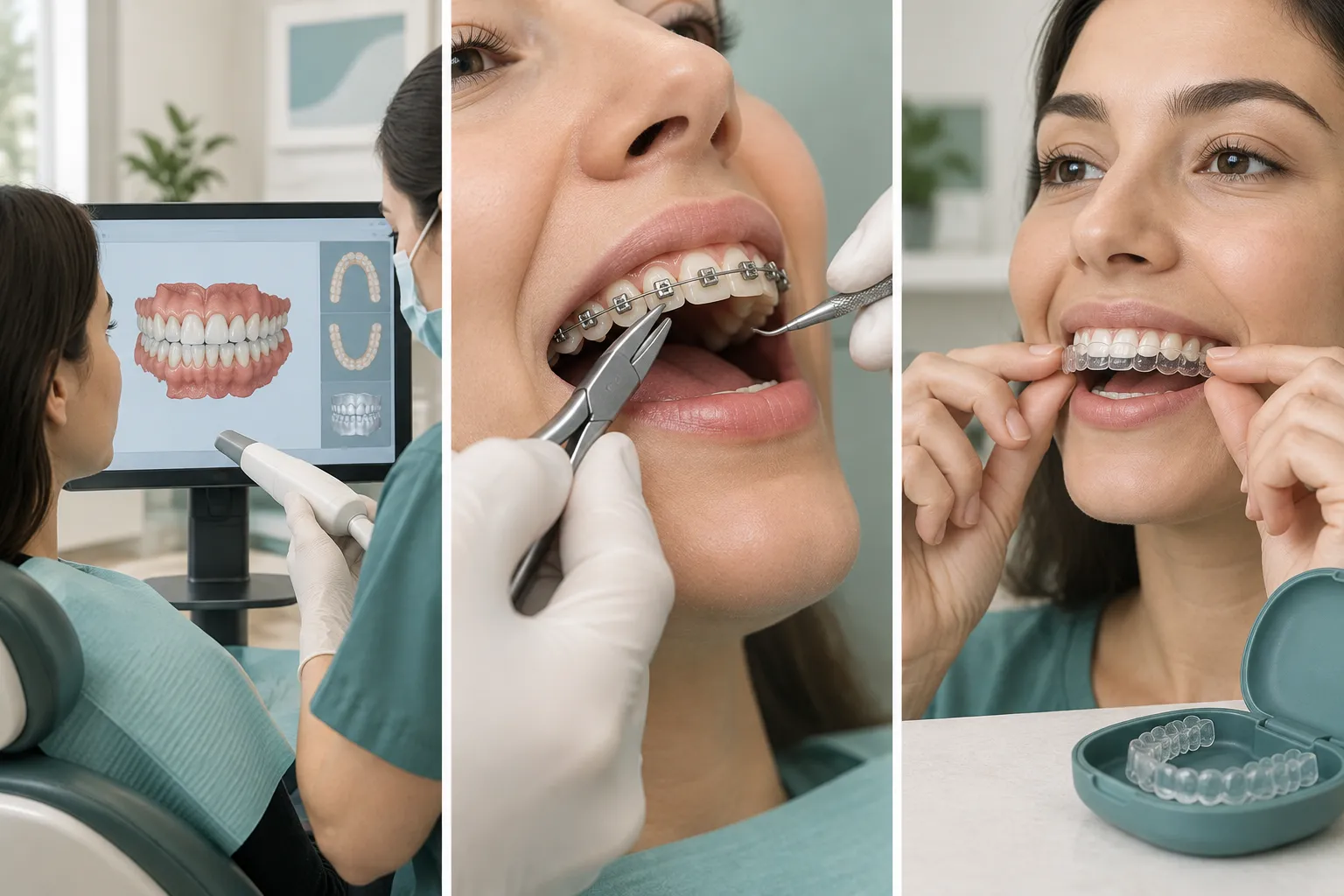
Your orthodontist examines your progress and asks what result you want. If Invisalign works for the remaining movements, they plan from your current tooth positions and explain any attachments or other aids. You should also get an updated timeline and a clear account of the charges.
Your orthodontist coordinates braces removal with the start of the aligner plan and tells you when to wear the first trays. Keep the brackets on until that plan is ready. An unplanned pause could interrupt the sequence of tooth movements.
Wear your aligners as prescribed and attend follow-ups after the switch. If a tooth does not track as planned, your orthodontist may fine-tune treatment with refinement trays. You will need retainers after active treatment, whether you finish with braces or aligners.
Will switching take longer or cost more?
No single treatment time or price estimate fits every switch. Your orthodontist needs time to scan your teeth and plan the aligners. Your finish date might stay close to the original estimate, or treatment could take longer. Ask how the movements you still need affect that estimate.
Your current treatment agreement, the braces care you have already received, and the new aligner plan all affect the cost. Financing terms may also change your payments. Ask for a breakdown of your remaining balance and any added charges before agreeing to remove the braces.
Eisenberger and Meister Orthodontics offers complimentary consultations and flexible financing, including 0% APR options without hard credit checks. You can discuss payment alongside the clinical plan before committing; the treatment fee will depend on your case.
Questions to ask before removing your braces
For a practical braces vs. Invisalign comparison, take these questions to your orthodontist and compare the answers with your current braces plan:
-
What movements and bite corrections remain, and which of them would aligners handle?
-
Would attachments or other aids be needed, and would any work be easier to finish with braces?
-
What is the estimated finish date for each option, including the transition?
-
How would the change affect my current agreement, total balance, and payment schedule?
-
What happens if the trays do not track as expected?
-
How will we coordinate removal and the start of aligner wear?
Eisenberger and Meister Orthodontics welcomes patients from Passaic and Clifton, as well as nearby communities including Garfield, Wallington, Rutherford, East Rutherford, Paterson, Nutley, Bloomfield, Belleville, Lyndhurst, Woodland Park, Little Falls, and Totowa. During a personalized consultation, you can discuss braces and Invisalign with a practice that treats children, teens, and adults and holds Invisalign Sapphire Provider status. Ask which option best handles the movements you still need.
The bottom line
Switching makes sense when aligners can handle your remaining tooth and bite movements, you can keep to the wear routine, and you are comfortable with the revised time and cost. If braces offer better control, completing treatment with them may be more predictable or take less time. Eisenberger and Meister Orthodontics offers a complimentary consultation so you can make that choice before any brackets come off.
FAQ
Is switching from braces to Invisalign worth it?
It can be worth it if aligners can complete your remaining treatment and you value a removable, less visible appliance enough to accept any change in cost or timing. If your bite still needs movements better managed with braces, staying with your current plan may be the better choice.
How long does it take to switch from braces to Invisalign?
There is no fixed switch time. Your orthodontist first reassesses your teeth, plans the aligners, and coordinates removal of the braces with the start of the new plan. Ask for a case-specific transition schedule and an updated estimate for when active treatment will finish.