
This teeth whitening guide for adults in 2026 compares teeth whitening options: office treatment, fitted trays, and whitening strips. The right choice depends on your starting point, schedule, and upfront cost: professional whitening offers supervision, while strips are the cheaper option. Crowns will not change color, and a suddenly dark tooth needs a diagnosis before whitening.
Teeth whitening guide for adults in 2026: options at a glance
|
Option |
Up-front price to budget |
Time and convenience |
What to expect |
|---|---|---|---|
|
Over-the-counter strips or kits |
Roughly $10–$100 per course |
Follow the product schedule at home, often over weeks |
Modest, variable improvement; fit and coverage vary |
|
Dentist-provided take-home trays |
Roughly $100–$600 |
Initial fitting and repeated home sessions, commonly over one to a few weeks |
More individualized application and gradual change |
|
In-office whitening |
Roughly $300–$1,000 |
A scheduled appointment, often around an hour or longer |
The quickest visible change, under professional supervision |
These are broad examples, not fees quoted by Eisenberger and Meister Orthodontics. An exam, cleaning, or touch-up may cost extra. Ask for the total in writing. The best value depends on your stain and whether you can follow the schedule, not a promise of several shades lighter.
Is professional whitening covered by insurance?
Whitening is an elective cosmetic service, and the American Dental Association (ADA) notes that dental plans may exclude tooth whitening. Budget for the full cost unless your plan covers it.
What happens with each whitening option?
Store-bought products: low entry cost, more guesswork
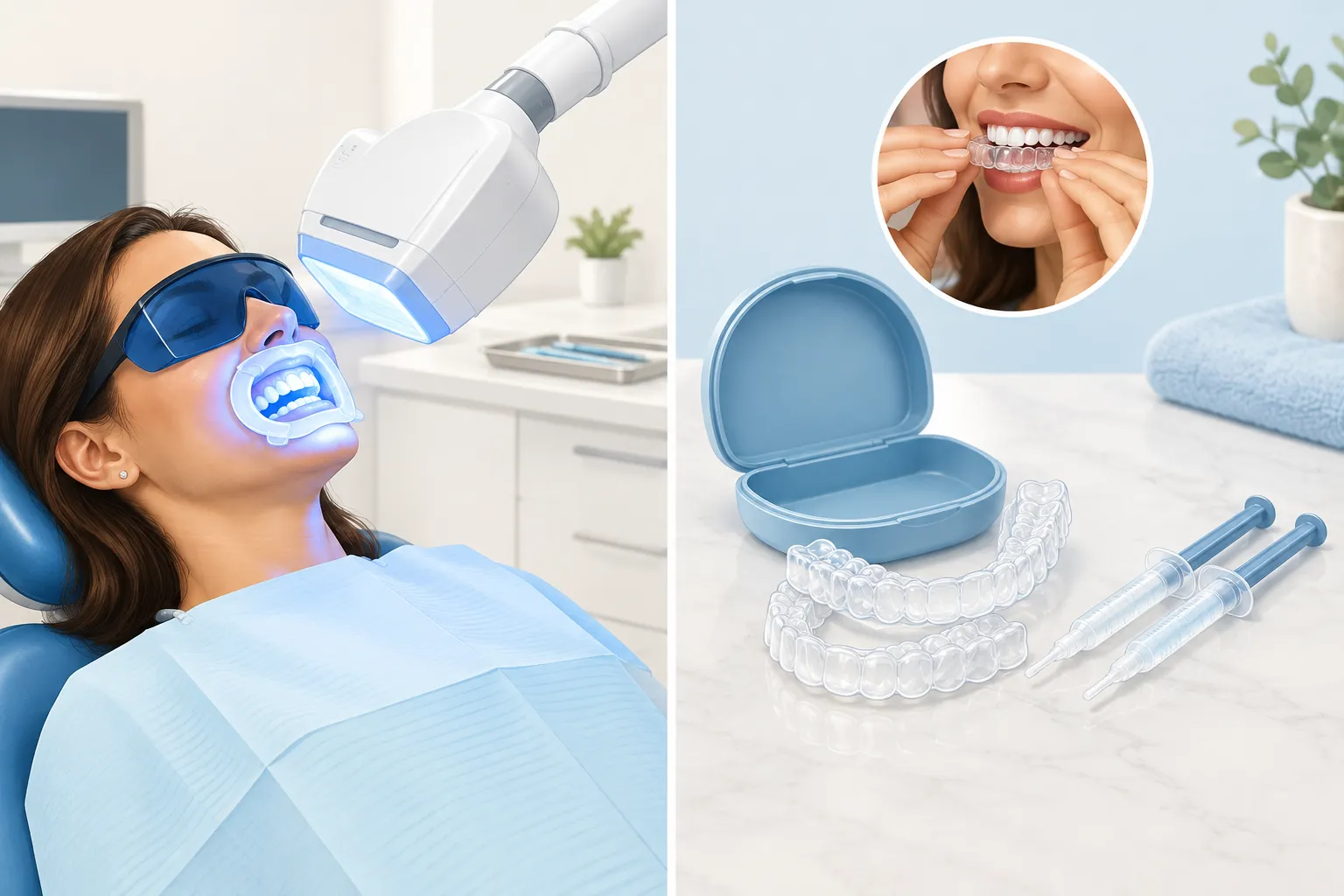
Peroxide-based whitening agents in strips and gels can lighten natural tooth enamel. Whitening toothpaste primarily removes surface stains. One-size-fits-most strips may miss crowded surfaces, and whitening gel can irritate gums. Follow the directions on whitening products; longer wear is not a safer shortcut.
If you have mild stains, healthy teeth and gums, and time to spare, a store-bought kit may be enough. Pain or a newly dark tooth calls for an examination instead.
Dentist-provided trays: a middle path
With fitted trays, a dental professional assesses your mouth and gives you whitening gel and a wear schedule. You use them for home whitening over several weeks or as directed. If you experience temporary sensitivity or gum irritation, ask the clinician to adjust the plan.
You still need to use the tray as directed. Too much gel or a poor fit can irritate gums, and tooth movement or new dental work may mean you need another tray.
In-office whitening: faster, with an appointment
During an in-office visit, a clinician checks your teeth and gums, protects soft tissue, applies gel, and monitors your comfort. Some professional treatments use an LED light, but it does not guarantee a particular shade. This option may fit an event deadline, though it costs more and may cause temporary tooth sensitivity.
What will actually change color?
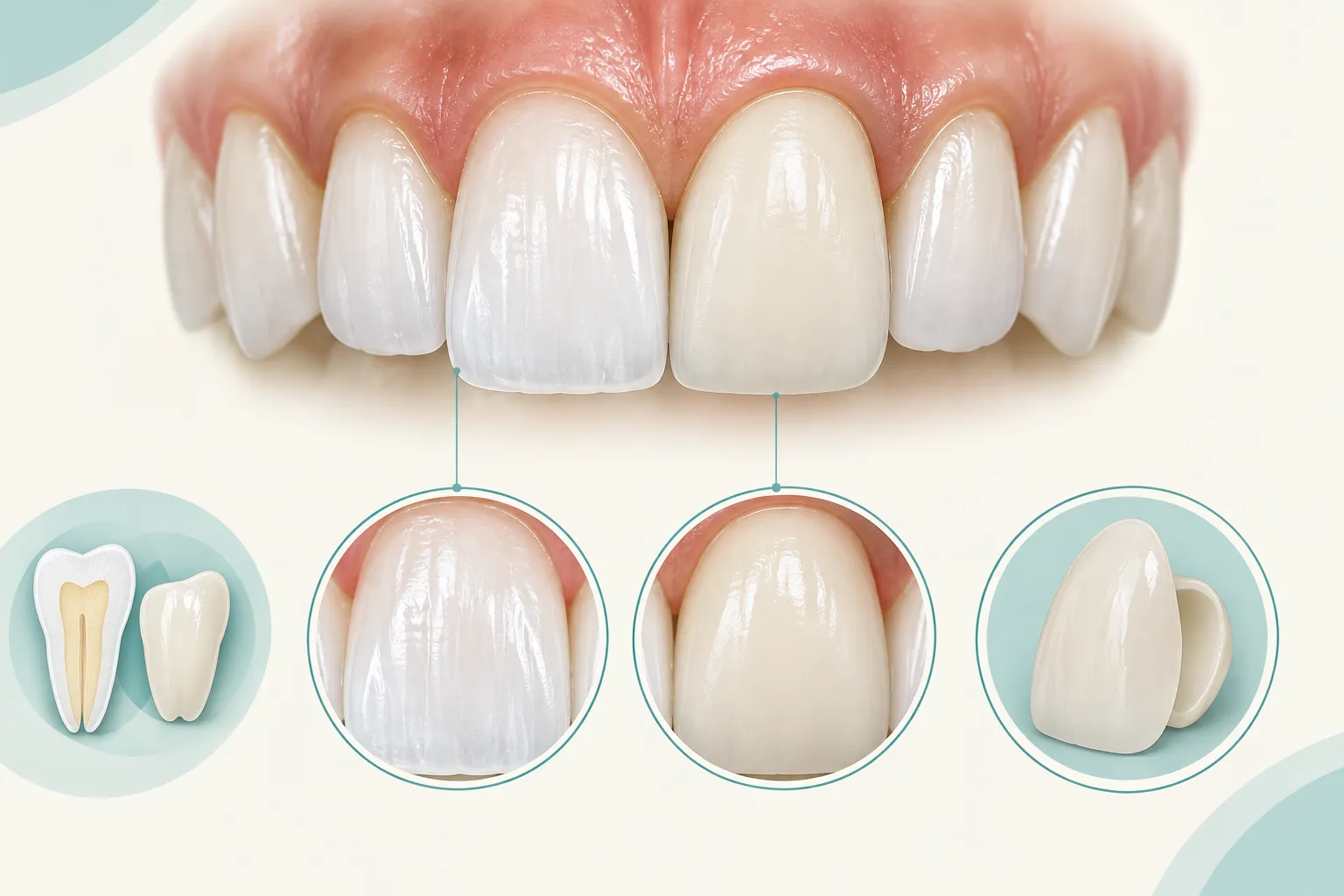
Whitening changes the color of a natural tooth, not crowns, veneers, or tooth-colored fillings. If visible restorations match your current shade, brightening adjacent teeth could make them stand out. Discuss existing restorations and the order of any planned dental work with your dentist before committing.
“Only natural teeth can be whitened, not tooth-colored restorations.” – American Dental Association
Yellowish staining often responds better than brown or gray discoloration. A single dark tooth or a color change after an injury needs a diagnosis. A cleaning removes surface buildup; bleaching changes the shade of natural teeth.
The ADA’s patient guidance on teeth whitening describes how the original stain color affects the likely result.
How long do results last? There is no fixed expiration date: results may remain noticeable for several months, but staining foods, drinks such as coffee, tea, and red wine, tobacco, and oral hygiene affect how quickly color returns. Brush twice daily, keep routine dental visits, and discuss touch-ups; new pain calls for an examination.
Safety, sensitivity, and orthodontic timing
Peroxide whitening can cause temporary sensitivity or gum irritation. Tell your clinician about exposed roots, cracks, cavities, inflamed gums, or past reactions. Treat active problems first; stop a home product and seek advice if discomfort is severe or persists.
Wearing braces? Gel reaches exposed enamel but not the tooth surface beneath each bracket, which could leave uneven color after removal. Discuss waiting until your braces come off and your teeth have been cleaned. Wearing Invisalign or retainers? An aligner or retainer is not automatically a whitening tray. Your clinician can advise you on timing and whether you need a separate tray.
If pregnant or breastfeeding, discuss elective whitening with your dental professional before starting.
Questions to ask before you choose
Bring these questions to your dentist or orthodontist:
-
What is causing my discoloration, and are my teeth and gums ready?
-
Will my fillings, crowns, or veneers match afterward?
-
What result, timeline, and total fee are realistic? Include assessment, supplies, and follow-up.
-
How will we manage sensitivity and time whitening around braces or aligners?
For an event deadline, ask about in-office whitening. For a flexible schedule, consider take-home trays. For mild stains and a lower initial price, a store-bought product may suffice.
Whitening for adults across North Jersey
Eisenberger and Meister Orthodontics offers teeth whitening alongside adult orthodontic care in Passaic, New Jersey. Patients from nearby North Jersey communities can ask the team how to time whitening around braces or Invisalign and request a personalized fee quote.
Passaic is close to communities across North Jersey and nearby New York. The following broad county-by-county list focuses on towns and cities in the approximately 20-mile vicinity; distance and driving time vary, and this is not a list of office locations or a defined service radius:
Passaic, Bergen, and Essex counties
|
County |
Nearby towns and cities |
|---|---|
|
Passaic |
Passaic, Clifton, Paterson, Haledon, North Haledon, Prospect Park, Hawthorne, Totowa, Woodland Park, Little Falls, Wayne, Pompton Lakes, Bloomingdale, Wanaque, Ringwood |
|
Bergen |
Garfield, Lodi, Wallington, East Rutherford, Rutherford, Carlstadt, Hasbrouck Heights, Wood-Ridge, Moonachie, Teterboro, Hackensack, South Hackensack, Maywood, Rochelle Park, Saddle Brook, Elmwood Park, Fair Lawn, Glen Rock, Paramus, River Edge, New Milford, Teaneck, Bogota, Ridgefield Park, Little Ferry, Ridgefield, Palisades Park, Leonia, Fort Lee, Englewood, Englewood Cliffs, Tenafly, Bergenfield, Dumont, Cresskill, Demarest, Closter, Haworth, Oradell, Emerson, Westwood, Washington Township, Hillsdale, Park Ridge, Montvale, Woodcliff Lake, Ho-Ho-Kus, Ridgewood, Waldwick, Midland Park, Wyckoff, Franklin Lakes, Oakland, Mahwah, Ramsey, Allendale, Upper Saddle River, Saddle River, North Arlington, Edgewater, Cliffside Park, Alpine, Northvale, Norwood, Old Tappan, Harrington Park, River Vale |
|
Essex |
Newark, Belleville, Bloomfield, Nutley, Glen Ridge, Montclair, Verona, Cedar Grove, West Orange, Orange, East Orange, South Orange, Maplewood, Millburn, Livingston, Roseland, Caldwell, North Caldwell, West Caldwell, Fairfield, Essex Fells, Irvington |
Hudson, Morris, Union, Somerset, and Rockland counties
|
County |
Nearby towns and cities |
|---|---|
|
Hudson |
Kearny, Harrison, East Newark, Secaucus, Jersey City, Hoboken, Union City, Weehawken, West New York, North Bergen, Guttenberg, Bayonne |
|
Morris |
Lincoln Park, Montville, Pequannock, Riverdale, Butler, Kinnelon, Boonton, Boonton Township, Mountain Lakes, Parsippany-Troy Hills, Denville, Rockaway, Rockaway Township, Dover, Wharton, Morris Plains, Morristown, Morris Township, East Hanover, Hanover, Florham Park, Chatham, Chatham Township, Madison |
|
Union |
Elizabeth, Hillside, Union, Springfield, Summit, New Providence, Berkeley Heights, Mountainside, Westfield, Roselle Park, Roselle, Kenilworth, Cranford, Garwood, Linden, Scotch Plains, Fanwood, Clark, Rahway, Plainfield |
|
Somerset |
North Plainfield, Watchung, Green Brook |
|
Rockland County, NY |
Suffern, Airmont, Montebello, Spring Valley, Nanuet, Pearl River, Chestnut Ridge, New City, Nyack, West Nyack, Orangeburg, Piermont, Tappan, Blauvelt |
A practical verdict
Choose an office visit for speed, take-home trays for flexibility, or strips for the lowest initial cost. First, confirm that the stain can be bleached and crowns will still match. Ask the Passaic team for a plan covering orthodontic timing, sensitivity, and price.
FAQ
Is it better to whiten my teeth at home or in the office?
In-office whitening is better for a quicker supervised change. Professional take-home trays suit a gradual schedule, while over-the-counter kits have a lower entry price. Your teeth, dental work, and sensitivity determine which trade-off makes sense.
Why did my teeth go back to yellow after whitening?
Whitening is not permanent. Coffee, tea, tobacco, and everyday staining can change color again over time; discuss cleaning and a suitable touch-up plan rather than repeatedly bleaching without guidance.