
If you are considering teeth whitening with braces, save bleaching for a conversation after fixed brackets come off. Gel cannot reach the enamel beneath each bracket as it reaches the exposed tooth, and the shade may look uneven after removal. For now, cleaning around the braces helps prevent stains.
Braces and whitening: can you whiten teeth with brackets on?
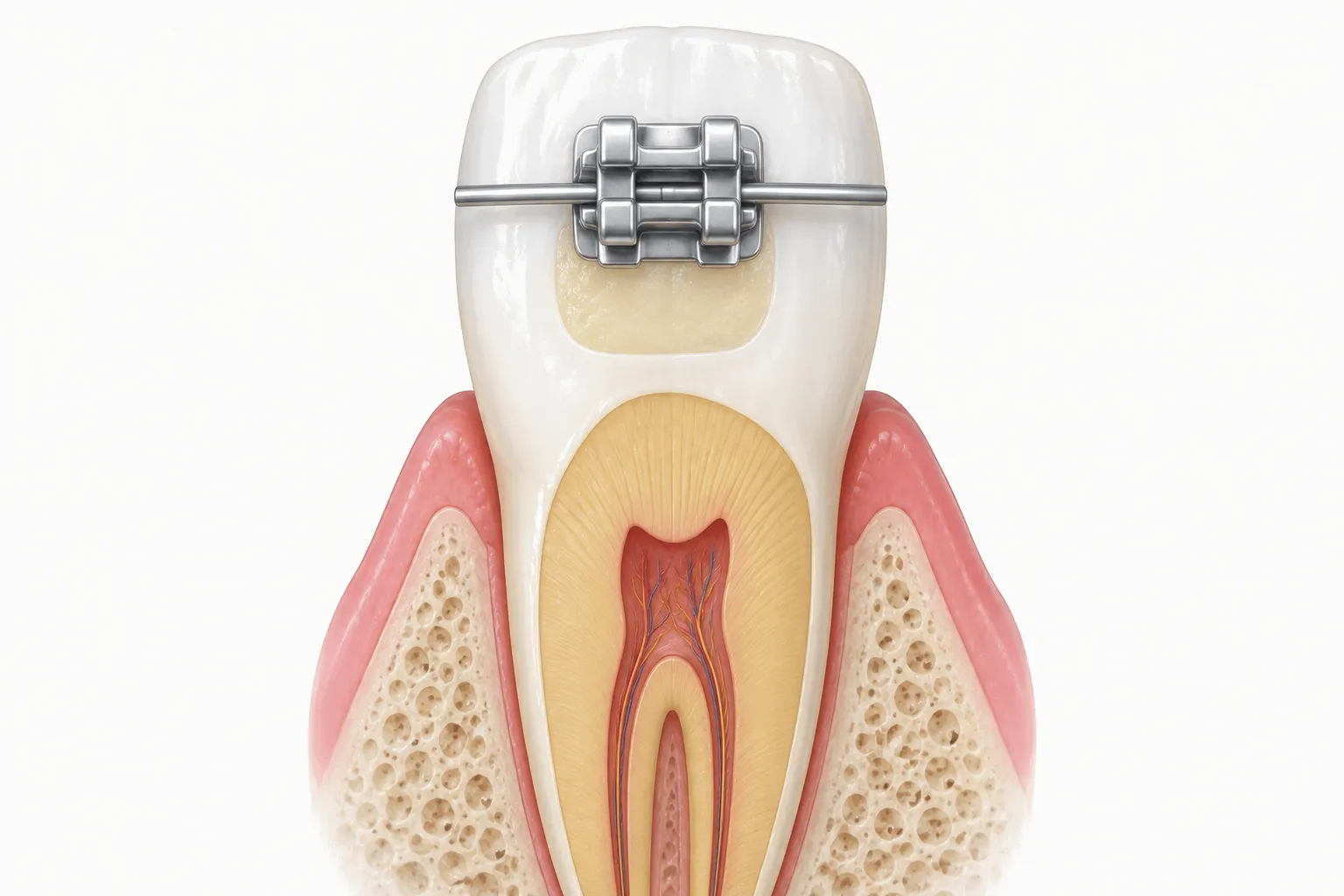
Traditional braces and ceramic braces both cover part of each tooth. Strips, trays, and in-office whitening agents touch the exposed enamel more easily than the area under a bracket. That covered patch may look darker when the bracket comes off. You cannot count on an even shade from whitening products used during fixed-brace treatment.
What looks like a stain may have another cause. Surface staining from food and drinks may improve with cleaning, while white spots near brackets can signal enamel demineralization. A yellow-looking area could be plaque, stain, or your natural tooth color. Tell your orthodontist or dentist about chalky patches, new sensitivity, or changes around a bracket before using bleach on them.
Removable aligners leave the front of the teeth uncovered. Even so, only put whitening gel in an aligner if your treating clinician recommends it; fit, wear time, and sensitivity matter.
What to do while brackets are attached
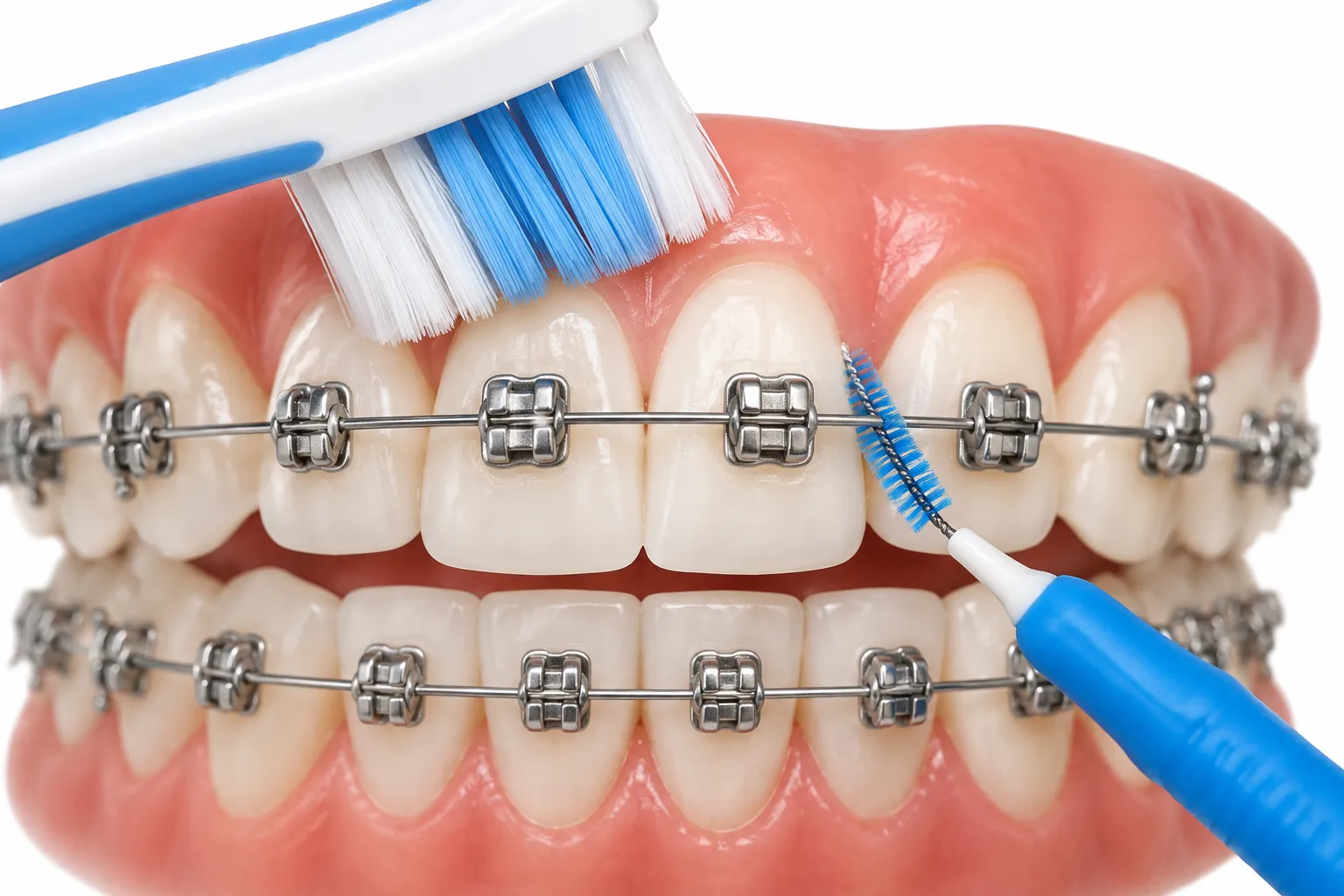
While wearing braces, use a soft-bristled brush and fluoride toothpaste to clean around brackets, including the top and bottom edges. Electric toothbrushes can also be part of your hygiene routine if you use gentle pressure around brackets. Clean between teeth each day with an orthodontic flosser, floss threader, or interdental brush where appropriate. Rinse with water after coffee, tea, or dark sodas if you cannot brush, and keep your regular dental cleanings.
Brushing and cleaning between teeth help prevent stains while you wear braces. Whitening toothpastes generally remove stains from the surfaces you can reach, and some contain abrasives. Use gentle pressure. Brushing harder will not expose the enamel under a bracket.
|
Option while wearing fixed braces |
What it can do |
Main limitation |
|---|---|---|
|
Brushing, interdental cleaning, and dental cleanings |
Remove plaque and some surface stains; support gum and enamel health |
Do not bleach natural tooth color |
|
Fluoride whitening toothpaste |
Help lift accessible surface stains, depending on the formula |
Does not bleach enamel covered by brackets; abrasive brushing may irritate tissues |
|
Whitening strips |
Bleach exposed areas they touch |
Poor contact around brackets can cause uneven color and sensitivity |
|
Over-the-counter whitening trays or gel |
Bleach accessible tooth surfaces |
Brackets affect fit and gel contact; irritation and uneven color are concerns |
|
Professional whitening |
Allows a dentist to assess the teeth and choose a treatment |
Fixed brackets still block direct, even application to covered enamel |
Skip lemon juice, charcoal, and improvised whitening mixtures. If the color bothers you, bring it up at your next visit. Your clinician can distinguish stain from plaque or enamel changes before removing your braces.
When to whiten after braces come off
There is no set number of days to wait after braces come off. You may need a cleaning first, and irritated gums may need time to settle. Removal can also reveal white spots or other enamel changes. Your dentist and orthodontist can assess these before you pick a date for whitening.
Once the brackets are off:
-
Ask about adhesive cleanup, lingering stains, white spots, decay, and gum inflammation when the braces are removed.
-
See your dentist for an exam and cleaning. With surface deposits gone, you can judge your tooth shade more clearly.
-
Discuss whitening in light of your sensitivity, visible fillings or crowns, and the shade you want. Restorations do not bleach like natural enamel.
-
Follow your retainer instructions. A retainer is not necessarily a whitening tray; ask whether your chosen method works with it.
Professional teeth whitening and at-home products can cause temporary sensitivity or gum irritation. If you notice discomfort or white patches after braces, seek an assessment before buying stronger products. A whitening treatment does not repair damaged enamel or guarantee immediate results, and the final shade may vary. The ADA also notes that fillings and crowns do not whiten like natural teeth.
“Temporary tooth sensitivity and gingival inflammation are the most common adverse effects of vital tooth whitening.” – American Dental Association
Questions to bring to your appointment
-
Is the discoloration on my teeth surface stain, plaque, or a change in enamel?
-
Are any white spots or sensitive areas present that should be treated before whitening?
-
Would bleaching now leave a visible color difference beneath my brackets?
-
After removal and cleaning, which whitening options suit my teeth and restorations?
-
When should I start, and will my retainer affect the plan?
If one front tooth looks darker or you have an upcoming event, raise it before your braces come off. Mention sensitivity too. Your dentist can assess tooth health and shade, while your orthodontist can explain bracket placement, removal, and retainer use.
A plan for your smile in Passaic
At Eisenberger and Meister Orthodontics, we plan for the appearance of your teeth after braces while caring for enamel during treatment. Bring us your questions about bracket removal and sensitivity. We can also help you decide when to speak with your dentist about bleaching. Our Passaic practice offers personalized braces and clear-brace care for children, teens, and adults.
Our Passaic office welcomes patients from nearby communities across three counties: Passaic County, including Clifton, Paterson, Little Falls, and Woodland Park; Bergen County, including Garfield, Wallington, Rutherford, East Rutherford, Lodi, and Lyndhurst; and Essex County, including Nutley, Belleville, Bloomfield, and Montclair. Bring your braces and whitening questions to a complimentary consultation. We will discuss your orthodontic treatment and what to expect when the brackets come off. For post-treatment options, look for Teeth Whitening Guide for Adults in 2026.
Clean around your fixed braces now. After removal and a dental assessment, you can make an informed choice about whitening. Eisenberger and Meister Orthodontics can help you plan for that next step at your complimentary consultation.
Common questions about braces and whitening
Is it a good idea to whiten your teeth with braces?
Usually, it is better to prevent stains while fixed brackets are on and discuss bleaching after removal. The brackets cover part of each tooth, so whitening exposed enamel can leave an uneven color when they come off.
How long after braces can you whiten?
There is no universal wait time. Have your dentist assess your enamel, gums, and sensitivity after removal and cleaning, then decide when to begin.
How do I whiten my teeth while wearing braces?
With fixed braces, start with gentle brushing using fluoride toothpaste, daily cleaning between the teeth, and regular dental cleanings to address surface stains. Ask your dentist before trying bleaching products because brackets can prevent even contact with the enamel.
Do dentists whiten teeth after braces?
Dentists can assess your teeth after braces and discuss whether professional or at-home whitening is suitable. A cleaning, enamel evaluation, and discussion of sensitivity and visible restorations should come first.
How to get rid of yellow teeth after braces?
Begin with a dental exam and cleaning to see whether the yellow color is removable stain or the natural tooth shade. If you want a lighter shade afterward, discuss whitening with your dentist; white spots or sensitivity may change the plan.