
Tooth damage from braces is possible, but brackets do not automatically ruin enamel. Plaque can collect around brackets and wires. The acids it produces can cause white spots and, over time, cavities. Careful cleaning and regular dental visits help protect your teeth. Ask your orthodontist about less common changes, such as shortened tooth roots.
What causes tooth damage from braces?
Your orthodontist bonds brackets to teeth to guide their movement. Bonding and removal require care. A bracket on a tooth does not mean that tooth has a cavity. Fixed braces create spaces that trap food and plaque. If plaque stays there, it can weaken enamel near a bracket or the gumline. Cleveland Clinic explains that plaque around brackets and wires can lead to cavities and gum inflammation.
If you are deciding whether to get braces for yourself or your child, start with healthy teeth and a cleaning routine you can maintain. Keep seeing your general dentist during treatment.
|
What you notice |
What it may mean |
Best next step |
|---|---|---|
|
A chalky white patch beside a bracket or along the gumline |
Early loss of minerals from enamel, sometimes called a white spot lesion |
Arrange a dental or orthodontic assessment rather than waiting for removal day |
|
A dark area, hole or persistent sensitivity |
Possible decay or another dental problem |
Contact your general dentist for an examination |
|
A tooth that feels temporarily tender after an adjustment |
An expected response to tooth movement can include tenderness |
Tell your orthodontist if pain is severe, persistent or localized to one tooth |
|
A change in root length seen on an X-ray |
Possible root resorption |
Ask your orthodontist what the finding means for your treatment plan |
What happens to enamel with braces?
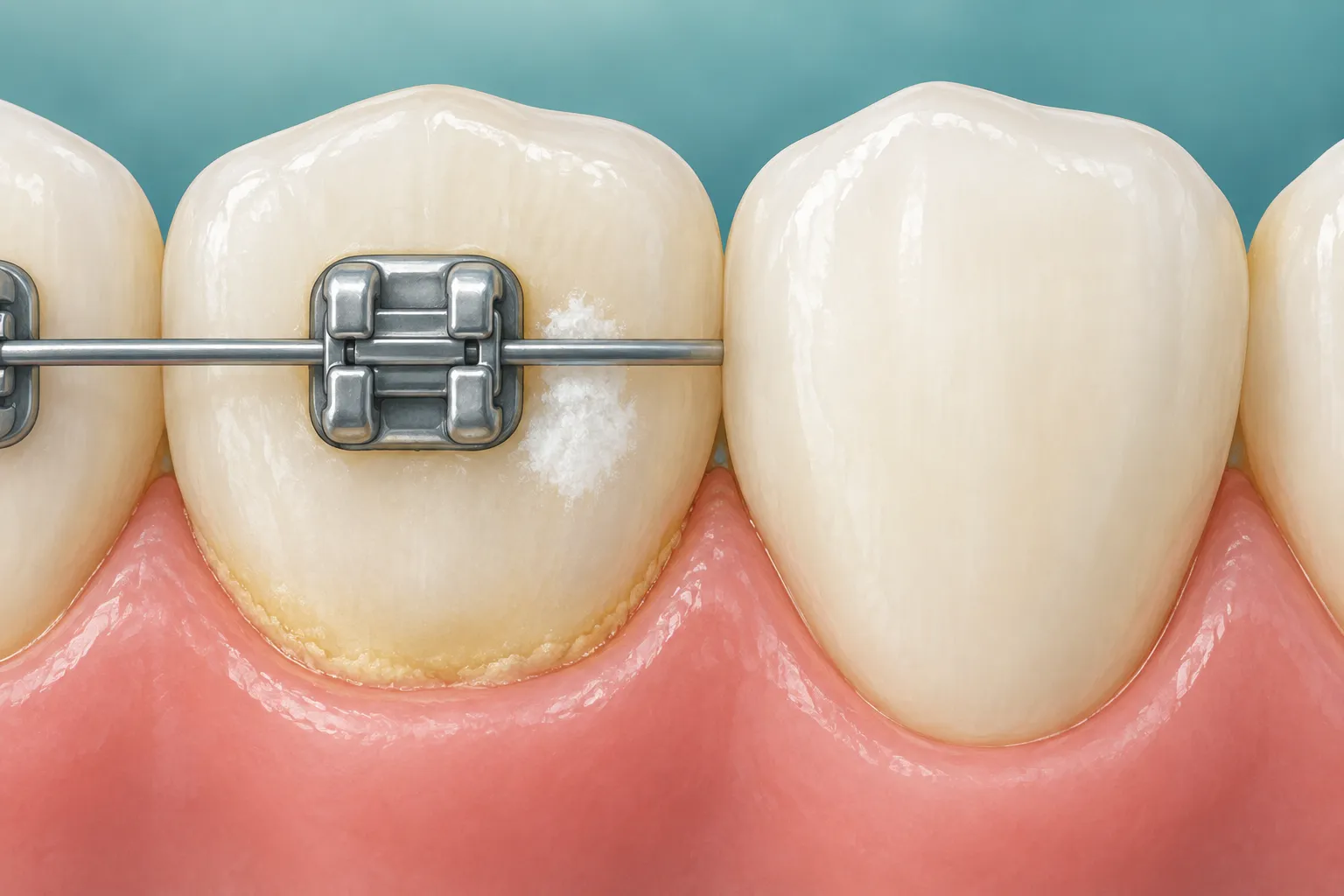
White spots are an early warning, not always a cavity
A new chalky patch around a bracket can mean enamel is losing minerals. It may not be a cavity yet, but plaque can make it worse. Some pale marks were there before treatment or have other causes. Your dentist can check whether the mark is new or needs care.
“White spots usually happen when plaque and acids remain on enamel for long enough to pull minerals out of the tooth surface, a process called enamel demineralization.” – American Association of Orthodontists
Cavities and gum inflammation can happen during treatment
Wires and brackets can get in the way of brushing the areas where plaque collects. If your dentist finds decay, ask about treating it while the braces are still on. Your dentist and orthodontist can coordinate access to the tooth. Tell them about swollen or bleeding gums too, even if the teeth look fine.
What about the adhesive and removing brackets?
The orthodontist uses dental adhesive to attach brackets, then removes the brackets and leftover adhesive at the end of treatment using techniques intended to protect enamel. White spots can be easier to see afterward. Seeing one does not prove that the bracket pulled enamel away. Ask for an examination if you notice a chip, rough patch or persistent pain after removal.
Can braces affect tooth roots?
As teeth move, some roots may shorten. This is called root resorption. Your orthodontist may see it on an X-ray, but you cannot see it by looking at enamel. Discuss your dental history, any imaging results and how your orthodontist will monitor your teeth. Root changes may call for a change in treatment. Tenderness or slight tooth movement alone does not mean a root is damaged.
What should you ask before starting braces?
Talk with your general dentist before treatment as well as your orthodontist. The dentist can address cavities, gum concerns and weak enamel; your orthodontist can account for those findings when planning tooth movement.
-
What does my starting enamel and gum health look like? Ask whether any white spots, decay or gum problems need attention before bonding.
-
How will you monitor my teeth and roots? Ask what exams or imaging are appropriate in your case and what changes would alter the plan.
-
Which cleaning tools fit this appliance? Have the team demonstrate how to clean above and below brackets, between teeth and around wires.
-
Who should I call about a new mark or sensitivity? Make sure you know when to see the dentist and when to contact the orthodontist.
-
Would a different appliance suit my circumstances? Clear braces and removable aligners have different care demands. Ask what is clinically appropriate rather than choosing on appearance alone.
With removable aligners, you can reach tooth surfaces more easily when you brush. Cavity risk remains, and you still need to clean your teeth before putting the aligners back in.
How to protect enamel while wearing braces
For a close look at cleaning around brackets, watch this demonstration from the American Association of Orthodontists:
Brush with fluoride toothpaste, taking time at the gumline and around every bracket. Clean between teeth every day with floss and a threader, an orthodontic flosser or another tool your dental team recommends. An interdental brush can help reach around wires, but it does not replace cleaning between teeth. After eating, rinse with water if you cannot brush right away, especially when food is caught in the appliance.
The American Dental Association’s daily oral-care recommendations also call for fluoride toothpaste and daily cleaning between teeth.
Limit frequent sugary snacks and drinks, which repeatedly expose plaque-covered enamel to acid. Keep regular general-dental appointments as well as orthodontic visits. Ask your dentist whether a fluoride rinse or professionally applied fluoride is appropriate for you, especially if you already have white spots or a history of cavities. Children and teens may need hands-on help until they can reliably clean around the appliance themselves.
If a bracket comes loose, contact your orthodontist rather than trying to remove it yourself. The immediate concern may be the appliance, but a bracket that is no longer in its intended position also makes cleaning and treatment less predictable.
What if a new white spot appears?
Tell your dentist or orthodontist about a new chalky patch while you are still in treatment. A rough, growing or sensitive spot needs attention, as does one where plaque keeps collecting. An exam can show whether you have active demineralization, an older enamel variation or another problem.
For an early spot, your dental team can help you control plaque and choose a fluoride plan to support remineralization. Some spots improve; a visible mark may not disappear entirely. If you still see it after treatment, ask your dentist about appearance options. The depth of the change and the presence of decay affect what makes sense, and an active cavity needs treatment rather than a cosmetic fix.
Start with a plan that protects your smile
At Eisenberger and Meister Orthodontics in Passaic, a complimentary consultation gives you time to discuss cleaning, existing dental concerns and appliance choices. The practice offers braces, clear braces, custom LightForce braces and Invisalign for patients at different stages of life. Keep your general dentist involved throughout treatment to care for your enamel and gums.
Considering orthodontic care in northern New Jersey? Passaic is near communities across Passaic, Bergen and Essex counties, including Clifton, Paterson, Little Falls, Totowa, Woodland Park, Wayne, Garfield, Wallington, Rutherford, East Rutherford, Carlstadt, Wood-Ridge, Lodi, Hasbrouck Heights, Elmwood Park, Fair Lawn, Hackensack, Nutley, Bloomfield, Belleville, Montclair and Newark. If you are still weighing appliances, read more about what to know before wearing braces and metal braces care.
Braces can be part of a healthy smile if you can keep plaque under control and have new changes assessed promptly. Ask Eisenberger and Meister Orthodontics for a personalized treatment plan that accounts for your dental health and your daily routine.
FAQ
Can braces damage tooth roots?
Root resorption can occur during orthodontic tooth movement and is different from enamel white spots. Your orthodontist can assess root changes on appropriate imaging and discuss whether the treatment plan needs adjustment.
Why did my teeth get worse after braces?
A chalky patch may be easier to notice after a bracket is removed and can reflect mineral loss that developed while plaque collected around the appliance. A dentist can check whether the area needs remineralization care, cosmetic treatment or cavity treatment; do not diagnose the cause from appearance alone.
Can braces cause tooth damage?
Yes, tooth damage is possible, but brackets themselves do not automatically cause cavities. Plaque around fixed appliances can contribute to white spots and decay, and orthodontic movement can sometimes affect roots. Good cleaning and coordinated dental and orthodontic follow-up help manage these risks.