
What does “Sapphire Invisalign Provider” mean for your smile? It signals substantial experience with Invisalign treatment, not a guaranteed result. For families in Passaic and North Jersey, the question is how an orthodontist will plan and adjust your care.
Eisenberger and Meister Orthodontics describes its Sapphire status as placing the practice among the top 0.5% of Invisalign specialists. That figure describes provider recognition, not a patient’s odds of success.
What does Sapphire Invisalign Provider mean for treatment?
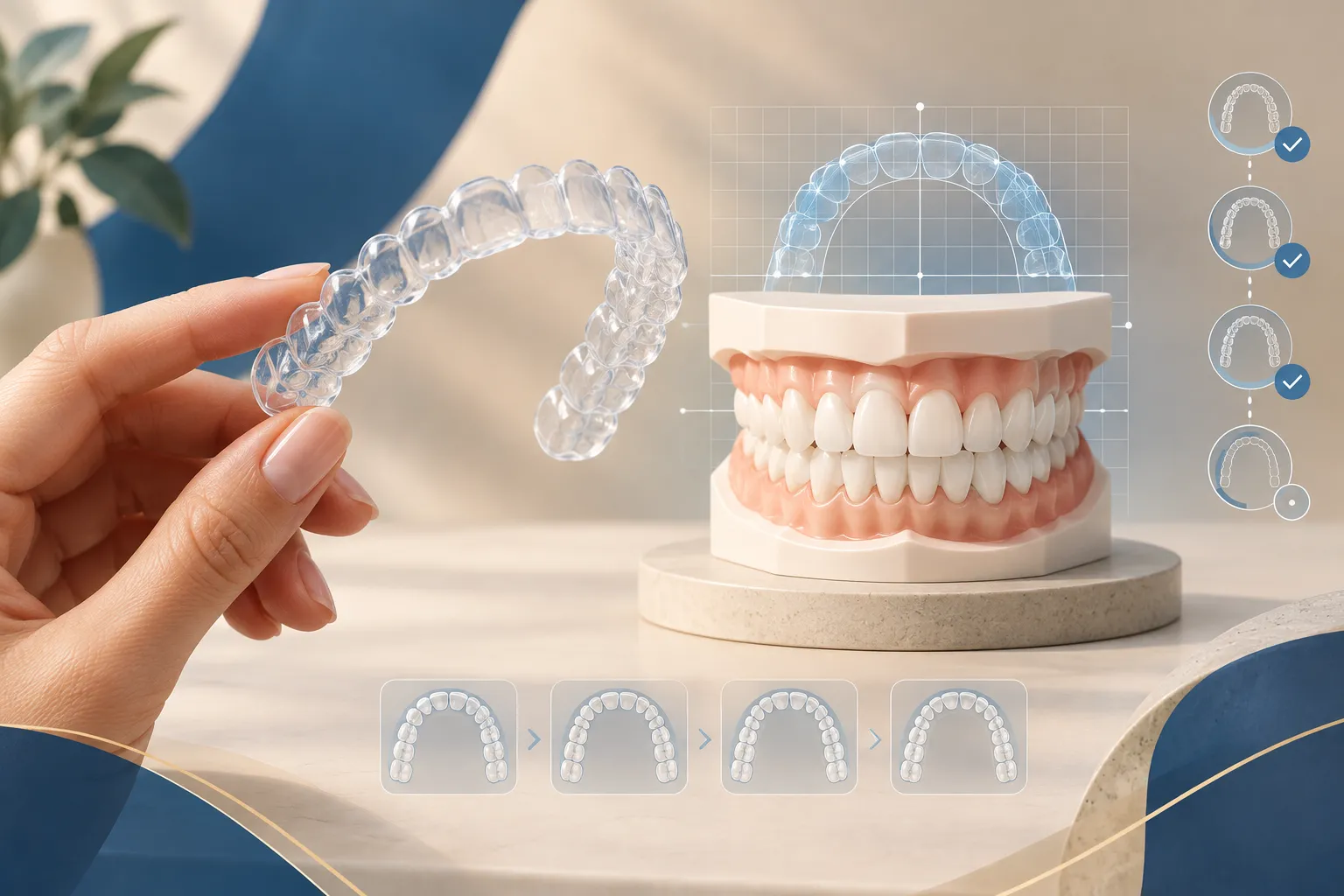
Sapphire recognizes substantial experience with Invisalign cases. Provider tiers generally reflect aligner treatments prescribed, not a separate clinical license or a guarantee that every case finishes without changes.
Descriptions of provider tiers vary by market and date, so a universal annual case-count threshold for Sapphire would be misleading. The practice’s top 0.5% figure is not an outcome ranking.
Is Sapphire the same as being an orthodontic specialist?
No. The tier reflects Invisalign experience; specialist status reflects professional training. Ask who will diagnose your bite, approve your plan and supervise changes.
How do Invisalign provider tiers work?
Invisalign recognition levels distinguish providers’ aligner experience. You may see Gold, Platinum, Diamond or Sapphire; names and thresholds can differ across regions and years. Ask how a practice handles cases like yours.
|
Signal |
What it tells you |
What it does not tell you |
|---|---|---|
|
Invisalign provider tier |
The practice has experience with the Invisalign system at a recognized level |
Your expected result, the clinician’s exact plan or the price you will pay |
|
Orthodontic specialist training |
The clinician has focused training in diagnosing and treating tooth and bite alignment |
Whether Invisalign is automatically the right appliance for you |
|
Consultation and treatment plan |
How your bite, goals, wear habits and alternatives shape the recommendation |
That teeth will move exactly as projected without refinements |
At your consultation, ask which teeth need to move and how the team will monitor progress.
Invisalign treatment experience: why it can matter for your smile
Your clinician assesses the bite, plans tooth movement and adjusts treatment if teeth do not track as expected. High case volume may mean broader experience, but it cannot show how carefully the team will manage yours.
Before the first tray: diagnosis and case selection
Your exam should look beyond the front teeth. Invisalign can treat some crowding, gaps and bite concerns; braces may suit other cases. The American Association of Orthodontists explains clear-aligner planning, including assessment of teeth and jaws. Ask how your plan addresses your bite.
At Eisenberger and Meister Orthodontics, patients can discuss Invisalign alongside clear braces and LightForce custom 3D-printed braces. Advanced digital technology can support planning, but the right appliance depends on your needs.
During treatment: tracking and adjustments
Wear aligners as directed and keep progress checks. If a tray stops fitting, contact the team. Eisenberger and Meister Orthodontics offers Dental Monitoring for remote check-ins when appropriate; in-person care remains necessary when recommended.
Read more about Dental Monitoring in orthodontic treatment if remote check-ins would make care easier to manage.
At the finish: refinements and retainers
Some patients need additional aligners called refinements. Ask whether these and your retainers are included in the fee.
What the top 0.5% distinction cannot prove
It is not a success-rate statistic. Top 0.5% does not mean other clinicians deliver worse outcomes or that you will not need refinements.
It is not a speed or price promise. Complexity, wear time and response to movement affect treatment.
It is not proof of geographic exclusivity. The practice’s recognition does not establish that it is the only private Sapphire provider in North Jersey.
Questions to ask at your Invisalign consultation
Use the consultation to get answers about your teeth and schedule:
-
What is the bite issue you are treating, and why do you recommend aligners over braces for it?
-
Who approves my digital plan and checks my progress if the trays do not fit?
-
Are attachments or refinements likely, and what do the quoted fee and payment plan include?
-
How will I contact the team about a lost tray or a change in fit?
-
What will I need to do each day, and what kind of retainers will I need afterward?
Orthodontic care should account for a teen’s wear habits, an adult’s schedule or a child’s dental development. The practice offers complimentary consultations and personalized plans for all ages. Flexible financing includes 0% APR options and no hard credit checks for qualifying plans; discuss terms before enrolling.
Our orthodontic financing overview explains payment options in more detail.
Invisalign care near Passaic, NJ
Our Passaic office welcomes patients from nearby communities in Passaic, Bergen, Essex and Hudson counties. Ask which visits require travel and whether remote monitoring suits your plan.
Make the designation work for you
Sapphire status points to experience, not a promised result. Eisenberger and Meister Orthodontics combines its reported top 0.5% recognition with 38 years in practice and more than 15,000 smiles treated. Book a complimentary consultation in Passaic to discuss your options, follow-up plan and costs.
FAQ
What do the Invisalign numbers mean?
A number on an aligner package typically identifies a tray’s place in your prescribed sequence; follow the schedule your orthodontist gives you. Numbers used in provider claims, such as “top 0.5%,” describe a provider distinction, not the chances that your treatment will succeed.
How many Invisalign refinements do people typically receive?
There is no single number that applies to everyone. Refinements are additional aligners used when the planned movements need fine-tuning; your orthodontist can explain how they are handled and whether the cost is included in your plan.
Does Invisalign make your smile wider?
Aligners may change the appearance of a smile when the treatment plan repositions teeth, but a wider-looking smile is not guaranteed. The effect depends on your starting bite and the movements your orthodontist considers appropriate.