
You may see your first teeth braces result within a few months, especially in your front teeth. Perhaps a gap starts narrowing or a crowded tooth begins to line up. That early movement is encouraging, although your orthodontist may have more work to do on your bite. In the first few weeks, it is common to feel a change before you can see one.
When does the first teeth braces result show?
Some patients spot a small change in six to eight weeks; many see more between one and three months. Where your teeth started and what your orthodontist works on first affect when you notice progress. These stages are a guide, not a deadline:
|
Stage |
What you might notice |
What it does not tell you |
|---|---|---|
|
First days and weeks |
Pressure or tenderness as you adjust; often little visible movement |
Soreness is not a measure of how well treatment is working. |
|
First few months |
Some teeth may look less crowded, a gap may begin to close, or one tooth may look more even |
A straighter front row does not mean the bite is finished. |
|
Later treatment |
More refined alignment and bite adjustments |
Small-looking changes can be important to the final fit of your teeth. |
|
After braces |
The braces come off and retainers help hold the new positions |
Results can shift if retainer wear stops. |
Your own plan gives you a more useful estimate. A small gap might start to close early, while bite correction may take longer to show in a photo. If your teeth look much the same after a few weeks, ask at your next appointment what your orthodontist is working on first.
What changes first, and what might you not see?
It is easiest to spot change in a front tooth or a gap you see every day. Meanwhile, your orthodontist may be making room for crowded teeth or improving how your upper and lower teeth meet. Those changes do not always show up in the mirror.
In the first week, your teeth may feel tender after braces go on. They can feel tender again after an adjustment. Try softer foods if chewing is uncomfortable, and ask your orthodontic team for help if a bracket or wire rubs your cheek. Soreness cannot tell you how fast teeth are moving.
Later on, you might wonder why progress seems slower once your front teeth look straight. Your orthodontist may be refining how the rest of your teeth fit together, including your bite. The first visible change is only one part of that work.
Why do braces results vary so much?
Two patients who start braces together may see changes weeks apart. One may have a small gap, while the other needs room made for several crowded teeth or bite correction. Teeth also respond at different rates.
Treatment has an order. Your orthodontist might create space before closing a gap, for example, or align teeth before adjusting the bite. Wear elastics or other appliances as instructed if they are part of your plan. Missed visits, broken brackets, and difficulty cleaning around braces can complicate progress.
Metal braces, clear ceramic braces, and custom options have different looks and planning approaches. The type you choose cannot promise a date when results will appear. Your orthodontist can recommend an option based on your teeth and your priorities.
How can you tell if your braces are working?
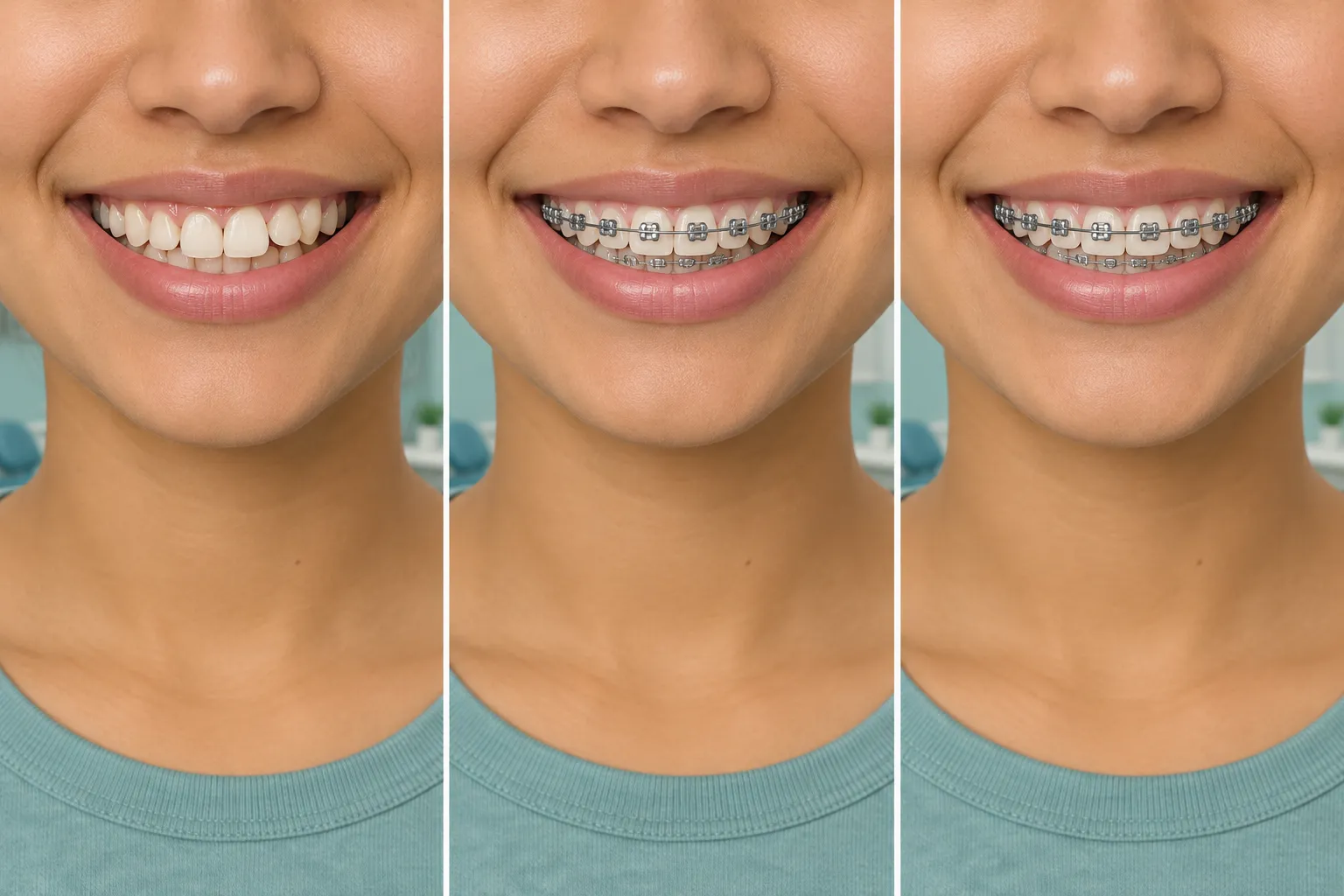
Day-to-day changes are hard to judge in the mirror. If you want to track progress, take photos from the same angle in similar lighting, starting before or soon after braces go on. At intervals your orthodontist suggests, compare a specific tooth or gap along with your whole smile.
At an appointment, you can ask, “Are we lining up the front teeth or working on my bite now?” Your orthodontist can assess movement that a photo misses and explain when you might see the next change.
Keep your scheduled visits and follow instructions for elastics and cleaning. If a bracket breaks or a wire pokes you, call the office; do the same for severe or persistent pain.
After braces, retainers protect the result
Your orthodontist will give you a retainer plan when braces come off. As the American Association of Orthodontists explains, your teeth can still shift afterward. The amount of time you need to wear your retainer may change as treatment moves into its maintenance phase.
“Your teeth naturally move and change position throughout your life, and even after orthodontic treatment, they can continue to shift.” – American Association of Orthodontists
Wear and care for your retainer as instructed, even while your smile looks straight. Call your orthodontic office if it feels tight, stops fitting, or gets lost or damaged. Consistent wear helps you keep the result you worked for during treatment.
Get a timeline that fits your smile
At Eisenberger and Meister Orthodontics in Passaic, treatment starts with your teeth, your bite, and what you hope to change. The practice offers metal braces, clear braces, and custom LightForce ceramic braces for children, teens, and adults. A consultation gives you room to ask what should move first and how retainers will help afterward.
Families from Passaic and nearby towns can discuss their options at the practice:
-
Passaic County: Passaic, Clifton, Paterson, Haledon, Prospect Park, Little Falls, and Woodland Park.
-
Bergen County: Garfield, Wallington, Rutherford, East Rutherford, Lodi, Elmwood Park, Lyndhurst, Carlstadt, and Hasbrouck Heights.
Expect early changes to be small, and plan on completing treatment and wearing your retainer to protect the final result. Eisenberger and Meister Orthodontics offers a complimentary consultation if you want a timeline for your own teeth.
FAQ
How long does it take for braces to show results?
Many people notice a change within the first few months, though some see a tooth move sooner and others need more time. What you see first depends on your starting alignment and which part of your bite is being treated.
What are the different types of braces available for teeth?
Common options include traditional metal braces and less noticeable clear ceramic braces. Eisenberger and Meister Orthodontics also offers custom LightForce ceramic braces; your orthodontist can explain which option suits your treatment plan.
What is the first day with braces like?
Your teeth may feel pressure or tenderness, and the brackets can feel unfamiliar against your cheeks. Choose foods that are comfortable to chew and contact your orthodontic team if a wire or bracket is hurting you.