
Clear aligners straighten teeth without fixed brackets. They need consistent wear, so the decision comes down to your bite, your routine and clear aligners cost. An orthodontist can assess whether trays can make the movements you need and price the plan for your teeth.
At Eisenberger and Meister Orthodontics in Passaic, you can discuss both treatment and cost at a consultation. The steps that follow take you from digital records through daily wear and, eventually, retainers.
Are clear aligners right for you?
Custom clear aligners are removable trays made for your teeth. They may be a treatment option for adults and teens with crowding, spacing or certain bite concerns. Suitability depends on more than how straight your front teeth look: an orthodontist examines how the upper and lower teeth meet, your oral health and the movements required. The American Association of Orthodontists explains that some cases respond more predictably to braces. For younger patients, a parent should also consider whether a teen can keep track of the trays and wear them as directed.
Have cavities or gum problems treated before starting orthodontic treatment. Traditional braces may be more predictable for complex cases involving difficult movements or bite corrections. They stay on your teeth, so your progress does not rely on remembering to put trays back in.
|
Consideration |
Clear aligners |
Fixed braces |
|---|---|---|
|
Daily routine |
Remove trays for meals and cleaning; wear them the rest of the day as prescribed |
Remain on the teeth; clean around brackets and wires |
|
Visibility |
Translucent trays, sometimes with visible tooth-colored attachments |
Metal brackets or ceramic brackets are visible to varying degrees |
|
Treatment control |
Depends on consistent wear and whether planned movements track |
Fixed appliances may offer better control for some difficult movements |
|
Best next step |
Ask whether your specific bite is suitable |
Ask if braces would make your case more predictable |
How clear aligner treatment works
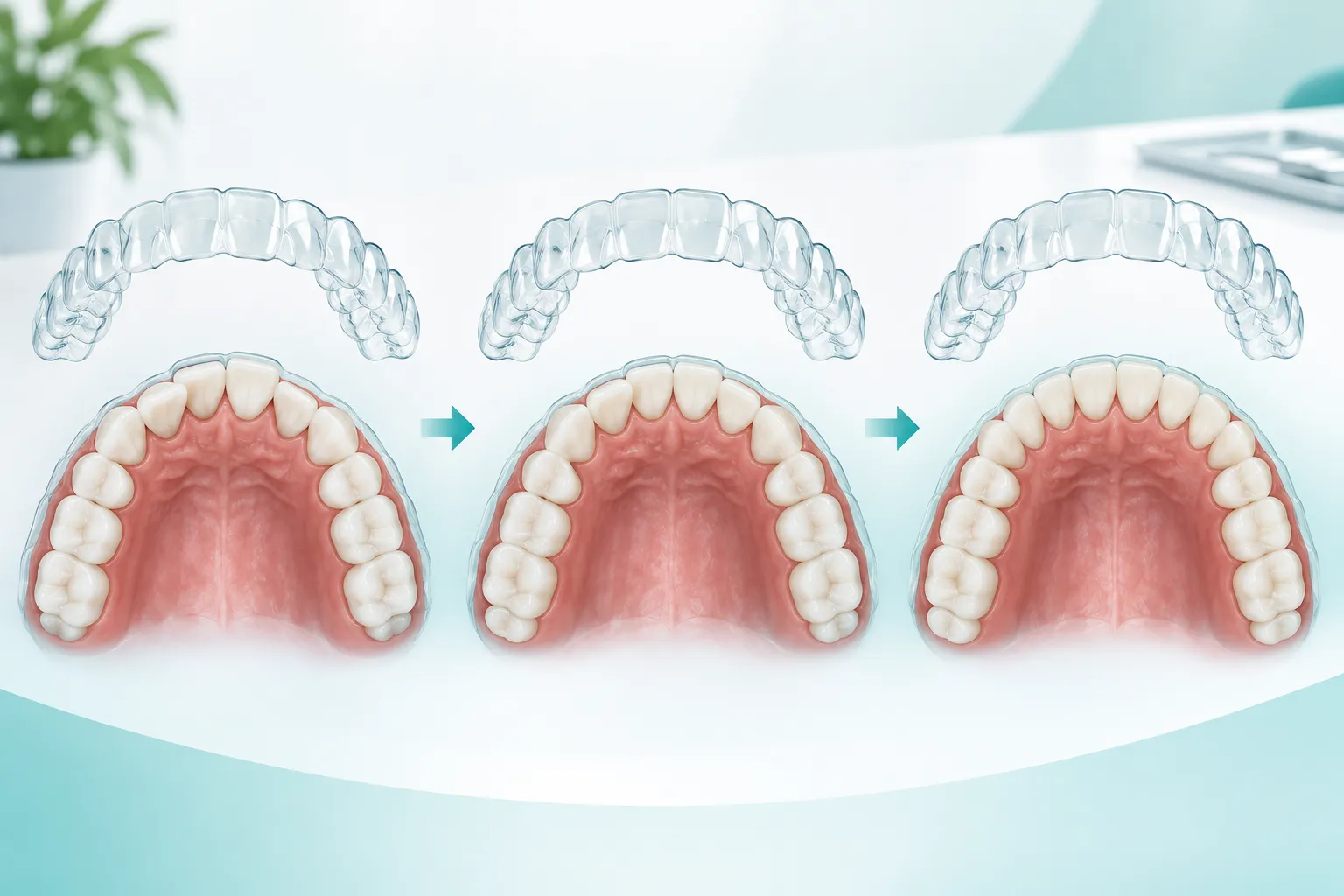
Consultation and digital records
Your orthodontist examines your teeth and bite, asks what you hope to change and collects records to plan care. A digital scan captures the shape and position of your teeth. Photos and X-rays may be needed to see what the scan cannot. Your orthodontist uses those records to plan each movement, though your teeth may not follow the on-screen simulation exactly.
Custom trays move teeth in stages
Each set of orthodontic aligners fits a little differently from the last, applying gentle, sustained pressure to move teeth toward their planned positions. Your clinician tells you when to switch sets. Tooth-colored attachments on some teeth can help the aligner trays grip; your plan may also call for a small amount of space to be made between teeth.
Progress visits, refinements and retainers
At progress appointments, your orthodontist checks whether your teeth are tracking with the trays. If they fall behind the plan, you may need a change of course and additional trays called refinements. Your quote should explain whether it covers those trays and the monitoring visits. Once active treatment ends, retainers help hold the result long term.
What daily wear actually involves
Plan to wear your trays for the hours your orthodontist prescribes. The American Association of Orthodontists describes a typical schedule of at least 22 hours daily:
“Typically, each aligner is worn for 1 week at a time, at least 22 hours a day, and moves teeth a fraction of a millimeter at a time.” – American Association of Orthodontists
Remove trays to eat, then brush your teeth before putting them back when possible. Water is the simplest drink to have while wearing trays; remove them for other drinks according to your orthodontist’s instructions. Clean the trays as directed, store them in their case when they are out and keep up with brushing and flossing. This oral hygiene routine matters because trays sit directly against your teeth.
New trays can feel tight or make teeth sore for a short time. Someone close to you might see the attachments or hear a change in your speech at first. You also have to keep track of the trays: missed wear time can make them fit poorly and slow progress. Call your orthodontic team if a tray will not seat or causes sharp pain; do not force it.
A teen who leaves trays in a lunchroom, or an adult who snacks throughout the day, may find fixed braces easier to live with. The option to remove aligners helps only if you put them back in on time.
How long does treatment take, and what can before-and-after results show?
A photo cannot tell you how long treatment will take. Closing a small gap may involve fewer stages than correcting a bite that involves many teeth. One published estimate puts minor corrections at around six months and more complex cases at 18 to 24 months. Your number of trays, response to treatment, wear habits and possible refinements determine your schedule. Longer treatment extends the daily wear routine too; your orthodontist can estimate the time after an exam.
|
What to review |
What it tells you |
|---|---|
|
Starting bite and case complexity |
Whether the smile photo reflects movements like yours |
|
Attachments and refinements |
Whether the result needed steps beyond the first trays |
|
Retainer plan |
How the result is maintained after treatment |
Clear aligners before and after photos usually show the smile from the front, not a clear picture of the bite. Teeth can look straighter before that part of treatment is complete. Your starting point and treatment plan will be different.
Clear aligners cost: what goes into the quote?
The cost of clear aligner treatment varies with case complexity, how long you need care and what the fee covers. One published general estimate puts minor corrections at $1,500 to $3,000, moderate cases at $3,000 to $5,000, and complex treatment at $5,000 to $8,000 or more. These ranges do not represent an average cost or a Passaic price list. A three-month course still carries planning and follow-up costs, and a quoted monthly payment tells you little about the total fee.
|
Ask for this in a written estimate |
Why it matters |
|---|---|
|
Records and treatment planning |
Scans, X-rays and an exam inform candidacy and the plan |
|
Active treatment and follow-up visits |
Monitoring helps catch trays that are not tracking |
|
Additional aligners |
Refinements may be needed after the first series |
|
Retainers and replacement policies |
Retention continues after tooth movement ends |
|
Insurance and financing terms |
Your actual out-of-pocket amount can differ from the listed fee |
Some insurance policies contribute to aligner treatment. Age limits, lifetime orthodontic maximums and network rules affect your insurance benefits and the amount you owe; other policies offer no orthodontic benefit. Payment plans spread the balance over time; compare the total fee as well as the monthly amount. Eisenberger and Meister Orthodontics offers complimentary consultations and flexible financing, including qualifying 0% APR options and no-hard-credit-check options. You can discuss treatment and payment at the same visit.
Deciding whether to book a consultation
At your consultation, ask whether aligners can correct your bite as well as the teeth you see in a smile. Then ask whether the estimate includes extra trays and retainers. If braces would give your orthodontist better control, you have that option too. Eisenberger and Meister Orthodontics offers Invisalign and braces with plans tailored to each patient. The practice has Invisalign Sapphire Provider status and offers Dental Monitoring for patients who may benefit from convenient progress check-ins.
If you live in Passaic, Clifton, Garfield, Wallington or Rutherford, you can book a complimentary orthodontic consultation close to home. The practice also welcomes families from East Rutherford, Carlstadt, Wood-Ridge, Hasbrouck Heights, Lodi, Saddle Brook, Elmwood Park, Paterson, Little Falls, Totowa, Wayne, Bloomfield, Nutley, Lyndhurst, North Arlington, Kearny, Newark, Montclair, Verona, Cedar Grove, Glen Ridge, Belleville and Secaucus. You will get a recommendation for your teeth, an estimated schedule and an explanation of costs before deciding. Clear aligners make sense when they suit your bite and you can keep up with daily wear. Eisenberger and Meister Orthodontics can help you make that call with a supervised, personalized plan.
FAQ
Will my insurance cover Invisalign?
Some dental plans include orthodontic benefits that can apply to Invisalign; others exclude it or limit coverage. Your out-of-pocket cost depends on your policy and treatment estimate, so ask the practice to review your benefits as part of your quote.
Are clear aligners worth it?
They can be worthwhile if they can treat your bite and you can wear the trays as prescribed. Their discretion and removability have to be weighed against daily wear requirements, possible refinements and the full cost of care.
How much do 3 months of Invisalign cost?
There is no standard three-month price: a short plan must still account for the exam, planning, trays, follow-ups and retention. A consultation determines whether such a short course is appropriate and what its complete fee would include.
What is a cheaper alternative to Invisalign?
Braces or another professionally supervised aligner option might cost less for a particular treatment plan, but no appliance is always cheaper. Compare written estimates for the same clinical goal, including monitoring, any refinements and retainers.