
Invisalign with whitening may be possible during orthodontic treatment. The right time to whiten teeth depends on attachments, sensitivity, dental restorations and the method your clinician recommends. Before putting gel in an aligner, ask whether it is appropriate for your treatment.
Tell your orthodontist you want a brighter smile as well as straighter teeth. Removable aligners give you more whitening options than fixed brackets, but you still need to follow your prescribed wear schedule.
Invisalign with whitening: Can you whiten teeth during treatment?
Yes, some adults can whiten during Invisalign treatment. You can remove aligners for a separate whitening session, or your clinician might approve gel with the aligners. If neither suits your teeth, wait until treatment ends.
An aligner fits snugly, so gel can squeeze onto your gums. Aligner wear time is not whitening time: follow the session length your clinician prescribes.
Fixed brackets cover part of the tooth surface, so whitening the exposed enamel can leave uneven color. If you wear brackets, read Teeth Whitening With Braces: What to Do and When to Wait and consider whitening after removal.
When is the best time to whiten teeth while using Invisalign?
|
Timing |
When it may make sense |
Main trade-off |
|---|---|---|
|
Before Invisalign |
You want to discuss your preferred shade before treatment begins. |
New attachments and existing restorations may affect how the finished smile looks. |
|
During Invisalign |
Your treating clinician approves a method that fits your attachment pattern and wear schedule. |
Sensitivity, gum irritation or uneven shade may interrupt your plans. |
|
After Invisalign |
You prefer to assess the full tooth surfaces after attachments are removed. |
You wait longer for the brighter shade, but can plan whitening around the finished alignment. |
Front-tooth attachments or sensitivity may make waiting more appealing. Planning a new restoration? Discuss its shade before your dentist matches it or your orthodontist plans a retainer.
After your aligners and attachments are finished, explore your options in the Teeth Whitening Guide for Adults in 2026. At that stage, you can consider the entire visible tooth surface.
How do attachments affect whitening?
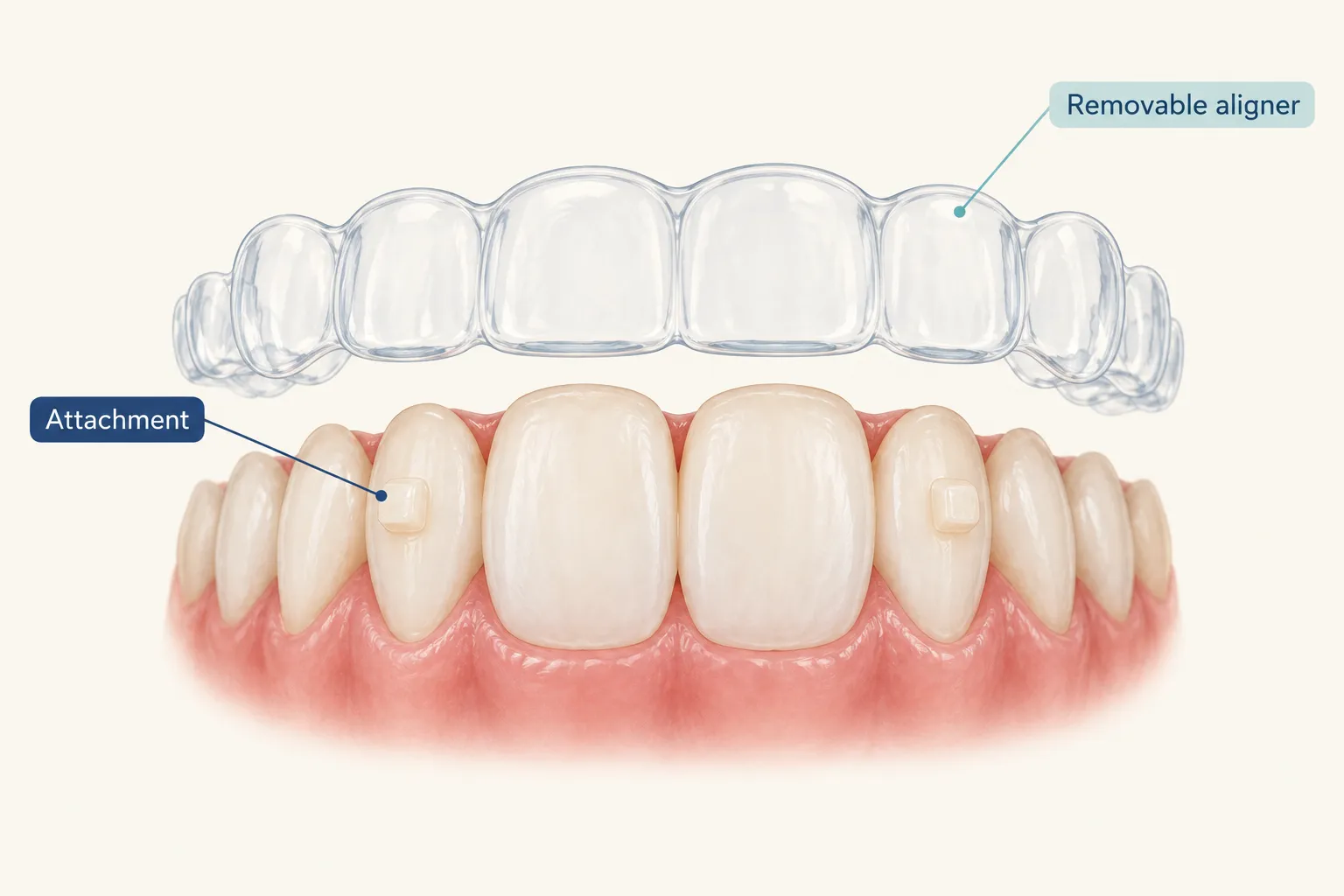
Your orthodontist may bond small tooth-colored attachments to help the aligners move certain teeth. The attachments stay in place when you take your trays out. Gel may not reach the enamel beneath them as readily as the exposed tooth, and a shade difference may show after removal.
Mention any crowns, veneers, fillings or visible bonding. The American Dental Association’s guidance on whitening treatments notes that only natural teeth whiten, while sensitivity and gum inflammation are common side effects. Your clinician can plan whitening around dental restorations.
“Whitening will not work on caps, veneers, crowns or fillings.” – American Dental Association
Which whitening method belongs in your plan?
|
Option |
Question to ask |
Practical concern |
|---|---|---|
|
Clinician-directed whitening gel with aligners |
Are my particular aligners appropriate for the prescribed gel? |
Gel can escape a tight tray and irritate gums; aligner wear time is not bleaching time. |
|
Separate whitening strips or trays |
Can I finish each session and clean my teeth before reinserting my aligners? |
Whitening time must fit around the aligner wear schedule and attachments. |
|
In-office whitening |
Should I wait until attachments are removed? |
Shade uniformity and sensitivity still matter. |
|
Whitening after orthodontics |
What should be done before a retainer or restoration is finalized? |
It requires a separate plan after alignment is complete. |
If you get sharp sensitivity, sore gums or burning, stop the whitening product and contact your clinician. Extra gel or a longer session may worsen the irritation. Your overnight aligner wear instructions do not apply to whitening gel.
Teeth whitening at home with dentist-prescribed kits in North Jersey
For patients considering Invisalign and whitening near Passaic, this at-home option may be worth discussing with your clinician. Communities in the roughly 20-mile North Jersey area include:
-
Passaic County: Passaic, Clifton, Paterson, Little Falls, Woodland Park, Wayne, Totowa, Haledon and Hawthorne.
-
Bergen County: Garfield, Wallington, Lodi, Rutherford, East Rutherford, Hackensack, Paramus, Teaneck, Fair Lawn and Ridgewood.
-
Essex County: Bloomfield, Nutley, Belleville, Montclair, Glen Ridge, Newark, West Orange and Livingston.
-
Hudson County: Secaucus, Kearny, Harrison, Jersey City, Hoboken, Union City and North Bergen.
-
Union County: Hillside, Elizabeth, Union, Cranford and Summit.
-
Morris County: Montville, Lincoln Park, Boonton, Parsippany and Morristown.
These examples are not a claim that the practice has offices in each town. If you live elsewhere in North Jersey, ask the Passaic team whether an in-person consultation works for you.
A dentist-prescribed kit may contain carbamide peroxide gel for separate whitening trays. Ask how the trays fit around attachments and when to begin whitening. Remove them when the prescribed session ends, even if you still need to wear your aligners.
Daily care that keeps aligners clear
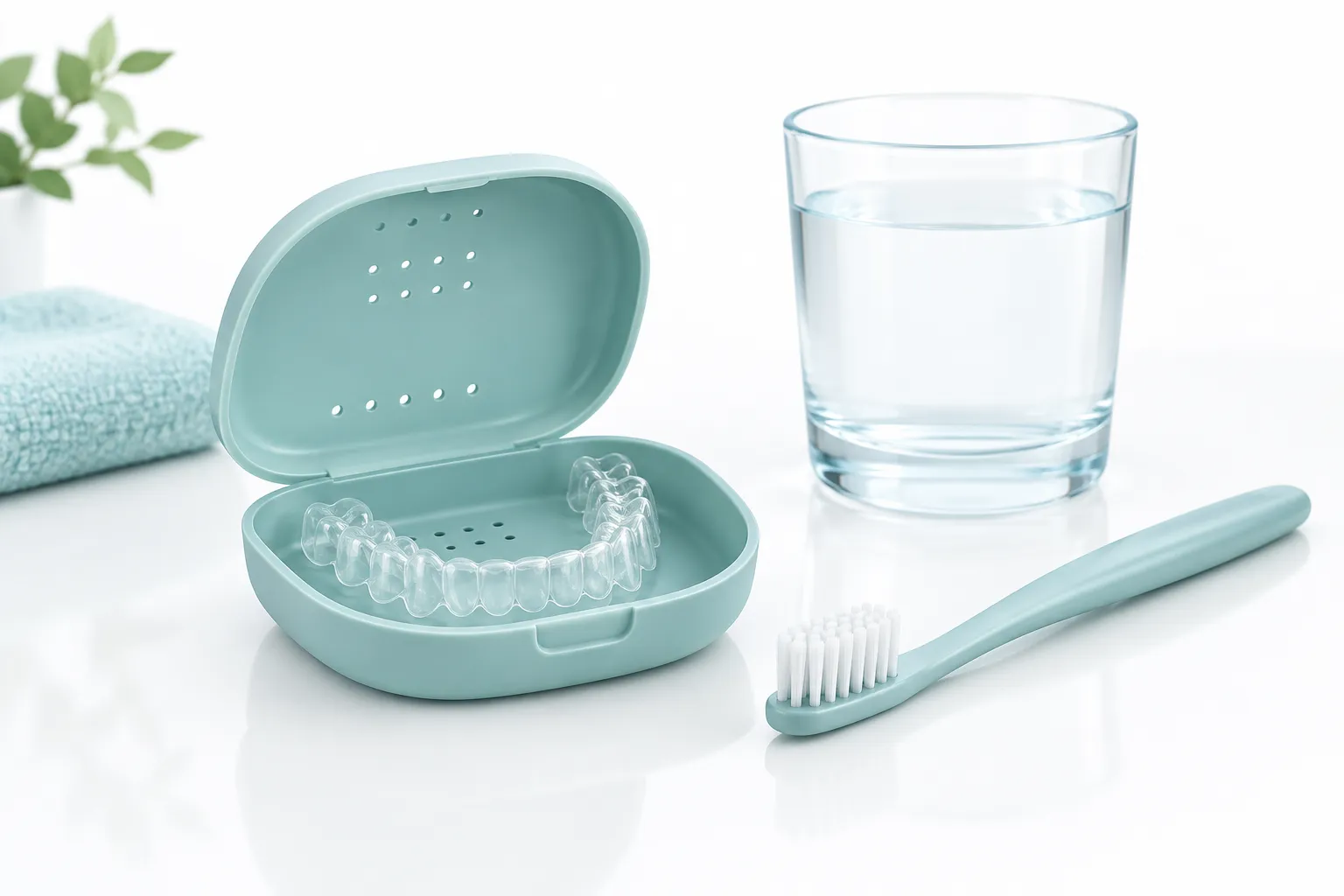
Keep up with brushing between whitening sessions. Take your aligners out for food and drinks other than water, and clean your teeth before putting them back so residue does not sit against your enamel. Clean the trays as your orthodontic team directs and store them in their case.
Coffee and black tea can stain teeth or aligners. Drink them with trays out, then clean your teeth before reinsertion. The ADA explains that whitening toothpaste primarily removes surface stains, while bleaching can brighten natural tooth color. Ask whether a cleaning is an effective option for staining before seeking more dramatic results.
What to ask at your Invisalign consultation
Mention whitening before your orthodontist places attachments. Take these questions to the consultation and get the cost details in writing:
-
Will I need attachments on visible teeth, and should whitening wait until they come off?
-
Would you recommend whitening before, during or after aligner treatment for my teeth? How do sensitivity and any fillings, crowns or veneers affect that choice?
-
Which product and schedule would you authorize: separate trays, strips, in-office whitening or gel used with aligners?
-
After a whitening session, when should I rinse, brush and put my aligners back in?
-
Does my written Invisalign quote include whitening, or is it a separate service? Will shade matching or retainer planning affect the order of treatment?
In Passaic or nearby communities, bring both goals to your consultation. Eisenberger and Meister Orthodontics offers Invisalign care and teeth whitening; the team can discuss what suits your mouth without assuming a particular system is included.
A practical next step
For a bright smile with even color, ask dental professionals whether to wait until attachments come off. If you hope to start sooner, get a method and schedule approved for your sensitivity and dental work.
Eisenberger and Meister Orthodontics offers complimentary consultations in Passaic. Bring your questions and treatment quote, and ask the team to plan your alignment and whitening around your own smile.
FAQ
What are some tips for whitening my teeth?
Ask whether surface stains or tooth color are the main concern. If you have attachments, ask when they come off before choosing a method. Use only the product and schedule approved for your teeth.
Do teeth turn yellow again after whitening?
Whitening does not permanently prevent new stains or natural changes in tooth color. Regular brushing and cleaning, plus limiting exposure to staining drinks, can help you maintain the result. Ask your clinician about touch-ups if the shade changes.
Which teeth cannot be whitened?
Whitening agents do not change the color of crowns, veneers or fillings the way they change natural teeth. If you have visible restorations or bonding, tell your clinician before whitening so your final shades can be planned together.