
Sore teeth after an adjustment and a bracket rubbing your cheek are common problems with braces. Call your orthodontist if pain worsens, a wire or bracket hurts, or swelling develops. Seek emergency care for trouble breathing or swallowing, bleeding that will not stop, or a serious injury.
When you call, say where it hurts, when it started, and whether you can eat, drink, and brush. The video below explains common orthodontic discomfort.
Common orthodontic problems: what needs attention?
|
What you notice |
What to do |
|---|---|
|
General tooth tenderness soon after braces are placed or adjusted, easing rather than intensifying |
Eat softer foods, keep cleaning gently, and observe how you feel. |
|
A small sore where a bracket rubs your lip or cheek |
Use orthodontic wax on the rubbing spot and contact your orthodontist if the sore persists or worsens. |
|
A loose bracket, a wire that pokes, or an appliance that no longer sits as expected |
Call your orthodontist for instructions; do not try to repair it yourself. |
|
Pain that persists, worsens, keeps you from sleeping, or is focused on one tooth |
Contact your orthodontist promptly. |
|
Increasing gum swelling, pus, fever, or facial swelling |
Seek prompt dental or medical assessment; do not wait for a routine adjustment. |
|
Trouble breathing or swallowing, heavy bleeding that will not stop, or a serious injury to the face or mouth |
Seek emergency care now. |
If a symptom worsens or makes meals or cleaning difficult, call even if it seemed minor at first.
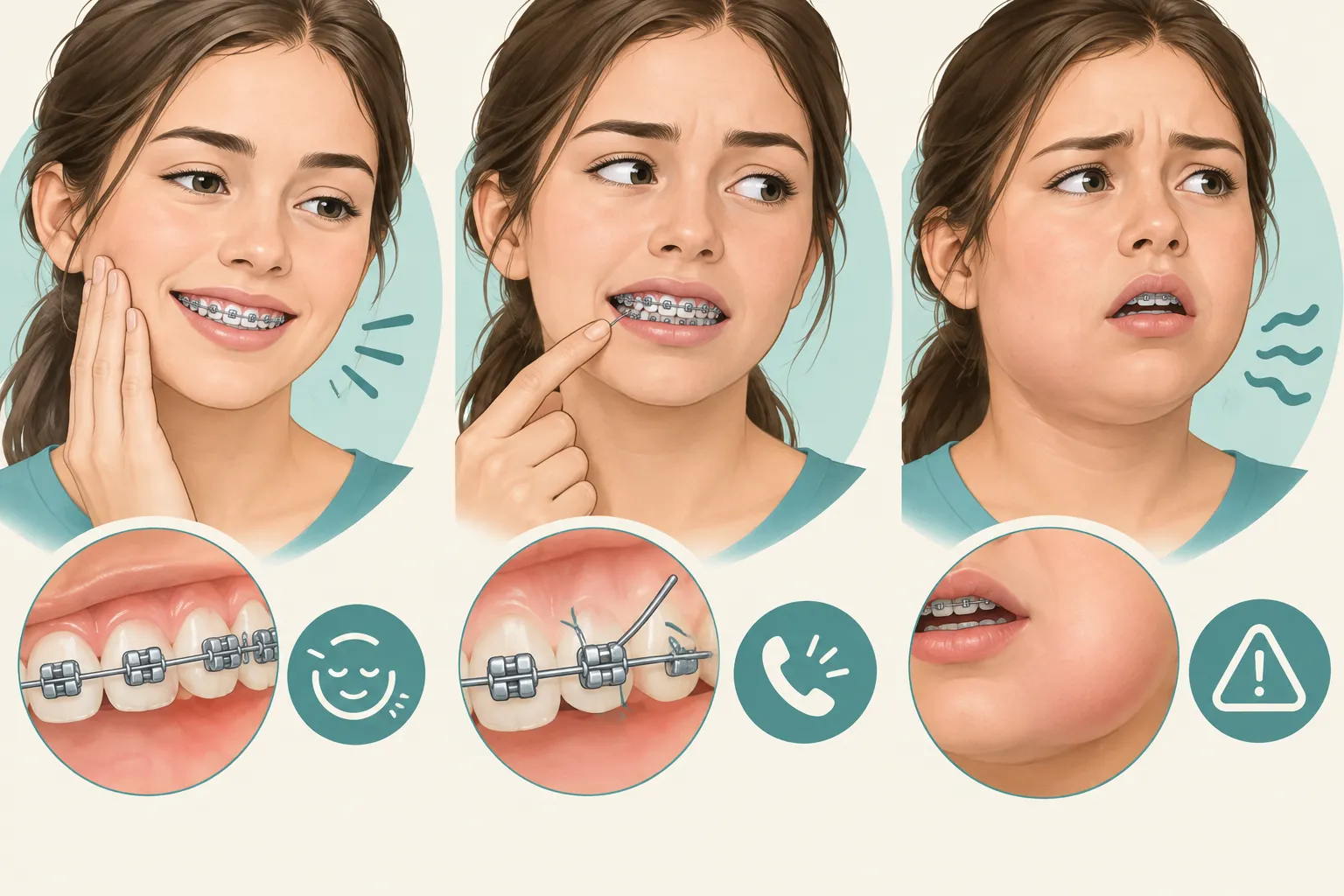
What can be normal after braces or an adjustment?
As braces move teeth, a new fitting or adjustment can cause soreness when you bite. The American Association of Orthodontists (AAO) says soreness generally settles within a few days. Choose soft foods and brush around your braces gently, including near sensitive lower teeth.
Brackets may rub your cheeks and lips at first. Orthodontic wax can shield the sore spot. Call your orthodontist if the sore grows, bleeds again, or makes eating painful.
Tell your orthodontist if discomfort interrupts sleep, drinking, or brushing, even if your braces look intact.
When should you call your orthodontist?
Pain that does not settle or feels different
Call if pain grows stronger, centers on one tooth, or appears long after an adjustment. Say whether it hurts when you bite or rest. Your orthodontist can direct you to appropriate care.
Ask your orthodontic team whether an over-the-counter pain reliever suits you. Follow the label and your clinician’s advice. If pain worsens, call rather than relying on medication.
Mouth sores and rubbing that keep coming back
A bracket can rub your cheek or lip. Wax may reduce friction. Call if a sore lasts, grows, interferes with meals, or develops increasing swelling. Ask your team before using an antiseptic rinse on a persistent sore.
A change in your appliance or bite
Tell the office if a bracket loosens, a wire pokes, a band shifts, rubber bands are hard to wear as prescribed, or your bite changes suddenly. Do not bend a broken wire or glue brackets. For damaged appliances, see Broken Braces: What Patients Should Know First and call the office.
Bleeding gums, bad breath, and white marks
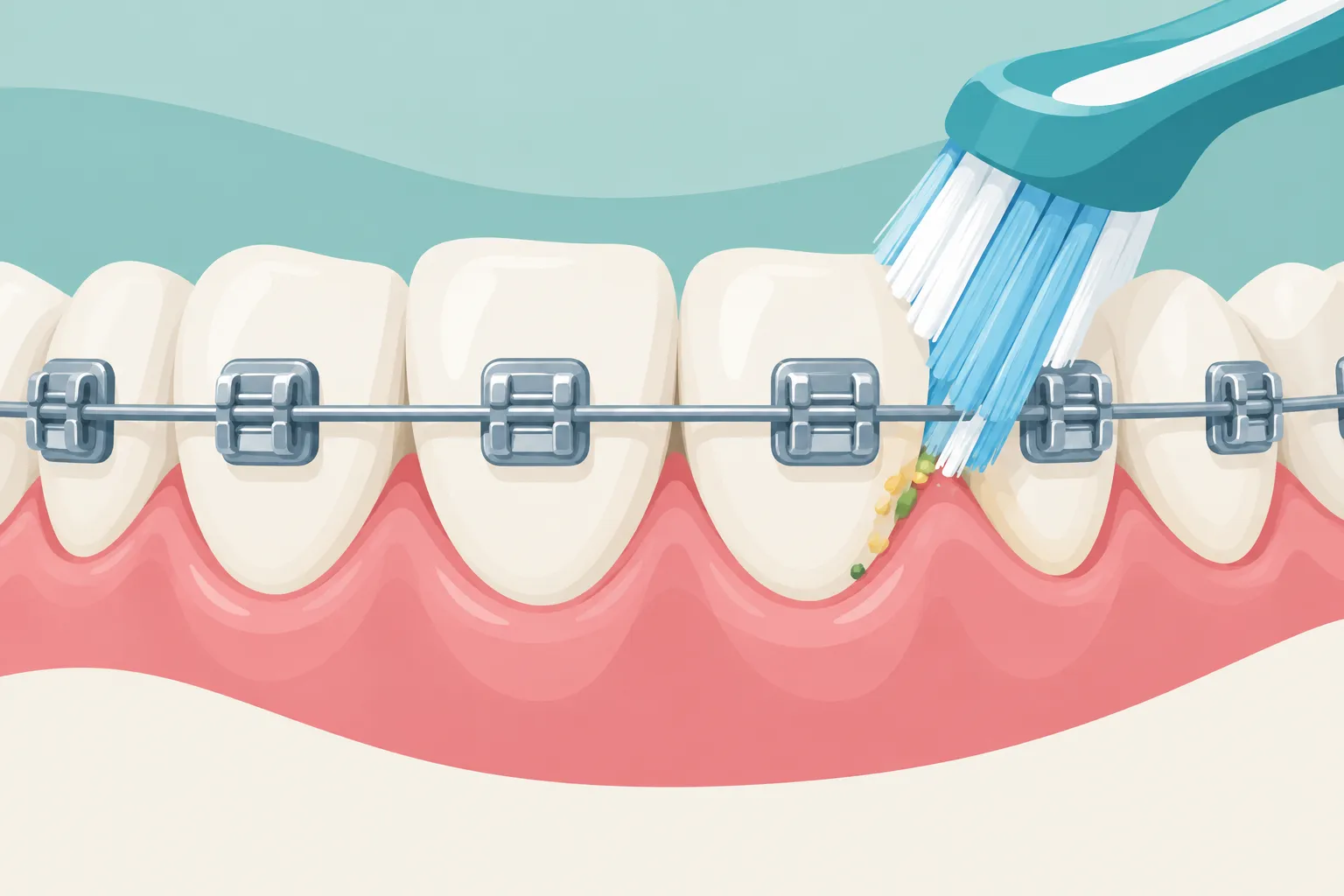
Plaque around brackets can undermine oral hygiene and a healthy mouth. Oral-B’s dentist-reviewed guide to braces problems notes that gum inflammation can be an early form of gum disease. Tell your orthodontic team and dentist about bleeding or persistently swollen gums, bad breath, or new white marks. Follow AAO advice on living with braces: clean around brackets and between teeth, and keep dental visits. Increasing swelling, pus, or fever needs prompt assessment.
When is it urgent?
Seek emergency care if you have trouble breathing or swallowing, bleeding that will not stop, or a serious injury to your mouth or face. Rapidly increasing facial swelling also needs immediate medical attention, especially if it affects breathing or swallowing.
The AAO’s emergency guidance also lists a knocked-out permanent tooth and a suspected broken or dislocated jaw as reasons to seek emergency care immediately.
An injury to a tooth or jaw, or swelling with fever, calls for prompt dental or medical care. Tell the clinician you wear braces; breathing trouble cannot wait for a return call.
How to stay comfortable while you arrange care
Choose soft foods if biting hurts; avoid hard foods that could damage braces. Brush gently around brackets and use wax for rubbing if you know how. Note when symptoms began; a photo of an appliance change may help your team.
For children, teens, and adults, call if a new problem interrupts sleep, meals, or cleaning.
Orthodontic care in Passaic and North Jersey
Eisenberger and Meister Orthodontics provides personalized care in Passaic for children, teens, and adults. Call about a persistent sore or changed appliance. At a consultation, patients with crooked teeth, crowded teeth, or other misaligned teeth can ask whether metal or ceramic braces or clear aligners suit their needs.
Families in Passaic and nearby North Jersey communities can contact the practice for guidance. Seek emergency care rather than waiting for a callback if breathing or swallowing is affected.
FAQ
Do painkillers help with braces pain?
An over-the-counter pain reliever may help with temporary soreness, but the right choice depends on your health and any medicines you take. Ask your orthodontic team or clinician what is appropriate for you and follow the label. Call your orthodontist if pain is severe, focused on one tooth, or worsening rather than relying on medication alone.